
In recent years, the beauty industry has seen a quiet revolution in nail care. What was once considered a temporary fix—press-on nails—has evolved into a high-performance alternative to traditional salon services. With advancements in adhesives, materials, and design precision, many are asking: Are press-on nails finally durable enough to replace acrylics? For those balancing time, budget, and aesthetics, this question isn’t just about convenience—it’s about redefining what professional-looking nails can be.
Gone are the days of flimsy, ill-fitting press-ons that peeled off after two days. Today’s premium glue-ons use medical-grade adhesives, flexible gel-infused materials, and custom-fit technology that rival the staying power of acrylic extensions. But how do they truly stack up against salon-applied acrylics in durability, safety, and long-term value?
The Evolution of Press-On Nails
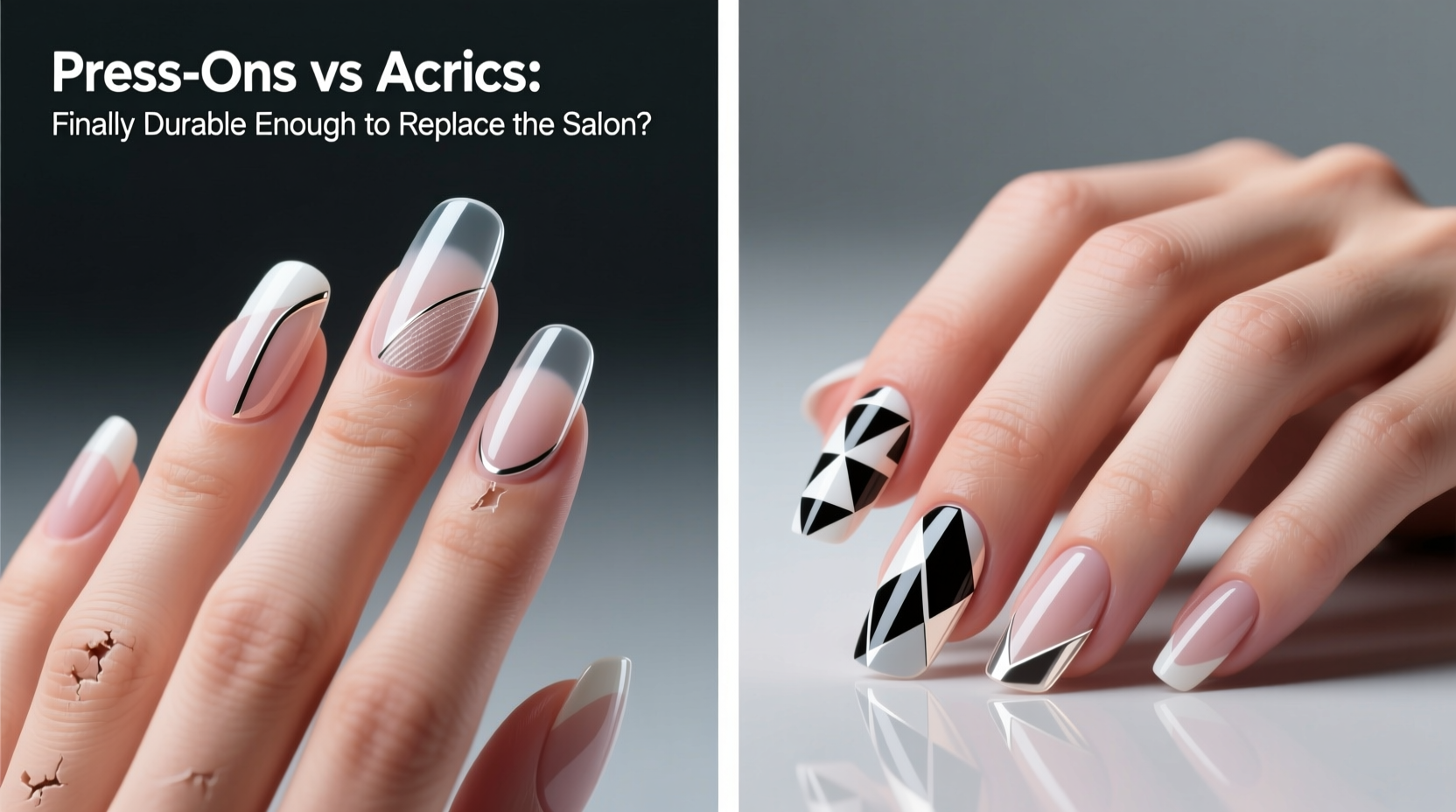
Press-on nails have undergone a dramatic transformation since their debut in the 1990s. Early versions were made from rigid plastic, offered limited sizing, and used weak adhesive stickers that failed within hours. Fast-forward to 2024, and brands like Nailtopia, Manucurist, and KISS Real Shorties use 3D scanning and flexible polymer blends to create nails that mimic natural movement and resist chipping.
Modern press-ons often feature:
- Customizable sizing with multiple width and length options
- Gel-like flexibility that reduces cracking under pressure
- UV-cured finishes for shine and scratch resistance
- Reusable designs with dual-sided adhesive tabs or nail glue
This evolution has shifted consumer perception. Where press-ons were once associated with last-minute fixes or costume wear, they’re now marketed as “at-home salon alternatives” with wear times of up to 14 days—matching or exceeding some acrylic sets when properly applied.
Durability Face-Off: Press-Ons vs Acrylics
Durability isn’t just about how long nails last—it’s also about how well they withstand daily wear: typing, dishwashing, lifting objects, and accidental knocks. Let’s break down key factors.
| Factor | Press-On Nails (Premium) | Acrylic Nails |
|---|---|---|
| Average Lifespan | 7–14 days | 2–3 weeks (with fills) |
| Resistance to Chipping | High (if prepped correctly) | Very High |
| Flexibility & Comfort | High (mimics natural bend) | Low (rigid, may cause strain) |
| Water Resistance | Good (avoid prolonged soaking) | Excellent |
| Risk of Damage to Natural Nail | Low (non-invasive) | High (drilling, dehydration) |
| Application Time | 10–20 minutes | 60–90 minutes |
| Cost per Use (Amortized) | $5–$10 | $40–$80+ |
The data shows a clear trade-off: acrylics offer superior structural integrity and longer initial wear, but at the cost of application time, maintenance, and potential nail damage. Premium press-ons, while slightly less resilient under extreme stress, provide a compelling balance of durability and safety.
“Today’s best press-ons aren’t just decorative—they’re engineered. With proper prep and adhesion, they perform within 80% of acrylics in real-world conditions.” — Dr. Lena Torres, Cosmetic Dermatologist & Nail Health Researcher
Real-World Performance: A Mini Case Study
Sarah Kim, a 32-year-old graphic designer in Austin, TX, used acrylics every three weeks for five years. She loved the look but struggled with thinning nails, frequent breaks, and the time commitment. After developing sensitivity to acrylic monomers, she switched to reusable press-ons from a premium brand.
Her routine: apply on Friday night, file edges slightly for fit, use liquid nail glue instead of stickers, and seal tips with top coat. She avoids prolonged water exposure and wears gloves for cleaning.
Result: Her set lasted 11 days with only one minor lift (on her left pinky). No damage to her natural nails. Total cost: $28 for a reusable set (vs. $75 per salon visit). Over six months, she saved over $400 and reported stronger natural nails.
Sarah’s experience reflects a growing trend among professionals who want polished aesthetics without compromising nail health or schedule flexibility.
When Press-Ons Win—and When They Don’t
Press-on nails excel in specific scenarios:
- Short-term wear: Events, vacations, seasonal styles
- Nail recovery periods: Giving natural nails a break after acrylics
- Budget-conscious users: Reusable sets amortize to a fraction of salon costs
- Allergy-sensitive individuals: Avoiding MMA, formaldehyde, and drilling
However, acrylics still dominate in these cases:
- Heavy manual work: Chefs, construction workers, hairstylists
- Desire for extreme lengths: Press-ons struggle beyond 1.5 inches
- Perfect contouring: Acrylics are molded directly to the nail bed
- Frequent fill needs: For those who dislike visible regrowth
Step-by-Step: Maximizing Press-On Durability
To get the most out of your press-ons—especially if comparing them to acrylics—follow this professional-grade application process:
- Remove old polish with acetone-free remover to preserve natural nail oils.
- Wash and dry hands thoroughly. Moisture is the enemy of adhesion.
- Shape natural nails to a square or almond base to improve surface contact.
- Buff lightly with a 180-grit file to create micro-grip (don’t over-buff).
- Clean with alcohol wipe to remove dust and oil residue.
- Select correct size for each finger—most kits include 2–3 sizes per nail type.
- Apply adhesive: Use a small drop of nail glue (not stickers) for longer hold.
- Press firmly for 30 seconds per nail, starting from the cuticle and pressing outward.
- Seal the free edge with a quick-dry top coat to prevent water infiltration.
- Avoid heavy use for 2 hours to allow full bond setting.
With this method, users report significantly fewer lifts and chips—even during active routines.
Expert Care Tips for Longevity
Durability isn’t just about the product—it’s about maintenance. Whether you choose press-ons or acrylics, aftercare determines real-world performance.
- Wear gloves when washing dishes or using cleaning products.
- Reapply top coat every 3–4 days to protect color and seal edges.
- Avoid using nails as tools (opening cans, scratching surfaces).
- Moisturize cuticles daily to prevent lifting due to dry skin expansion.
- Store press-ons in their case away from heat and sunlight to maintain shape.
“The biggest mistake people make is treating press-ons like temporary bandaids. When cared for like real enhancements, they last.” — Jasmine Reed, Master Nail Technician & Educator
Environmental and Health Considerations
One area where press-ons clearly outperform acrylics is in health and sustainability.
Acrylic application involves liquid monomers and powders that release volatile organic compounds (VOCs), which can irritate eyes, lungs, and skin—especially in poorly ventilated spaces. Chronic exposure has been linked to respiratory issues in nail technicians.
In contrast, press-ons generate zero airborne chemicals during application. While disposable versions contribute to waste, reusable sets (made from ABS plastic or bio-resins) can be worn 20+ times, reducing environmental impact.
Additionally, removing press-ons is non-invasive. Soaking in acetone for 10–15 minutes gently loosens the bond without filing down the natural nail—a common cause of weakening with acrylic removal.
FAQ: Common Questions About Press-Ons vs Acrylics
Can press-on nails really last as long as acrylics?
Premium press-ons, when applied correctly with nail glue and maintained with top coats, can last 10–14 days—comparable to an acrylic set before needing a fill. However, they are more vulnerable to sudden lifts from trauma or moisture exposure.
Do press-ons damage natural nails?
No, not when used properly. Unlike acrylics, they don’t require drilling or aggressive buffing. The removal process is gentle, involving soaking rather than scraping. In fact, many users report improved nail health after switching from acrylics.
Are reusable press-ons worth the investment?
For anyone getting salon fills every 2–3 weeks, yes. A high-quality reusable set costs $25–$40 but can last 6–12 months with care. That’s less than the price of a single acrylic fill. They’re ideal for those who love changing styles frequently without recurring salon bills.
Final Verdict: Are Press-Ons Ready to Replace the Salon?
The answer depends on your definition of “replace.” If you’re seeking a permanent substitute for every acrylic appointment, the answer may still be no—for now. Acrylics remain unmatched in structural customization, extreme length support, and resilience under physical stress.
But if you’re looking for a durable, safe, cost-effective way to achieve salon-quality results at home—especially for everyday wear, travel, or nail recovery—then modern press-on nails are not just viable. They’re often superior.
The real breakthrough isn’t just in materials—it’s in accessibility. You no longer need training, UV lamps, or fume extraction to get long-lasting, beautiful nails. With the right prep and care, press-ons deliver 90% of the aesthetic payoff of acrylics with a fraction of the risk and cost.
And as technology advances—think magnetic adhesion, smart-fit sensors, and biodegradable polymers—the gap will only narrow further.
Conclusion: Rethinking Nail Beauty on Your Terms
The rise of high-performance press-on nails isn’t just a trend—it’s a shift toward more sustainable, health-conscious, and user-empowered beauty. You don’t have to choose between strong nails and healthy nails anymore. You can have both.
Whether you’re a longtime acrylic loyalist or someone tired of spending weekends at the salon, it’s time to reconsider what’s possible at home. Try a premium press-on set. Follow the pro steps. Test them in your real life.




 浙公网安备
33010002000092号
浙公网安备
33010002000092号 浙B2-20120091-4
Comments
No comments yet. Why don't you start the discussion?