
Cats are natural climbers, hunters, and observers. In the wild, they use elevation to survey their surroundings, escape threats, and rest in safety. When brought indoors, these instincts don’t disappear—they simply need appropriate outlets. A well-designed cat tree can fulfill that role, but not all cat trees are created equal. The key factor that determines whether a cat will actually use—and stay interested in—a cat tree is its height and overall structure.
Selecting the right height isn’t just about fitting the piece into your living room. It’s about understanding your cat’s behavior, physical ability, and emotional needs. Too short, and it becomes irrelevant. Too tall without stability, and it becomes a hazard. This guide breaks down how to choose the optimal cat tree height based on breed, age, space, and engagement level—so your kitty stays mentally stimulated, physically active, and emotionally secure.
Why Height Matters for Cat Trees
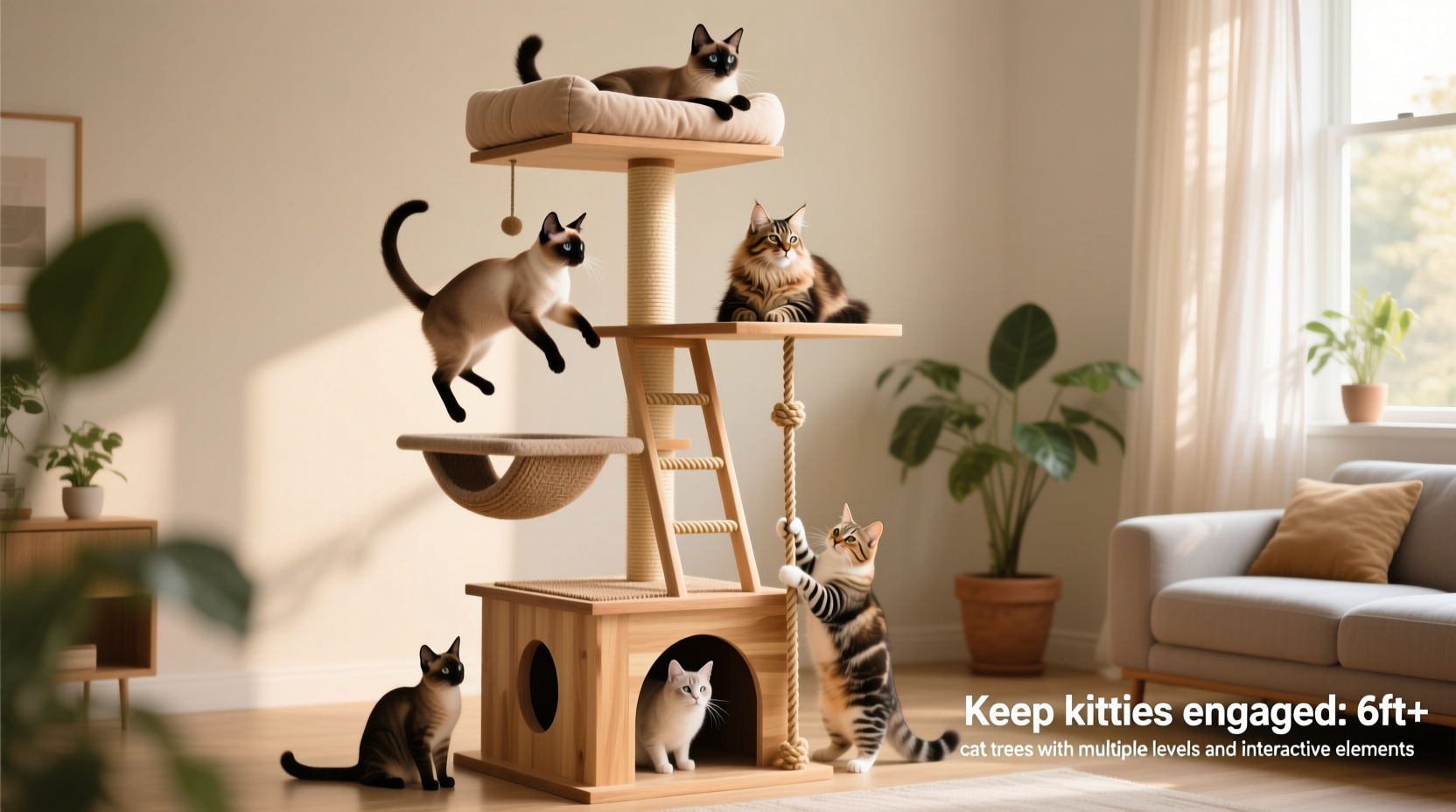
Climbing serves multiple purposes in a cat’s daily life. From a behavioral standpoint, elevated spaces provide security. Cats feel vulnerable when grounded, especially in homes with other pets or frequent foot traffic. An elevated perch allows them to observe without being approached, reducing stress.
Physically, climbing strengthens muscles, improves balance, and supports joint health. Vertical movement also mimics hunting behaviors—stalking from above, pouncing from height—which keeps cats mentally sharp. Without opportunities for vertical exploration, indoor cats often become sedentary, leading to weight gain and boredom-related behaviors like overgrooming or aggression.
The height of a cat tree directly influences how effectively it meets these needs. A study published in *Applied Animal Behaviour Science* found that cats consistently preferred platforms higher than 5 feet when given a choice, especially in multi-cat households where social hierarchy plays a role. Higher perches act as “neutral zones” where lower-ranking cats can retreat without confrontation.
“Cats are vertical-oriented animals. Their sense of safety and control is tied to elevation. A cat tree should allow them to rise above floor-level chaos.” — Dr. Sarah Ellis, Feline Behavior Specialist, University of Lincoln
Finding the Ideal Cat Tree Height by Cat Type
Not every cat has the same mobility or preference. Age, breed, and personality all influence what height will be both accessible and appealing. Below is a breakdown by common categories:
| Cat Type | Recommended Height Range | Rationale |
|---|---|---|
| Kittens (3–12 months) | 3–5 feet | High energy and agility; need safe climbing space to develop coordination. |
| Adult Cats (1–7 years) | 5–7 feet | Peak physical ability; benefit from multi-level structures that challenge them. |
| Senior Cats (8+ years) | 3–4 feet with low-step access | Arthritis or joint pain may limit jumping; easier access prevents injury. |
| Large Breeds (Maine Coon, Norwegian Forest Cat) | 6–7+ feet | Naturally strong climbers; need sturdier, taller structures to support weight. |
| Small or Flat-Faced Breeds (Persian, Scottish Fold) | 3–5 feet with wide platforms | Less inclined to jump high; prefer lounging at moderate heights. |
While these ranges serve as guidelines, individual preferences vary. Some cats may ignore a 6-foot tower if the steps are too narrow or the top perch feels unstable. Others may scale an 8-foot structure daily despite being seniors—provided the design supports their confidence.
Structural Design: More Than Just Height
Height alone doesn’t guarantee engagement. A poorly designed tall cat tree can be intimidating or unsafe. The following structural elements determine whether a cat will return to the tree again and again:
- Step Graduation: Platforms should increase in height gradually. Sudden jumps between levels discourage use, especially in older or cautious cats.
- Base Stability: The wider the base relative to height, the more stable the unit. A tree over 5 feet tall should have a footprint of at least 20 x 20 inches.
- Platform Size: Perches should be large enough for the cat to turn around and lie down comfortably. Minimum size: 12 x 12 inches for small cats, 16 x 16 for larger breeds.
- Material Texture: Sisal-wrapped posts encourage scratching and climbing. Soft plush on platforms invites resting.
- Multi-Functionality: Include hideaways, dangling toys, and hammocks to increase long-term interest.
A 2022 consumer survey by PetTech Insights revealed that 68% of cat owners replaced their first cat tree within six months due to disuse—most often because the design didn’t match their cat’s habits. The most successful models combined moderate height (5–6 feet) with varied activity zones and secure footing.
Real Example: How One Household Transformed Cat Behavior
The Rivera family adopted two rescue cats: Luna, a 3-year-old tabby, and Milo, a 10-year-old domestic shorthair. Initially, they purchased a budget 4-foot cat tree. Milo used the bottom condo, but Luna ignored it entirely—instead, she climbed bookshelves and curtains, causing damage.
After consulting a feline behaviorist, they invested in a 6.5-foot modular tree with a broad base, sisal poles, and staggered platforms. They placed it near a window for bird-watching. Within three days, Luna began using the upper levels regularly. Over the next month, destructive climbing dropped by 90%, and both cats showed increased playfulness and reduced tension.
The turning point wasn’t just height—it was the combination of height, visibility, and stability. Luna could climb high enough to feel dominant, while Milo accessed mid-level lounges without strain. The tree became a shared territory rather than a contested one.
Step-by-Step Guide to Choosing the Right Cat Tree
Follow this sequence to ensure you select a cat tree that matches your cat’s needs and your home environment:
- Assess Your Cat’s Mobility: Can they jump onto your couch or bed easily? If yes, they’re likely capable of using a 5–7 foot tree. If they struggle, prioritize lower height with ramps or adjacent furniture for stepping up.
- Measure Your Space: Allow at least 6 inches of clearance from walls and ceilings. Ensure the room door can open fully without hitting the tree.
- Determine Activity Goals: Are you aiming to reduce scratching on furniture? Encourage exercise? Provide a safe retreat? Match features accordingly (e.g., multiple scratching posts for destructive scratchers).
- Check Weight Capacity: Especially important for large breeds. Look for trees rated for at least 30 lbs per platform if housing multiple cats.
- Assemble and Test Stability: Once built, gently shake the tree at the top. Excessive wobbling means it’s unsafe. Anchor it to the wall using included straps if available.
- Introduce Gradually: Rub the tree with catnip, place treats on lower levels, or dangle toys to draw interest. Never force interaction.
- Monitor Usage for Two Weeks: Track which levels are used most. If the top is ignored, consider adding a cozy blanket or moving it closer to a window.
Common Mistakes to Avoid
Even well-intentioned owners make errors when selecting cat trees. These pitfalls reduce engagement and can lead to wasted money or even injury:
- Choosing Style Over Stability: Sleek, narrow designs may look good in a modern living room but tip easily when climbed.
- Ignoring Assembly Quality: Poorly secured joints or weak glue can cause collapse. Always follow assembly instructions precisely.
- Placing in High-Traffic or Dark Corners: Cats avoid areas with constant foot traffic or poor lighting. Optimal spots are near windows or quiet corners with natural light.
- Buying Too Small “For Now”: If your cat is young or energetic, a small tree will quickly become obsolete. Invest in scalability or modular options.
- Overlooking Multi-Cat Dynamics: In homes with more than one cat, single-tower trees create competition. Consider L-shaped or dual-pole designs.
Frequently Asked Questions
How tall should a cat tree be for a single adult cat?
For most healthy adult cats, a height of 5 to 6 feet is ideal. This allows for multiple levels, a high lookout point, and sufficient scratching height. Ensure the base is wide enough to prevent tipping during vigorous play.
Can a cat tree be too tall?
Yes—if it compromises safety or usability. Trees over 7 feet must be exceptionally stable and ideally anchored to the wall. Very tall trees with few intermediate platforms may intimidate less confident climbers, even if they’re physically capable.
Do cats really use the top of tall cat trees?
Many do, especially if the top platform offers a panoramic view. However, usage depends on trust in the structure. A cat may avoid the highest level if the tree wobbles or the perch feels exposed. Adding a raised edge or soft cushion can increase comfort and use.
Final Checklist Before Buying
Use this checklist to evaluate any cat tree before purchase:
- ✅ Height matches cat’s age, breed, and mobility
- ✅ Base width is at least 1/3 of total height
- ✅ Weight capacity exceeds your cat’s weight by 10+ lbs
- ✅ Includes multiple activity types (scratching, lounging, hiding)
- ✅ Made with durable materials (solid wood base, tightly wound sisal)
- ✅ Assembly includes wall anchor for safety
- ✅ Fits in intended space with room to move around
- ✅ Easy to clean and maintain (removable covers, stain-resistant fabric)
Conclusion: Build High, Build Smart
The right cat tree does more than occupy a corner—it transforms your home into a dynamic, enriching environment for your cat. Height is a critical component, but it must be balanced with stability, accessibility, and engagement. Whether you live in a studio apartment or a spacious house, there’s a cat tree configuration that aligns with your cat’s instincts and lifestyle.
Don’t settle for generic recommendations. Observe your cat, assess your space, and invest in a structure that grows with their needs. A well-chosen cat tree isn’t a piece of furniture—it’s a cornerstone of feline well-being.




 浙公网安备
33010002000092号
浙公网安备
33010002000092号 浙B2-20120091-4
Comments
No comments yet. Why don't you start the discussion?