
In classrooms around the world, students return home each day burdened with stacks of assignments meant to reinforce learning. Yet growing evidence suggests that mandatory homework may do more harm than good. While the intention behind homework is often sound—promoting practice, responsibility, and academic rigor—the reality for many students includes stress, sleep deprivation, and diminishing returns on learning. This article examines the key arguments against requiring homework, presents real-world examples of successful reform, and offers practical alternatives that prioritize engagement, equity, and genuine understanding.
The Case Against Mandatory Homework
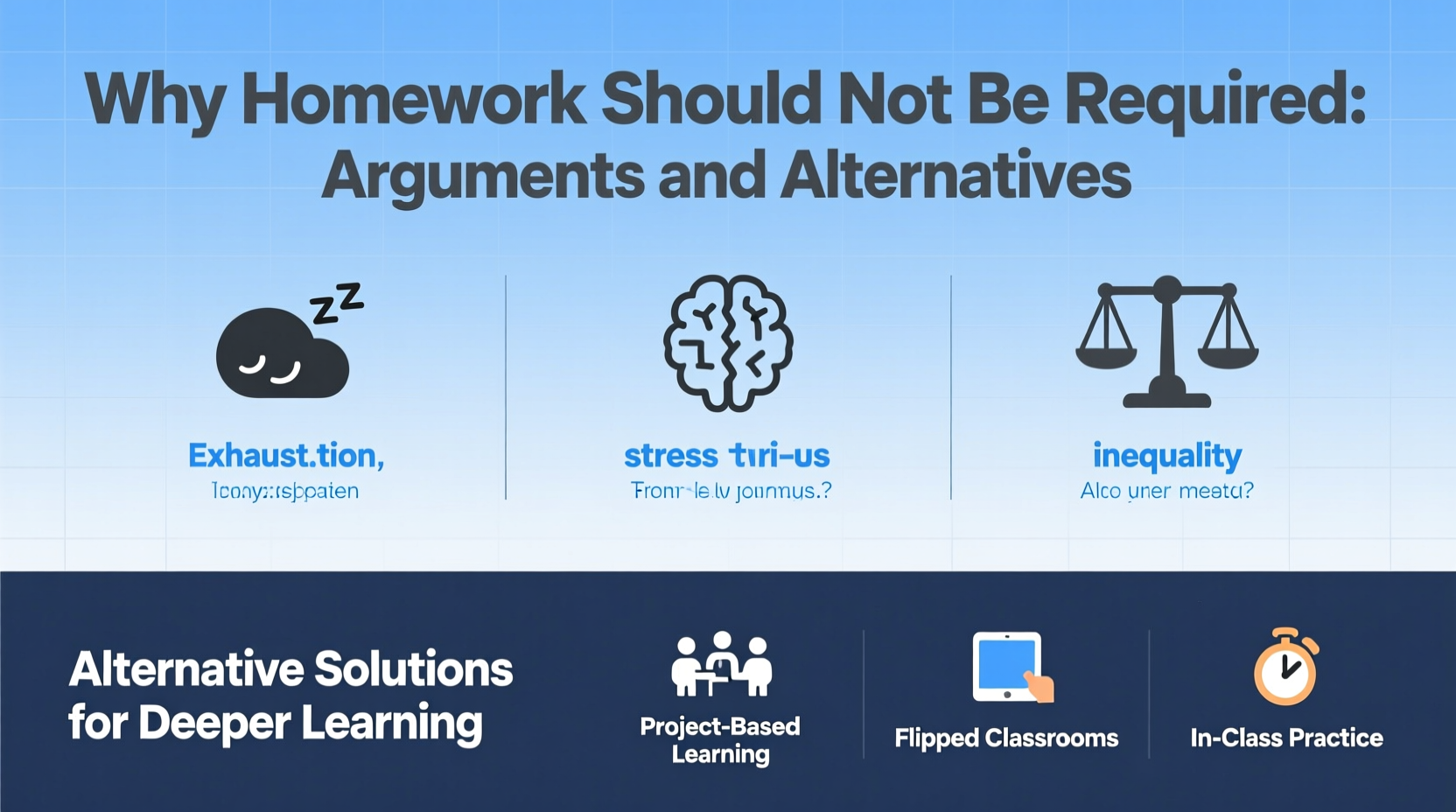
Homework has long been a staple of education, but its effectiveness is increasingly questioned by educators, psychologists, and parents. One major concern is the disproportionate impact on student well-being. Studies show that high school students in the U.S. average over three hours of homework per night, far exceeding the recommended 10 minutes per grade level suggested by educational researcher Harris Cooper.
This overload contributes to chronic stress, anxiety, and disrupted sleep patterns. A Stanford University study found that 56% of students considered homework a primary source of stress, with many reporting physical symptoms such as headaches and exhaustion. When academic work extends deep into the evening, it encroaches on time needed for rest, family, extracurriculars, and unstructured play—all essential components of healthy development.
“Excessive homework not only undermines mental health but also erodes students’ intrinsic motivation to learn.” — Dr. Denise Pope, Senior Lecturer at Stanford Graduate School of Education
Educational Inequity and Access Barriers
Mandatory homework assumes equal access to resources—a flawed assumption in diverse communities. Not all students have quiet study spaces, reliable internet, or parental support. For those balancing part-time jobs or caregiving responsibilities, completing nightly assignments becomes an added hardship rather than an academic aid.
This creates a hidden curriculum of privilege: students from affluent backgrounds are more likely to complete homework successfully, while others fall behind—not due to ability, but circumstance. By making homework optional or eliminating it altogether, schools can begin to level the playing field and assess learning through equitable means.
Diminishing Returns on Learning
Research consistently shows that the academic benefits of homework are minimal in elementary school and only modest in middle and high school. While some practice can reinforce skills, there’s a threshold beyond which additional work yields no measurable gains. The National Education Association (NEA) and the PTA both endorse the “10-minute rule,” advocating for just 10 minutes of homework per grade level per night (e.g., 30 minutes for third grade).
Yet many districts exceed this guideline, leading to burnout without improved outcomes. A meta-analysis published in the Journal of Educational Psychology concluded that while moderate homework had a positive effect on high school achievement, the correlation was weak in younger grades and nonexistent when volume increased.
Homework vs. Learning Outcomes: A Comparative Overview
| Grade Level | Typical Homework Load | Academic Benefit | Common Side Effects |
|---|---|---|---|
| Elementary (K–5) | 30–60+ minutes | Negligible to low | Stress, disengagement |
| Middle School (6–8) | 60–90 minutes | Moderate | Sleep loss, anxiety |
| High School (9–12) | 2–3+ hours | Modest (diminishes after 2 hours) | Burnout, reduced well-being |
Real-World Example: A School That Eliminated Homework
In 2017, the public elementary schools in Marion, Massachusetts made headlines when they abolished traditional homework. Instead, students were encouraged to read daily, engage in family conversations, or pursue hobbies. Teachers reported higher engagement, fewer behavioral issues, and improved classroom participation.
Standardized test scores remained stable, and parent satisfaction rose significantly. Educators noted that students arrived better rested and more focused. “We realized homework wasn’t helping—it was becoming a barrier,” said Principal Jill Burke. “Removing it allowed us to refocus on meaningful learning during school hours.”
This case illustrates that eliminating homework does not mean lowering expectations. It means rethinking how and when learning happens.
Effective Alternatives to Traditional Homework
Replacing mandatory homework doesn’t mean abandoning reinforcement or practice. It means adopting strategies that are more effective, inclusive, and humane. Here are several research-backed alternatives:
- In-Class Practice and Application: Use class time for guided exercises, peer collaboration, and formative assessments. Immediate teacher feedback improves understanding more than isolated nighttime corrections.
- Project-Based Learning: Assign interdisciplinary projects completed during school hours or collaboratively in flexible time blocks. These promote critical thinking and real-world application without penalizing home environments.
- Reading for Pleasure: Encourage voluntary reading tailored to student interests. Studies show that self-directed reading builds vocabulary and comprehension more effectively than assigned worksheets.
- Family Engagement Activities: Suggest discussion prompts or inquiry-based tasks that involve caregivers without demanding academic expertise (e.g., “Ask a family member about their first job” or “Measure ingredients while cooking together”).
- Flipped Classroom Models: Provide video lessons or readings for students to explore at their own pace, reserving class time for active problem-solving and deeper exploration.
Implementation Checklist: Transitioning Away from Homework
- Conduct a school-wide audit of current homework practices and student feedback
- Train teachers in alternative assessment and in-class differentiation strategies
- Communicate changes clearly to parents with research and goals
- Introduce pilot programs in select grades or subjects
- Monitor student well-being, engagement, and academic performance over time
- Adjust based on data and stakeholder input
Frequently Asked Questions
Isn’t homework necessary to build discipline and responsibility?
While responsibility is important, it can be taught through classroom routines, project management, and consistent expectations—without relying on after-hours work. True responsibility includes knowing when to rest and how to manage time holistically, not just completing tasks under pressure.
What about preparing students for college, where homework is expected?
College readiness involves critical thinking, self-direction, and research skills—not the ability to endure excessive nightly assignments. High schools can simulate college-level expectations through structured independent projects and time-management coaching, rather than mimicking volume.
How do teachers assess learning without homework?
Formative assessments—exit tickets, quick writes, peer reviews, and in-class quizzes—provide more accurate, timely insights into student understanding than graded homework, which may reflect parental help or stress-induced errors.
A Path Forward: Rethinking Learning Beyond the Bell
The debate over homework isn’t about lowering standards—it’s about aligning practices with evidence, equity, and human needs. When schools eliminate mandatory homework, they create space for deeper engagement, reduce stress, and acknowledge that learning doesn’t only happen through assigned tasks after school.
Education should foster curiosity, not compliance. By replacing outdated homework mandates with thoughtful, inclusive alternatives, schools can honor students’ time, energy, and individual circumstances. The goal isn’t to make school easier, but to make learning more meaningful.




 浙公网安备
33010002000092号
浙公网安备
33010002000092号 浙B2-20120091-4
Comments
No comments yet. Why don't you start the discussion?