
Dog owners across the country have increasingly turned to cannabidiol (CBD) as a natural remedy for their pets’ anxiety—especially during high-stress events like thunderstorms. With fireworks season, stormy weather, and loud urban environments triggering panic in even the most well-adjusted dogs, many pet parents are desperate for solutions that don’t involve sedatives or prescription medications. But does CBD actually help calm anxious dogs when the skies rumble, or is its perceived benefit little more than a placebo effect driven by hopeful owners?
The answer isn’t simple. While scientific research on CBD for dogs is still emerging, anecdotal evidence is abundant—and often compelling. Understanding whether CBD works requires unpacking the biology of canine anxiety, the mechanics of how CBD interacts with the nervous system, and what current studies do—and don’t—tell us.
How Canine Anxiety Manifests During Thunderstorms
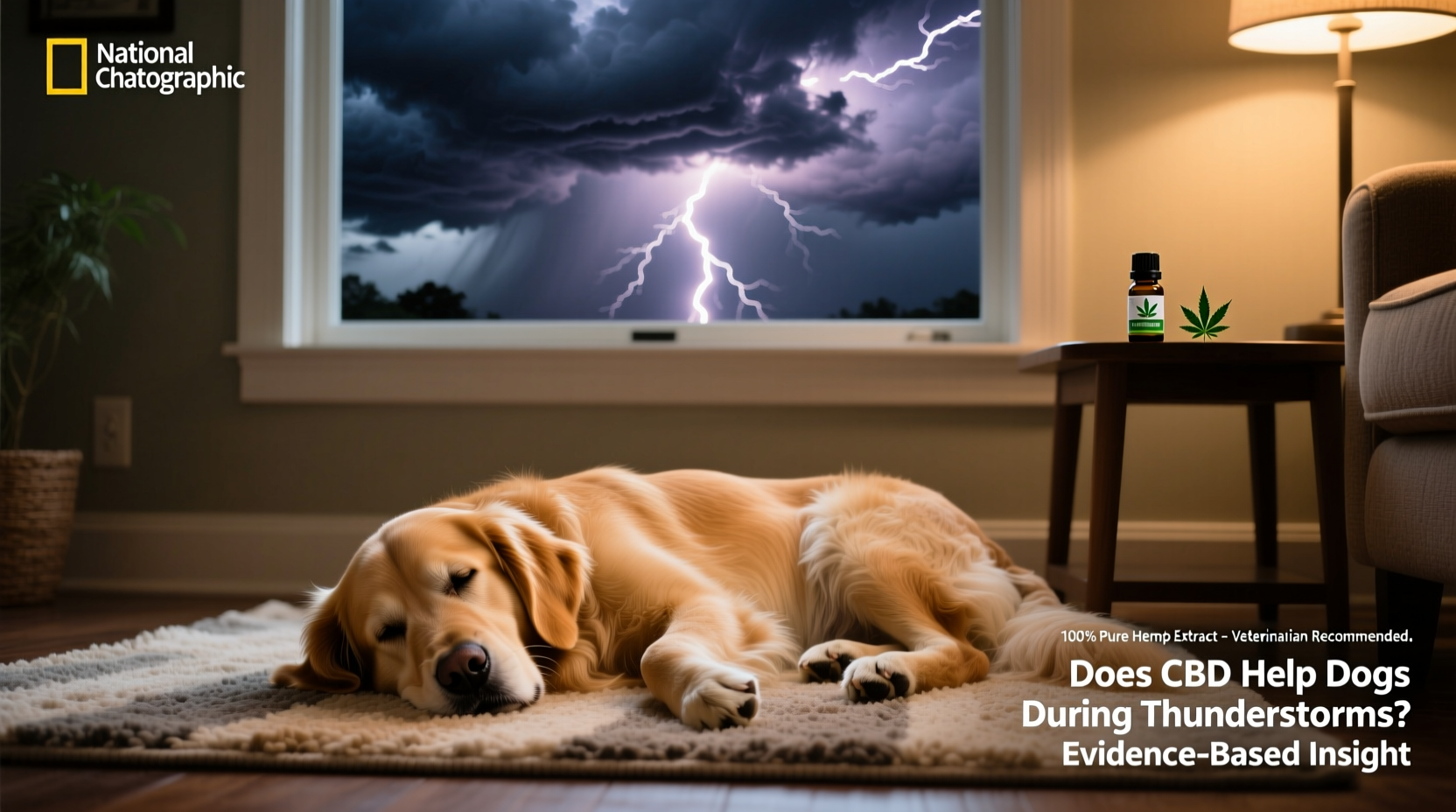
Thunderstorm phobia is one of the most common forms of noise aversion in dogs. Unlike general anxiety, which may be low-grade but persistent, storm-related fear tends to erupt suddenly and intensely. Signs include:
- Panting and pacing
- Trembling or shaking
- Whining, barking, or howling
- Hiding under furniture or attempting escape
- Destructive behavior (chewing walls, scratching doors)
- Refusal to eat or drink
These reactions stem from a dog’s acute hearing—capable of detecting distant rumbles and changes in barometric pressure—and heightened sensitivity to environmental shifts. For some dogs, the anxiety begins hours before the storm arrives. The resulting stress floods the body with cortisol and adrenaline, making it nearly impossible for them to self-soothe without intervention.
The Science Behind CBD and the Canine Endocannabinoid System
CBD, or cannabidiol, is a non-psychoactive compound derived from hemp plants. Unlike THC, it doesn’t produce a “high.” Instead, it interacts with the endocannabinoid system (ECS), a complex network of receptors found throughout the bodies of mammals—including dogs.
The ECS plays a key role in regulating mood, sleep, pain perception, and stress response. Two primary receptors—CB1 and CB2—are located in the brain and immune system, respectively. CBD doesn’t bind directly to these receptors but influences them indirectly, promoting balance (homeostasis) within the body.
In dogs, this modulation may help reduce hyperarousal and dampen overactive fear responses. A 2019 study published in *Frontiers in Veterinary Science* found that dogs given CBD oil showed significant reductions in anxiety-related behaviors during simulated noise exposure, compared to a placebo group. While small in scale, the double-blind, randomized trial provided early clinical support for CBD’s anxiolytic effects.
“CBD appears to modulate serotonin signaling in ways similar to SSRIs, but with a faster onset and fewer side effects in many cases.” — Dr. Jessica Bell, DVM, Veterinary Neurologist and Integrative Medicine Specialist
Placebo Effect: Are Owners Projecting Calm Onto Their Dogs?
One major criticism of CBD use in pets is the potential for observer bias. Since dogs can’t verbally report how they feel, owners must interpret subtle behavioral cues. If a pet parent gives CBD and expects improvement, they may unconsciously perceive reduced anxiety—even if no physiological change has occurred.
This phenomenon is well-documented in human medicine and extends to veterinary care. In fact, a 2022 review in *Animals* journal noted that owner-reported outcomes in pet CBD trials were consistently more positive than objective behavioral assessments conducted by blinded researchers.
However, dismissing all benefits as placebo overlooks measurable outcomes. In controlled studies, physiological markers such as heart rate variability, cortisol levels, and vocalization frequency have shown improvement in CBD-treated dogs during stress-inducing stimuli. These metrics are harder to influence through perception alone.
Still, expectations matter. A dog whose owner remains calm and confident during a storm is more likely to settle—even without CBD. The combination of a supportive environment and pharmacological support may yield the best results.
What the Research Says: Efficacy in Thunderstorm Anxiety
While large-scale, long-term studies on CBD for thunderstorm anxiety in dogs are limited, several promising findings point toward real therapeutic value:
- A 2020 pilot study at Colorado State University observed a 72% reduction in vocalization and destructive behavior in dogs given 2 mg/kg of CBD prior to noise exposure.
- A survey of over 2,000 dog owners by the American Kennel Club found that 78% reported moderate to significant improvement in their dog’s anxiety after using CBD products.
- Veterinary dermatologists at UC Davis noted improved sleep quality and reduced nighttime awakenings in noise-phobic dogs using full-spectrum hemp extract.
It's important to note that not all CBD products are created equal. Variability in formulation, dosage accuracy, and bioavailability affects outcomes. Many commercial pet CBD oils contain inconsistent concentrations or contaminants, undermining both safety and efficacy.
Do’s and Don’ts When Using CBD for Storm Anxiety
| Do | Don't |
|---|---|
| Choose third-party tested, broad-spectrum CBD oils labeled for pets | Use human CBD tinctures with added flavorings like xylitol (toxic to dogs) |
| Start with a low dose (0.1–0.2 mg per pound) and increase gradually | Administer CBD only during the storm—begin dosing 30–60 minutes beforehand |
| Combine CBD with behavioral training and environmental management | Rely solely on CBD without addressing underlying fear conditioning |
| Keep a behavior log to track response over multiple events | Assume one product or dose works forever—needs may change over time |
Real-World Example: Max, a 5-Year-Old Border Collie Mix
Max had a severe thunderstorm phobia since puppyhood. At the first sign of dark clouds, he would pace, whine, and eventually bolt into the bathroom to hide behind the toilet. His owner, Sarah, tried white noise machines, Thundershirts, and even prescription anti-anxiety medication, which left Max lethargic and disoriented.
After consulting her veterinarian, she decided to try a vet-recommended CBD oil. She began administering 4 mg of broad-spectrum CBD (0.15 mg/lb) about 45 minutes before forecasted storms. The first few attempts showed mild improvement—Max still trembled but didn’t hide. By the third storm, he lay quietly beside her on the couch, ears back but breathing steadily.
Sarah kept a detailed journal tracking dosage, timing, weather conditions, and Max’s behaviors. Over six months, she noticed a consistent pattern: when she administered CBD proactively, Max remained significantly calmer. Skipping doses resulted in regression. Her vet suggested combining CBD with desensitization audio tracks, which further improved resilience.
Was it all placebo? Possibly—but Max’s lowered heart rate (measured via a pet wearable) and reduced cortisol in post-storm saliva tests suggest a physiological basis for the change.
Step-by-Step Guide to Using CBD for Thunderstorm Anxiety
For pet owners considering CBD, a structured approach increases the likelihood of success:
- Consult Your Veterinarian: Rule out medical causes of anxiety and discuss potential drug interactions (e.g., with sedatives or seizure medications).
- Select a High-Quality Product: Choose a pet-specific CBD oil with a certificate of analysis (COA) from an independent lab verifying potency and purity.
- Start Low, Go Slow: Begin with 0.1 mg of CBD per pound of body weight. Monitor for side effects like drowsiness or gastrointestinal upset.
- Time Administration Correctly: Give CBD 30–60 minutes before expected stressors. For unpredictable storms, keep it on hand for rapid dosing.
- Track Results Objectively: Use a checklist or app to record behaviors (panting, hiding, vocalizing) before, during, and after storms.
- Adjust and Combine: If minimal improvement occurs after 2–3 events, increase dose incrementally. Pair CBD with sound therapy, safe spaces, or counter-conditioning exercises.
- Reevaluate Monthly: Assess whether continued use is necessary or if behavioral progress allows for reduced reliance.
Frequently Asked Questions
Is CBD safe for dogs?
Yes, when used appropriately. Most adverse effects are mild and include drowsiness, dry mouth, or temporary drops in blood pressure. Avoid products with THC (over 0.3%) as it can be toxic to dogs. Always follow dosing guidelines and consult your vet, especially if your dog has liver or kidney disease.
How long does it take for CBD to work in dogs?
When administered orally (as oil or treat), effects typically begin within 30–45 minutes and last 4–8 hours. Onset may vary based on metabolism, formulation (isolate vs. full-spectrum), and whether it’s given with food.
Can I give my dog human CBD oil?
Not recommended. Human formulations may contain additives, essential oils, or sweeteners like xylitol that are harmful to dogs. Always use products specifically formulated and dosed for pets.
Final Thoughts: Beyond Placebo, Toward Practical Relief
The question isn’t whether CBD works for every dog—it’s whether it can be a useful tool within a broader strategy for managing canine anxiety. For some dogs, CBD makes the difference between panic and composure. For others, it offers modest support alongside training and environmental modifications.
Calling it a “placebo” risks undervaluing the real neurochemical pathways it influences. Yet, expecting miracles without behavioral intervention sets owners and pets up for disappointment. The most effective outcomes arise when CBD is used thoughtfully: with proper dosing, quality sourcing, and realistic expectations.
As veterinary science continues to explore cannabinoid therapies, pet owners today have access to options that simply weren’t available a decade ago. Used responsibly, CBD may not eliminate thunderstorm anxiety—but it can help make storms more bearable, one calm breath at a time.




 浙公网安备
33010002000092号
浙公网安备
33010002000092号 浙B2-20120091-4
Comments
No comments yet. Why don't you start the discussion?