
If you’ve ever applied a new face cream only to feel an immediate sting or burning sensation around your eyes, you’re not alone. This uncomfortable reaction affects countless people—even those who consider their skin “normal.” While a slight tingle might be dismissed as a sign of “active ingredients working,” persistent or sharp eye irritation is not normal and often signals that something in the product doesn’t belong near your delicate facial skin. Understanding why this happens and how to avoid it can transform your skincare routine from a source of discomfort to one of confidence and comfort.
The Science Behind Eye Irritation from Face Creams
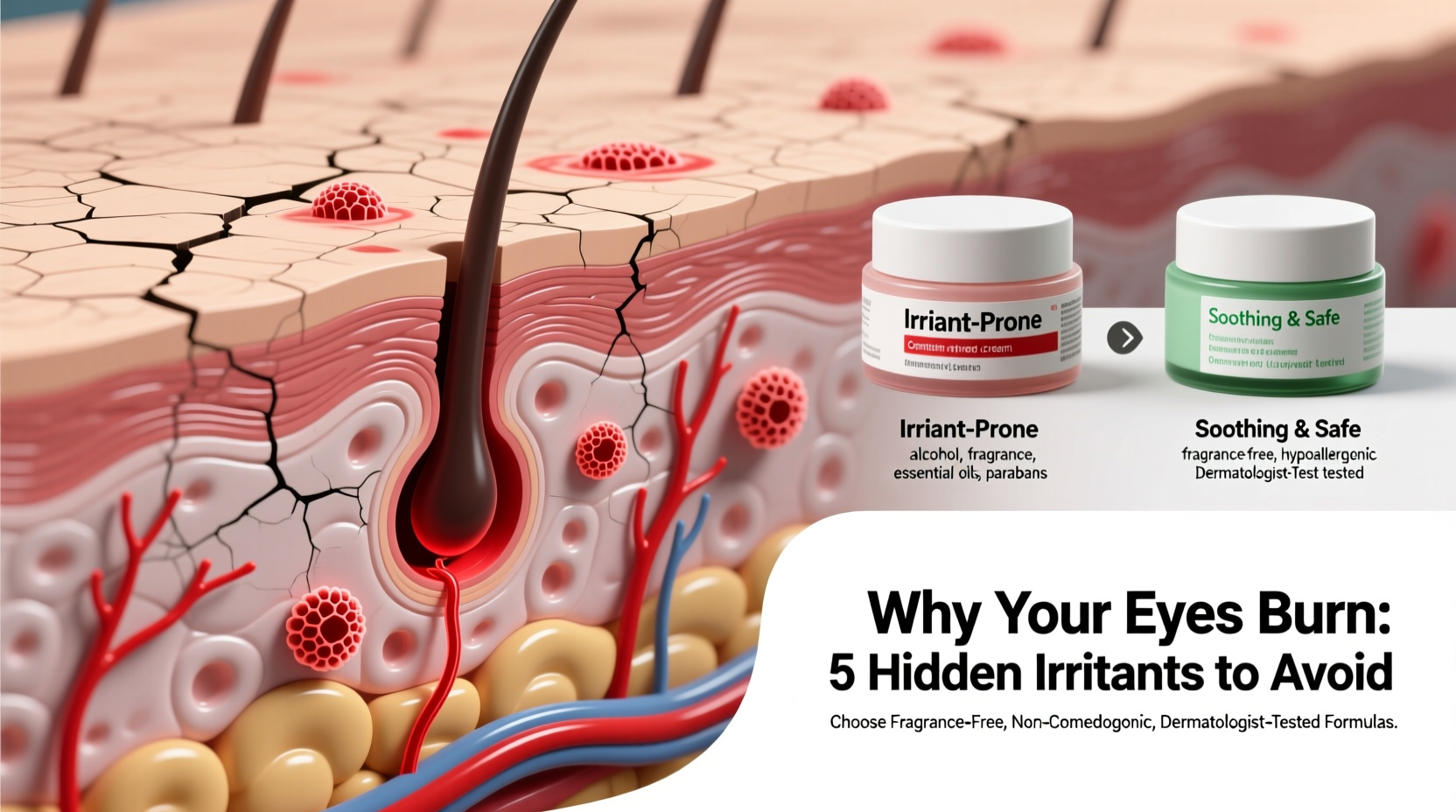
The skin around the eyes is among the thinnest on the body—up to ten times thinner than facial skin elsewhere. This area lacks sufficient sebaceous (oil) glands, making it more vulnerable to moisture loss and environmental aggressors. When you apply a face cream too close to the eyes, active ingredients can migrate into this fragile zone, triggering inflammation, stinging, or even chemical irritation.
Certain ingredients are more likely to cause these reactions. For example, alpha-hydroxy acids (AHAs) like glycolic and lactic acid increase cell turnover but can disrupt the skin barrier if used improperly. Similarly, beta-hydroxy acid (salicylic acid), commonly found in acne treatments, is oil-soluble and penetrates deeply, increasing the risk of irritation when near the eyes.
Fragrances—both synthetic and natural—are another major culprit. The American Contact Dermatitis Society named fragrance mix one of the top allergens in patch testing. Essential oils like citrus, peppermint, and lavender, while marketed as “natural,” contain volatile compounds that can trigger neurosensory responses, including burning and tearing.
“Even products labeled ‘for face’ aren’t always safe near the eyes. The periocular region has unique physiology and requires special consideration.” — Dr. Lena Patel, Board-Certified Dermatologist
Common Offending Ingredients to Watch For
Not all skincare ingredients are created equal. Some are essential for efficacy; others pose unnecessary risks, especially near the eyes. Below is a breakdown of frequent irritants:
- Alcohol (Denatured or SD Alcohol): Often used as a solvent or texture enhancer, it strips natural oils and compromises the moisture barrier.
- Fragrance/Parfum: A catch-all term masking dozens of undisclosed chemicals, many of which are sensitizers.
- Essential Oils: Despite being plant-derived, oils like eucalyptus, lemon, and rosemary can provoke stinging, especially on compromised skin.
- Retinoids (Retinol, Retinaldehyde): Powerful anti-aging agents, but highly irritating when applied too close to the eyes.
- Sulfates (SLS/SLES): Harsh cleansers that may linger in formulations and contribute to dryness and sensitivity.
- Chemical Sunscreens (Oxybenzone, Avobenzone): Known to migrate into the eye area and cause stinging, particularly in mineral-sensitive individuals.
How to Choose Safer Face Creams for Sensitive Skin
Selecting a face cream that won’t burn your eyes involves more than just avoiding known irritants—it’s about understanding formulation philosophy and ingredient synergy. Here’s how to make smarter choices:
Read Labels Like a Pro
Start by examining the ingredient list (INCI). Ingredients are listed in descending order by concentration. If alcohol, fragrance, or essential oils appear in the first five ingredients, the product likely contains high levels of potential irritants.
Look for terms like “fragrance-free” rather than “unscented.” The latter may still contain masking fragrances. Also, prefer products labeled “ophthalmologist-tested” or “safe for use around eyes,” especially if you wear contact lenses or have dry eye syndrome.
Prioritize Barrier-Supporting Ingredients
Instead of chasing trendy actives, focus on formulations rich in ceramides, squalane, niacinamide, and hyaluronic acid. These support the skin’s natural lipid barrier, reducing trans-epidermal water loss and improving resilience against irritants.
Niacinamide, in concentrations of 2–5%, has been shown to reduce inflammation and improve micro-barrier function without the stinging associated with stronger acids or retinoids.
Opt for Minimalist Formulas
Products with fewer ingredients reduce the risk of adverse reactions. Brands focusing on “clean,” minimalist skincare—such as Vanicream, CeraVe, or La Roche-Posay Toleriane—are formulated specifically for reactive skin types.
| Ingredient | Risk Level Near Eyes | Safer Alternatives |
|---|---|---|
| Glycolic Acid | High | Mandelic Acid (gentler AHA) |
| Retinol | High | Bakuchiol (plant-based alternative) |
| Fragrance/Parfum | Very High | Fragrance-free formulas |
| Denatured Alcohol | High | Hydrating alcohols (e.g., cetyl, stearyl) |
| Oxybenzone | High | Zinc Oxide (non-nano, mineral-based) |
Step-by-Step Guide to Testing New Face Creams Safely
Before applying any new product to your entire face, follow this methodical approach to minimize risk of eye irritation:
- Check the ingredient list: Eliminate products containing known irritants, especially if you have sensitive or reactive skin.
- Perform a patch test: Apply a pea-sized amount behind your ear or on the inner forearm. Wait 24–48 hours. If redness, itching, or swelling occurs, do not use.
- Test near the jawline: After passing the patch test, apply a small amount to the lower cheek, avoiding the eye area entirely.
- Wait 72 hours: Monitor for delayed reactions such as dryness, flaking, or low-grade stinging.
- Introduce slowly: Use the product every other day for the first week, then daily if tolerated.
- Apply with care: Use clean fingertips and avoid dragging product upward toward the eyes. Consider using separate moisturizers for face and eye area.
Real-Life Example: Sarah’s Reaction to a “Gentle” Brightening Cream
Sarah, a 34-year-old teacher with combination skin, purchased a popular brightening face cream advertised as “dermatologist-recommended” and “suitable for sensitive skin.” Within minutes of application, she experienced intense burning around both eyes, followed by redness and puffiness.
She stopped using the product immediately and consulted a dermatologist. Upon reviewing the label, they identified two key offenders: phenoxyethanol (a preservative that can sting at high concentrations) and limonene (a citrus-derived fragrance component known to oxidize and become allergenic).
Switching to a fragrance-free, ceramide-based moisturizer resolved her symptoms within days. Her experience underscores that marketing claims don’t always align with actual tolerability—especially for those with ocular sensitivity.
Expert-Recommended Checklist for Safer Skincare Choices
Use this checklist before purchasing or applying any new face cream:
- ✅ Is the product fragrance-free (not just unscented)?
- ✅ Are alcohol, sulfates, or essential oils near the top of the ingredient list?
- ✅ Does it contain proven barrier-supporting ingredients (ceramides, fatty acids, hyaluronic acid)?
- ✅ Has it been tested for ophthalmological safety?
- ✅ Is it formulated for sensitive or reactive skin types?
- ✅ Have I patch-tested it for 48 hours before full-face application?
- ✅ Am I applying it correctly—away from the eye contour zone?
Frequently Asked Questions
Can a face cream really damage my eyes?
While most reactions are temporary and limited to surface irritation, chronic exposure to harsh ingredients can compromise the tear film and contribute to conditions like contact dermatoconjunctivitis. In rare cases, especially with strong acids or alkalis, chemical injury is possible. Always rinse thoroughly with water if a product causes severe stinging.
I only feel burning when I sweat—why is that?
Sweat can act as a carrier, dissolving active ingredients and transporting them into the eye area. It also lowers skin pH temporarily, which may amplify the sensation of stinging, especially with exfoliating agents present.
Are natural or organic creams safer for the eyes?
Not necessarily. Many natural ingredients—like citrus extracts, mint oils, or witch hazel—are highly irritating to the periocular skin. “Natural” does not mean non-reactive. Focus on formulation integrity, not labeling trends.
When to See a Dermatologist
Occasional mild stinging may resolve on its own, but persistent symptoms warrant professional evaluation. Seek medical advice if you experience:
- Chronic redness or swelling around the eyes
- Burning that lasts more than a few hours post-application
- Blurred vision, excessive tearing, or light sensitivity
- Peeling, cracking, or oozing skin
A board-certified dermatologist can perform patch testing to identify specific allergens and recommend a personalized skincare regimen that avoids triggers while maintaining skin health.
Conclusion: Protect Your Vision, Comfort, and Confidence
Your face cream should nurture your skin, not punish your eyes. Burning sensations are not a badge of efficacy—they’re warning signs. By learning to decode labels, avoid common irritants, and adopt cautious application habits, you can enjoy effective skincare without compromising comfort.
Remember, the goal isn’t to eliminate all active ingredients but to use them wisely. Choose formulations designed with sensitivity in mind, prioritize barrier repair, and never assume “gentle” means safe for every area of your face.




 浙公网安备
33010002000092号
浙公网安备
33010002000092号 浙B2-20120091-4
Comments
No comments yet. Why don't you start the discussion?