
When you reach for a jar of ground cinnamon, you likely assume it’s all the same—warm, sweet, and essential in everything from apple pie to oatmeal. But not all cinnamon is created equal. The two most common types—Ceylon and Cassia—are botanically distinct, differ significantly in flavor and safety, and are often used interchangeably without awareness of their implications. Understanding the difference between Ceylon and Cassia cinnamon isn't just a matter of culinary precision; it's also a consideration for long-term health, especially if you consume cinnamon regularly. This guide breaks down their origins, taste profiles, chemical composition, culinary applications, and health considerations to help you make informed choices in the kitchen.
Definition & Overview
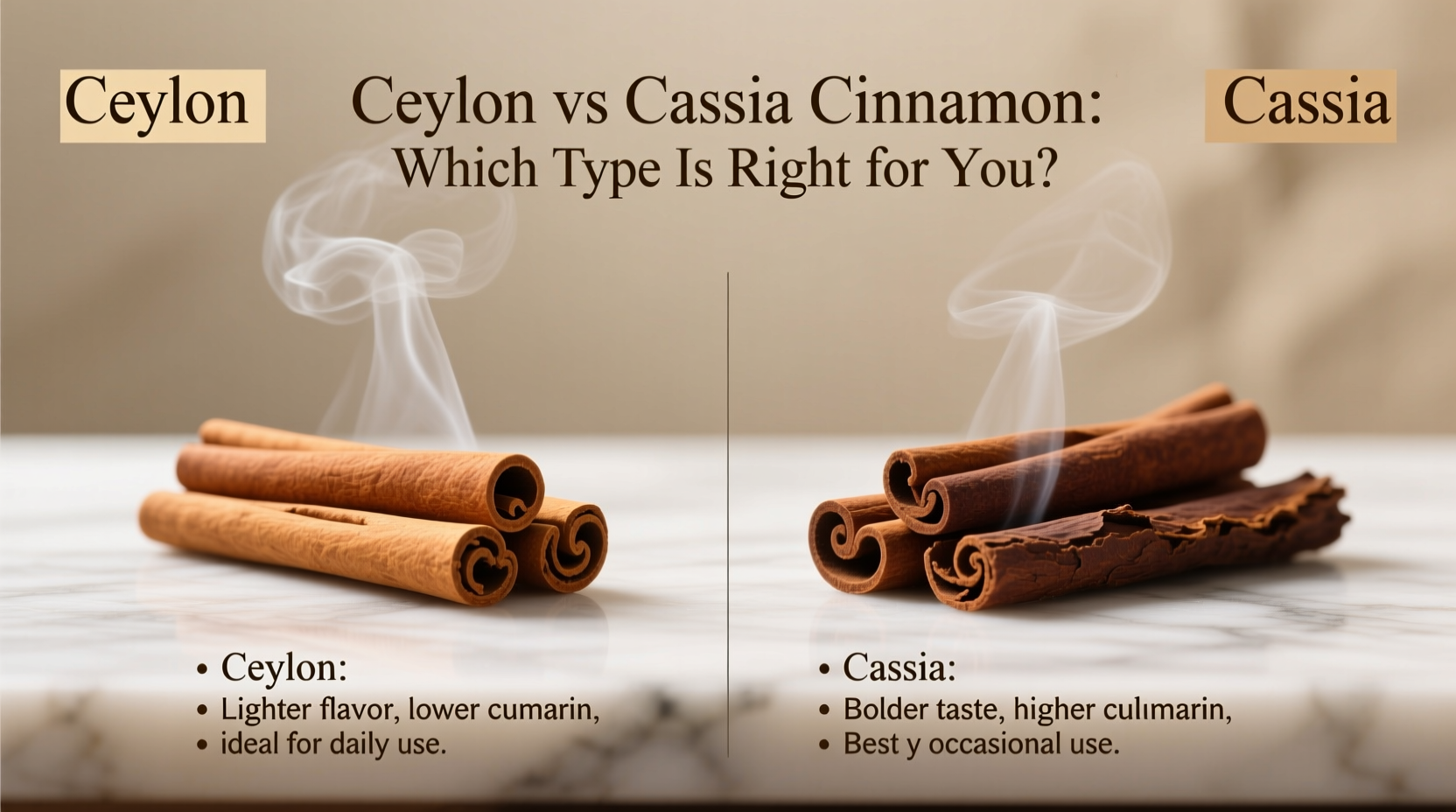
Cinnamon is a spice derived from the inner bark of trees belonging to the genus Cinnamomum. When harvested, the bark curls into quills (commonly known as “sticks”) as it dries, which can then be ground into powder. Despite its widespread use, many consumers don’t realize that the majority of cinnamon sold in supermarkets across North America and Europe is not true cinnamon—but rather a closely related, more pungent cousin.
Cassia cinnamon, primarily sourced from southern China and Indonesia, comes from the species Cinnamomum cassia. It is robust, spicy, and slightly bitter, with a deep reddish-brown color. It dominates global trade due to its lower cost and stronger aroma, making it the default “cinnamon” in most commercial products.
Ceylon cinnamon, often labeled “true cinnamon,” originates mainly from Sri Lanka (formerly Ceylon) and is made from Cinnamomum verum, meaning “true cinnamon tree.” It has a lighter tan color, a more delicate, layered flavor with citrusy and floral notes, and a crumbly texture when broken. Though prized by chefs and herbalists, it remains less common in mainstream markets.
The confusion arises because both are marketed simply as “cinnamon,” with little distinction on packaging. Yet their differences affect not only how they perform in recipes but also their safety when consumed in quantity over time.
Key Characteristics
| Characteristic | Ceylon Cinnamon | Cassia Cinnamon |
|---|---|---|
| Scientific Name | Cinnamomum verum | Cinnamomum cassia |
| Origin | Sri Lanka, India, Madagascar | China, Indonesia, Vietnam |
| Color | Pale tan to light brown | Deep reddish-brown |
| Texture | Multiple thin layers, soft, brittle | Thick, hard single layer |
| Flavor Profile | Delicate, sweet, citrusy, floral | Strong, spicy, pungent, slightly bitter |
| Aroma | Mild, nuanced, honey-like | Intense, bold, woody |
| Coumarin Content | Very low (approx. 0.004%) | High (up to 1–5% dry weight) |
| Shelf Life | 2–3 years (due to lower oil content) | 3–4 years (higher oil retention) |
| Price | Higher (often 5–10x more than Cassia) | Low to moderate |
The structural difference is immediately visible: Ceylon sticks form tight, multi-layered rolls resembling cigar tubes, while Cassia forms a thick, dense single curl that resists crumbling. These physical traits reflect their chemical divergence—particularly in coumarin, a naturally occurring compound with anticoagulant properties that can be toxic in high doses.
Practical Usage: How to Use Each Type in Cooking
The choice between Ceylon and Cassia should be guided by the dish, cooking method, and desired intensity. Both bring warmth and sweetness, but their behavior under heat and in combination with other ingredients varies significantly.
Using Ceylon Cinnamon
Ceylon shines in dishes where subtlety and balance are key. Its gentle profile makes it ideal for:
- Desserts requiring finesse: custards, rice puddings, crème brûlée, and delicate cakes where overpowering spice would disrupt harmony.
- Beverages: chai blends (when balanced with other spices), golden milk, or spiced lattes where a smooth finish is preferred.
- Fruit preparations: poached pears, baked apples, or fruit compotes where the citrus undertones enhance natural acidity.
- Confectionery and icing: dusting powdered sugar mixtures or buttercreams where a refined aroma is desired.
In savory applications, Ceylon complements Middle Eastern and Indian rice dishes like biryani, where it’s used sparingly alongside cardamom and cloves. Because it’s milder, it won’t dominate the blend.
TIP: Grind Ceylon cinnamon fresh using a dedicated spice grinder or mortar and pestle. Pre-ground versions lose aromatic complexity faster due to lower volatile oil content. Store in an airtight container away from light and heat.
Using Cassia Cinnamon
Cassia’s boldness makes it suitable for recipes that demand presence and resilience under prolonged cooking:
- Baked goods with strong flavors: gingerbread, snickerdoodles, pumpkin bread, and sticky buns benefit from Cassia’s punch.
- Spice blends: garam masala, Chinese five-spice, and curry powders rely on Cassia for depth and heat.
- Slow-cooked dishes: stews, braises, and mulled wines where the spice must withstand hours of simmering.
- Commercial food production: due to its potency and low cost, Cassia is standard in cereals, snacks, and processed foods.
Cassia holds up well in acidic environments (like tomato-based sauces or chutneys), where Ceylon might fade. However, its bitterness can intensify if overused, particularly in dairy-based dishes.
Professional Chef Insight
“In fine dining, we almost exclusively use Ceylon. It integrates seamlessly into complex flavor profiles without shouting. Cassia has its place—especially in rustic or street-food-inspired menus—but requires restraint.” —Chef Elena Torres, Executive Pastry Chef, San Francisco
Variants & Types
While Ceylon and Cassia represent the two main categories, several regional subtypes exist within each group:
Ceylon Variants
- Ala (or \"Chippings\"): Broken pieces of quills, often used in infusions and decoctions.
- Featherings: Fine inner bark shavings, highly aromatic, used in premium teas and confections.
- Quills (Grade A): Whole, tightly rolled sticks—ideal for presentation and controlled extraction in liquids.
Cassia Variants
- Indonesian (Korintje): Milder than Chinese Cassia, commonly found in U.S. supermarkets.
- Chinese (Cassia vera): Harsher, thicker bark, strongest coumarin levels.
- Saigon (Vietnamese): Highest essential oil content, extremely pungent—popular in artisanal baking.
Each variant influences shelf life, solubility, and release of flavor compounds. For example, Saigon cinnamon may require only half the amount of Ceylon in a recipe to achieve equivalent warmth.
Comparison with Similar Ingredients
Cinnamon is sometimes confused with other bark-derived spices or adulterated products. Here’s how it compares:
| Ingredient | Difference from Ceylon/Cassia | Common Misuse |
|---|---|---|
| Cassia vs. Ceylon | Same genus, different species; Cassia has higher coumarin and stronger bite. | Labeled interchangeably as “cinnamon” in stores. |
| Padang Cassia (Cinnamomum burmannii) | Even higher coumarin; duller flavor; often mixed into ground “cinnamon” blends. | Used to cut costs in mass-produced spice mixes. |
| Canella (Canella winterana) | North American bark; mild cinnamon-like scent but unrelated botanically. | Rarely sold commercially; sometimes used in herbal remedies. |
| Wood Extracts / Artificial Flavor | Synthetic cinnamaldehyde added to imitate real cinnamon. | Found in cheap candies, gum, and air fresheners. |
The takeaway: always check labels. If a product lists only “cinnamon” without specifying origin, it is almost certainly Cassia—or a blend dominated by it.
Practical Tips & FAQs
Is Cassia Cinnamon Safe?
Yes, in moderation. The European Food Safety Authority (EFSA) recommends a tolerable daily intake (TDI) of 0.1 mg of coumarin per kilogram of body weight. For a 60 kg (132 lb) adult, this equals about 6 mg per day. One teaspoon (2.6 g) of Cassia cinnamon contains roughly 7–21 mg of coumarin—exceeding safe limits with regular use. Ceylon, by contrast, contains negligible amounts.
Who Should Avoid Cassia?
- Individuals with liver conditions
- Those on blood-thinning medications (coumarin enhances anticoagulant effects)
- People consuming cinnamon daily (e.g., in smoothies, supplements, or keto diets)
How to Identify Ceylon vs. Cassia
- Look at the stick: Ceylon has multiple thin layers; Cassia is one thick, rough piece.
- Check the label: Look for “Cinnamomum verum” or “True Cinnamon.”
- Taste test: Ceylon is sweeter and less sharp; Cassia burns the tongue slightly.
- Smell: Ceylon has a softer, honeyed aroma; Cassia is aggressively woody.
Can I Substitute One for the Other?
Yes, but adjust quantities. Replace 1 tsp of Cassia with 1.5 tsp of Ceylon for similar warmth. In reverse, use half the amount of Cassia when substituting for Ceylon to avoid bitterness. In medicinal or supplement contexts, substitution is not advised due to coumarin risk.
Storage Guidelines
Store both types in airtight glass containers, away from sunlight and moisture. Ground cinnamon loses potency faster than whole sticks—use within 6 months for peak flavor. Label containers with purchase date. Freezing is unnecessary and may introduce condensation.
Best Dishes for Each Type
| Dish Type | Recommended Cinnamon | Why |
|---|---|---|
| Apple Pie | Cassia | Withstands baking; complements tart apples with bold spice. |
| Churros | Cassia | Coating sugar needs strong aroma; holds up during frying. |
| Rice Pudding | Ceylon | Prevents overpowering dairy; adds elegant background note. |
| Hot Chocolate | Ceylon | Blends smoothly; doesn’t leave bitter aftertaste. |
| Garam Masala | Cassia | Provides backbone in high-heat spice roasting. |
| Breakfast Oatmeal (daily consumption) | Ceylon | Safer for frequent use; gentler on digestion. |
Case Study: Switching from Cassia to Ceylon in a Bakery
A Portland-based artisan bakery switched from Cassia to Ceylon in their signature cardamom-cinnamon rolls after customers reported occasional stomach discomfort. After reformulating with Ceylon and increasing the blend ratio by 20%, feedback improved: patrons described the rolls as “more aromatic” and “less heavy.” Lab testing confirmed a 98% reduction in coumarin content. While ingredient costs rose 12%, customer retention increased, and repeat orders rose by 18% over six months—proving that quality substitutions can yield both health and business benefits.
Summary & Key Takeaways
Choosing between Ceylon and Cassia cinnamon involves more than taste—it’s a decision rooted in health, application, and intention. Here’s what matters most:
- Cassia is strong, affordable, and widely available, but its high coumarin content limits safe daily intake. Best for bold baked goods and spice blends.
- Ceylon is delicate, nuanced, and safer for regular consumption. Ideal for desserts, beverages, and dishes where balance is paramount.
- Always read labels. “Cinnamon” alone usually means Cassia. Seek out “Ceylon” or “Cinnamomum verum” for authenticity.
- Adjust usage based on form and recipe. Substitutions require recalibration—not just of volume, but of timing and pairing.
- Storage affects longevity. Whole sticks last longer; protect from heat and humidity.
Final Recommendation: Keep both types in your pantry. Use Cassia for weekend baking projects and robust dishes. Reserve Ceylon for daily use, delicate preparations, and anyone with health sensitivities. Your palate—and your body—will notice the difference.




 浙公网安备
33010002000092号
浙公网安备
33010002000092号 浙B2-20120091-4
Comments
No comments yet. Why don't you start the discussion?