
When you use a Chase credit card that earns rewards—like the Chase Sapphire Preferred®, Chase Freedom Unlimited®, or Ink Business Preferred®—you expect points to accumulate with each purchase. But sometimes, instead of seeing new points in your account, all you see is \"pending.\" This status can be confusing, especially if you're planning a redemption or tracking progress toward a travel goal. Understanding why points are pending and how long it typically takes for them to post is essential for maximizing your rewards experience.
Pending points are not lost—they're simply not yet finalized. Like transactions on your statement, rewards must go through a verification process before they're officially credited to your account. Knowing the mechanics behind this delay helps eliminate uncertainty and empowers you to manage your rewards more effectively.
Why Are Chase Points Pending?
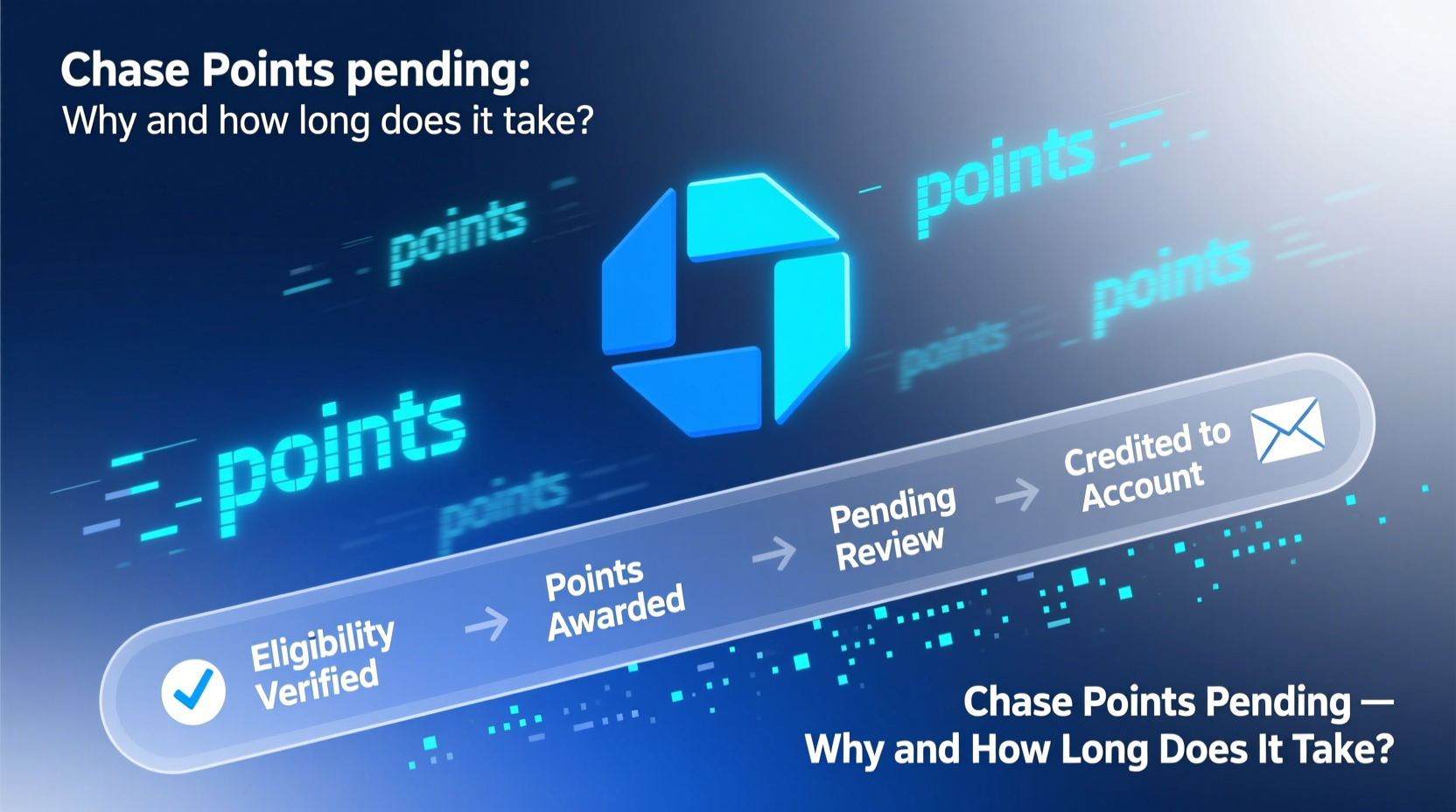
Chase displays points as \"pending\" during the interim period between when you make a purchase and when the merchant's transaction fully settles. This is part of a standard financial reconciliation process. When you swipe, tap, or input your card details online, the merchant sends an authorization request to Chase. At that moment, Chase may place a temporary hold on funds (in the case of purchases), but reward points aren't immediately awarded.
The key reason points remain pending is that Chase waits for the final transaction confirmation from the merchant. Until the charge posts to your account as a completed transaction, the system cannot confirm the exact amount spent or whether the purchase qualifies for bonus categories (e.g., 5x points on travel). Prematurely awarding points could lead to errors if a transaction is later canceled, refunded, or adjusted.
Additionally, some merchants batch their transactions, meaning they don’t send data to credit card networks daily. Others, particularly subscription services or travel providers, may take several days to finalize billing cycles. These delays ripple into the rewards posting timeline.
“Rewards systems are built to ensure accuracy over speed. Pending status protects both the issuer and the cardholder from discrepancies.” — Financial Analyst David Lin, Credit Innovation Group
How Long Do Pending Points Take to Post?
In most cases, Chase points post within 2 to 7 business days after a purchase has posted to your account. However, the total time from purchase to points availability often feels longer because it includes two phases:
- Transaction Posting Time: The time it takes for a merchant to settle the charge (typically 1–3 days).
- Rewards Processing Time: The time Chase takes to verify and award points after the charge appears on your statement (usually 1–4 days).
For example, if you make a $100 purchase on Monday using your Chase Sapphire Preferred, the transaction might not appear on your account until Wednesday. Once posted, Chase begins processing the associated 2x points. By Friday or early next week, those 200 points should appear as earned—not pending.
Some categories, like dining or travel, may involve third-party booking platforms that extend settlement times. In such cases, it’s not uncommon for points to take up to 10 days to finalize.
Common Scenarios That Delay Points
While most purchases follow the standard timeline, certain types of transactions are more likely to experience extended pending periods:
- Hotel and rental car bookings: Pre-authorization holds may show first, followed by the final charge days later upon checkout. Points are only awarded after the final amount posts.
- Subscription services: Some companies bill in arrears or use trial periods, delaying final settlement.
- Foreign transactions: International purchases may take longer to clear due to currency conversion and cross-border processing.
- Disputed charges: If you initiate a dispute, points will remain pending—or be reversed—if the transaction is under investigation.
- New accounts: During the first few billing cycles, rewards processing may be slightly delayed as systems verify eligibility.
Mini Case Study: Travel Purchase With Delayed Points
Sarah booked a hotel stay in Italy using her Chase Sapphire Reserve®. She paid $800 at check-in, and the merchant sent a pre-authorization for $850 two days prior. The $50 hold dropped off her account a week later, but the actual $800 charge didn’t post until day 10. Only then did Chase award the 5x points (4,000 total). Although Sarah expected points sooner, the delay was normal due to the merchant’s billing practices. Her patience paid off—she later used those points toward a flight redemption.
Do Chase Points Expire While Pending?
No. Pending points do not count toward expiration because they are not yet part of your active balance. However, once points post to your account, their expiration depends on your card type:
| Chase Card | Points Expiration Policy |
|---|---|
| Chase Sapphire Preferred & Reserve | No expiration as long as account is open |
| Chase Freedom, Freedom Flex, Freedom Unlimited | No expiration with active account |
| Ink Business Preferred, Ink Cash | No expiration if account remains open |
| Closed Accounts | Points typically expire 90 days after closure |
Since pending points aren’t technically “yours” until posted, there’s no risk of losing them to expiration during the waiting period. However, if a transaction is reversed (e.g., a refund), the associated points will never be awarded.
Step-by-Step: Tracking and Managing Pending Points
To stay on top of your rewards and avoid confusion, follow this practical timeline:
- Day 0 – Make a Purchase: Use your Chase card for eligible spending.
- Days 1–3 – Monitor Activity: Log in to your Chase account. Look for the transaction under “Recent Activity.” It may show as “Pending” or not appear yet.
- Days 3–5 – Confirm Transaction Posting: Wait for the charge to move from “Pending Transactions” to “Posted Transactions.”
- Days 5–7 – Check Rewards Dashboard: Navigate to your rewards summary. Pending points may now appear with a note like “In process.”
- Days 7–10 – Verify Final Credit: Ensure points have moved from “pending” to “earned” and are available for redemption.
- If Beyond 10 Days: Contact Chase customer service via phone or secure message to inquire about delays.
Frequently Asked Questions
Do all Chase cards handle pending points the same way?
Yes, the pending points process is consistent across Chase consumer and business rewards cards. Whether you have a personal travel card or a business cash-back card, points are held pending until the transaction fully settles.
Can I redeem pending points?
No. Only posted, earned points can be redeemed. Pending points are not part of your available balance and cannot be used for transfers, gift cards, or statement credits.
What should I do if points never post?
If a transaction has posted but points haven’t appeared after 10 business days, contact Chase. Provide the date, merchant, and amount. Most issues are resolved within 48 hours, and missing points are typically credited retroactively.
Action Plan: Maximizing Your Chase Rewards Experience
- Review your account weekly for posted transactions and pending points.
- Use the Chase Mobile app to get real-time updates on rewards status.
- Keep records of major purchases (receipts, confirmation emails) in case you need to dispute missing points.
- Avoid closing old Chase accounts prematurely—this protects your accumulated points from expiration.
- Link your Ultimate Rewards® account to partner loyalty programs only after points have fully posted and settled.
Final Thoughts
Pending Chase points are a normal part of the rewards lifecycle. They reflect a necessary verification step that ensures accuracy and fairness in your rewards balance. While waiting a few extra days may feel inconvenient, the system protects against errors and maintains the integrity of your point total.
By understanding the typical timeline, recognizing factors that cause delays, and knowing how to monitor your account proactively, you gain greater control over your rewards strategy. Don’t let pending status create doubt—use it as a signal to stay engaged with your financial habits.




 浙公网安备
33010002000092号
浙公网安备
33010002000092号 浙B2-20120091-4
Comments
No comments yet. Why don't you start the discussion?