
A blinking check engine light is one of the most urgent warnings your vehicle can display. Unlike a steady light, which often indicates a minor issue, a flashing light signals an active and potentially severe problem that requires immediate attention. Ignoring it can lead to irreversible engine damage, expensive repairs, or even roadside breakdowns. Understanding why it happens, what dangers it poses, and how to respond can save both your car and your wallet.
Why the Check Engine Light Blinks: Critical Misfire Conditions
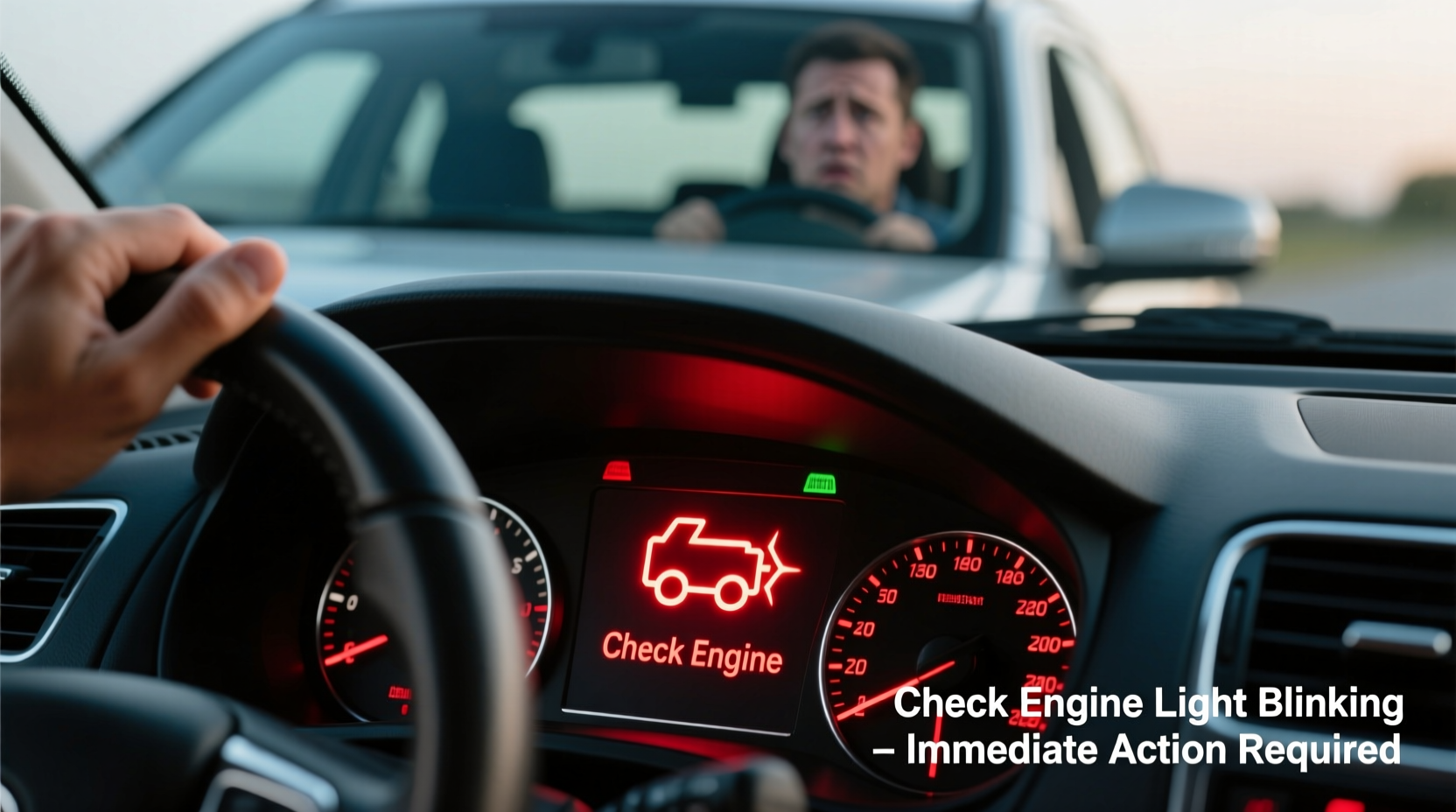
The primary reason for a blinking check engine light is a misfire in one or more of the engine’s cylinders. When a cylinder fails to ignite fuel properly, unburned gasoline passes into the exhaust system. This not only reduces performance but floods the catalytic converter with raw fuel, causing it to overheat. Prolonged exposure can destroy this expensive emissions component—often costing over $1,000 to replace.
Misfires typically stem from issues in three core systems: ignition, fuel delivery, or compression. Common culprits include worn spark plugs, faulty ignition coils, clogged fuel injectors, vacuum leaks, or low compression due to internal engine wear. Modern vehicles use oxygen sensors and onboard diagnostics (OBD-II) to detect these anomalies and trigger the warning light accordingly.
Risks of Driving with a Blinking Light
Continuing to operate a vehicle with a flashing check engine light significantly increases the risk of cascading failures. The following are key consequences:
- Catalytic Converter Damage: Unburned fuel overheats the converter, melting its internal honeycomb structure. Once damaged, it cannot be repaired—only replaced.
- Engine Overheating: Misfires disrupt combustion balance, leading to uneven temperatures and potential warping of engine components.
- Reduced Fuel Efficiency: Incomplete combustion wastes fuel and increases emissions, failing environmental standards.
- Poor Performance: Expect rough idling, hesitation during acceleration, or sudden power loss.
- Stalling or No-Start Scenarios: Severe electrical or mechanical faults may leave you stranded.
“Driving with a blinking check engine light is like running a marathon with a sprained ankle—you might keep going, but you’re doing serious harm.” — Marcus Tran, ASE-Certified Master Technician
Immediate Actions to Take When the Light Flashes
When the check engine light begins blinking while driving, follow this step-by-step response plan to minimize damage:
- Stay Calm and Assess Symptoms: Note any changes in engine behavior—shaking, loss of power, strange noises, or smell of fuel.
- Reduce Engine Load: Ease off the accelerator. Avoid high speeds, towing, or climbing hills.
- Safely Pull Over: Find a safe location to stop within 5–10 minutes of the light appearing.
- Turn Off the Engine: Let the vehicle cool down for at least 10 minutes before attempting restart.
- Restart Cautiously: If the light remains solid after restarting, you may drive slowly to the nearest repair shop. If it resumes blinking, do not continue driving.
- Call for Towing: If uncertain or symptoms persist, arrange flatbed towing to avoid further strain on drivetrain components.
Common Causes Behind the Blinking Light
While misfires are the main trigger, several underlying problems can cause them. Identifying patterns helps prioritize diagnosis:
| Cause | Symptoms | Urgency Level |
|---|---|---|
| Faulty Spark Plugs | Rough idle, poor acceleration, increased fuel consumption | High |
| Damaged Ignition Coils | Intermittent misfires, stalling, backfiring | High |
| Clogged Fuel Injectors | Hesitation under load, uneven power delivery | Moderate to High |
| Vacuum Leaks | High idle RPM, hissing sounds, lean fuel mixture codes | Moderate |
| Low Compression (Internal Engine Issue) | Hard starting, blue exhaust smoke, knocking sounds | Critical |
| Malfunctioning Oxygen Sensor | Poor fuel economy, failed emissions test | Low to Moderate |
Diagnostic Process: What Mechanics Will Do
Professional technicians use OBD-II scanners to retrieve diagnostic trouble codes (DTCs) stored in the vehicle’s computer. These codes—such as P0300 (random misfire) or P0301–P0308 (cylinder-specific misfires)—pinpoint where the fault lies. Further inspection may include:
- Visual checks for damaged wires, loose connections, or cracked hoses
- Scope testing of ignition waveforms
- Fuel pressure tests
- Compression and leak-down tests for internal engine health
- Inspection of the catalytic converter for signs of overheating
Many auto parts stores offer free code reading, but interpreting results requires expertise. A code pointing to a specific cylinder misfire doesn’t always mean the spark plug is at fault—it could be the coil pack, injector, or even a valve issue.
Real-World Example: A Costly Oversight
Jason, a delivery driver in Denver, noticed his SUV’s check engine light flashing during a highway commute. The vehicle felt slightly sluggish but still moved. He decided to finish his route, assuming it was just a sensor glitch. By the end of the day, the engine began sputtering violently. When towed to a shop, diagnostics revealed a failed ignition coil had caused prolonged misfiring. The catalytic converter was melted internally. Total repair cost: $1,750—nearly triple what replacing the $120 coil would have been.
This case illustrates how delaying action on a blinking light turns small fixes into major expenses. Early intervention could have prevented thousands in avoidable damage.
Preventive Maintenance Checklist
To reduce the likelihood of a blinking check engine light, follow this proactive maintenance checklist:
- Replace spark plugs according to manufacturer intervals (typically every 30,000–100,000 miles depending on type)
- Inspect ignition coils and wires during routine tune-ups
- Use high-quality fuel with detergent additives to prevent injector clogging
- Check for vacuum hose cracks or disconnections annually
- Change air filters regularly to maintain proper air-fuel mixture
- Address any engine warning lights promptly—even if they go out on their own
- Schedule annual OBD-II system scans, especially before long trips
Frequently Asked Questions
Can I drive my car if the check engine light is blinking?
No. A blinking light indicates an active engine misfire that can damage the catalytic converter. Limit driving immediately and seek professional help. Continued operation risks catastrophic failure.
What’s the difference between a blinking and a steady check engine light?
A blinking light signals an urgent issue—usually a severe misfire requiring immediate attention. A steady light indicates a non-critical fault that should be diagnosed soon but doesn’t demand emergency action.
Will the light reset itself if the problem goes away?
In some cases, yes. If the issue was temporary (e.g., a loose gas cap), the light may turn off after several successful drive cycles. However, stored codes remain accessible via scanner. Persistent or intermittent problems should still be investigated.
Conclusion: Act Fast, Save Big
A blinking check engine light isn’t just a warning—it’s an emergency signal from your engine. Whether caused by failing spark plugs, faulty sensors, or deeper mechanical issues, the consequences of delay are real and expensive. By recognizing the urgency, taking immediate action, and maintaining your vehicle proactively, you protect not only your investment but also your safety on the road.




 浙公网安备
33010002000092号
浙公网安备
33010002000092号 浙B2-20120091-4
Comments
No comments yet. Why don't you start the discussion?