
Many home cooks reach for chili powder or cayenne interchangeably, assuming they’re just different names for the same fiery red spice. This confusion is understandable—both appear similar in color and are used to add heat to dishes. But mistaking one for the other can dramatically alter a recipe’s flavor, intensity, and balance. Understanding the real differences between chili powder and cayenne isn’t just about semantics; it’s essential for achieving consistent, authentic results in everything from Tex-Mex chili to Indian curries. These two spices serve distinct roles in the kitchen, and using them correctly elevates your cooking from guesswork to precision.
Definition & Overview
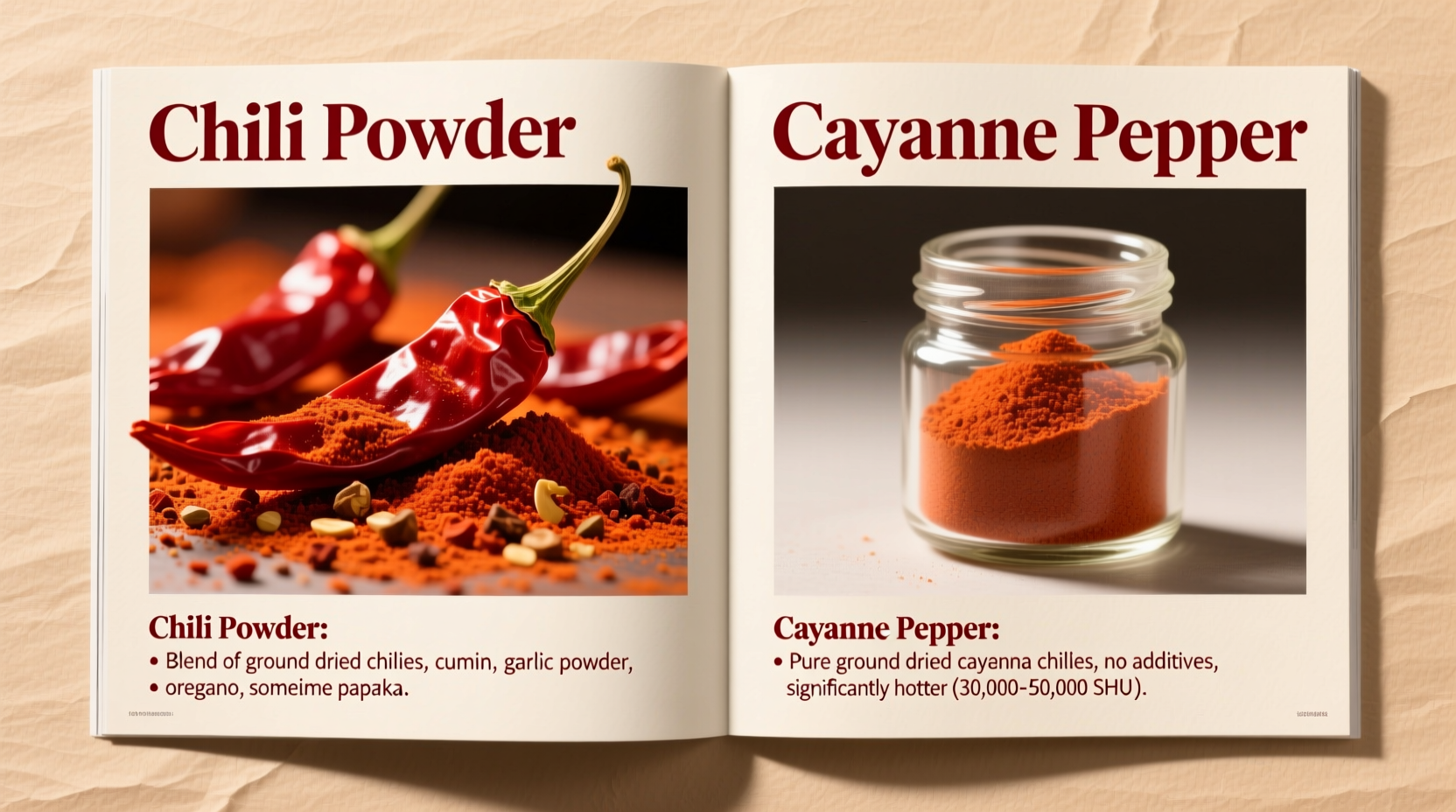
Chili powder is not a single spice but a blend typically made from ground dried chile peppers, often combined with complementary spices such as cumin, garlic powder, oregano, and sometimes salt. The exact formulation varies widely by brand and region, making it a compound seasoning rather than a pure ingredient. In American supermarkets, “chili powder” usually refers to this seasoned blend, commonly used in chili con carne, tacos, and stews.
In contrast, cayenne pepper is a specific type of ground chile pepper derived solely from the cayenne variety (Capsicum annuum), known for its bright red color and sharp, penetrating heat. It is a single-ingredient spice, prized for delivering clean, unadulterated spiciness without additional flavor modifiers. Originating in French Guiana and popularized in Creole and Cajun cuisines, cayenne is used globally in spice blends, rubs, sauces, and even medicinal preparations.
The fundamental distinction lies here: chili powder is a **seasoning blend**, while cayenne is a **pure ground pepper**. Recognizing this difference prevents culinary missteps and allows for intentional layering of flavor and heat.
Key Characteristics
| Characteristic | Chili Powder | Cayenne Pepper |
|---|---|---|
| Composition | Blend: ground chiles + cumin, garlic, oregano, etc. | Pure ground cayenne chile pepper |
| Flavor Profile | Earthy, slightly sweet, smoky, with herbal notes | Sharp, pungent, straightforward heat with mild fruitiness |
| Heat Level (Scoville) | Mild to medium (500–1,500 SHU average) | High (30,000–50,000 SHU) |
| Aroma | Warm, complex, savory-spiced | Pungent, acrid, intensely peppery |
| Color | Bright to deep red, sometimes orange-tinged | Vibrant, uniform red |
| Culinary Function | Flavor base, seasoning agent | Heat booster, accent spice |
| Shelf Life | 6–12 months (flavor fades faster due to multiple components) | 12–18 months (more stable due to purity) |
This comparison underscores that substituting one for the other without adjustment can lead to imbalanced dishes—either under-seasoned or overwhelmingly hot.
Practical Usage: How to Use Each Spice
Using Chili Powder in Cooking
Chili powder shines as a foundational ingredient in slow-cooked, layered dishes where depth of flavor matters more than raw heat. Its blend of spices integrates seamlessly into:
- Chili con carne: Add 1–3 tablespoons early in the sauté stage with onions and garlic to build a robust base.
- Taco meat and fajitas: Combine with ground beef or chicken along with onion, tomato, and broth for an instant Tex-Mex profile.
- Bean dishes and lentil soups: Stir in during simmering to enhance earthiness and warmth.
- Dry rubs: Mix with paprika, salt, and brown sugar for ribs or roasted vegetables.
Because chili powder contains cumin and garlic, adding extra amounts of these spices in a recipe may result in overpowering flavors. Always taste as you go.
Using Cayenne Pepper in Cooking
Cayenne is best deployed in small quantities to fine-tune heat without altering the core flavor profile. Think of it as a “heat scalpel” rather than a flavor builder. Ideal applications include:
- Spice blends: A pinch enhances curry powders, garam masala, or Chinese five-spice without dominating.
- Sauces and marinades: Whisk into barbecue sauce, hot honey, or vinaigrettes for controlled kick.
- Egg dishes: A dash in scrambled eggs or deviled eggs adds brightness.
- Baked goods: Used sparingly in chocolate desserts (e.g., mole cake) to deepen complexity.
A general rule: start with ⅛ teaspoon of cayenne per serving and adjust upward only if needed. Overuse leads to bitterness and excessive burn that masks other ingredients.
Pro Tip: When a recipe calls for “red pepper flakes” and you're out, substitute with half the amount of cayenne—never chili powder. Conversely, if you need bulk seasoning and lack chili powder, combine 1 tsp ground chile (like ancho) with ¼ tsp each cumin, garlic powder, and oregano.
Variants & Types
Types of Chili Powder
Not all chili powders are created equal. Variations exist across regions and brands:
- American Chili Powder: The standard supermarket version, often containing fillers like flour or anti-caking agents. Brands like McCormick offer a balanced mix ideal for chili and taco seasoning.
- Homemade Chili Powder Blend: Customizable and fresher. A typical ratio includes 2 parts ground ancho, 1 part chipotle, 1 part cumin, ½ part garlic powder, and a pinch of oregano.
- Indian \"Chilli Powder\": In South Asia, “chilli powder” refers to pure ground dried red chiles—often Kashmiri or Byadgi—which are mild and vivid red. This is functionally closer to cayenne but milder in heat.
- Spanish Pimentón: Though technically smoked paprika, some sweet or bittersweet varieties are labeled as chili powder in Europe. Adds smokiness, not heat.
Forms of Cayenne
Cayenne comes in several forms beyond the standard ground spice:
- Fine Ground Cayenne: Most common; dissolves easily into liquids and blends.
- Coarse Cayenne Flakes: Retain texture, used in pickling or crusts.
- Liquid Cayenne Extract: Concentrated tincture used in hot sauces or dietary supplements.
- Capsaicin Capsules: Purified form used medicinally for pain relief or metabolism support.
For cooking, stick with fine ground unless texture is desired. Liquid extract should be used sparingly—one drop equals roughly ¼ tsp ground cayenne.
Comparison with Similar Ingredients
Confusion often arises between chili powder, cayenne, paprika, and crushed red pepper. Clarifying these distinctions ensures accurate usage.
| Spice | Primary Use | Heat Level | Substitution Notes |
|---|---|---|---|
| Chili Powder | Seasoning blend for Tex-Mex, stews | Mild–Medium | Not interchangeable with cayenne; lacks heat |
| Cayenne | Heat enhancement | High | Use ¼ tsp cayenne = 1 tsp chili powder (approx.) |
| Paprika | Color and mild sweetness | None (sweet) to Medium (hot) | Sweet paprika adds no heat; hot paprika ≈ mild cayenne |
| Crushed Red Pepper | Texture and moderate heat (e.g., on pizza) | Medium | 1 tsp crushed = ½ tsp cayenne; less soluble |
| Hot Sauce (e.g., Tabasco) | Liquid heat with vinegar tang | Variable | 1 tsp hot sauce ≈ ⅛ tsp cayenne + splash of vinegar |
“I’ve seen chefs ruin a pot of gumbo by dumping in two tablespoons of ‘chili powder’ thinking it was cayenne. The dish became muddy and overpowered. Know your spice before you season.” — Chef Lena Torres, New Orleans Culinary Institute
Practical Tips & FAQs
Q1: Can I substitute chili powder for cayenne?
A1: Only in recipes where additional spices won’t interfere. For every ¼ teaspoon of cayenne, use up to 1 tablespoon of chili powder—but expect added cumin and garlic flavors. Never swap in reverse without reducing quantity drastically.
Q2: Is cayenne hotter than chili powder?
A2: Yes, significantly. Cayenne measures 30,000–50,000 Scoville Heat Units (SHU), while most chili powders range from 500–1,500 SHU due to dilution with non-pungent ingredients.
Q3: How should I store these spices?
A3: Keep both in airtight containers away from light, heat, and moisture. Store in a cool, dark cupboard—not above the stove. Label with purchase date. Ground spices lose potency after 6–12 months; replace if aroma is faint.
Q4: Why does my chili powder taste bitter?
A4: Bitterness can come from old spices, overheating during cooking, or low-quality blends with fillers. Toast spices gently and avoid prolonged high-heat exposure. Freshly blended chili powder tastes cleaner.
Q5: Are there health benefits to cayenne?
A5: Capsaicin, the active compound in cayenne, has been studied for anti-inflammatory effects, temporary metabolism boost, and circulatory support. However, culinary doses are too low for significant impact. Consult a healthcare provider before using for therapeutic purposes.
Q6: What’s the best chili powder for authentic chili?
A6: Look for a blend with ancho (mild, fruity), cumin, and a touch of oregano. Avoid versions with salt or cornstarch. Frontier Co-op and Simply Organic offer clean-label options. For authenticity, toast whole dried chiles (ancho, pasilla, guajillo), remove seeds, grind, then mix with toasted cumin and garlic.
Storage Checklist:
✅ Use glass jars with tight lids
✅ Store away from sunlight and steam
✅ Write purchase date on label
✅ Do not store in refrigerator (condensation degrades spices)
✅ Refresh spices every 12 months for peak performance
Summary & Key Takeaways
Chili powder and cayenne are fundamentally different spices serving unique roles in the kitchen. Chili powder is a seasoned blend designed to build flavor complexity in dishes like chili, tacos, and stews. Cayenne is a pure, potent source of heat used to amplify spice levels without introducing secondary flavors.
The main takeaways:
- Chili powder = flavor blend; cayenne = heat source.
- Never substitute one for the other without adjusting quantity and accounting for flavor additions.
- Cayenne is up to 100 times hotter than standard chili powder by volume.
- Freshness matters—replace ground spices every 6–18 months.
- Know your regional labels: “chilli powder” in India is not the same as U.S. chili powder.
Mastering these distinctions empowers you to cook with intention. Whether you're building a rich, aromatic stew or fine-tuning the fire in a sauce, choosing the right spice ensures your dish sings in harmony—not chaos.
Challenge: Next time you make chili, try this experiment: split the pot in two. Season one with 2 tbsp chili powder. Season the other with 1 tbsp chili powder plus ¼ tsp cayenne. Taste both. Notice how the second version has deeper heat without muddying the spice profile. That’s precision seasoning.




 浙公网安备
33010002000092号
浙公网安备
33010002000092号 浙B2-20120091-4
Comments
No comments yet. Why don't you start the discussion?