
When crafting a bowl of soup that balances depth, clarity, and nourishment, one of the most consequential decisions happens before any vegetables are chopped or herbs added: whether to use stock or broth. Though often used interchangeably in recipes and casual conversation, stock and broth are distinct culinary foundations with different ingredients, preparation methods, and end results. Understanding these differences empowers home cooks to make intentional choices—elevating everything from weekday chicken noodle to refined French consommé. The liquid base you select influences not only flavor but also mouthfeel, body, and even nutritional content. Making the right choice ensures your soup achieves its intended character, whether rich and unctuous or light and delicate.
Definition & Overview
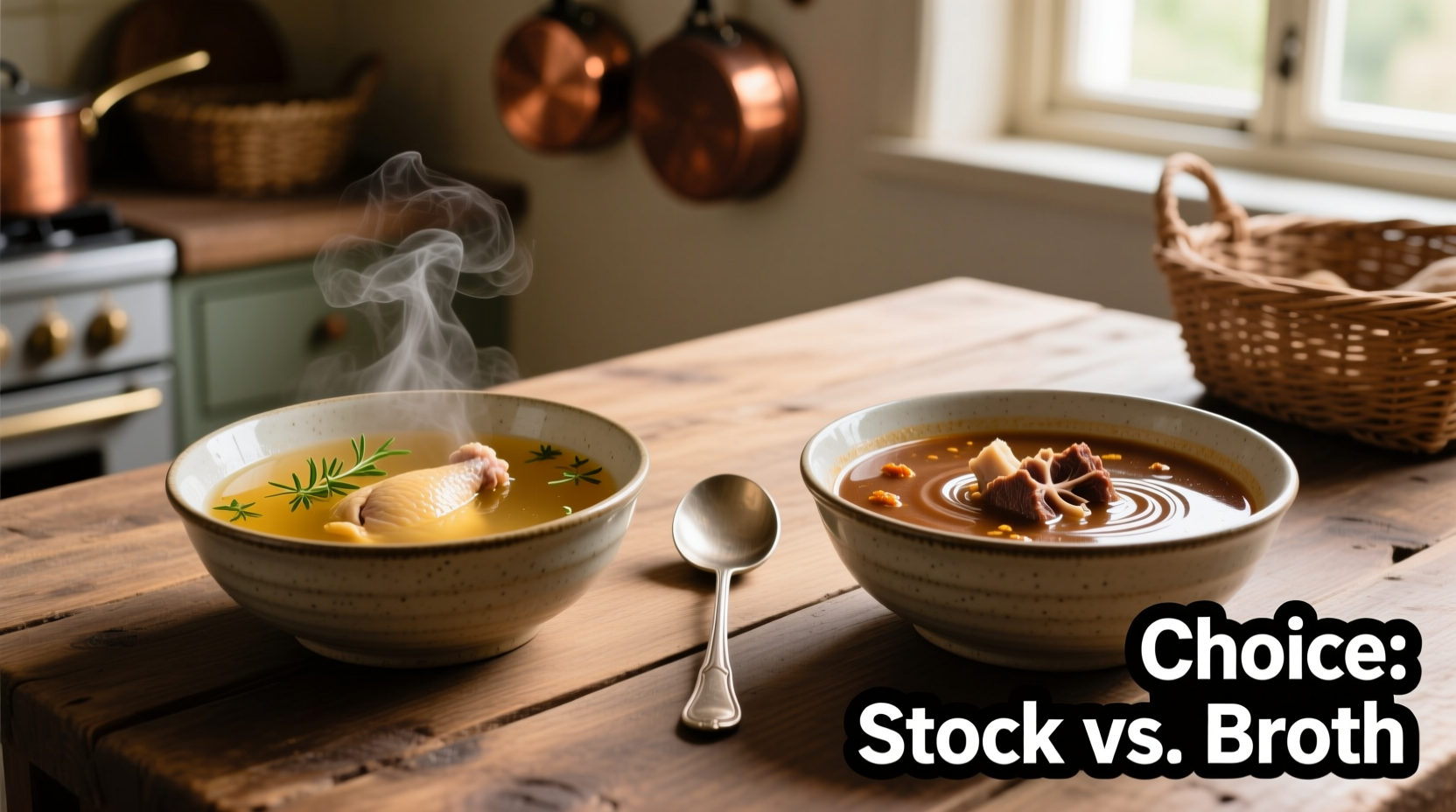
Stock is a savory cooking liquid made by simmering animal bones—often with connective tissue and cartilage—for several hours, typically with aromatic vegetables (like onion, carrot, and celery) and herbs. The prolonged cooking extracts collagen, which converts into gelatin, giving stock its characteristic body and silky mouthfeel. It is usually unsalted or lightly seasoned, as it serves primarily as a building block in sauces, gravies, and complex dishes where additional seasoning will be introduced later.
Broth, by contrast, is a ready-to-consume liquid made by simmering meat (and sometimes bones) for a shorter duration. It is fully seasoned during cooking with salt, herbs, and spices, resulting in a flavorful, immediately palatable liquid. Broth can be sipped on its own or used as a primary ingredient in lighter soups, stews, and grain preparations. While both stock and broth begin with similar components, their purpose, preparation time, and final application set them apart.
The distinction dates back centuries. In classical French cuisine, fond de veau (veal stock) and bouillon (broth) were categorized separately in Escoffier’s foundational texts, each serving a specific role in the kitchen hierarchy. Today, commercial products blur the lines—many labeled “broth” contain gelatin-rich extracts mimicking stock—but understanding the traditional definitions allows for greater control and precision in home cooking.
Key Characteristics
| Characteristic | Stock | Broth |
|---|---|---|
| Main Ingredient | Bones (with connective tissue) | Meat (sometimes with bones) |
| Cooking Time | 4–12+ hours | 1–3 hours |
| Gelatin Content | High (forms gel when chilled) | Low to moderate |
| Flavor Profile | Deep, earthy, umami-rich | Bright, seasoned, immediate |
| Salt Level | Low or none | Seasoned to taste |
| Culinary Role | Base for sauces, braises, reductions | Finished soup component or sipping liquid |
| Shelf Life (Homemade) | 4–5 days refrigerated; up to 6 months frozen | 3–4 days refrigerated; up to 3 months frozen |
The high gelatin content in stock contributes more than just texture—it enhances mouthfeel and helps emulsify fats in sauces. Broth, being more immediately flavorful, suits quick meals where layering complexity isn’t the goal. Recognizing these traits enables better pairing with specific dishes.
Practical Usage: How to Use Stock and Broth in Soup
The decision between stock and broth should align with the type of soup you're preparing and the sensory experience you want to achieve.
When to Use Stock
Choose stock when making:
- Hearty, long-simmered soups like beef barley, oxtail, or French onion soup. The gelatin adds body and richness that complements slow-cooked ingredients.
- Cream-based soups such as potato leek or mushroom velouté. Stock provides structural integrity without diluting flavor, especially when reduced.
- Asian-inspired ramen or pho. Authentic versions rely on bone broths (technically stocks) simmered for 12–24 hours to develop deep, resonant flavors and viscous texture.
- Dishes requiring reduction. Since stock is unsalted, it can be boiled down aggressively to intensify flavor without risking over-seasoning.
In professional kitchens, chefs often start with homemade stock, then adjust seasoning at the final stage. This approach prevents oversalting during long reductions and allows precise control over flavor balance.
When to Use Broth
Opt for broth in recipes that call for:
- Quick-cooking vegetable or grain soups, such as lentil, minestrone, or miso soup. Broth delivers instant flavor without needing extended simmering.
- Light, clear soups like consommé or chicken rice soup. A well-made broth maintains clarity and offers a clean, bright taste.
- Soups served immediately with minimal prep, such as weeknight chicken noodle. Using seasoned broth saves time and ensures balanced flavor out of the pot.
- Dietary-focused preparations, including low-fat or paleo diets, where the emphasis is on nutrient extraction and drinkability.
Because most commercial broths are pre-salted, always taste before adding additional seasoning. Dilution with water may be necessary if reducing the liquid or combining with other salty ingredients like soy sauce or canned tomatoes.
Pro Tip: For best results, clarify store-bought broth by straining through a fine-mesh sieve lined with cheesecloth. This removes sediment and improves clarity, especially important in refined soups.
Variants & Types
Both stock and broth come in various forms, each suited to different culinary needs.
By Base Ingredient
- Chicken: Most common; versatile for poultry, vegetable, and noodle soups.
- Beef: Robust and deeply flavored; ideal for heartier soups and sauces.
- Veal: Considered the gold standard in classic French cuisine due to its high gelatin and neutral fat profile.
- Fish (Fumet): Made from fish bones and heads, often with white wine and aromatics; essential for bouillabaisse and seafood bisques.
- Vegetable: Technically neither stock nor broth in the traditional sense (no animal collagen), but functions similarly. Best when roasted first for depth.
By Form and Preparation
- Homemade: Offers superior flavor and control over ingredients. Requires time and planning but yields unmatched quality.
- Canned or Carton: Convenient and shelf-stable. Quality varies widely—look for low sodium, no artificial additives, and recognizable ingredients.
- Concentrated (Bouillon Cubes, Pastes, Powders): Space-saving and long-lasting but often high in sodium and MSG. Dilute carefully and supplement with fresh aromatics.
- Pressure-Cooker or Instant Pot Versions: Reduce cooking time significantly while still extracting decent gelatin from bones.
Specialty Variants
- Golden Milk Broth: Plant-based, turmeric-infused broth used in wellness-focused soups.
- Roasted Stock: Bones and vegetables are roasted before simmering, adding caramelized depth—common in demi-glace and brown sauces.
- White Stock (Fond Blanc): Made without roasting; produces a cleaner, paler liquid used in chicken or fish dishes.
Selecting the right variant depends on the desired color, intensity, and dietary requirements of your dish. For example, a roasted beef stock would overpower a delicate seafood chowder, while a fumet would lack the body needed for a beef stew.
Comparison with Similar Ingredients
Several terms are commonly confused with stock and broth. Clarifying these distinctions prevents recipe mishaps.
| Term | How It Differs | Best Used For |
|---|---|---|
| Bouillon | Often refers to concentrated cubes or granules; reconstituted with water. Less nuanced than fresh stock or broth. | Emergency substitutions, camping, or budget cooking. |
| Consommé | A clarified broth, purified using egg whites to trap impurities. More refined and transparent. | Elegant appetizers, formal dining presentations. |
| Bone Broth | Marketing term for stock—simmered 12+ hours for maximum nutrient and collagen extraction. | Sipping, gut health trends, hearty soups. |
| Stock Concentrate | Reduced stock, often sold in tubes. More intense flavor than broth, less salt than bouillon. | Boosting flavor in risottos, sauces, or quick soups. |
“In professional kitchens, we never say ‘just use broth.’ We specify chicken stock, veal stock, or fish fumet because each brings a different weight and function to the plate.” — Chef Antoine Lebret, Culinary Instructor, Institute of Classical Cooking
Practical Tips & FAQs
Can I substitute stock for broth or vice versa?
Yes, but with caveats. Substituting broth for stock may result in a thinner, less luxurious soup—especially noticeable in cream-based or reduced preparations. Conversely, using unsalted stock in place of broth means you must season carefully at the end. When substituting, add salt gradually and consider enriching stock-thin soups with a spoon of tomato paste or a Parmesan rind to boost umami.
Is bone broth the same as stock?
Essentially, yes. “Bone broth” is a consumer-friendly rebranding of traditional stock, emphasizing long simmer times (12–24 hours) and health claims related to collagen and amino acids. From a culinary standpoint, it functions identically to stock and can be used interchangeably in recipes.
How do I make my own stock or broth at home?
For stock: Roast 2–3 pounds of bones (chicken, beef, or veal) at 400°F for 30–40 minutes. Transfer to a large pot with 1 chopped onion, 1 carrot, 1 celery stalk, 2 garlic cloves, a bay leaf, and 2 sprigs of thyme. Cover with cold water by 2 inches. Simmer uncovered for 4–6 hours (chicken) or 8–12 hours (beef). Skim foam early. Strain through cheesecloth.
For broth: Use raw or cooked meaty bones (like a leftover chicken carcass). Add vegetables and herbs, cover with water, and simmer gently for 1–2 hours. Season with 1 tsp salt and a few grinds of pepper per quart during the last 30 minutes.
Storage Tip: Freeze stock and broth in ice cube trays for small portions (ideal for deglazing), or in 1-cup or 4-cup containers for soups. Label with date and type. Homemade versions keep up to 6 months in the freezer.
Are store-bought options acceptable?
High-quality commercial broths and stocks have improved dramatically. Brands like Kettle & Fire, Pacific Foods, and Better Than Bouillon offer low-sodium, clean-label options with real ingredients. Always read labels: avoid carrageenan, excessive sugar, and unrecognizable additives. For stock-like body, look for products listing “bone broth” or “collagen-rich” on the label.
What about vegetarian or vegan alternatives?
Mushrooms (especially shiitake), kombu (a type of seaweed), and roasted root vegetables can mimic the umami depth of animal-based stocks. Simmer dried mushrooms and a 4-inch piece of kombu in water for 45 minutes to create a savory base. Remove kombu before boiling to prevent bitterness. Add soy sauce or tamari sparingly for salt and depth.
Why does my homemade stock gel in the fridge?
This is a sign of success. Gelation indicates high gelatin content from collagen breakdown—proof that your bones released their nutrients. The gel melts back into liquid when heated and contributes richness to soups and sauces. If your stock doesn’t gel, the bones may have been too lean, the cook time too short, or the pH too low (adding acid like vinegar helps extract minerals but can inhibit gel formation if overused).
Can I reuse bones to make a second batch?
Technically yes, but the second extraction yields far less flavor and gelatin. A second simmer (called a “remouillage” in French) produces a weaker stock suitable only for poaching or thin sauces. For optimal results, use fresh bones each time.
Summary & Key Takeaways
Choosing between stock and broth is not a matter of preference alone—it's a strategic decision rooted in technique, timing, and desired outcome. Stock, built on bones and time, delivers body, richness, and versatility as a foundational ingredient. Broth, seasoned and meat-focused, offers immediate flavor and convenience for quicker preparations. Understanding their differences allows cooks to match the base to the soup’s intent: a silky bisque demands the depth of stock, while a vibrant tomato soup sings with a bright, seasoned broth.
Key points to remember:
- Use stock for rich, body-heavy soups, reductions, and professional-style cooking.
- Use broth for quick, flavorful soups meant to be consumed as-is.
- Homemade versions offer superior control and quality; freeze in portioned containers for ease.
- Read labels on commercial products—opt for low sodium and minimal additives.
- Substitutions are possible but require adjustments in seasoning and enrichment.
- The gelling of stock in the fridge is a positive indicator of quality.
Final Thought: Mastering the use of stock and broth is akin to mastering the alphabet of savory cooking. Once you understand their roles, you’re equipped to build bolder, more nuanced, and professionally balanced dishes—one pot at a time.




 浙公网安备
33010002000092号
浙公网安备
33010002000092号 浙B2-20120091-4
Comments
No comments yet. Why don't you start the discussion?