
In an age where digital innovation reshapes even the most traditional customs, the humble Christmas gift tag is undergoing a quiet revolution. Once limited to handwritten names and short seasonal wishes, today’s gift tags are increasingly embedded with QR codes that unlock personalized video messages. This shift raises a compelling question: in 2024, does a high-tech video message delivered via QR code feel more personal than a classic handwritten note?
The answer isn’t as straightforward as nostalgia might suggest. While tactile traditions hold undeniable warmth, digital intimacy—when thoughtfully executed—can convey emotion with surprising depth. The real measure of “personal” no longer lies solely in the medium, but in the intention, effort, and authenticity behind it.
The Rise of the Digital Gift Tag
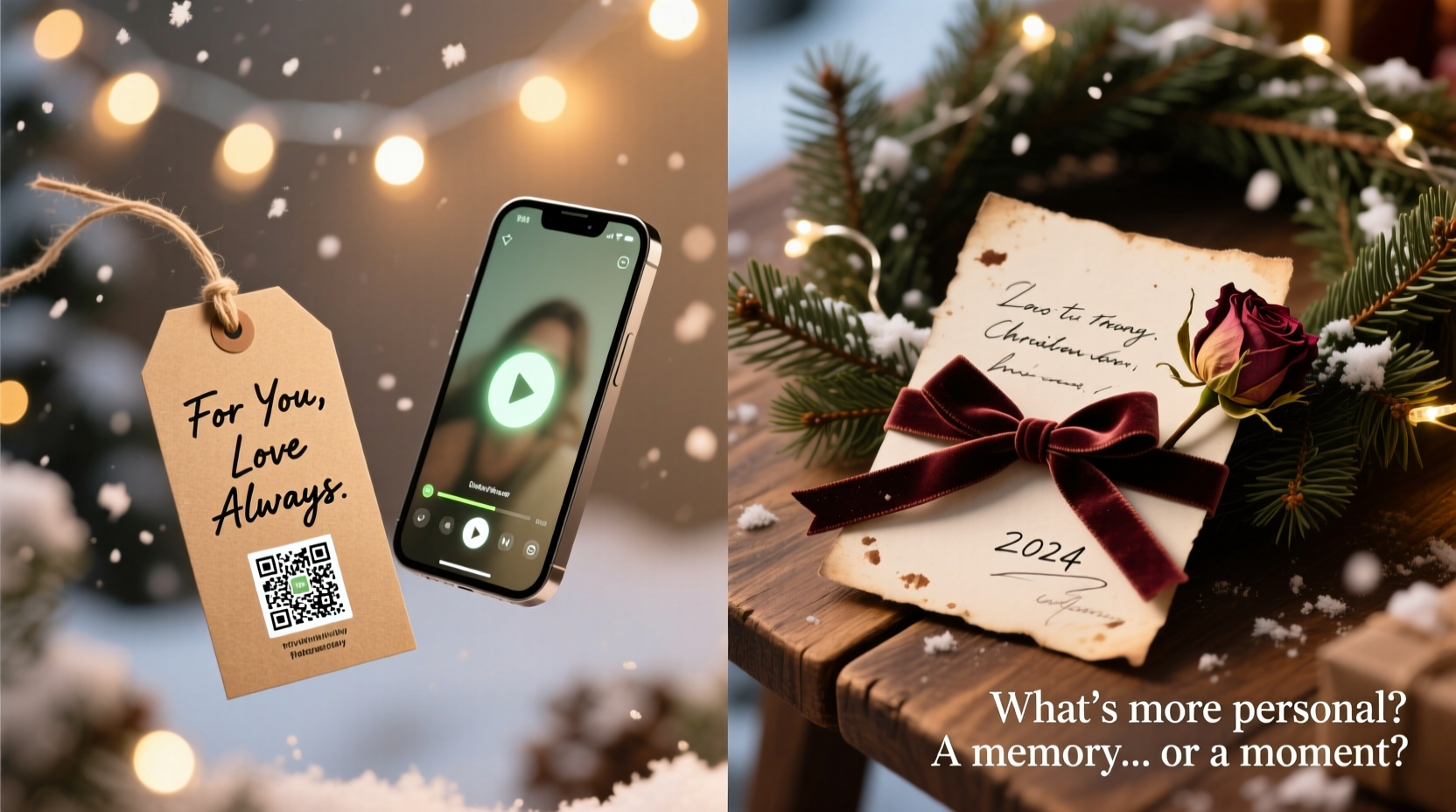
QR codes on gift tags have moved from novelty to norm in just a few years. Enabled by near-universal smartphone access and user-friendly video platforms like YouTube Shorts, Loom, or private cloud links, they allow givers to record heartfelt messages, family updates, or even sing snippets of holiday songs directly tied to the gift.
For busy families separated by distance, this format offers a practical yet emotionally rich alternative. A parent working overseas can record a message for their child before the gift arrives. Grandparents who struggle with handwriting can speak their love clearly and warmly. In these cases, the video becomes more than a supplement—it becomes the heart of the gesture.
The Enduring Power of the Handwritten Note
Despite technological advances, many still regard the handwritten note as the gold standard of personalization. There’s something irreplaceable about seeing a loved one’s penmanship—the slant of letters, the pressure of the stroke, the smudge of ink. Psychologists point to the cognitive engagement involved in writing by hand: it activates memory and emotional centers in ways typing cannot replicate.
A study published in the Journal of Experimental Psychology found that handwritten communication is consistently perceived as more sincere and effortful than digital alternatives. When someone takes time to write out a message, recipients often interpret it as a sign of deeper care—even if the words themselves are simple.
“Handwriting creates a sensory connection. It’s not just what is said, but how it’s formed—each letter carries a fingerprint of emotion.” — Dr. Lena Peterson, Cognitive Psychologist, University of Edinburgh
This emotional resonance explains why wedding cards, condolence notes, and holiday letters on paper remain culturally significant. They are artifacts, not just messages.
Comparing Emotional Impact: A Practical Breakdown
To understand which method feels more personal, we must evaluate them across key dimensions: effort, accessibility, longevity, emotional delivery, and recipient experience.
| Critera | Handwritten Note | QR Code + Video Message |
|---|---|---|
| Effort Perceived | High – requires physical time and focus | Moderate to High – recording, editing, uploading |
| Emotional Delivery | Subtle, reflective, intimate | Vivid, immediate, dynamic (voice, facial expression) |
| Accessibility | Universal – anyone can read it | Requires smartphone and internet access |
| Longevity | Paper lasts decades; can be framed or saved | Dependent on link stability and platform longevity |
| Personal Touch | Tactile and nostalgic | Audiovisual and expressive |
| Best For | Older relatives, minimalist givers, sentimental keepsakes | Long-distance relationships, young tech-savvy recipients, multi-generational families |
The data suggests that neither option is universally superior. Instead, context determines impact. A grandmother receiving a typed note taped to a mug may feel disconnected, while a teenager opening a gift with a scrawled “Merry Xmas” might overlook its sentiment entirely. Personalization depends on alignment with the recipient’s values and lifestyle.
Case Study: The Miller Family Experiment
In December 2023, the Miller family in Portland, Oregon, decided to test both methods. With three generations living across two states, they wanted to see which approach resonated most during their annual gift exchange.
The parents sent gifts to their children—one with a handwritten note, the other with a QR code linking to a 75-second video of the whole family singing a snippet of “Silent Night” and sharing updates. Their daughter, aged 32 and tech-proficient, adored the video. She watched it multiple times, shared it with her partner, and later told her parents it made her feel “like I was right there.”
Their son, however, received a beautifully calligraphed tag with a short poem and a pressed holly sprig. He kept the note on his desk for months. “It’s not flashy,” he said, “but every time I saw it, I remembered Mom’s hands writing it. That meant more than any video.”
The Millers concluded that both formats had value—but worked best when matched to the recipient. They now use a hybrid model: a brief handwritten line on the tag, plus a discreet QR code for those who want more.
Creating Meaningful Hybrid Solutions
The future of personal gifting may not be analog versus digital, but analog and digital. Combining the strengths of both allows for layered emotional expression.
Consider this approach: a small, elegant gift tag with a handwritten name and a single sentence—“This reminded me of our summer in Maine”—paired with a QR code that leads to a 60-second video of you explaining why you chose the gift, sharing a memory, or simply saying “I love you.”
This hybrid model satisfies multiple needs:
- The immediate, tangible warmth of handwriting
- The richness of vocal tone and facial expression
- The flexibility for recipients to engage at their own pace
- A lasting physical artifact alongside a shareable digital one
Step-by-Step Guide to Creating a QR Video Gift Tag
If you're considering using a QR code for your next holiday gift, follow this simple process:
- Choose Your Platform: Upload your video to a private or unlisted setting on YouTube, Google Drive, or a dedicated service like QRCode Monkey or Visualead.
- Record Your Message: Speak naturally. Mention the recipient’s name, why you chose the gift, and a personal memory or wish. Keep it under 90 seconds.
- Generate the QR Code: Use a free tool like QRCode Generator or Beaconstac. Test the code on multiple devices to ensure it scans smoothly.
- Print and Attach: Print the QR code on sturdy cardstock or adhesive label. Pair it with a minimal handwritten line for balance.
- Inform the Recipient (if needed): If giving to someone less familiar with QR codes, include a small instruction: “Scan to hear my message!”
This method preserves tradition while embracing convenience and emotional range.
Expert Insight: Bridging Generations Through Gifting
Dr. Alicia Turner, a sociologist specializing in family communication, observes that the tension between digital and analog gifting reflects broader cultural shifts.
“The most personal gift isn’t defined by format, but by presence. Whether through ink or pixels, people are seeking connection. The best gifts make the recipient feel seen—and that can happen through a shaky video or a crookedly written ‘Love, Dad.’” — Dr. Alicia Turner, Family Communication Researcher
She emphasizes that younger generations often appreciate the effort behind handwritten notes, even if they don’t create them themselves. Conversely, older adults are increasingly comfortable with QR codes, especially when introduced gently and meaningfully.
FAQ: Common Questions About Modern Gift Tags
Are QR code gift tags really secure?
Yes, if used responsibly. Always use reputable platforms and avoid including personal data in URLs. Set videos to unlisted or password-protected if sensitive. Test the link frequently to ensure it remains active.
What if the recipient doesn’t have a smartphone?
In such cases, a handwritten note is the safer, more inclusive choice. Alternatively, offer to play the video over a phone call or include a printed transcript of the message.
Can I combine both without seeming impersonal?
Absolutely. Many find that a brief handwritten line (“Thinking of you this season”) paired with a QR code enhances rather than dilutes the personal touch. The key is authenticity, not volume.
Checklist: Choosing the Right Format for Your Gift
- ✅ Consider the recipient’s age, tech comfort, and preferences
- ✅ Assess whether they value keepsakes or experiences more
- ✅ Decide how much emotional nuance you want to convey
- ✅ Determine if you’re gifting across distances or time zones
- ✅ Choose tools that are reliable and easy to use
- ✅ Test all QR codes before sending
- ✅ Always include a human element—handwritten text or spoken voice
Conclusion: Personal Is What Feels True
In 2024, the definition of “personal” is no longer bound by format. A shaky, tearful video message recorded on a kitchen phone can carry as much weight as a perfectly penned letter. What matters is not whether ink or pixels are used, but whether the giver’s presence is felt.
QR codes and video messages are not replacements for handwritten notes—they are expansions of our emotional vocabulary. They allow us to say more, show more, and reach further. Yet, the handwritten word remains a quiet act of devotion in a fast-moving world.
The most thoughtful givers won’t choose one over the other. They’ll listen—to their recipients, to their instincts—and use whatever medium best carries their love. Sometimes that’s a smudged pencil note on lined paper. Other times, it’s a voice saying “I miss you” through a screen.




 浙公网安备
33010002000092号
浙公网安备
33010002000092号 浙B2-20120091-4
Comments
No comments yet. Why don't you start the discussion?