
The warm glow of Christmas lights has long been a hallmark of the holiday season. For decades, chase controllers—those simple devices that create the illusion of moving lights by cycling through a sequence—have powered countless festive displays. But as technology advances, a growing number of lighting enthusiasts and professionals are asking: are these traditional sequential patterns truly effective anymore? With the rise of addressable LEDs, Wi-Fi-enabled controllers, and customizable animation software, the once-impressive “chasing” effect now risks appearing dated, predictable, and limited in creative potential.
This shift isn’t just about aesthetics—it reflects broader changes in consumer expectations, energy efficiency, and control precision. Today’s holiday lighting is less about repetition and more about storytelling, synchronization, and interactivity. As homeowners seek dynamic, music-synced light shows and commercial installations aim for immersive experiences, the limitations of basic chase controllers become increasingly apparent.
The Evolution of Holiday Lighting Control
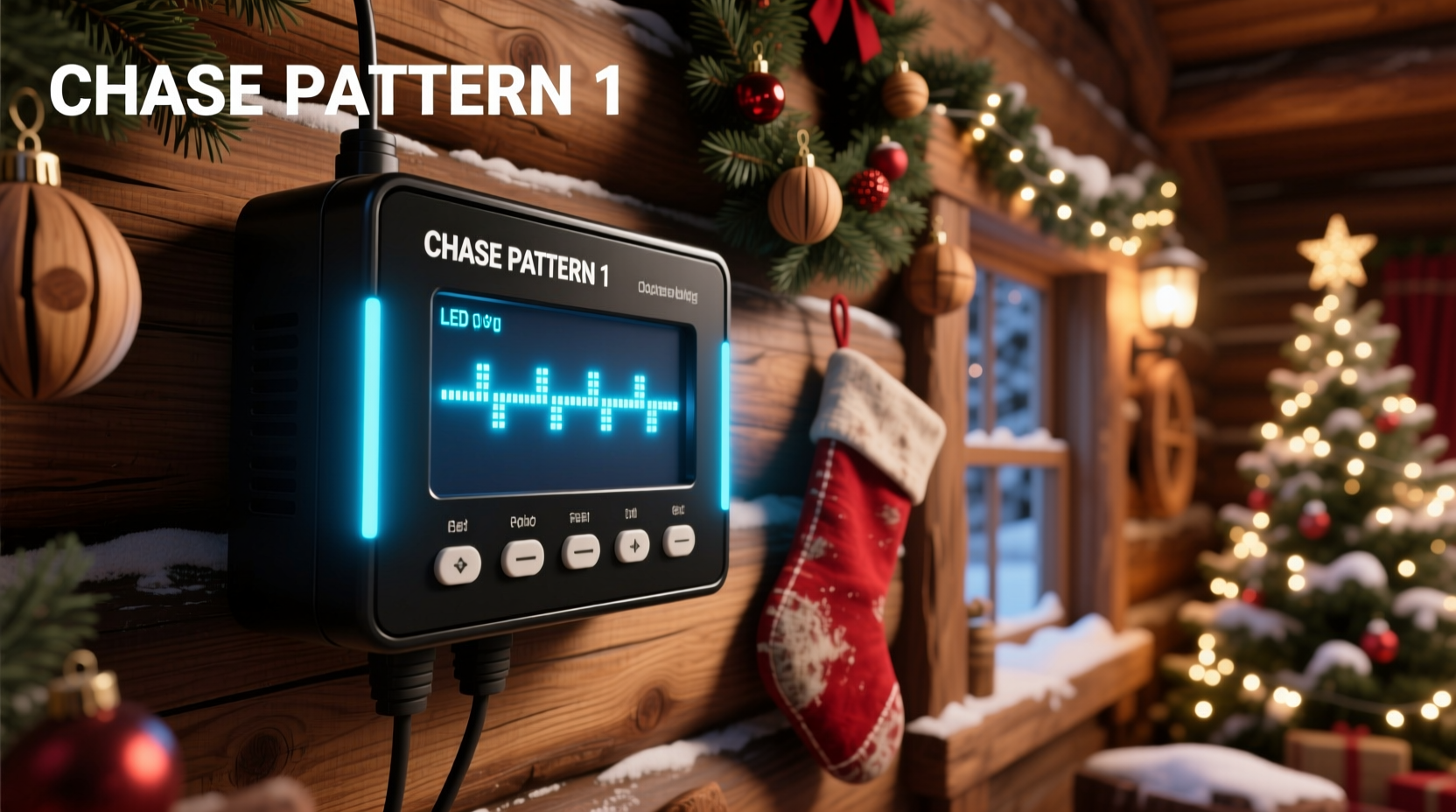
Chase controllers emerged in the mid-20th century as an affordable way to simulate motion in string lights. By turning on and off individual circuits in a predetermined order—often three or four channels—they created a wave-like effect across strands of bulbs. This was revolutionary at the time, especially when compared to static displays.
However, these early systems were constrained by hardware design. Each controller could only manage a few channels, and programming options were minimal. Most operated on fixed timing loops with no ability to adjust speed, direction, or pattern complexity without physical rewiring.
In contrast, modern lighting systems leverage digital protocols like DMX512, E1.31 (sACN), and proprietary smart-home integrations. These allow for granular control over thousands of individual LED nodes. Instead of treating a strand as a single unit, today’s controllers can manipulate each bulb independently, enabling effects like ripples, fades, pixel-mapped animations, and real-time audio response.
Why Sequential Patterns Feel Outdated
Sequential chasing suffers from several inherent drawbacks that limit its appeal in contemporary applications:
- Predictability: The repeating back-and-forth motion quickly becomes monotonous. Viewers recognize the loop within seconds, reducing visual engagement.
- Limited creativity: Basic controllers offer one or two preset patterns—usually \"chase,\" \"twinkle,\" or \"steady\"—with no customization.
- Lack of synchronization: They cannot sync with music, timers, or external triggers, making them unsuitable for coordinated neighborhood displays or public events.
- Energy inefficiency: Older models often use mechanical relays or high-draw circuits, consuming more power than necessary.
- Scalability issues: Expanding a chase setup beyond a few strands requires additional hardware, increasing cost and complexity.
These shortcomings stand in stark contrast to what modern consumers expect. A 2023 survey by the National Retail Federation found that nearly 40% of Americans now use smart home devices during the holidays, including app-controlled lights and voice-activated scenes. The demand for personalization is clear—and legacy chase controllers simply can't keep up.
“Static sequences had their place, but today’s audiences want emotion, rhythm, and surprise in their light displays. That starts with moving beyond the basic chase.” — Marcus Lin, Lighting Designer & Founder of HolidayPixels Inc.
Modern Alternatives to Traditional Chase Controllers
Several technologies have emerged to replace or enhance traditional chasing, offering greater flexibility, visual impact, and ease of use.
Addressable LED Strips (e.g., WS2812B, NeoPixel)
These strips contain individually controllable LEDs, each assigned a unique address. Using microcontrollers like Arduino or ESP32, users can program complex animations such as color waves, meteor effects, or responsive patterns based on sound input.
Smart Controllers with Wi-Fi/Bluetooth
Devices like the Falcon F16v3, Glediator-compatible boards, or Shelly RGBW2 enable remote control via smartphone apps or web interfaces. Many support scheduling, cloud integration, and even live video mapping.
Music-Synchronized Systems
With software like xLights or Vixen Lights, hobbyists can choreograph entire displays to music tracks. These programs export sequences to hardware controllers, enabling precise timing down to the millisecond.
Mesh Network Lighting (e.g., Philips Hue Holiday Lightstrip)
For residential users, mesh-based systems offer plug-and-play simplicity. While not ideal for large-scale chasing, they allow ambient color shifts, gradient flows, and integration with voice assistants.
| Feature | Traditional Chase Controller | Modern Smart System |
|---|---|---|
| Pattern Customization | Limited (1–3 presets) | Full (user-defined animations) |
| Bulb-Level Control | No | Yes (via addressable LEDs) |
| Music Sync Capability | No | Yes (with software) |
| Remote Access | No | Yes (Wi-Fi/app control) |
| Setup Complexity | Low | Moderate to High |
| Cost per Channel | $5–$10 | $15–$30 (initial investment) |
Real-World Example: Upgrading a Residential Display
Dan Reyes, a homeowner in Portland, Oregon, used the same four-channel chase controller for his front-yard light show for over 15 years. Each season, he’d hang red and green C9 bulbs along the roofline and activate the classic left-to-right chase pattern. While neighbors appreciated the effort, feedback was consistent: it looked “like every other house.”
In 2022, Dan invested $200 in an ESP32-based controller, 150 addressable pixels, and downloaded xLights. Over two weekends, he mapped out his roofline and programmed a new display synced to “Jingle Bell Rock.” The result was transformative: cascading snowflakes, pulsing trees, and dancing outlines timed perfectly to the beat.
The local newspaper featured his home in a “Best Displays” roundup, and foot traffic increased dramatically. More importantly, Dan reported enjoying the process far more than before—tweaking animations became a seasonal tradition in itself.
Step-by-Step Guide to Transitioning from Chase to Smart Lighting
- Assess Your Current Setup: Inventory existing lights, power sources, and controller types. Note voltage requirements and strand lengths.
- Choose a Controller Platform: For beginners, consider pre-built solutions like the Renkforce WiFi LED Controller or DIY options using WLED firmware on ESP8266.
- Select Addressable LEDs: Opt for waterproof, outdoor-rated strips (e.g., WS2811 12V) if installing externally. Use diffused lenses for smoother color blending.
- Map Your Layout: Sketch your home’s outline and assign pixel numbers to each segment. Tools like xLights’ preview mode help visualize placement.
- Install and Test: Mount lights securely, connect data/power lines, and test communication between controller and LEDs.
- Create Animations: Use free software (xLights, Jinx!) to build sequences. Begin with simple gradients before attempting full music sync.
- Schedule and Automate: Set timers for daily on/off cycles or integrate with Google Assistant/Alexa for voice control.
Checklist: Is It Time to Retire Your Chase Controller?
- ☐ You’ve used the same pattern for more than five seasons
- ☐ Your display receives little attention or engagement
- ☐ You wish you could sync lights to music
- ☐ Neighbors have upgraded to smart lighting
- ☐ You’re unable to control brightness or color temperature
- ☐ Repairs are becoming frequent due to aging relays or wiring
- ☐ You want remote access or automation features
Frequently Asked Questions
Can I reuse my old Christmas lights with a modern controller?
Yes—but only if they’re compatible. Traditional incandescent or non-addressable LED strings can still be controlled via relay modules or smart plugs. However, for advanced effects like chasing with variable speed or color shifts, you’ll need addressable RGB LEDs.
Are smart lighting systems difficult to install?
Beginner-friendly kits now make installation accessible. Pre-flashed controllers with WLED or NodeMCU firmware allow setup via browser interface without coding. YouTube tutorials and active forums (like r/lightshow on Reddit) provide extensive support for troubleshooting.
Do modern controllers use more electricity?
No—in fact, most are more efficient. Addressable LEDs consume less power than older incandescent chase setups, and many smart systems include dimming and scheduling to reduce runtime. A typical WS2812B strip uses about 1.2W per foot at full white, versus 3–4W for older mini-lights.
Conclusion: Embracing the Future of Festive Lighting
While Christmas light chase controllers played a vital role in the history of holiday decoration, their era of dominance is waning. The rigid, repetitive nature of sequential patterns no longer aligns with the dynamic, expressive possibilities offered by today’s technology. What once amazed now risks being overlooked—a relic in a landscape defined by innovation and personalization.
That doesn’t mean tradition must be abandoned. The spirit of celebration remains unchanged. But how we express it can evolve. By embracing smarter, more responsive lighting systems, both homeowners and professionals can create displays that captivate, inspire, and bring communities together in new ways.
The tools are more accessible than ever. Open-source software, affordable hardware, and supportive online communities lower the barrier to entry. Whether you’re illuminating a single tree or orchestrating a block-wide symphony of light, the future is bright—and beautifully unpredictable.




 浙公网安备
33010002000092号
浙公网安备
33010002000092号 浙B2-20120091-4
Comments
No comments yet. Why don't you start the discussion?