
As homes become more energy-efficient, LED Christmas lights have largely replaced incandescent bulbs. While they save power and last longer, their intense brightness can create uncomfortable glare—especially when reflected off mirrors, glass, polished stone, or glossy tiles. This issue is particularly noticeable in bathrooms, kitchens, hallways, and foyers where reflective surfaces amplify the light output. The solution lies not in removing the lights, but in managing how their light disperses. With the right diffusers and strategic placement, you can preserve the festive charm of your display without the eye strain.
Why LED Christmas Lights Cause Harsh Glare
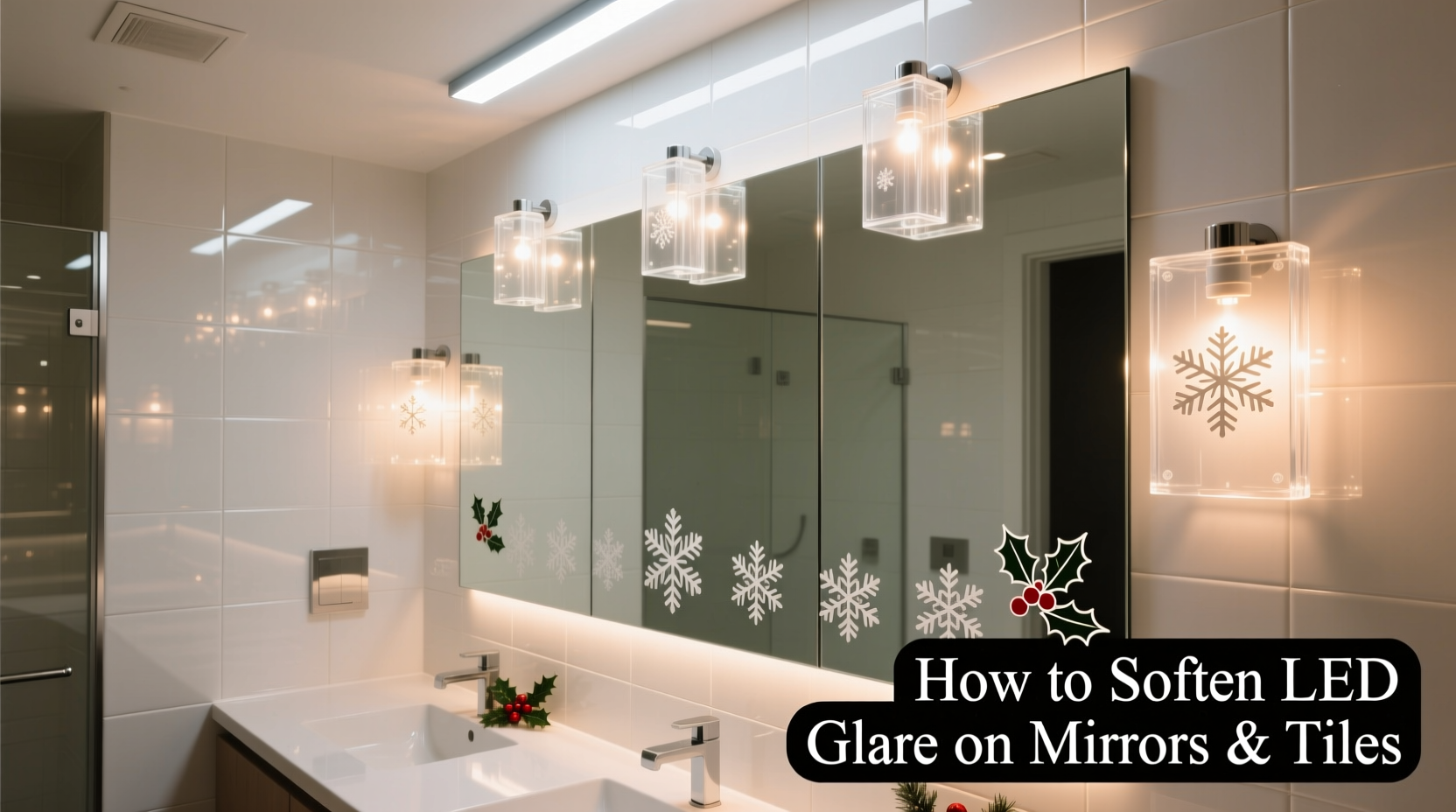
LEDs emit light differently than traditional bulbs. Incandescent lights produce a warm, omnidirectional glow that naturally softens as it spreads. In contrast, LEDs are directional and concentrated, often emitting a narrow beam with high luminance. When this focused light hits a mirror or tile, it reflects sharply into the room, creating hotspots that feel intrusive rather than inviting.
The problem is compounded by modern home design. Many contemporary interiors feature large mirrors, backsplashes, and high-gloss finishes that enhance space perception—but also act as secondary light sources during the holidays. Without diffusion, these surfaces turn into unintended spotlights, disrupting ambient comfort.
“Unmodified LED strings on reflective surfaces are like tiny lasers bouncing around a room. Diffusion isn’t optional—it’s essential for visual comfort.” — Dr. Lena Torres, Lighting Design Specialist, Institute of Interior Illumination
Effective Diffuser Materials and Techniques
Diffusing LED Christmas lights doesn’t mean dimming them entirely. The goal is to scatter the light evenly so it feels softer and more atmospheric. Several materials work well for this purpose, each suited to different installation scenarios.
1. Frosted Plastic Sleeves
Slip-on plastic sleeves made from translucent polycarbonate or PETG fit directly over individual LED bulbs. These sleeves refract light outward, reducing pinpoint intensity. They’re especially useful for mini-lights strung along mirror frames or window edges.
2. Tissue Paper and Vellum Wraps (Temporary)
For short-term displays, wrapping clusters of lights in double-layered tissue paper or drafting vellum creates an instant softening effect. Secure with transparent tape or twist ties, ensuring no material touches the bulbs directly. This method works best indoors where airflow prevents overheating.
3. Fabric Sheers and Netting
Drape lightweight white organza, tulle, or muslin over light strands mounted behind mirrors or above tile backsplashes. The fabric scatters reflections while maintaining visibility of the lights themselves. Choose flame-retardant versions for safety.
4. 3D-Printed or Molded Covers
Custom diffuser caps designed to snap over common LED bulb shapes (like G40 or C6) are increasingly available. Some models feature textured inner surfaces that maximize dispersion. DIY enthusiasts can print their own using free designs from open-source repositories.
5. Acrylic Panels and Light Boxes
For permanent or semi-permanent installations—such as under-cabinet lighting in kitchens—mounting LEDs behind frosted acrylic sheets transforms them into gentle ambient strips. This approach mimics professional architectural lighting and eliminates direct reflection altogether.
Strategic Placement to Minimize Reflection
Beyond physical diffusers, how and where you place lights dramatically affects glare. Even the best diffuser won’t fully compensate for poor positioning.
Avoid Direct Line-of-Sight Reflections
Position lights so they aren’t directly visible in mirrors when standing at typical viewing angles. For example, instead of stringing lights across the top edge of a bathroom mirror, mount them vertically along the sides, out of direct reflection paths.
Use Indirect Bounce Lighting
Point lights toward ceilings, walls, or non-reflective surfaces to let the glow reflect indirectly into the space. This technique produces a subtle, even illumination that enhances ambiance without causing discomfort.
Elevate or Lower Fixtures Strategically
If lights must be near mirrors, install them just above head height or close to the floor. This shifts reflections out of primary eye level zones. For instance, placing lights along baseboards and aiming them upward creates a warm wash on tiles without glare.
| Placement Strategy | Best For | Glare Reduction Effectiveness |
|---|---|---|
| Lights behind frosted acrylic | Kitchens, vanities | ★★★★★ |
| Sides of mirror (vertical) | Bathrooms, hallways | ★★★★☆ |
| Ceiling-mounted bounce lighting | Living rooms, entryways | ★★★★☆ |
| Fabric-diffused overhead strings | Dining areas, stairwells | ★★★☆☆ |
| Direct top-edge mirror mounting | Avoid if possible | ★☆☆☆☆ |
Step-by-Step Guide: Softening Glare in a Tile-Backed Kitchen
Consider a common scenario: holiday lights installed along the upper edge of a kitchen backsplash, reflecting harshly off both the tile and cabinet glass doors. Here's how to fix it:
- Assess Viewing Angles: Stand at your usual cooking or coffee-making position. Note where the brightest reflections occur.
- Remove Existing Lights: Carefully unplug and detach the string from adhesive clips.
- Add Bulb-Level Diffusers: Slide frosted silicone sleeves over each LED bulb. Ensure full coverage and secure fit.
- Reposition the String: Reinstall the lights just below the bottom of the upper cabinets, pointing slightly upward toward the ceiling.
- Install a Diffuser Panel: Cut a piece of 1/8-inch frosted acrylic to match the length of the cabinet run. Mount it horizontally beneath the lights using small brackets, creating a light shelf.
- Test and Adjust: Turn on the lights at night. If residual glare remains, add a thin strip of white felt along the front edge of the acrylic to block downward spill.
This method turns a glaring fixture into a warm, indirect glow that highlights the holiday spirit without overwhelming the senses.
Mini Case Study: Transforming a Bathroom Vanity Display
Sarah, a homeowner in Portland, installed a new set of cool-white LED fairy lights around her bathroom mirror for the holidays. Within days, she found herself squinting every morning while brushing her teeth—the reflection turned her mirror into a blinding grid of dots.
She tried turning off half the string, but the effect looked uneven. After researching solutions, she purchased translucent plastic diffuser sleeves and applied them to every other bulb. Then, she shifted the top strand upward by four inches and added a sheer voile curtain rod above the mirror, draping a loose panel of white tulle in front of the lights.
The result? A soft, glowing halo that framed the mirror without glare. Morning routines became pleasant again, and guests complimented the “ethereal” look. Sarah now uses this setup annually, switching to warmer-toned LEDs next time for even greater coziness.
Checklist: How to Soften LED Christmas Light Glare
- ✅ Identify all reflective surfaces in your display area (mirrors, tiles, glass, metal)
- ✅ Choose appropriate diffuser material (sleeves, fabric, acrylic)
- ✅ Avoid placing lights where they’ll reflect directly into eye level
- ✅ Test lighting at night under real-use conditions
- ✅ Use warm-white LEDs (2700K–3000K) instead of cool-white for softer ambiance
- ✅ Ensure all added materials are non-flammable and allow ventilation
- ✅ Secure diffusers so they won’t slip or degrade over time
Common Mistakes to Avoid
Even well-intentioned efforts can backfire if basic principles are overlooked.
- Using opaque materials: Cardboard, thick paper, or dark fabrics may block too much light and create shadows.
- Taping directly over bulbs: Adhesives can trap heat and damage LED components.
- Ignoring color temperature: Blue-tinted LEDs increase perceived glare. Opt for warm white.
- Overloading circuits: Adding multiple diffused strings shouldn’t exceed outlet capacity.
- Forgetting maintenance: Dust buildup on diffusers reduces effectiveness. Clean gently with a microfiber cloth monthly.
FAQ
Can I use wax paper as a diffuser?
Wax paper is not recommended. It’s flammable and can discolor or melt when exposed to prolonged heat, even from low-power LEDs. Use parchment paper only as a last-resort temporary fix, and never leave it unattended.
Do colored Christmas lights reduce glare?
Colored lenses can help slightly by absorbing some intensity, but they don’t diffuse light effectively. A red or blue LED still emits a focused beam. For true softening, combine color filters with physical diffusion like sleeves or fabric.
Are there commercial products specifically for this?
Yes. Brands like GE, Christmas Lights, Etc., and Snowflex offer pre-diffused LED strings with built-in opal covers. Look for terms like “glare-free,” “soft glow,” or “frosted lens” when shopping. Third-party accessories such as Lumiconn diffuser caps also provide retrofit solutions.
Final Recommendations and Long-Term Solutions
Managing LED glare isn’t just about aesthetics—it’s about creating spaces that remain comfortable and functional during the holidays. While temporary fixes work for seasonal decor, consider long-term upgrades for recurring installations.
Invest in purpose-built diffused LED strings for areas like bathrooms and kitchens. These come with factory-installed lenses that evenly spread light without aftermarket modifications. Alternatively, integrate lighting into architectural features: recessed channels behind valances, under-shelf grooves, or within crown molding eliminate exposure to reflective planes altogether.
Also, reconsider brightness levels. Not every space needs full-density lighting. Spacing bulbs farther apart or using fewer strands often achieves the desired effect with less intensity. Sometimes, less truly is more.
“Good holiday lighting enhances mood, not headache. The best displays are felt before they’re seen.” — Marcus Lin, Residential Lighting Consultant
Conclusion
Harsh LED glare on mirrors and tiles doesn’t have to ruin your holiday ambiance. With thoughtful diffusers, strategic placement, and a few simple materials, you can transform piercing beams into a warm, inviting glow. Whether you're dressing up a bathroom vanity or illuminating a kitchen backsplash, the tools and techniques exist to balance beauty with comfort. Take the time this season to refine your display—not just for photos, but for everyday living.




 浙公网安备
33010002000092号
浙公网安备
33010002000092号 浙B2-20120091-4
Comments
No comments yet. Why don't you start the discussion?