
As holiday decorating trends shift toward convenience and innovation, Christmas light projectors have emerged as a popular alternative to traditional string lights. Marketed for their ease of setup, variety of patterns, and wide coverage, these devices promise festive cheer with minimal effort. But one question lingers in the minds of homeowners and decorators alike: Are they actually bright enough? The answer isn’t a simple yes or no—it depends on your expectations, environment, and how you use them.
This article examines the brightness capabilities of multi-pattern Christmas light projectors, compares them to conventional lighting, and offers practical guidance for maximizing their impact—indoors and out.
Understanding Brightness in Light Projectors
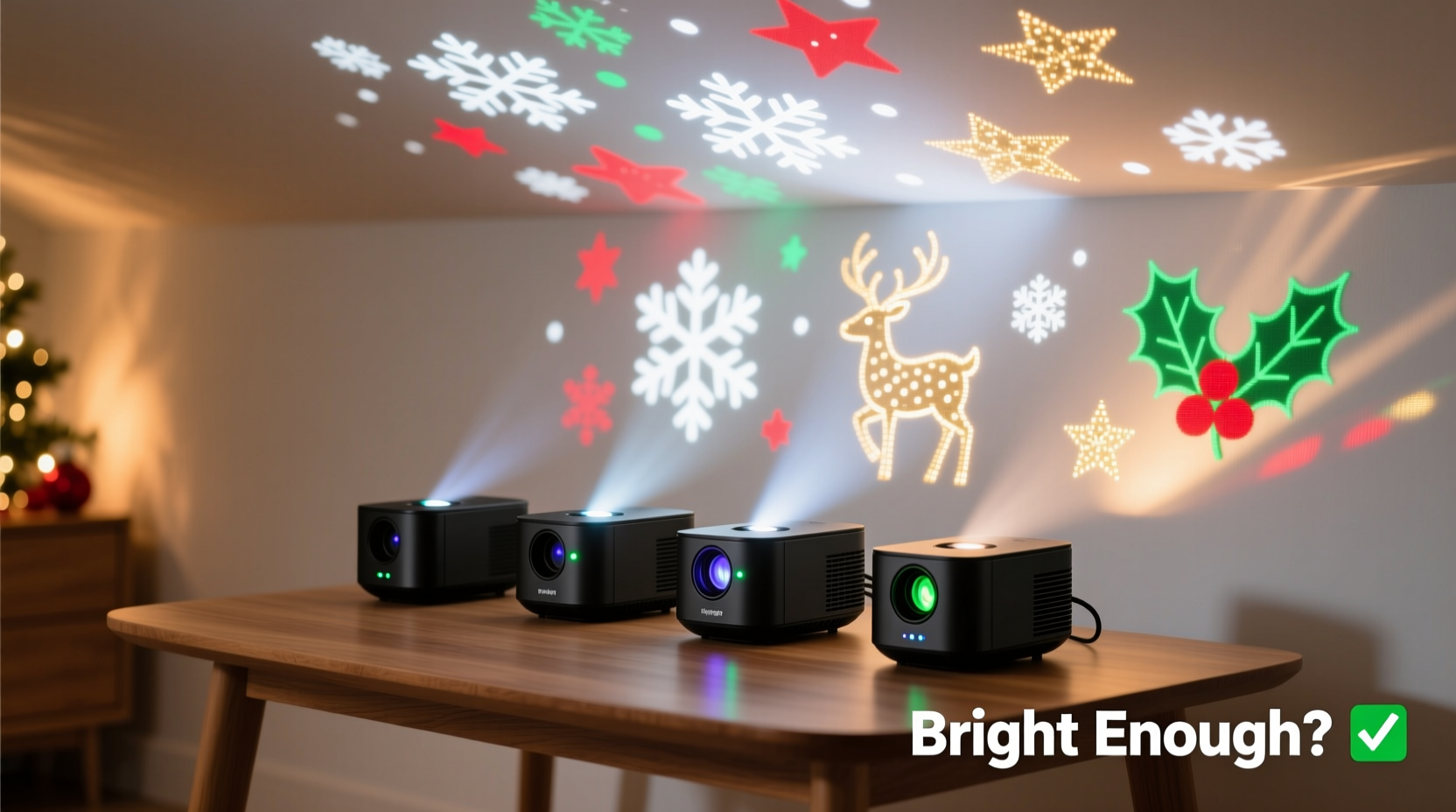
Brightness in light projectors is typically measured in lumens, though many manufacturers don’t list this spec clearly. Instead, consumers often rely on advertised coverage area (e.g., “covers up to 50 feet”) and visual demonstrations. However, lumens alone don’t tell the full story. Beam spread, ambient light conditions, surface reflectivity, and projector placement all influence perceived brightness.
Most Christmas light projectors range from 300 to 1,200 lumens. For context, a standard 60-watt incandescent bulb produces about 800 lumens. While that might sound promising, projectors distribute light over a large surface area, which dilutes intensity compared to focused bulbs or tightly strung LEDs.
The type of pattern also affects visibility. Snowflakes or stars may appear dimmer than solid color washes because they consist of discrete points of light rather than continuous illumination. Additionally, white and warm white modes generally appear brighter than colored overlays like red or blue, which absorb more light.
How Multi-Pattern Projectors Work
Multi-pattern Christmas light projectors use rotating glass or plastic discs etched with different designs—snowmen, reindeer, falling snow, icicles, etc. A high-intensity LED or halogen bulb shines through the disc, projecting the image onto nearby walls, fences, or driveways. Some models offer remote controls to switch between patterns, adjust speed, or set timers.
While versatility is a major selling point, it comes with trade-offs. Each additional pattern requires space on the disc, which can reduce the density and clarity of individual designs. Moreover, switching between patterns doesn’t increase brightness—it simply changes how the same amount of light is distributed.
Higher-end models incorporate dual lenses or multiple projectors in one unit, allowing two patterns to be projected simultaneously (e.g., snowfall on one wall and reindeer on another). These tend to deliver stronger overall illumination due to increased light output and strategic beam control.
“Projector brightness must be evaluated in context. A 700-lumen unit may look dazzling on a porch but disappear on a large, distant facade.” — Marcus Tran, Lighting Designer & Holiday Display Consultant
Real-World Performance: Indoor vs. Outdoor Use
The effectiveness of a Christmas light projector varies significantly based on location. Here’s how they perform in common settings:
Outdoor Applications
Outdoors, projectors shine brightest when used close to the target surface—ideally within 15 to 25 feet. At this range, most models produce vivid, eye-catching displays visible from the street. However, beyond 30 feet, patterns begin to blur and lose intensity, especially under moonlight or urban skyglow.
Dark environments enhance contrast, making even moderately bright projectors appear impressive. In suburban or rural areas with low ambient light, a mid-range projector (600–800 lumens) can create a magical atmosphere across lawns and trees.
Indoor Applications
Indoors, projectors are less commonly used but can add festive flair to ceilings, blank walls, or windows. On small to medium-sized interior walls (up to 10 x 10 feet), multi-pattern projectors often exceed expectations. Their brightness is more than sufficient, especially when room lights are dimmed.
However, indoor use presents challenges. Pattern movement can cause distraction if placed in living spaces where people spend extended time. Additionally, ceiling projections may appear stretched or distorted unless the projector is centered and angled correctly.
| Setting | Average Distance | Perceived Brightness | Best Use Case |
|---|---|---|---|
| Front Porch (urban) | 10–15 ft | High | Accent lighting near entryway |
| Lawn to House Facade | 20–30 ft | Moderate | Supplemental to string lights |
| Large Backyard | 35+ ft | Low to Moderate | Atmospheric effect only |
| Living Room Wall | 8–12 ft | Very High | Festive ambiance, kids’ rooms |
| Ceiling Projection | 7–10 ft | High (if angled well) | Holiday movie nights, parties |
Comparing Projectors to Traditional Lights
To assess whether projectors are “bright enough,” it helps to compare them directly to conventional Christmas lights:
- Setup Time: Projectors win by far—plug in, aim, and go. No untangling wires or climbing ladders.
- Brightness Density: String lights provide concentrated, consistent glow along their length. Projectors offer broad but diluted light.
- Customization: Strings allow precise placement; projectors cover large zones but lack fine control.
- Energy Use: Most projectors consume 15–30 watts—comparable to a small LED strip.
- Durability: Projectors have moving parts (motors, gears) and exposed lenses, making them more vulnerable to moisture and impact than sealed LED strings.
In terms of raw luminance per square foot, traditional lights almost always outperform projectors. But projectors compensate with scale and motion—creating dynamic scenes that static lights cannot replicate.
Step-by-Step Guide to Maximizing Projector Brightness
Follow these steps to get the most out of your multi-pattern Christmas light projector:
- Choose the Right Location: Place the projector on stable ground, ideally elevated slightly (on a step stool or table) to aim upward at walls.
- Minimize Ambient Light: Turn off nearby outdoor lights or motion sensors during display hours to improve contrast.
- Select Optimal Surfaces: Aim at light-colored, slightly textured walls. Avoid glossy paint or dark siding, which absorb light.
- Adjust Distance: Start at 15 feet and move closer or farther until the image is sharp and bright without being too small.
- Use the Brightest Mode: If your model has adjustable brightness or color temperature, select white or warm white over colored filters.
- Clean the Lens Regularly: Dust, frost, or spider webs on the lens can drastically reduce output. Wipe gently with a microfiber cloth.
- Pair with Complementary Lights: Add battery-powered LED spots or rope lights to highlight key architectural features.
Mini Case Study: The Miller Family’s Front Yard Display
The Millers, a family in suburban Ohio, wanted to upgrade their holiday decor without spending weekends on installation. They purchased a dual-lens Christmas light projector with six patterns, including snowfall and reindeer in motion. Rated at 900 lumens, it promised coverage up to 40 feet.
They set it up on their front walkway, aiming diagonally at the house facade 22 feet away. At dusk, the display was vibrant—neighbors could see the animated reindeer galloping across the wall from the sidewalk. However, by 8 PM, when streetlights came on, the image lost some punch. By midnight, under partial cloud cover, it appeared washed out.
For year two, they added a second identical projector aimed at the garage door and turned off their porch light during display hours. The difference was dramatic: brightness doubled, and the layered patterns created depth. They also mounted both units on swivel bases for easier adjustment.
Their experience confirms that while single projectors can impress, pairing them with smart placement and reduced ambient light yields professional-grade results.
Checklist: Is Your Christmas Light Projector Bright Enough?
Use this checklist to evaluate your projector’s performance:
- ✅ Can you clearly see the pattern from the street or sidewalk at night?
- ✅ Does the image remain visible under partial moonlight or nearby lamp posts?
- ✅ Is the focus sharp, or is it blurry and faded at the edges?
- ✅ Have you tested it on the darkest setting (no competing lights)?
- ✅ Are the colors true, or do they look pale and washed out?
- ✅ Does it work effectively on your specific wall material and color?
- ✅ Have you cleaned the lens and ensured no obstructions?
If three or more items are unchecked, consider upgrading your model, repositioning it, or supplementing with additional lighting.
Frequently Asked Questions
Do Christmas light projectors work in snowy or rainy conditions?
Many models are rated for outdoor use with IP44 or similar weather resistance, meaning they can handle light rain and snow. However, moisture on the lens will distort or dim the image. It’s best to place them under eaves or use protective covers that don’t block ventilation.
Can I leave my light projector on all night?
Most modern projectors include timers (4, 6, or 8 hours) and are designed for nightly use. LED-based units generate little heat and are energy-efficient. Still, turning them off after 8 hours extends lifespan and reduces light pollution.
Why does my projector look dimmer this year than last?
Brightness degradation can occur due to dust buildup, aging LEDs, or mineral deposits from humidity. Clean the lens and internal vents. If the issue persists, the LED may be nearing end-of-life—typically after 2,000–3,000 hours of use.
Final Verdict: Are They Bright Enough?
Yes—but conditionally. Christmas light projectors with multiple patterns are bright enough to create festive, attention-grabbing displays, especially when used within optimal range and in dark environments. They excel as accent lighting, complementing traditional decorations rather than replacing them entirely.
For small to medium homes, a single high-lumen projector (800+ lumens) can serve as the centerpiece of your holiday setup. Larger properties benefit from multiple units or combining projectors with string lights for layered brilliance.
Ultimately, their value lies not just in brightness, but in simplicity, versatility, and motion. A dancing snowman or shimmering starfield brings a dynamic element that static lights can’t match. When chosen and positioned wisely, these projectors deliver more than adequate illumination—and a whole lot of holiday magic.




 浙公网安备
33010002000092号
浙公网安备
33010002000092号 浙B2-20120091-4
Comments
No comments yet. Why don't you start the discussion?