
There’s something deeply comforting about a well-crafted Christmas village: the soft glow of miniature lights, the quiet charm of snow-dusted rooftops, the sense of a story unfolding in miniature. Yet many assume such magic requires deep pockets, shelf space, or decades of collecting. It doesn’t. A truly memorable village isn’t measured in price tags—it’s built on intention, rhythm, and resourcefulness. Whether you’re working with a 24-inch mantel, a repurposed bookshelf, or a single corner of your coffee table, this guide delivers actionable, tested strategies for building a cohesive, emotionally resonant village that feels curated—not cluttered—and costs less than a holiday dinner for four.
Start with Story, Not Stuff
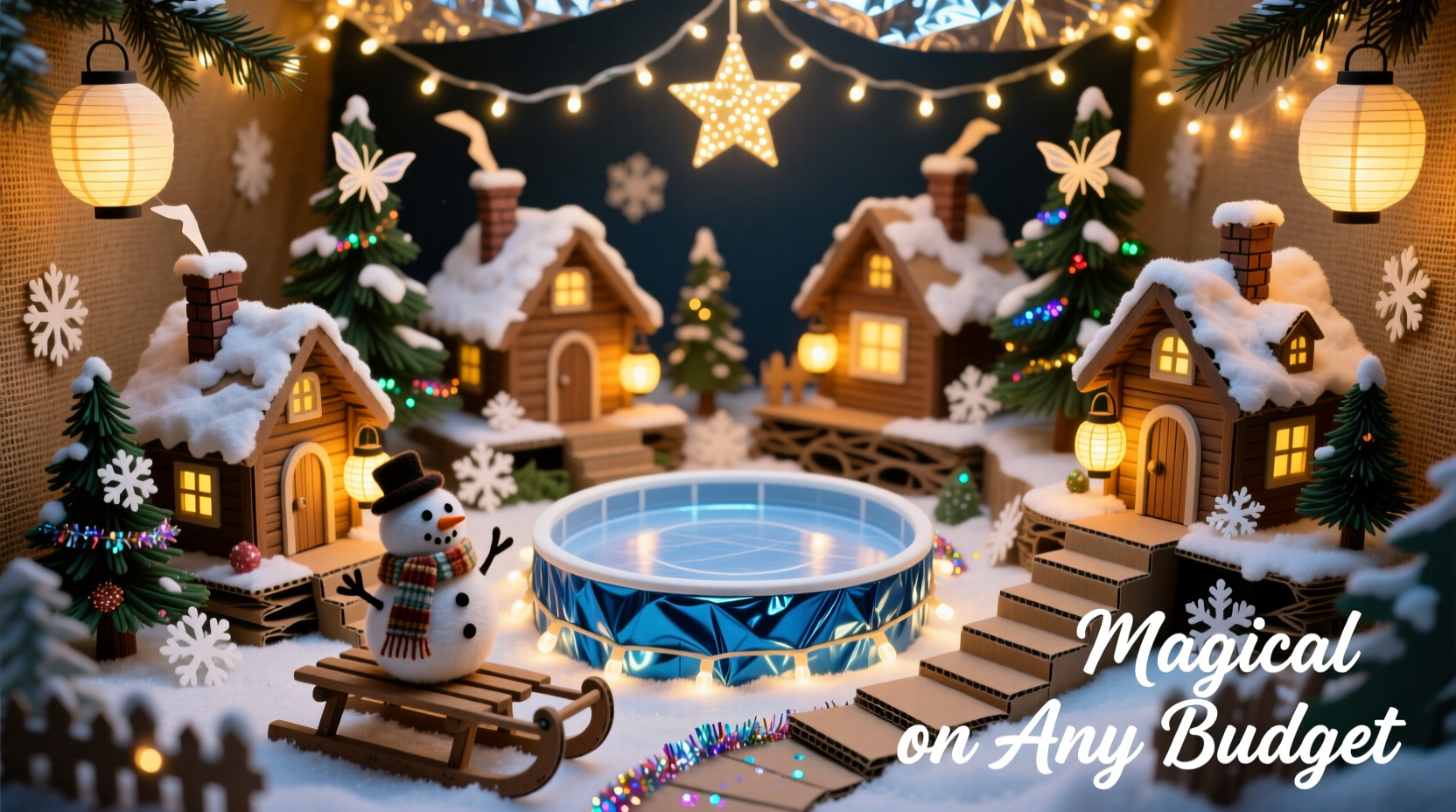
A compelling village begins not with buildings, but with narrative logic. Think of your display as a living scene—not a collection of ornaments. Who lives here? What season is it *in* the village? Is it a snowy Alpine hamlet at dusk? A coastal New England harbor dusted with frost? A cozy Midwestern main street after a gentle snowfall? Defining that micro-narrative upfront prevents haphazard placement and guides every subsequent decision: scale, color palette, lighting tone, even sound (more on that later).
Most beginners make the mistake of buying “village pieces” without context—adding a lighthouse next to a log cabin because both are labeled “Christmas”—only to end up with visual dissonance. Instead, commit to one geographic and seasonal identity. That choice alone eliminates 70% of purchasing confusion and gives your eye a natural anchor when arranging.
Build Your Foundation: Scale, Surface & Structure
Scale consistency is non-negotiable. Mixing 1:100, 1:150, and 1:200 pieces creates visual chaos—even if they’re all labeled “village.” Stick to one primary scale (1:150 is most common and widely available) and treat outliers like trees or figurines as intentional accents—not core architecture. If you inherit mismatched pieces, group them by size and assign roles: larger buildings become “anchor structures” (town hall, church), smaller ones become “residential details” (cottages, shops), and tiny elements become “foreground texture” (benches, mailboxes, sleds).
Your surface—the base—is where budget ingenuity shines. Skip expensive pre-made platforms. A sturdy, unfinished pine board ($8–$12 at hardware stores) sanded smooth and stained with diluted walnut wood stain creates rich warmth. For snow, use a mix of 60% baking soda + 30% white glue + 10% iridescent craft glitter—applied thickly near buildings, thinly toward edges for depth. Let dry overnight. This dries matte-white with subtle shimmer and holds up to handling better than cotton batting or fake snow spray.
| Surface Option | Cost (Est.) | Best For | Pro Tip |
|---|---|---|---|
| Repurposed wooden tray (thrifted) | $2–$5 | Small mantels or tabletops | Sand lightly and seal with clear matte Mod Podge to prevent warping from humidity. |
| Corrugated cardboard + burlap wrap | $0.75 | Kids’ villages or temporary displays | Glue burlap with diluted white glue—wrinkles add rustic texture; avoid staples (they snag wires). |
| Painted MDF board (1/4\" thick) | $10–$14 | Permanent, large-scale setups | Paint base coat in cool gray (e.g., Sherwin-Williams “Mindful Gray”) before adding snow—creates realistic shadow depth. |
| Old picture frame (glass removed) | $1–$4 (thrift) | Wall-mounted or shelf-edge displays | Line back with dark blue velvet paper—makes lights pop and hides wiring. |
The Budget Breakdown: Smart Sourcing & DIY Swaps
A full village doesn’t require a $300 starter set. Most high-quality, long-lasting pieces cost $12–$25 each—but you rarely need more than 5–7 core buildings for impact. The rest comes from clever substitution and repetition.
- Thrift stores & estate sales: Look beyond “Christmas” sections. Ceramic salt-and-pepper shakers become cottages; miniature ceramic fruit bowls become gazebos; vintage glass cloches (cleaned thoroughly) house glowing LED tea lights as “snow globes.”
- Dollar stores, not for decor—but for utility: Clear plastic cupcake liners ($1 for 100) become snow-covered rooftops when filled with baking-soda mix and glued upside-down. Foam craft balls ($0.12 each) sanded and painted become textured boulders or snowmen bases.
- Hardware store hacks: Cork coasters ($3 for 4) cut in half = rustic stone foundations. Copper pipe offcuts (1/4\" diameter) painted white = miniature picket fences. Steel wool pads (used dry) = perfect textured “snow drifts” when layered and glued.
- Lighting on $0: Use battery-operated fairy lights you already own (check old garlands or string lights). Remove bulbs from one strand, rewire 3–5 LEDs onto thin insulated wire, and tuck into windows with hot glue dabs. No soldering needed—just twist connections and wrap with electrical tape.
“Scale discipline and consistent lighting temperature are what separate ‘cute’ from ‘captivating.’ A village lit only in warm white (2700K) with no cool accents feels flat. Add one or two cool-white LEDs—like a streetlamp or distant train headlight—to create depth and realism.” — Lena Torres, Display Designer, National Retail Federation Holiday Council
Step-by-Step: Building Your Village in 90 Minutes (No Experience Needed)
This timeline assumes you’ve chosen your story, gathered base materials, and selected 5–7 key pieces. All steps use hand tools and household supplies.
- Minute 0–10: Prep your base. Sand, stain or paint, then apply first layer of snow mixture (keep it thicker near center, thinner at edges). Let dry 15 minutes.
- Minute 10–20: Arrange buildings loosely—no glue yet. Group by height and function (tall church at back, low cottages in front, shop with awning at eye level). Leave breathing room: minimum 1.5x building width between structures.
- Minute 20–35: Add terrain layers. Press cork coasters into snow for stone paths. Glue foam balls partially submerged for hills. Tuck steel wool “drifts” beside buildings. Let adhesive set 5 minutes.
- Minute 35–55: Wire lighting. Start with interior lights (use tweezers to position LEDs in windows), then add exterior strings along paths or wrapped around trees. Test batteries before final gluing.
- Minute 55–80: Secure buildings with low-temp hot glue (less risk of warping plastic). Hold each piece for 10 seconds. Then add micro-details: mini pinecones (glued to roof peaks), toothpick fences, fabric scraps for awnings.
- Minute 80–90: Final review. Step back 6 feet. Does your eye travel naturally? Is there a clear focal point? Does the “story” read instantly? Adjust one element only—then stop.
Real Example: Maya’s Mantel Magic on $47.82
Maya, a teacher in Portland, had a 32-inch marble mantel, zero village pieces, and a $50 limit. She spent $22 at Goodwill: three ceramic mushroom lamps (repainted white with acrylic), a vintage brass candleholder (re-purposed as a gazebo), and a wooden toy train set (wheels removed, body painted cobalt blue as a general store). At Dollar Tree, she bought cupcake liners ($1), faux fur scraps ($1), and battery tea lights ($3). Hardware store added cork coasters ($3) and steel wool ($2). Her total: $47.82.
She built a “Pacific Northwest logging town” story: mossy green felt (cut from an old sweater) became forest floor, steel wool “snow” clung to mushroom caps, and the brass gazebo held a single warm LED. She used hot glue sparingly—only on bases—and wired lights with thin copper wire scavenged from an old Ethernet cable. Her secret? She placed the tallest piece (a repainted ceramic lamp) slightly off-center left, drawing the eye diagonally across the mantel to the blue storefront on the right. Visitors consistently say, “It feels like you could hear the creek running behind it.” That’s story-driven design—not spending.
Do’s and Don’ts: Avoiding Common Pitfalls
Even seasoned decorators misstep. Here’s what actually derails village magic—and how to sidestep it.
| Action | Do | Don’t |
|---|---|---|
| Lighting | Use only warm-white LEDs (2700K) for interiors; add one cool-white accent (e.g., lamppost) | Mix warm and cool whites randomly—creates visual noise and breaks immersion |
| Color Palette | Limit dominant colors to 3: base (white/snow), structure (wood-tone or stone-gray), and accent (one hue: red door, green wreath, gold bell) | Add more than one accent color—dilutes focus and reads as cluttered |
| Figurines | Use 3–5 max; place at varying depths (one near front path, one mid-scene, one barely visible in window) | Crowd sidewalks with identical figurines—they read as “stock” not “lived-in” |
| Wiring | Route wires under snow or behind buildings; secure with glue dabs every 3 inches | Let wires dangle visibly—immediately breaks illusion of reality |
| Scale Consistency | Measure one building’s height, then compare others against it using a ruler or credit card edge | Rely on “looks about right”—scale errors compound visually |
FAQ
How do I make my village feel “alive” without spending more?
Add subtle motion and sensory layers. Place a small, silent USB-powered fan (set to lowest speed) *behind* the display—not blowing on it, but creating gentle air movement that makes lightweight fabric awnings or paper snowflakes tremble. Add a Bluetooth speaker playing low-volume nature sounds (distant sleigh bells, wind chimes, or crackling fire) on loop. These cues trigger subconscious recognition of “life,” requiring zero new physical objects.
Can I mix brands like Department 56 and Lemax?
Yes—if you control scale and finish. Both offer 1:150 lines. But avoid mixing their “premium” and “value” tiers: Department 56’s Heritage line has finer detail than its Classic line, and Lemax’s Signature series outperforms its Village line. Stick to one tier per brand, or better—choose one brand and supplement with thrifted or handmade pieces in matching scale and paint style.
What’s the safest way to store my village year-round?
Never stack buildings directly. Place each in its own rigid cardboard box lined with acid-free tissue paper. Store boxes flat (not upright) in a climate-controlled closet—avoid attics (heat warps plastic) and basements (humidity yellows paint). Label boxes with your village’s story name (“Norwegian Fjord 2024”) so you rebuild with intention next year—not memory.
Conclusion: Your Village Isn’t About Perfection—It’s About Presence
A Christmas village isn’t a trophy to be polished and admired from afar. It’s a tactile, evolving ritual—a quiet act of world-building during a season that often feels overwhelming. The most beloved villages aren’t the most expensive or elaborate; they’re the ones that hold personal resonance: the cottage shaped like your childhood home, the lighthouse that echoes a family vacation, the tiny bakery window lit with the same amber glow as your grandmother’s kitchen at midnight.
You don’t need permission to begin. You don’t need clearance from a retailer or approval from social media. Grab that thrifted ceramic mushroom. Paint that cork coaster gray. Twist those LED wires. Place one building where it feels *true*. Then step back—not to critique, but to witness what you’ve made possible with attention, patience, and the quiet confidence that magic isn’t purchased. It’s assembled, one intentional choice at a time.




 浙公网安备
33010002000092号
浙公网安备
33010002000092号 浙B2-20120091-4
Comments
No comments yet. Why don't you start the discussion?