
When it comes to comfort, few things rival the warmth of a cozy throw draped over the couch or folded at the foot of the bed. But when you factor in long-term durability and softness retention through repeated laundering, two popular choices—chunky knit blankets and fleece throws—diverge significantly. While both promise snug appeal, their performance under the stress of regular washing tells very different stories. Understanding how each fabric behaves over time can save you from disappointment, wasted money, and scratchy surprises.
This article dives deep into the material science, care requirements, and real-world longevity of chunky knit blankets versus fleece throws. Whether you're furnishing a guest room, upgrading your living space, or shopping for a gift, knowing which option maintains its softness—and why—is essential for making an informed decision.
Material Composition and Fabric Behavior
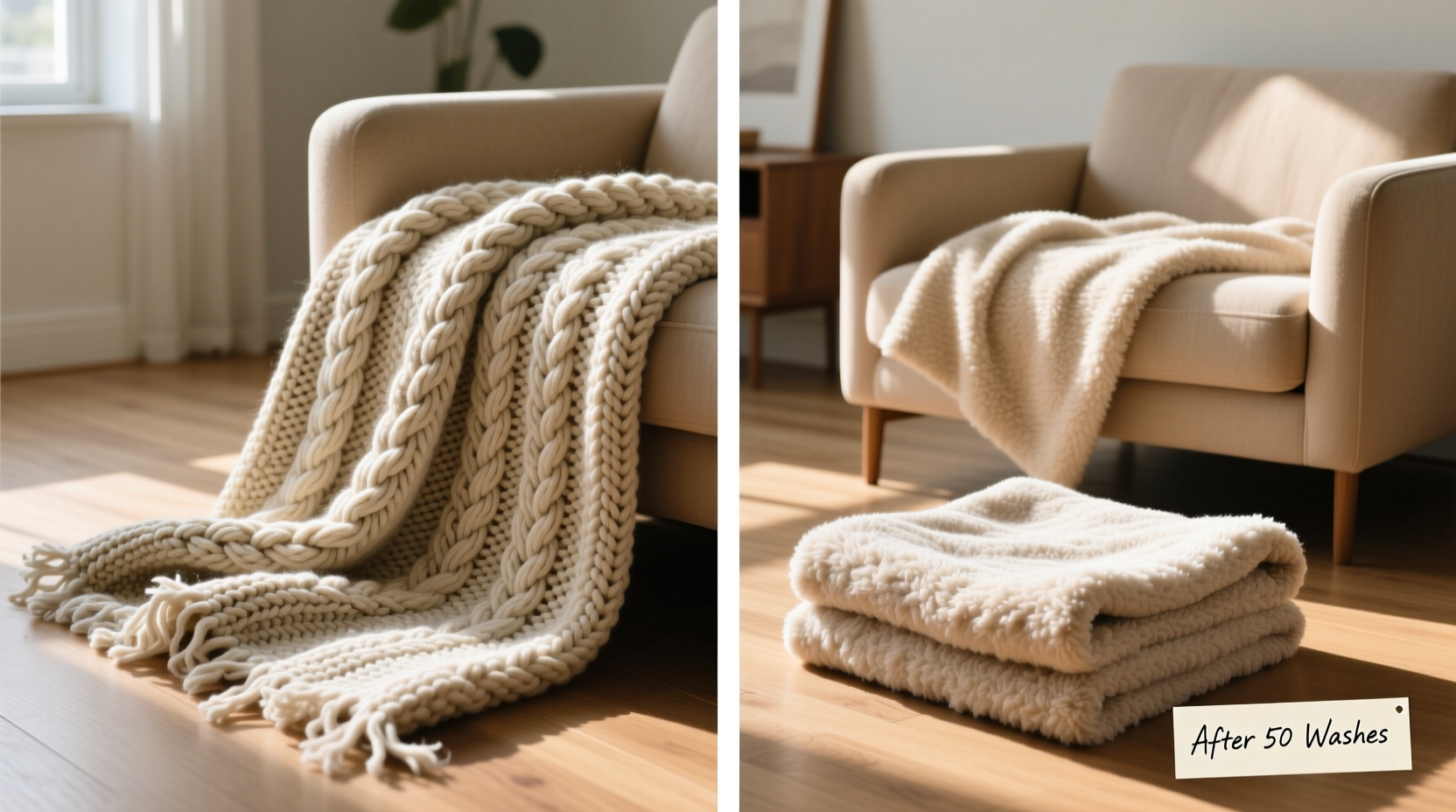
The foundation of any textile’s performance lies in its fiber composition. Chunky knit blankets are typically made from natural or synthetic yarns such as merino wool, acrylic, cotton, or blends. The defining feature is the oversized stitching technique that creates thick loops and a three-dimensional texture. This construction gives the blanket its signature heft and rustic charm but also introduces structural vulnerabilities during machine agitation.
In contrast, fleece throws are almost exclusively made from polyester microfiber—a synthetic material derived from petroleum-based plastics. Fleece is engineered for maximum softness and moisture-wicking ability. Its surface consists of fine, densely packed fibers that mimic the nap of wool without the weight or allergenic properties. Because it's non-woven and tightly bonded, fleece resists pilling better than many knits—but not all treatments or weaves perform equally.
Over multiple wash cycles, the integrity of these materials diverges. Natural fibers in chunky knits may shrink, stretch, or felt depending on care methods, while synthetic fleece generally holds its shape but risks developing static cling and surface hardening due to detergent buildup.
Wash Performance: Softness Retention Over Time
Softness isn’t just about initial touch; it's about consistency. A blanket might feel luxurious out of the package but degrade rapidly after a few launderings. To compare long-term softness retention, consider three key factors: fiber resilience, construction method, and response to mechanical stress.
Chunky knit blankets, particularly those made from 100% acrylic or high-quality wool blends, start soft but often lose loft and pliability over time. The large stitches loosen or tighten unevenly during tumbling, leading to distortion. Wool varieties risk felting if exposed to heat or friction, resulting in a dense, stiff fabric that no longer drapes well. Even machine-washable versions labeled as \"easy care\" tend to shed lint and develop snags within six months of regular use.
Fleece throws, by comparison, maintain dimensional stability far more effectively. Their non-knit structure means there are no stitches to unravel. Polyester microfibers resist abrasion and retain pile height across dozens of washes. However, softness can diminish subtly due to surfactant residue from detergents clogging fiber pores. Without proper rinsing or periodic deep cleaning, fleece develops a slightly plasticky feel and increased static charge—especially in dry climates.
“Fleece excels in durability because it lacks the structural weak points inherent in knitted fabrics. But neglecting rinse cycles leads to tactile degradation over time.” — Dr. Lena Patel, Textile Scientist at the Institute for Home Fabric Innovation
Side-by-Side Comparison: Key Attributes After Repeated Washing
| Attribute | Chunky Knit Blanket | Fleece Throw |
|---|---|---|
| Initial Softness | High (plush, textured) | Very High (silky, smooth) |
| After 10 Washes | Moderate softness loss; possible stretching or shrinking | Minimal change; slight static increase |
| After 30+ Washes | Noticeable matting, thinning, or stiffness | Slight pilling; retains 85–90% original softness |
| Pilling Resistance | Low to moderate (depends on yarn twist) | Moderate to high (tight fiber bonding) |
| Shrinkage Risk | High (especially wool or cotton blends) | Negligible (synthetic fibers are dimensionally stable) |
| Care Complexity | High (often requires hand-washing or gentle cycle) | Low (safe for standard machines and dryers) |
| Lifespan (with average use) | 2–4 years | 5–7+ years |
Real-World Example: A Year-Long Home Test
Jessica M., a homemaker in Portland, OR, conducted an informal side-by-side trial using two throws purchased simultaneously: a bulky merino-blend chunky knit from a boutique brand and a mid-tier polyester fleece throw from a major retailer. Both were used daily on her living room sofa and laundered every three weeks—approximately 17 washes over 12 months.
By month six, the chunky knit had visibly sagged along one edge, likely from being pulled taut during pet naps. It developed small knots where threads snagged and required frequent re-shaping after drying. Though still warm, the texture became coarser, especially around the arms of the couch where friction was highest.
The fleece throw showed only minor pilling near the corners after a year but retained its original drape and softness. Jessica noted she began using fabric softener sheets after nine months to reduce static, which improved tactile comfort. She concluded, “I love the look of the knit, but I reach for the fleece every time now. It just feels like it belongs in a busy household.”
Best Practices for Maximizing Softness Longevity
No fabric remains pristine forever, but proper care dramatically extends peak performance. Below is a step-by-step guide tailored to each type of throw.
For Chunky Knit Blankets
- Wash sparingly. Only launder when necessary—spot clean spills immediately.
- Use cold water and a gentle cycle. Agitation causes stretching and fiber fatigue.
- Never wring or hang dry. Lay flat on a clean towel, reshaping to original dimensions.
- Avoid high heat. Tumble dry only on air-fluff or no-heat settings—if permitted.
- Store loosely folded. Do not compress in tight spaces; this distorts stitch patterns.
For Fleece Throws
- Wash in cold water with mild detergent. Avoid bleach and fabric softeners, which coat fibers.
- Use a mesh laundry bag. Reduces abrasion against other garments.
- Rinse thoroughly. Run an extra rinse cycle to eliminate detergent residue.
- Tumble dry low. High heat melts microfibers slightly, causing hardening.
- Refresh occasionally with vinegar. Add ½ cup white vinegar to the rinse cycle once every few months to dissolve buildup.
Checklist: Choosing the Right Throw for Your Lifestyle
- ✅ Do you have pets or kids? → Choose fleece for durability and easy cleanup.
- ✅ Do you prioritize aesthetic charm over practicality? → Choose chunky knit for visual impact.
- ✅ Will the blanket be washed frequently? → Lean toward fleece.
- ✅ Are you sensitive to synthetic materials? → Consider natural-fiber knits (but expect shorter lifespan).
- ✅ Do you live in a humid climate? → Fleece resists mildew better than wool-based knits.
- ✅ Want low-maintenance warmth? → Fleece wins for hassle-free upkeep.
Frequently Asked Questions
Can I machine wash a chunky knit blanket?
Some can, but only if explicitly labeled as machine-washable. Even then, use a front-loading washer on the gentle cycle with cold water. Place the blanket in a mesh laundry bag to minimize pulling. However, hand-washing remains the safest method for preserving texture and softness over time.
Why does my fleece throw feel stiff after washing?
Stiffness usually results from detergent or fabric softener buildup. Synthetic fibers don’t absorb moisture well, so residues remain on the surface. To restore softness, rewash the throw in warm water with ½ cup distilled white vinegar instead of detergent. Avoid drying until fully rinsed.
Which is warmer: chunky knit or fleece?
Warmth depends on density and material. Chunky knits trap more air due to their lofty construction, offering superior insulation in still conditions. However, fleece provides consistent warmth even when damp and is more wind-resistant. For active use or variable humidity, fleece often performs better despite being thinner.
Final Verdict: Which Stays Softer Longer?
If softness retention after repeated washing is your primary concern, **fleece throws outperform chunky knit blankets** in nearly every measurable category. Their engineered fiber structure resists deformation, maintains pile integrity, and withstands mechanical stress far better than handcrafted or loosely knitted alternatives. While a high-end merino chunky knit may feel more luxurious initially, its tactile decline accelerates with routine use and laundering.
Fleece, though sometimes dismissed as less “premium,” delivers unmatched consistency. Advances in microfiber technology have closed the gap in breathability and drape, making modern fleece throws surprisingly comfortable against the skin. When combined with simple care habits—like avoiding fabric softeners and using cold water washes—fleece retains up to 90% of its original softness even after dozens of cycles.
That said, aesthetics matter. If you value artisanal appearance and don’t mind investing time in maintenance, a chunky knit adds character and coziness to a curated interior. But for households seeking lasting softness with minimal effort, fleece is the clear winner.




 浙公网安备
33010002000092号
浙公网安备
33010002000092号 浙B2-20120091-4
Comments
No comments yet. Why don't you start the discussion?