
Choosing the right essential oil diffuser can significantly impact your aromatherapy experience. With so many options on the market, two popular choices stand out: clay diffusers and electric diffusers. Each offers a unique approach to dispersing essential oils into the air, but they differ in mechanism, efficiency, maintenance, and overall performance. Understanding these differences is key to selecting the best option for your home, office, or wellness space.
This article compares clay and electric diffusers in depth—examining how each works, their advantages and drawbacks, scent diffusion quality, safety considerations, and long-term value. Whether you're new to essential oils or refining your current setup, this guide provides actionable insights to help you make an informed decision.
How Clay Diffusers Work
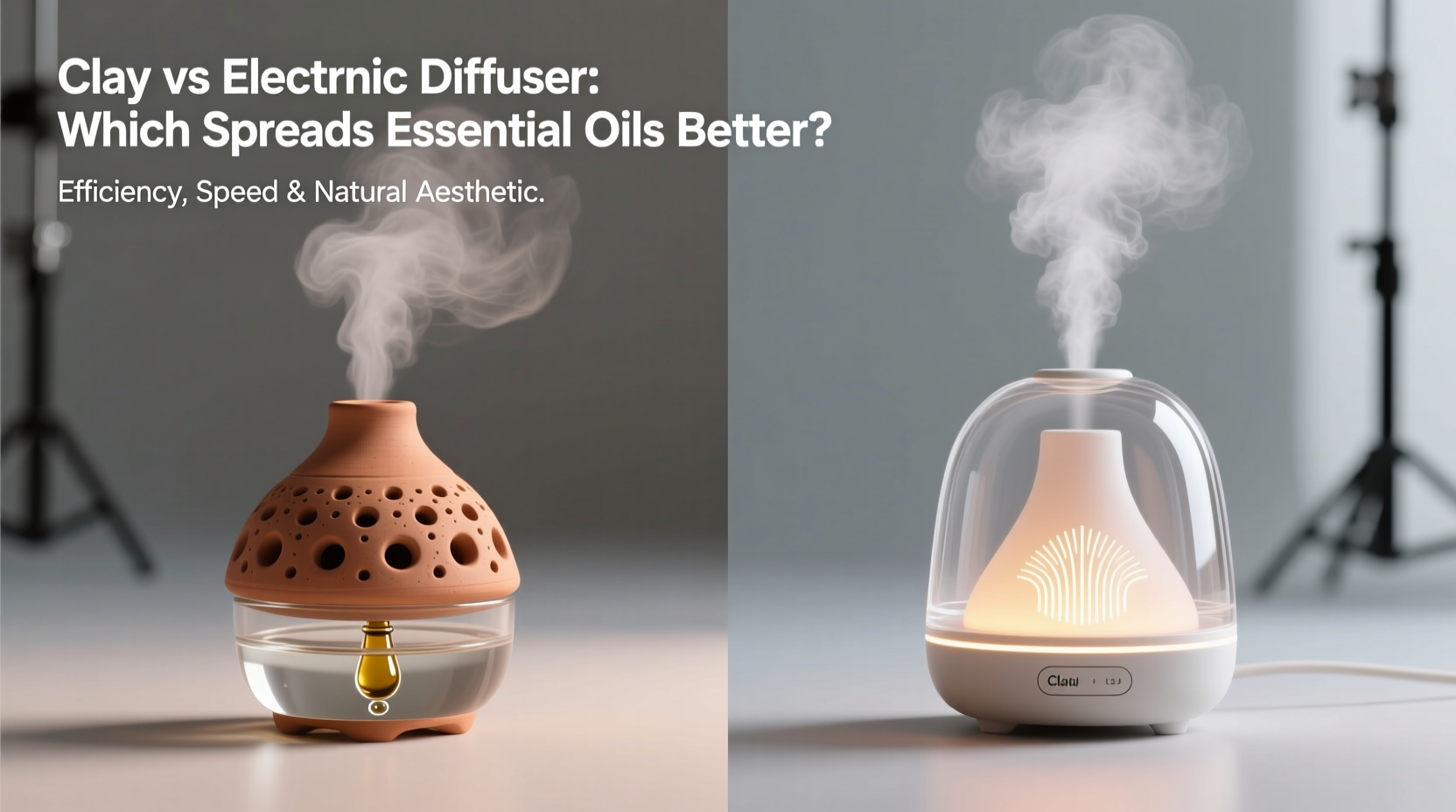
Clay diffusers, often referred to as passive or natural diffusers, rely on the porous nature of unglazed ceramic or terracotta to absorb and slowly release essential oils into the surrounding air. These diffusers typically consist of a small vessel or decorative piece with no moving parts or electrical components.
To use a clay diffuser, a few drops of essential oil are applied directly onto the surface or into a central well. The oil seeps into the micro-pores of the clay and evaporates gradually over time. This process is entirely passive, meaning there’s no fan, heat, or ultrasonic vibration involved.
Because diffusion depends on ambient temperature, humidity, and airflow, results can vary. In warm, dry environments with good circulation, evaporation occurs more quickly. In cooler or more stagnant spaces, the scent may be subtle or take longer to become noticeable.
How Electric Diffusers Work
Electric diffusers use technology to actively disperse essential oils. The most common types are ultrasonic, nebulizing, and heat-based electric models. Ultrasonic diffusers are especially popular due to their quiet operation and dual humidifying function.
Ultrasonic diffusers work by using electronic frequencies to create vibrations in water mixed with essential oils. These vibrations break the oil into fine microparticles, which are then released into the air as a cool mist. Nebulizing diffusers operate without water, using high-pressure air streams to atomize pure essential oils into a concentrated vapor.
Heat-based electric diffusers use warmth to evaporate oils, though this method risks altering the chemical composition of sensitive oils, potentially reducing therapeutic benefits.
Unlike clay diffusers, electric versions provide consistent, adjustable output. Most models include timers, LED lighting, and variable mist settings, allowing users to control intensity and duration of diffusion.
Performance Comparison: Scent Strength and Coverage
The primary goal of any diffuser is effective scent dispersion. When comparing clay and electric models, several factors come into play: speed of diffusion, scent strength, room coverage, and longevity of aroma.
Clay diffusers offer a gentle, ambient fragrance that spreads slowly and subtly. They are best suited for small spaces like bedrooms, bathrooms, or personal workspaces. Because diffusion is passive, the scent rarely becomes overpowering, making them ideal for people sensitive to strong smells.
Electric diffusers, particularly ultrasonic and nebulizing types, deliver faster and wider scent distribution. An ultrasonic model can effectively cover rooms up to 300 square feet, depending on settings and ventilation. Nebulizers produce the most potent aroma due to their use of undiluted oils, making them excellent for therapeutic applications.
“Passive diffusers like clay are great for continuous background aroma, but if you want immediate, room-filling scent with control, electric models are far superior.” — Dr. Lena Patel, Aromatherapy Researcher at Holistic Wellness Institute
Detailed Comparison Table
| Feature | Clay Diffuser | Electric Diffuser |
|---|---|---|
| Diffusion Method | Passive evaporation through porous clay | Active misting via ultrasonic, nebulizing, or heat |
| Scent Strength | Mild to moderate | Moderate to strong (adjustable) |
| Room Coverage | Small areas (50–100 sq ft) | Medium to large rooms (up to 300+ sq ft) |
| Oil Efficiency | High – uses minimal oil over time | Variable – nebulizers use more oil; ultrasonic more efficient |
| Maintenance | Low – occasional wipe-down | Regular cleaning required to prevent clogging |
| Noise Level | Silent | Quiet (ultrasonic), silent (nebulizing) |
| Safety | Very safe – no electricity or heat | Safe with supervision; avoid near children/pets if using heat |
| Lifespan | Years (if not broken) | 1–5 years depending on usage and model |
Real-World Example: Office vs. Bedroom Use
Sarah, a freelance graphic designer, wanted to incorporate aromatherapy into her daily routine. She works from a small home office during the day and values focus and calm. Initially, she tried a clay diffuser with lavender oil. While she enjoyed its subtle presence and aesthetic appeal, she found the scent faded too quickly and didn’t reach the back of the room.
After switching to an ultrasonic electric diffuser with a timer function, she noticed an immediate improvement. The mist dispersed evenly, and the scent remained consistent for hours. She programmed it to run during her morning work block, enhancing concentration without needing constant reapplication.
In contrast, Sarah placed the clay diffuser in her bedroom overnight. There, the gentle aroma provided a soothing background note without disturbing her sleep—something a louder or stronger electric model might have done. This case illustrates how both types have distinct strengths depending on context.
Maintenance and Long-Term Care
One of the appealing aspects of clay diffusers is their low maintenance. Since they don’t contain mechanical parts or water reservoirs, there’s little risk of mold or mineral buildup. Simply wipe the surface occasionally with a dry cloth and reapply oil as needed. If the pores become saturated over months of use, soaking the diffuser in warm water (without soap) can help reset absorption capacity.
Electric diffusers require more attention. Ultrasonic models need regular cleaning—ideally every 3–5 uses—to prevent oil residue from clogging the internal mechanism. Most manufacturers recommend using distilled water to minimize mineral deposits. Nebulizing diffusers, while powerful, require periodic nozzle cleaning to maintain spray efficiency.
Cost and Value Over Time
Clay diffusers are generally inexpensive, ranging from $10 to $30, and last indefinitely with proper care. They consume essential oils very slowly—sometimes just 10–15 drops per week—making them economical for long-term use.
Electric diffusers vary widely in price, from $20 for basic models to over $100 for advanced nebulizers. While they use more oil per session, especially nebulizing types, their ability to cover larger areas and deliver targeted aromatherapy may justify the investment for frequent users.
However, electric units may need replacement after a few years due to wear on internal components. Clay diffusers, being inert and durable, won’t degrade unless physically damaged.
Step-by-Step Guide: Choosing the Right Diffuser for Your Needs
- Assess your space size. For rooms under 100 sq ft, a clay diffuser may suffice. Larger areas benefit from electric models.
- Determine your desired scent intensity. Prefer a soft background aroma? Choose clay. Want strong, fast-acting fragrance? Go electric.
- Consider noise sensitivity. Bedrooms or meditation spaces favor silent clay or quiet ultrasonic diffusers.
- Evaluate maintenance willingness. If you prefer set-and-forget solutions, clay requires less upkeep.
- Think about safety. Homes with children or pets may benefit from flame-free, electricity-free clay options.
- Budget for long-term use. Calculate oil consumption and replacement costs over a year to compare true value.
Frequently Asked Questions
Do clay diffusers actually work?
Yes, clay diffusers do work, but they provide a mild, gradual release of fragrance. They are effective for small spaces and those who prefer a subtle aroma. Their performance is based on passive evaporation, so results depend on environmental conditions like airflow and humidity.
Which type preserves the therapeutic properties of essential oils better?
Ultrasonic and nebulizing electric diffusers preserve therapeutic compounds better than heat-based models. Clay diffusers also retain oil integrity since no heat is involved. However, because clay releases only small amounts of vapor, the concentration may be too low for clinical aromatherapy effects.
Can I use the same essential oils in both types?
Absolutely. Both clay and electric diffusers work with standard essential oils. Avoid using carrier oils or fragrance oils in electric diffusers, as they can clog the mechanism. For clay diffusers, thicker oils may saturate the surface more slowly but are still usable.
Final Recommendation: Match the Tool to the Goal
There is no single “best” diffuser—only the best choice for your specific needs. If you prioritize simplicity, safety, and a natural aesthetic, a clay diffuser is an excellent option. It blends seamlessly into decor, operates silently, and consumes minimal resources.
But if you want powerful, consistent scent dispersion across larger areas—or are using essential oils for focused wellness purposes—an electric diffuser delivers superior performance. Modern ultrasonic models combine functionality with elegance, offering programmable features and ambient lighting that enhance usability.
Many users find value in owning both types: a clay diffuser for quiet, intimate spaces like nightstands or reading nooks, and an electric unit for living areas, offices, or during times when stronger aromatic support is desired.




 浙公网安备
33010002000092号
浙公网安备
33010002000092号 浙B2-20120091-4
Comments
No comments yet. Why don't you start the discussion?