
When it comes to deep-cleaning the skin and removing excess oil, dirt, and environmental pollutants, facial masks are a go-to solution. Among the most popular options are clay and charcoal masks—both celebrated for their purifying abilities. But when it comes to drawing out impurities quickly and effectively, which one actually performs better? The answer isn’t always straightforward, as it depends on your skin type, the formulation of the product, and how each ingredient interacts with your pores.
While both clay and activated charcoal are powerful detoxifiers, they work through different mechanisms and offer unique advantages. Understanding these differences can help you make an informed decision about which mask delivers faster results for your specific concerns—whether that’s clogged pores, blackheads, or dullness caused by buildup.
How Clay Masks Work to Cleanse Skin
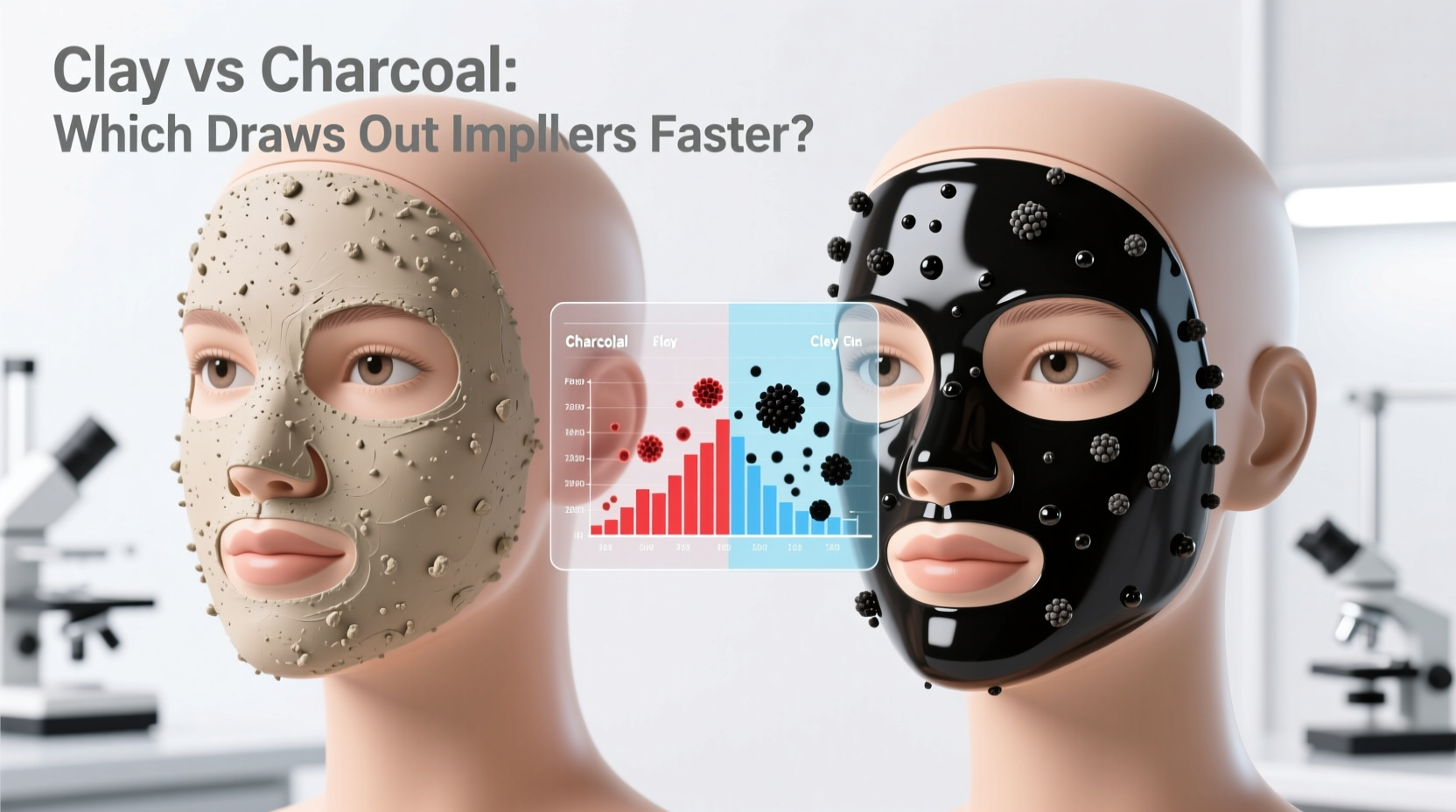
Clay has been used in skincare for centuries, dating back to ancient civilizations like Egypt and Greece. Its effectiveness lies in its mineral-rich composition and natural absorbency. When applied to the skin, clay draws out sebum, toxins, and dead skin cells from pores through capillary action—the same principle that allows a sponge to soak up liquid.
Different types of clay offer varying benefits:
- Kaolin clay: Gentle and ideal for sensitive or dry skin; removes surface impurities without over-drying.
- Bentonite clay: Highly absorbent, excellent for oily and acne-prone skin; swells when mixed with water, increasing its ability to pull out debris.
- French green clay: Rich in iron oxide and magnesium; effective at exfoliating and detoxifying due to its mild abrasiveness.
- Rhassoul clay: Originating from Morocco, this clay softens skin while cleansing, making it suitable for combination types.
Clay masks typically begin working within minutes of application. As the mask dries, it tightens the skin and creates a slight suction effect that helps dislodge trapped oil and grime. Most dermatologists recommend leaving a clay mask on for 10–15 minutes to maximize efficacy without causing irritation.
The Science Behind Activated Charcoal Masks
Activated charcoal is produced by heating carbon-rich materials like coconut shells to extremely high temperatures, creating a highly porous structure. This process dramatically increases its surface area—just one gram can have over 3,000 square meters of surface—which gives it exceptional adsorption capacity (note: adsorption, not absorption; meaning substances bind to the surface rather than being soaked in).
When formulated into a face mask, activated charcoal acts like a magnet for toxins, heavy metals, and excess sebum. It binds to these impurities on contact and lifts them away when the mask is rinsed off. Because of its fine particle size and reactivity, charcoal can penetrate deeper into pore linings compared to some clays, especially in gel or peel-off formulations.
Charcoal masks often produce a dramatic visual result—black residue left behind after removal clearly shows what’s been extracted. However, this doesn’t always mean deeper cleansing; sometimes, it's just the remnants of the product itself. Still, clinical studies suggest that activated charcoal can reduce bacterial load on the skin surface, potentially lowering acne risk.
“Activated charcoal excels at binding organic compounds and oils on the skin’s surface, making it particularly effective for urban dwellers exposed to pollution.” — Dr. Lena Torres, Board-Certified Dermatologist
Clay vs Charcoal: A Direct Comparison
To determine which draws out impurities faster, we need to compare key factors such as onset time, depth of cleansing, suitability for skin types, and overall efficiency.
| Feature | Clay Mask | Charcoal Mask |
|---|---|---|
| Onset of Action | 5–7 minutes (as it begins drying) | Immediate upon contact (adsorption starts instantly) |
| Pore Penetration Depth | Moderate (depends on clay type and consistency) | High (especially in lightweight serums or peel-offs) |
| Oil Removal Speed | Gradual but sustained during wear time | Rapid initial binding, peaks within first few minutes |
| Skin Types Best Suited | All types (choose clay accordingly) | Oily, acne-prone, combination |
| Drying Effect | Can be drying if overused or left too long | Often more dehydrating, especially peel-off versions |
| Residue Visibility After Use | Minimal (usually white or gray smear) | High (black particles visibly removed) |
| Average Time to See Results | 1–2 uses (reduced shine, smoother texture) | Immediate post-mask clarity, though temporary |
From the data above, charcoal appears to initiate impurity removal faster due to immediate adsorption. However, clay provides a more gradual yet thorough cleanse, especially when targeting deeper congestion over multiple uses. In short: charcoal wins in speed, clay wins in balance and sustainability.
Real-World Example: A Weeklong Experiment
Jessica, a 29-year-old marketing professional living in downtown Chicago, struggled with persistent blackheads along her nose and forehead. With daily exposure to city pollution and frequent makeup use, she wanted a fast-acting solution. Over one week, she tested both types of masks:
- Day 1: Used a bentonite clay mask mixed with apple cider vinegar. Noticed mild tightening after 10 minutes. Pores looked less shiny but no major extraction.
- Day 3: Tried a peel-off charcoal mask. Upon removal, visible black strands came off—mostly hardened glue-like residue from the mask, though some sebum plugs were present.
- Day 5: Repeated the clay mask, this time after steaming. Found small whiteheads emerging and easier to clear manually.
- Day 7: Skipped masking but assessed results. Her skin felt smoother overall, with fewer new breakouts. She concluded that while the charcoal gave instant gratification, the clay delivered longer-term improvement.
This case illustrates a common pattern: charcoal offers theatrical results, but consistent clay use leads to healthier skin architecture over time.
Step-by-Step Guide to Maximizing Impurity Removal
If your goal is to draw out impurities as quickly and safely as possible, follow this optimized routine regardless of which mask you choose:
- Cleanse First: Wash your face with a gentle foaming cleanser to remove surface oils and makeup. This prevents the mask from merely sitting on top of grime.
- Open Pores: Hold a warm, damp washcloth over your face for 2–3 minutes or take a hot shower. Heat expands pores, enhancing penetration.
- Apply Evenly: Use fingers or a brush to apply a thin, even layer. Avoid thick globs, which dry unevenly and may crack.
- Set a Timer:
- For clay: 10–12 minutes max.
- For charcoal (especially peel-off): Follow label instructions, usually 15–20 minutes until fully dry.
- Remove Properly:
- Clay: Rinse with lukewarm water using circular motions to gently exfoliate.
- Charcoal (peel-off): Peel slowly from bottom to top, pulling upward against hair growth.
- Follow With Toner: Apply an alcohol-free toner to close pores and restore pH balance.
- Hydrate Immediately: Lock in moisture with a lightweight, non-comedogenic moisturizer to prevent rebound oil production.
Frequently Asked Questions
Can I use both clay and charcoal in the same mask?
Yes, many commercial masks combine both ingredients. The synergy enhances purification—clay provides structure and mineral nourishment, while charcoal boosts adsorption power. Just ensure the formula includes soothing agents like aloe vera or chamomile to counteract potential dryness.
Which is better for acne?
For active breakouts, clay—particularly bentonite or sulfur-infused varieties—is generally safer and more effective. While charcoal removes surface bacteria, clay reduces inflammation and absorbs pus from existing pimples. Overuse of peel-off charcoal masks can also irritate inflamed skin.
How often should I use either mask?
Two to three times per week is sufficient for oily skin. Those with dry or sensitive skin should limit use to once a week. Overuse disrupts the skin barrier, leading to increased oil production and sensitivity.
Checklist: Choosing the Right Mask for Your Needs
Use this checklist to decide whether a clay or charcoal mask suits your goals:
- ☐ Do I have oily or combination skin? → Both options viable
- ☐ Am I looking for immediate visible results? → Lean toward charcoal
- ☐ Do I struggle with blackheads or congestion? → Try charcoal peel-off or clay with salicylic acid
- ☐ Is my skin sensitive or easily irritated? → Choose kaolin-based clay; avoid peel-off charcoal
- ☐ Do I live in a polluted environment? → Charcoal has an edge for daily detox
- ☐ Want long-term pore refinement? → Prioritize regular clay masking with proper aftercare
- ☐ Looking for exfoliation + cleansing? → Opt for French green clay or charcoal with fruit enzymes
Final Verdict: Which Draws Out Impurities Faster?
When measuring speed alone—how quickly a mask begins removing contaminants—activated charcoal takes the lead. Its adsorptive properties activate immediately upon contact with oil and debris, making it highly efficient in short timeframes. Peel-off versions create a satisfying physical demonstration of extraction, though some of what comes off is the dried film itself.
However, “faster” doesn’t always mean “better.” Clay masks offer a more controlled, balanced approach. They don’t rely on dramatic peeling effects but instead work progressively to normalize sebum production and refine pores with repeated use. For individuals seeking sustainable clarity without compromising skin health, clay is often the superior long-term choice.
Ultimately, the best option depends on your priorities. If you need a quick pre-event deep clean before a night out, a charcoal mask might deliver the instant glow you want. But if you're building a consistent skincare regimen aimed at reducing breakouts and minimizing pore appearance over weeks, integrating a well-formulated clay mask will likely yield more stable, noticeable improvements.
“The fastest result isn’t always the healthiest outcome. Skin thrives on consistency, not shock treatments.” — Dr. Arjun Patel, Cosmetic Dermatology Researcher
Take Action Today for Cleaner, Healthier Skin
Understanding the strengths of clay versus charcoal empowers you to make smarter choices in your skincare journey. Whether you opt for rapid detoxification or gradual refinement, the key is alignment with your skin’s needs—not marketing hype.
Start by evaluating your current skin condition: Are you battling shine and blackheads daily? Try a weekly charcoal treatment paired with gentle cleansing. Dealing with recurring congestion and enlarged pores? Build a routine around mineral-rich clay masks twice a week, supported by steaming and hydration.




 浙公网安备
33010002000092号
浙公网安备
33010002000092号 浙B2-20120091-4
Comments
No comments yet. Why don't you start the discussion?