
For individuals with oily skin, achieving a clear, balanced complexion can feel like a constant battle. Excess sebum production often leads to clogged pores, breakouts, and a persistent shine that resists even the most diligent skincare routines. In this landscape, two popular treatments—clay face masks and sheet masks—are frequently turned to for fast, visible results. But when it comes to oily skin, which one truly clears the complexion more effectively and quickly? The answer isn't always straightforward, as both offer distinct benefits, mechanisms of action, and ideal use cases.
Understanding how each mask type interacts with oily skin is key to making an informed decision. While clay masks are lauded for their deep-cleansing power, sheet masks bring hydration and soothing ingredients to the table—often overlooked needs in oily skin care. This article dives into the science, effectiveness, and practical application of both options, helping you determine which path leads to faster clarity for your skin type.
The Science Behind Oily Skin and Mask Treatments
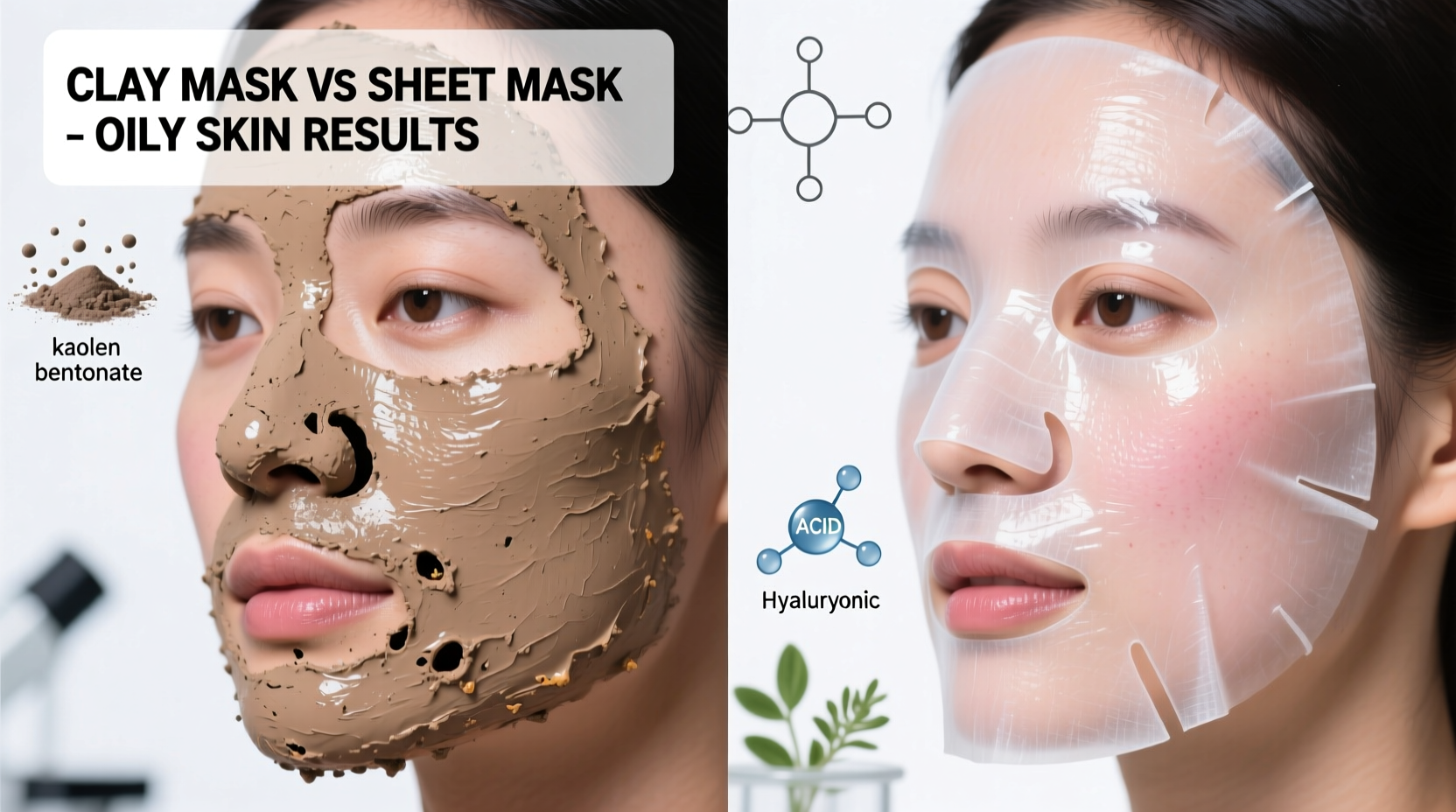
Oily skin results from overactive sebaceous glands producing excess sebum. While sebum is essential for maintaining skin barrier integrity, too much of it can mix with dead skin cells and environmental debris, leading to comedones (blackheads and whiteheads) and inflammatory acne. Effective treatment must address oil regulation, pore cleansing, and inflammation control—all while avoiding irritation that could trigger further oil production.
Face masks serve as targeted treatments, delivering concentrated ingredients directly to the skin. Their efficacy depends on formulation, active ingredients, and compatibility with skin’s biological behavior. Clay masks typically contain absorbent minerals like kaolin, bentonite, or French green clay, which draw out impurities and reduce surface oil. Sheet masks, on the other hand, are soaked in serums rich in humectants (like hyaluronic acid), antioxidants, and anti-inflammatory agents that hydrate and calm without adding oil.
A common misconception is that oily skin doesn’t need hydration. In reality, dehydrated skin can signal the sebaceous glands to produce more oil, worsening the problem. Therefore, any effective treatment must balance oil removal with moisture support.
“Treating oily skin isn’t about stripping it dry—it’s about regulating sebum and supporting the skin barrier. Over-drying can backfire, increasing oil production.” — Dr. Lena Patel, Board-Certified Dermatologist
How Clay Masks Work on Oily Skin
Clay masks have long been a staple in acne-prone and oily skincare regimens. Their primary function is adsorption—the process by which molecules adhere to the surface of the clay particles, pulling out oil, toxins, and impurities from pores.
Kaolin clay is gentle and suitable for sensitive oily skin, while bentonite and French green clay are more potent, offering deeper cleansing and mild exfoliation. Many clay masks also include salicylic acid, sulfur, or tea tree oil to enhance antibacterial and pore-clearing effects.
When applied, clay masks create a tightening sensation as they dry, indicating the removal of surface oils and water. This immediate matte effect is appealing, but overuse can compromise the skin barrier. Most dermatologists recommend limiting clay mask use to 1–2 times per week to avoid over-stripping.
While clay masks excel at unclogging pores and reducing shine, they do not provide lasting hydration. For some users, especially those with combination skin, the post-mask tightness can lead to rebound oiliness within hours.
Sheet Masks and Oily Skin: More Than Just Hydration
Sheet masks are often dismissed by those with oily skin as “too moisturizing” or “unnecessary.” However, modern formulations designed for acne-prone or oily complexions challenge this notion. These masks deliver lightweight, non-comedogenic serums infused with niacinamide, centella asiatica, zinc, and low-molecular-weight hyaluronic acid—all ingredients proven to regulate sebum, reduce redness, and strengthen the skin barrier.
Unlike clay masks, sheet masks work by occlusion: the fabric sheet prevents serum evaporation, allowing prolonged absorption. This enhances delivery of active ingredients without clogging pores. Studies show that properly formulated sheet masks can improve skin texture and clarity within days when used consistently.
For oily skin, the best sheet masks avoid heavy emollients and fragrances. Instead, they focus on balancing the microbiome and calming inflammation—key factors in preventing breakouts. Because they don’t strip the skin, sheet masks can be used 2–3 times weekly, even daily for short durations during flare-ups.
Direct Comparison: Clay vs Sheet Masks for Clearer Skin
To determine which option delivers faster clarity, consider the following criteria: speed of visible results, impact on pore congestion, oil control, and overall skin health improvement.
| Metric | Clay Face Masks | Sheet Masks |
|---|---|---|
| Immediate Oil Absorption | High – visibly reduces shine within minutes | Low to moderate – may feel slightly damp initially |
| Pore Cleansing Effect | Strong – physically removes debris and blackheads | Mild – relies on biochemical exfoliants over time |
| Time to Noticeable Clarity | 1–3 uses (if consistent) | 3–5 uses (gradual improvement) |
| Hydration Support | None – may dehydrate | High – improves moisture balance |
| Risk of Over-Drying | High – especially with frequent use | Low – when non-comedogenic formulas are used |
| Best For | Deep cleaning, pre-event mattifying, treating blackheads | Daily maintenance, post-breakout healing, barrier repair |
From this comparison, clay masks offer faster initial results in terms of oil reduction and pore visibility. However, sheet masks contribute to longer-term clarity by addressing root causes like inflammation and imbalance. For sustained improvement, combining both—strategically—may yield optimal outcomes.
Step-by-Step Routine for Faster Skin Clarity
Maximizing results requires more than choosing the right mask—it demands a thoughtful integration into your skincare routine. Here’s a dermatologist-recommended weekly plan tailored for oily skin seeking rapid clarity:
- Day 1 (Cleansing & Exfoliation): Use a salicylic acid cleanser followed by a chemical exfoliant (BHA). Wait 20 minutes, then apply a clay mask to the T-zone for 10 minutes. Rinse and follow with a lightweight, oil-free moisturizer.
- Day 3 (Hydration & Calming): After cleansing, apply a niacinamide-infused sheet mask for 15 minutes. Gently press remaining serum into skin. Skip heavier products; let the skin breathe overnight.
- Day 5 (Targeted Treatment): If breakouts are forming, spot-treat with benzoyl peroxide, then use a sulfur-based clay mask for 8–10 minutes. Focus on congested areas only.
- Day 7 (Recovery & Balance): Use a soothing centella-based sheet mask to restore barrier health after midweek treatments. Ideal after sun exposure or stress-induced flare-ups.
This alternating approach leverages the strengths of both mask types: clay for deep intervention, sheet masks for recovery and prevention. Consistency over 4–6 weeks typically results in significantly fewer breakouts, smaller-looking pores, and reduced midday shine.
Mini Case Study: Real Results in 3 Weeks
Sophia, a 28-year-old graphic designer with combination-oily skin, struggled with recurrent forehead and chin breakouts despite using foaming cleansers and toners daily. She avoided sheet masks, believing they would worsen oiliness, and relied solely on a weekly charcoal-clay mask. While her skin felt “clean” afterward, she noticed increased flakiness on her cheeks and persistent midday greasiness.
After consulting a dermatologist, Sophia adjusted her routine: she reduced clay mask usage to once every 10 days and introduced a niacinamide sheet mask twice weekly. Within three weeks, her breakouts decreased by 70%, and her skin appeared more even-toned. “I was shocked,” she said. “The sheet masks didn’t make me oilier—they actually helped control it better than anything I’d tried.”
Her experience underscores a critical point: clarity isn’t just about removing oil—it’s about creating balance. By incorporating hydration and anti-inflammatory support, Sophia’s skin stopped overcompensating with excess sebum.
Frequently Asked Questions
Can I use both clay and sheet masks in the same week?
Yes, and doing so can be highly effective. Use clay masks for deep cleansing (1–2 times weekly) and sheet masks for hydration and calming (2–3 times weekly). Avoid using them on the same day unless your skin is resilient and well-conditioned.
Do sheet masks cause breakouts on oily skin?
Not inherently. Breakouts depend on formulation. Avoid masks with heavy silicones, mineral oil, or high fragrance content. Look for labels like “non-comedogenic,” “oil-free,” and “for acne-prone skin.” Patch testing new masks behind the ear for 24 hours is a smart precaution.
Which is better for blackheads—clay or sheet masks?
Clay masks are superior for immediate blackhead extraction due to their physical adsorption properties. However, sheet masks containing AHAs (like glycolic acid) or enzymes can gradually dissolve buildup over time. For best results, combine both: use a clay mask monthly for maintenance and a chemical-exfoliating sheet mask weekly.
Action Plan Checklist
- ✅ Identify your skin’s specific concerns: shine, breakouts, clogged pores, or sensitivity
- ✅ Choose clay masks with kaolin or bentonite and added BHA for oily zones
- ✅ Select sheet masks with niacinamide, zinc, or centella—avoid alcohol-heavy formulas
- ✅ Limit clay mask use to 1–2 times per week to prevent barrier damage
- ✅ Use sheet masks 2–3 times weekly, ideally after cleansing and before moisturizing
- ✅ Alternate mask types throughout the week for balanced results
- ✅ Always follow masking with a light, non-comedogenic moisturizer—even oily skin needs hydration
Final Verdict: Which Delivers Clearer Skin Faster?
For immediate, visible oil reduction and pore purification, clay masks take the lead. They offer fast, tangible results that make skin appear instantly cleaner and smoother. However, their effects are often temporary, and overuse can disrupt the skin’s natural equilibrium.
Sheet masks, while slower to show dramatic changes, support long-term clarity by improving skin health from within. They reduce inflammation, regulate sebum production, and prevent future breakouts—making them a smarter choice for sustainable results.
If speed is your priority—such as before an event or during a breakout flare—a clay mask will give you quicker surface-level clarity. But for lasting improvement in skin texture, tone, and oil control, integrating well-formulated sheet masks into your routine proves more effective over time.
The ideal strategy? Combine both. Use clay masks sparingly for deep intervention and rely on targeted sheet masks for maintenance and healing. This dual approach addresses both symptoms and causes, giving oily skin the comprehensive care it needs to achieve true clarity.




 浙公网安备
33010002000092号
浙公网安备
33010002000092号 浙B2-20120091-4
Comments
No comments yet. Why don't you start the discussion?