
Navigating the classic interview question—“What are your strengths and weaknesses?”—can make or break your chances of landing a job. While it seems straightforward, many candidates stumble by either overselling themselves or revealing flaws that raise red flags. The key isn’t just honesty—it’s strategic self-awareness. When answered well, this question becomes an opportunity to demonstrate maturity, growth mindset, and alignment with the role.
This guide breaks down how to structure compelling responses, avoid common pitfalls, and deliver answers that leave a lasting positive impression.
Why This Question Matters
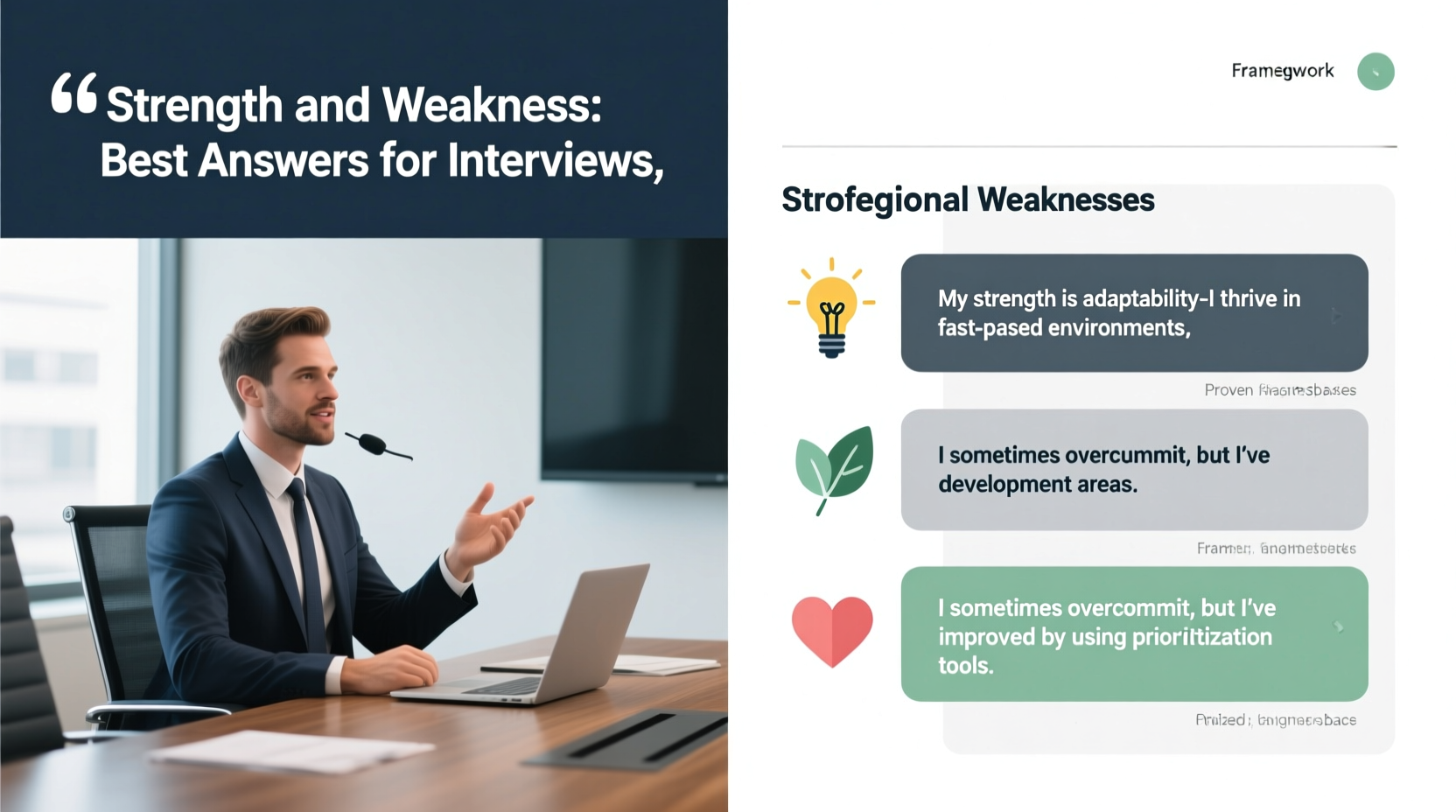
Interviewers don’t ask about strengths and weaknesses to trap you. They’re assessing self-awareness, authenticity, and cultural fit. A strong response shows you understand your professional identity and are committed to improvement.
According to hiring managers at top firms like Google and Deloitte, candidates who frame weaknesses as areas of active development—rather than excuses or deflections—are 68% more likely to receive job offers.
“Candidates who can articulate a real weakness—and what they’re doing about it—show emotional intelligence and coachability.” — Sarah Lin, Talent Acquisition Lead, TechForward Inc.
How to Answer: Strengths That Align With the Role
Your strengths should reflect skills directly relevant to the job description. Generic answers like “I’m a hard worker” or “I’m a team player” lack impact. Instead, tailor your response using specific competencies.
Structure Your Strength Response
- Name the strength: Be precise (e.g., \"data-driven decision-making\").
- Provide context: Share a brief example from past experience.
- Connect to value: Explain how it benefits the employer.
Example: “One of my core strengths is project management under tight deadlines. In my last role, I led a cross-functional team to launch a client portal two weeks ahead of schedule by implementing agile sprints and daily standups. This not only improved client satisfaction but reduced post-launch bugs by 40%. I believe this skill would help your team maintain momentum during high-pressure product cycles.”
Addressing Weaknesses Without Self-Sabotage
The weakness question is where most candidates falter. Some deny having any weaknesses (“I’m a perfectionist”), while others disclose disqualifying flaws (“I struggle with showing up on time”). The goal is balance: acknowledge a genuine area for growth while showing proactive effort to improve.
Realistic Weakness Examples (and How to Frame Them)
- Public speaking: “I used to feel anxious presenting to large groups. To improve, I joined Toastmasters and now lead monthly team updates. I’m more confident, though I still prepare thoroughly.”
- Delegating tasks: “Early in my career, I took on too much because I wanted control over quality. I’ve since learned to trust my team more by setting clear expectations and check-ins. It’s helped me scale my impact.”
- Technical proficiency: “I’m less experienced with advanced Excel functions. Over the past six months, I’ve completed an online course and now use pivot tables regularly in my reports.”
“The best weakness answers include humility, specificity, and evidence of action.” — Mark Tran, HR Director at NexaCorp
Do’s and Don’ts: Strengths & Weaknesses Comparison
| Category | Do’s | Don’ts |
|---|---|---|
| Strengths | Tie to job requirements; give measurable results | Say “I work hard” without proof |
| Weaknesses | Pick a real but non-critical flaw; show improvement steps | Cite core job skills (e.g., “I’m bad at coding” for a developer role) |
| Delivery | Be concise (30–45 seconds per answer) | Ramble or apologize excessively |
| Honesty | Use real examples with modest confidence | Use clichés like “I care too much” |
Step-by-Step Guide to Crafting Your Answers
Follow this process to build authentic, effective responses tailored to your background and target role.
- Analyze the job description: Identify 3–5 key competencies (e.g., communication, problem-solving, technical skills).
- Reflect on your track record: Which strengths have delivered measurable results? Choose one aligned with the role.
- Select a developmental area: Pick a weakness that’s true, not central to the job, and one you’re actively improving.
- Draft your answers: Use the structure: “I’ve improved in X by doing Y, which has led to Z.”
- Practice aloud: Record yourself. Does it sound natural? Trim jargon and over-explanation.
- Get feedback: Ask a mentor or colleague if your answers come across as credible and balanced.
Mini Case Study: Turning a Weakness into a Growth Story
Jessica applied for a marketing manager role at a fast-paced startup. During her interview, she was asked about her greatest weakness. Instead of dodging the question, she shared:
“I used to hesitate when making data decisions without full information. In my previous role, this sometimes delayed campaign launches. Realizing speed matters in agile environments, I started using minimum viable data sets to inform quick tests. I also set tighter internal deadlines for analysis. Over three months, our average time-to-launch dropped by 30%. I’m still refining this balance, but I now see informed urgency as a skill worth developing.”
The hiring panel noted her answer demonstrated both self-awareness and initiative. She got the job—and within six months, led a campaign that increased lead conversion by 22%.
Frequently Asked Questions
Is it okay to say “I don’t know” when asked about strengths?
No. This suggests a lack of self-reflection. Even early-career candidates should identify transferable strengths like adaptability, active listening, or fast learning. If unsure, review past performance reviews or feedback from supervisors.
Can I use the same weakness for multiple interviews?
You can, but tailor it to each role. For example, “I’m improving my public speaking” works for most positions. But avoid recycling the same story without adjusting context. Interviewers notice canned answers.
What if my biggest weakness is something critical to the job?
If you lack a core skill (e.g., coding for a software role), address it honestly but emphasize compensating factors: relevant training, rapid learning ability, or supportive collaboration habits. However, consider whether you’re truly ready for the role.
Final Checklist Before Your Interview
- ✅ Identified 1–2 strengths tied to the job description
- ✅ Prepared concise, results-backed examples for each strength
- ✅ Selected a genuine weakness unrelated to core job functions
- ✅ Outlined concrete steps you’re taking to improve that weakness
- ✅ Practiced delivering answers naturally (not memorized)
- ✅ Anticipated follow-up questions (e.g., “Tell me more about that project”)
Conclusion: Turn the Question Into Your Advantage
The “strengths and weaknesses” question isn’t a test of perfection—it’s a window into your professional character. By preparing thoughtfully, you transform a common stumbling block into a standout moment. Focus on growth, relevance, and authenticity. Employers don’t expect flawless candidates; they seek capable, reflective professionals who add value and evolve with the team.




 浙公网安备
33010002000092号
浙公网安备
33010002000092号 浙B2-20120091-4
Comments
No comments yet. Why don't you start the discussion?