
Slingbacks have long been a staple in professional wardrobes and refined casual ensembles alike. Their blend of elegance and convenience—thanks to the back strap that keeps them secure without requiring laces or zippers—makes them a favorite across age groups and fashion preferences. But as styles evolve, a quiet debate has emerged: closed toe versus open toe slingbacks. Is one objectively better? Or is the distinction merely a passing trend shaped by seasonal runways?
The answer lies somewhere between personal comfort, functional needs, and subtle shifts in fashion culture. While both styles share the same foundational silhouette, their differences influence how they perform in real-world scenarios—from office wear to weekend outings.
Understanding the Slingback: A Timeless Design
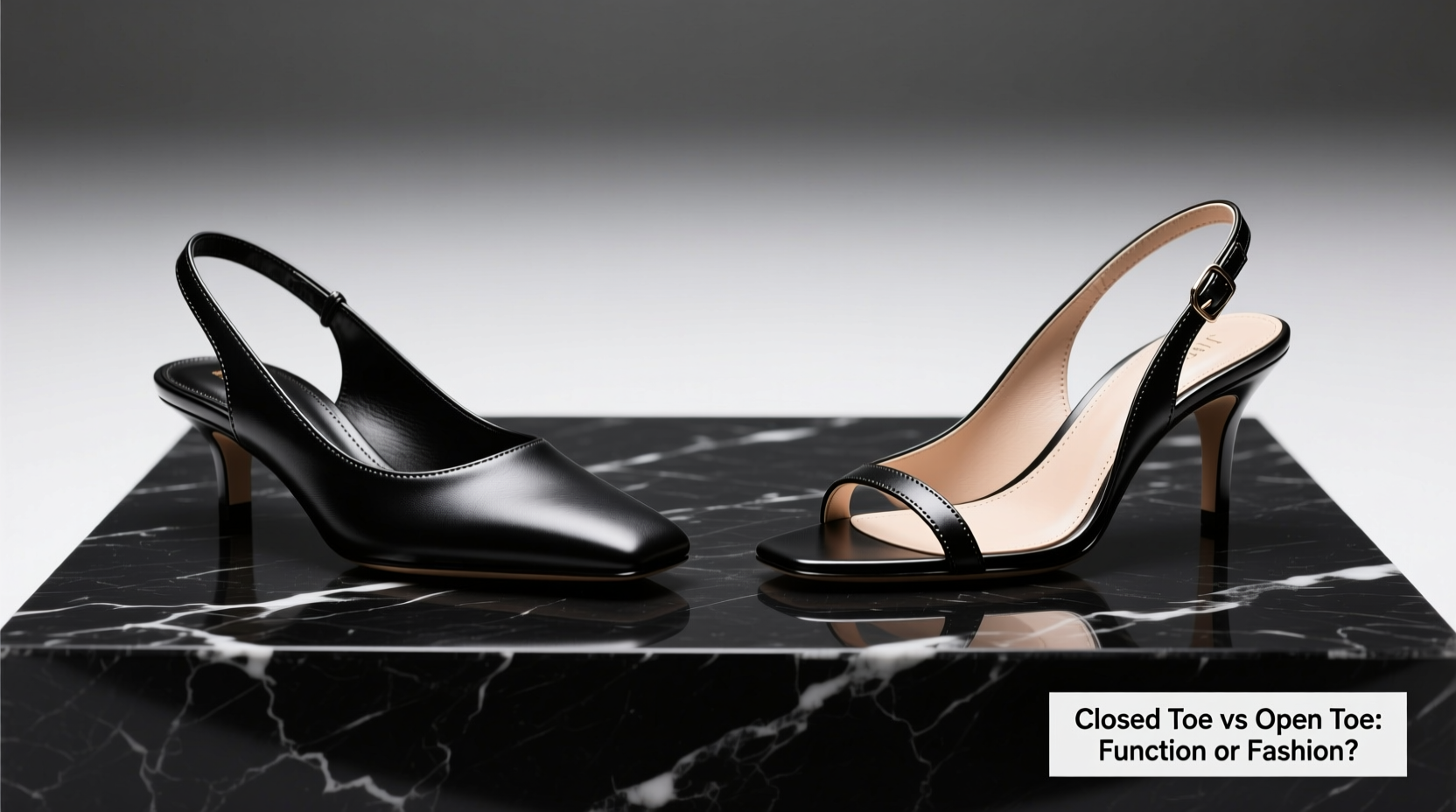
The slingback shoe traces its origins to the early 20th century but gained prominence in the 1950s and 60s, championed by icons like Audrey Hepburn and Grace Kelly. Characterized by a low heel (though modern versions vary), a modest toe box, and a strap that wraps around the heel, the slingback bridges the gap between pumps and mules. Its versatility allows it to transition from boardrooms to brunches with ease.
Today, designers offer slingbacks in two dominant variations: closed toe and open toe. The former covers the entire foot up to the toes, while the latter leaves the front portion exposed, often with a cut-out design just behind the toes. Both maintain the signature back strap, but their aesthetic and functional profiles diverge significantly.
Functional Differences: When Comfort Meets Practicality
Choosing between closed and open toe slingbacks isn't just about aesthetics—it’s also about environment, activity level, and foot health. Each design offers distinct advantages depending on context.
Closed toe slingbacks are inherently more protective. They shield the foot from external elements like debris, sun exposure, or accidental bumps. This makes them ideal for urban environments, workplaces with strict dress codes, or transitional seasons when weather can be unpredictable. They also tend to pair more easily with sheer or opaque tights, expanding styling options during colder months.
Open toe slingbacks, on the other hand, prioritize breathability and visual lightness. In warm climates or summer settings, they allow air circulation, reducing sweat and discomfort. However, this openness comes at a cost: less stability and increased vulnerability to stubbing or chafing. Additionally, pairing them with socks or tights is often impractical, limiting their seasonal usability.
Comparative Overview: Key Functional Factors
| Feature | Closed Toe Slingbacks | Open Toe Slingbacks |
|---|---|---|
| Foot Protection | High – full coverage prevents debris entry | Low – toes are exposed |
| Breathability | Moderate – depends on material | High – open design promotes airflow |
| Seasonal Flexibility | Year-round (especially fall/winter) | Limited to spring/summer |
| Dress Code Compatibility | Widely accepted in formal/professional settings | May be seen as too casual in conservative offices |
| Styling Versatility | Can be worn with socks, tights, bare legs | Best with bare feet; limited sock pairing |
“While open-toe shoes offer seasonal relief, closed-toe slingbacks remain the gold standard for workplace polish and foot safety.” — Lena Torres, Footwear Stylist & Consultant
Style Considerations: Fashion Trends vs. Timeless Appeal
Fashion cycles often elevate open toe slingbacks during summer collections, positioning them as fresh, modern, and fashion-forward. Runway appearances and influencer styling frequently showcase them with cropped pants, midi skirts, or flowy dresses—emphasizing leg length and a carefree attitude.
Yet, despite these trends, closed toe slingbacks consistently reappear in capsule wardrobes and editorial spreads focused on timeless dressing. Their streamlined silhouette complements tailored trousers, pencil skirts, and structured blazers, reinforcing a sense of professionalism and intentionality.
The perception of open toe slingbacks as “trend-driven” isn’t entirely unfounded. Unlike their closed counterparts, which rarely fall out of favor, open toe designs can appear dated within a few years, especially if paired with extreme heels or overly ornate cut-outs. Closed toe versions, particularly in neutral tones like black, navy, or taupe, retain their relevance across decades.
Mini Case Study: Office Attire Evolution at Veridian Consulting
In 2022, Veridian Consulting, a mid-sized financial advisory firm, relaxed its dress code to include \"business casual\" attire three days per week. Employees responded by incorporating more open toe footwear into their rotations, including open toe slingbacks.
Within six months, HR noted a rise in minor workplace incidents—primarily stubbed toes and tripping due to loose straps. Simultaneously, feedback indicated that clients perceived consultants in open toe shoes as less authoritative during presentations.
By 2023, the company issued updated guidelines recommending closed toe footwear for client-facing roles. Open toe slingbacks were permitted on casual Fridays but discouraged. The shift reinforced the idea that while open toe styles may align with current fashion, they don’t always serve functional or perceptual needs in professional contexts.
How to Choose: A Practical Decision Framework
Deciding between closed and open toe slingbacks shouldn’t rely solely on what’s trending. Instead, consider these factors before purchasing:
- Primary Use Case: Will you wear them mainly in an office, at social events, or during travel?
- Climate: Do you live in a hot, humid region where breathability matters?
- Dress Code Requirements: Are there professional standards limiting exposed toes?
- Foot Sensitivity: Do you have delicate skin or conditions like bunions that require protection?
- Wardrobe Compatibility: Do you own pieces that pair better with one style over the other?
Checklist: Selecting the Right Slingback for Your Lifestyle
- ☐ Determine your most common wearing environment (office, outdoor, hybrid)
- ☐ Assess heel height—opt for 1–2 inches for all-day comfort
- ☐ Check strap adjustability—elastic or buckle details improve fit security
- ☐ Prioritize leather or breathable synthetic uppers for durability
- ☐ Try walking in them before buying—ensure no heel slippage or toe pressure
- ☐ Match color to existing wardrobe staples (black, nude, gray are safest)
FAQ: Common Questions About Slingback Styles
Are open toe slingbacks appropriate for work?
It depends on your workplace culture. In creative or relaxed environments, they may be acceptable. However, in traditional corporate, legal, or client-facing roles, closed toe shoes are typically preferred for their polished appearance and professionalism.
Can I wear socks with open toe slingbacks?
Not practically. The open front makes pairing with conventional socks impossible. While toe-less hosiery or foot jewelry exist, they’re niche solutions and may not align with conservative settings.
Do closed toe slingbacks look outdated?
No. On the contrary, they are considered classic. Designers continue to reinvent them with modern materials, architectural heels, and minimalist lines. A well-made closed toe slingback never goes out of style.
Conclusion: Beyond the Trend, Focus on Function
The choice between closed toe and open toe slingbacks isn’t just about following fashion—it’s about aligning footwear with lifestyle, environment, and long-term value. While open toe designs offer seasonal charm and visual appeal, they often sacrifice protection, versatility, and professional appropriateness.
Closed toe slingbacks, though sometimes overlooked in favor of trendier options, deliver enduring elegance and practical benefits. They adapt to changing seasons, complement diverse outfits, and withstand the test of time—both in durability and style.
Rather than chasing fleeting trends, build your shoe collection around pieces that serve you daily. Start with a well-crafted closed toe slingback in a neutral hue. Add an open toe version only if your climate and wardrobe genuinely benefit from it. In doing so, you’ll invest in comfort, confidence, and timeless taste.




 浙公网安备
33010002000092号
浙公网安备
33010002000092号 浙B2-20120091-4
Comments
No comments yet. Why don't you start the discussion?