
Wearing jewelry isn’t just about personal style—it’s a silent language. A well-chosen bracelet can project confidence, taste, and even wealth. When deciding between a clover bracelet and a heart bracelet, the choice goes beyond aesthetics. It’s about what each symbol communicates, how it’s crafted, and how it aligns with the image of affluence you wish to convey. While both designs are popular, only one tends to carry stronger connotations of sophistication and quiet luxury.
The perception of wealth in accessories doesn’t come from flashiness alone. True elegance often lies in subtlety, craftsmanship, and symbolic depth. Let’s break down the two options—clover and heart bracelets—and determine which better supports the impression of refined wealth.
Symbols and Their Social Significance
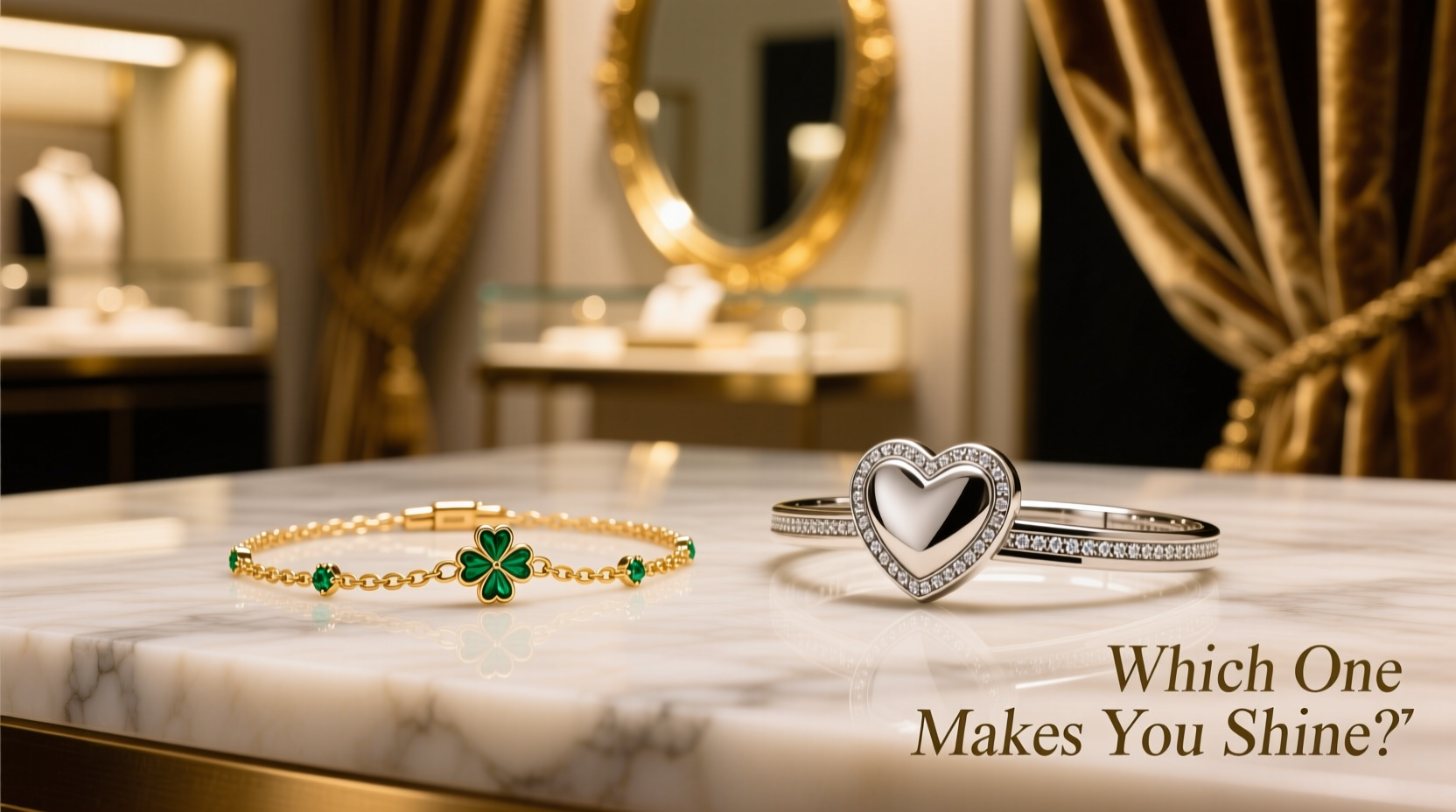
Jewelry symbols have long carried cultural weight. The heart is universally recognized as a token of love and affection. It’s romantic, emotional, and often associated with gifts between partners or sentimental milestones. While meaningful, the heart motif is common in mass-market fashion jewelry, which can dilute its exclusivity.
In contrast, the clover—especially the four-leaf variety—symbolizes luck, rarity, and prosperity. Historically, finding a four-leaf clover was considered a stroke of fortune. In modern luxury contexts, the clover has been adopted by high-end brands like Cartier (Love collection) and Tiffany & Co., where clover motifs appear in gold and diamond-set pieces priced in the thousands. This association with elite designers elevates the clover beyond mere superstition into a marker of cultivated taste.
“Symbols in jewelry act as social shorthand. A clover speaks to serendipity and success—qualities linked to wealth—while a heart signals emotion, which is less tied to status.” — Lila Monroe, Jewelry Historian & Curator
Design and Craftsmanship: What Screams Luxury?
A key factor in appearing wealthy isn’t just what you wear, but how it’s made. High-net-worth individuals often favor understated design with impeccable finish. Think clean lines, premium materials, and attention to detail.
Clover bracelets, particularly those from luxury houses, are typically minimalist. They feature polished gold (white, yellow, or rose), precise engraving, and sometimes a single diamond at the center of one leaf. These details suggest discretion and investment. The simplicity allows the quality of materials to speak for itself—a hallmark of old-money aesthetics.
Heart bracelets, on the other hand, are more likely to be stylized, oversized, or embellished with colored stones. While beautiful, these traits lean toward playful or youthful expressions rather than mature sophistication. Mass-produced heart-shaped charms often use lower-grade metals and cubic zirconia, reinforcing a “costume jewelry” impression unless carefully selected.
Material Comparison: How to Spot a Rich-Looking Bracelet
Regardless of shape, material defines perceived value. Below is a comparison of common materials used in clover and heart bracelets and how they influence the “rich” effect.
| Material | Clover Bracelet Suitability | Heart Bracelet Suitability | Perceived Wealth Signal |
|---|---|---|---|
| Solid 14K Gold | Excellent – standard in luxury versions | Good – rare in mainstream designs | High – indicates investment and permanence |
| Gold Plated | Fair – may tarnish quickly | Poor – common in fast fashion | Low – suggests temporary trend-following |
| White Gold with Diamond Accent | Exceptional – elegant and rare | Limited – hard to balance without gaudiness | Very High – associated with fine jewelry collections |
| Silver or Stainless Steel | Fair – acceptable if minimalist | Poor – often looks cheap in heart shapes | Moderate – depends heavily on design |
The table shows that clover designs integrate more naturally with high-value materials, while heart bracelets risk appearing costume-like unless executed with restraint and premium components.
Real-World Example: Two Women, Two Choices
Consider Sarah and Mia, both attending the same industry gala. Sarah wears a delicate 14K yellow gold clover bracelet from a heritage brand. It’s small, unobtrusive, and catches the light subtly. Several guests notice it during handshakes and ask where she got it. One compliments her “quiet taste.”
Mia wears a bold heart-shaped charm bracelet with pink enamel and glittering faux gems. It’s eye-catching, and someone asks if it’s from a teen boutique. Though cheerful, it reads as decorative rather than valuable.
Neither is wrong—but Sarah’s choice aligns more closely with how wealth is silently communicated: through discretion, heritage, and enduring design. Her bracelet implies she owns other pieces like it, part of a curated collection. Mia’s implies a one-off gift or impulse buy.
How to Choose the Right Bracelet: A Step-by-Step Guide
If your goal is to look rich—not flashy—follow this decision process:
- Evaluate your wardrobe style. Do you wear neutral tones, tailored fits, and timeless pieces? If yes, a clover complements this aesthetic.
- Assess your jewelry collection. If most of your pieces are simple and metal-based, a clover adds cohesion. If you favor colorful, themed items, a heart might fit better.
- Set a budget for quality. Spend enough to get solid gold or platinum. Avoid anything labeled “fashion jewelry.”
- Research brands with heritage. Look at designers like Cartier, David Yurman, or Bogoff for clover styles. For hearts, fewer high-end references exist—proceed with caution.
- Try them on. A clover should feel balanced and light. A heart should not dominate your wrist or clink noisily.
Checklist: Does Your Bracelet Say “I’m Wealthy”?
- ✅ Made of solid gold or platinum
- ✅ Minimalist design with no loud colors
- ✅ From a reputable or heritage brand
- ✅ Polished finish with no visible seams or plating wear
- ✅ Worn with confidence, not as a centerpiece
- ✅ Paired with other subtle accessories (e.g., a classic watch)
This checklist filters out pieces that merely sparkle but lack substance. Wealthy individuals don’t need to prove value—they let it be noticed.
Frequently Asked Questions
Can a heart bracelet ever look expensive?
Yes, but only under strict conditions: it must be made of solid precious metal, feature minimal detailing, and avoid enamel, rhinestones, or cartoonish shapes. A small, matte-finish heart in white gold can work—especially if part of a designer line like Bulgari’s B.zero1, though such cases are exceptions.
Is the clover trend still relevant among the wealthy?
Absolutely. The clover remains a staple in luxury jewelry. Brands continue releasing clover-themed collections because they resonate with values of luck, legacy, and understated elegance. Unlike seasonal trends, the clover has endured for decades across European and American elite circles.
Does the number of leaves matter?
Three-leaf clovers (shamrocks) are traditional and widely accepted. Four-leaf variants emphasize rarity and are often marketed as lucky charms. Both work, but four-leaf designs tend to command higher prices and more attention due to their symbolic uniqueness.
Final Verdict: Which Should You Buy?
If your primary goal is to look rich, the **clover bracelet** is the superior choice. It carries stronger associations with luxury brands, uses higher-quality materials by default, and aligns with the minimalist, heritage-driven aesthetic of true affluence. It’s not about having money—it’s about looking like you’ve had it for a while.
A heart bracelet can be luxurious, but achieving that look requires exceptional taste and budget. Most available options skew sentimental or juvenile, undermining the desired impression. Unless you’re selecting a museum-quality piece from a top-tier jeweler, the heart is a riskier bet.
The clover, meanwhile, comes pre-coded for success. It’s worn by executives, heiresses, and tastemakers who understand that real wealth whispers.




 浙公网安备
33010002000092号
浙公网安备
33010002000092号 浙B2-20120091-4
Comments
No comments yet. Why don't you start the discussion?