
Shelving isn’t just about storage—it’s a canvas for personal expression. Whether lining the walls of a living room, bedroom, or study, shelves offer prime real estate for showcasing what makes a space uniquely yours. Two popular decorative choices—clown figurines and themed bookends—both promise personality, but in vastly different ways. One leans into whimsy and bold visual storytelling; the other combines utility with thematic flair. The question isn’t just about aesthetics, but about how each item contributes to the soul of your space.
The decision between clown figurines and themed bookends ultimately hinges on what kind of character you want your shelves to project: playful eccentricity or curated charm. Let’s explore their strengths, limitations, and the subtle ways they influence atmosphere and functionality.
The Allure of Clown Figurines: Bold, Unapologetic Personality
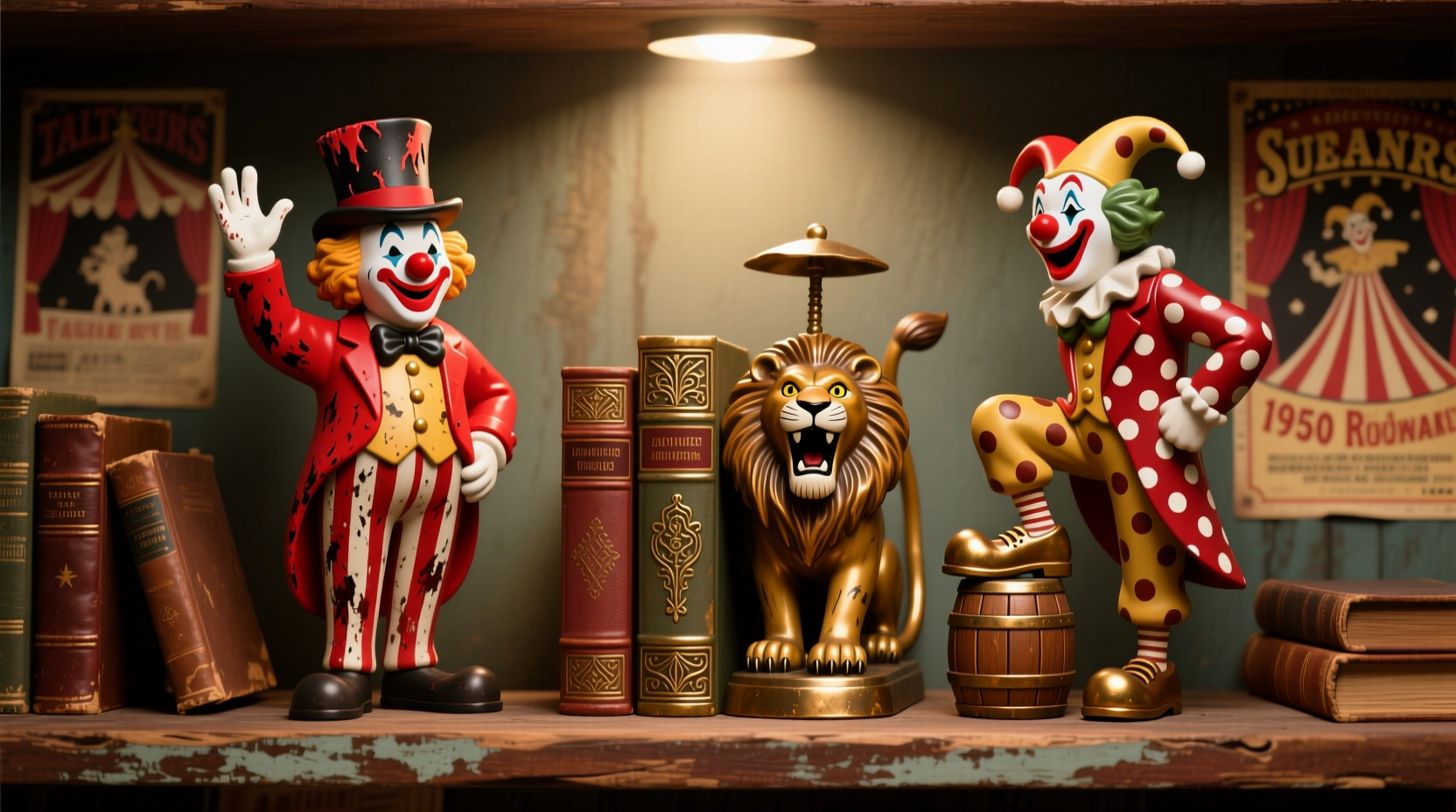
Clown figurines are not subtle. From vintage porcelain jesters to modern resin caricatures, these pieces command attention. They’re often chosen by collectors and design risk-takers who embrace irony, nostalgia, or surrealism. A single clown figure can become the centerpiece of a shelf, instantly shifting the mood from neutral to theatrical.
These figurines tap into deep cultural symbolism—laughter, melancholy, absurdity—and can reflect a homeowner’s sense of humor or love for the unconventional. In spaces that celebrate maximalism or eclectic tastes, clowns add layers of narrative depth. For example, a 1950s-style circus clown might evoke childhood memories of carnivals, while a surrealist-inspired piece could suggest an appreciation for the bizarre.
However, their boldness comes with caveats. Clowns carry strong emotional associations—some find them delightful, others unsettling. This duality means they’re best suited for private spaces or homes where guests share a similar aesthetic sensibility. Overuse can tip a room from quirky to chaotic, so moderation is key.
Themed Bookends: Functional Charm with Narrative Flair
Unlike purely decorative objects, themed bookends serve a dual purpose: they stabilize books while enhancing visual cohesion. Available in countless motifs—literary quotes, animals, architectural landmarks, or pop culture icons—they subtly reinforce a room’s theme. A pair of bookends shaped like miniature Eiffel Towers supports novels on Parisian history, while dinosaur-themed ones anchor a child’s science collection.
What sets themed bookends apart is their integration of form and function. They don’t just sit on a shelf; they interact with it, creating balance and order. Their presence suggests intentionality—a curated mind behind the display. Because they’re grounded in utility, they rarely feel excessive, even when boldly designed.
Moreover, bookends invite thematic storytelling. Matching a set to the books they hold creates micro-exhibits: travel guides flanked by globe-shaped bookends, cookbooks paired with ceramic spatulas. This synergy elevates shelves from storage zones to expressive installations.
“Good decor doesn’t just look right—it feels inevitable. Themed bookends achieve this by aligning utility with identity.” — Lena Patel, Interior Stylist & Author of *Curated Living*
Comparative Breakdown: Key Differences at a Glance
| Feature | Clown Figurines | Themed Bookends |
|---|---|---|
| Primary Function | Decorative | Functional + Decorative |
| Visual Impact | High (immediate focal point) | Moderate to High (context-dependent) |
| Emotional Tone | Bold, playful, sometimes eerie | Warm, organized, thematic |
| Versatility | Low (niche appeal) | High (fits diverse themes) |
| Space Efficiency | Low (occupies space without utility) | High (supports organization) |
| Lifespan & Resale Value | Variable (collector-dependent) | Stable (especially vintage or branded sets) |
Real-World Scenario: A Shelf Transformed
Consider Sarah, a freelance writer with a passion for vintage horror films. Her bookshelf originally held only novels and journals, looking tidy but impersonal. She introduced a hand-painted 1970s clown figurine—a nod to *It* and her love of psychological thrillers. Immediately, the shelf felt more “her.” But over time, she noticed books slumping and the clown dominating the scene to the point of distraction.
Her solution? She kept the clown but added two wrought-iron raven bookends—one on each end—inspired by Edgar Allan Poe. The ravens provided structural support while echoing the dark whimsy of the clown. Now, the shelf balances drama and order. The clown remains the star, but the bookends frame the narrative, grounding the chaos with purpose.
This case illustrates a powerful principle: character doesn’t require sacrifice of function. The most compelling shelves blend both.
How to Choose What Adds More Character
“Character” isn’t inherent in an object—it emerges from context, curation, and personal resonance. To decide between clown figurines and themed bookends, consider the following checklist before making your choice:
- Assess your shelf’s primary role: Is it for display, storage, or both?
- Evaluate existing decor: Does your space lean minimal, eclectic, or traditional?
- Identify your comfort with bold statements: Are you drawn to conversation starters or subtle elegance?
- Think about longevity: Will this item still resonate in two years?
- Test placement: Use temporary stand-ins to visualize scale and tone.
Frequently Asked Questions
Can clown figurines be tasteful in home decor?
Absolutely—if used intentionally. A single, well-crafted piece in a space that embraces eclecticism or nostalgia can feel charming rather than kitschy. Avoid cluttering multiple clown figures together unless aiming for a collector’s gallery effect.
Do themed bookends limit my book arrangement?
Not if chosen wisely. Opt for adjustable or heavy-duty bookends that accommodate varying book heights and weights. Magnetic or weighted designs offer flexibility without compromising style.
Which option holds better resale value?
Vintage or limited-edition clown figurines can appreciate, especially those from known artists or eras. Themed bookends from iconic brands (e.g., mid-century designers or licensed pop culture merchandise) also retain value, particularly as functional antiques.
Final Considerations: Character Isn’t Just Visual
True character in decor comes from authenticity. A shelf filled with meaningful items—regardless of type—tells a story. Clown figurines shine when they reflect genuine affection or artistic interest. Themed bookends excel when they echo the intellect and passions behind the books they support.
In a practical sense, bookends often contribute more sustainable character because they enhance usability while expressing taste. But for sheer emotional punch and memorability, few objects rival the jolt of joy—or unease—a well-placed clown delivers.
The ideal approach may not be choosing one over the other, but integrating both. Let bookends provide rhythm and stability, and let a carefully selected clown figurine inject surprise. Together, they create a shelf that’s not just organized or decorated, but alive with narrative tension and personal truth.




 浙公网安备
33010002000092号
浙公网安备
33010002000092号 浙B2-20120091-4
Comments
No comments yet. Why don't you start the discussion?