
For millions of coffee lovers, summer means trading in hot mugs for icy refreshments. But not all chilled coffee is created equal. Cold brew and iced coffee are often used interchangeably, yet they differ significantly in preparation, flavor profile, caffeine content, and acidity. Understanding these differences isn’t just a matter of taste—it can impact digestion, energy levels, and even long-term enjoyment of your daily cup.
The confusion starts with presentation: both arrive in glasses over ice, often with cream or sweeteners. But beneath the surface, their brewing processes diverge completely. One is steeped slowly in cold water for hours; the other is simply hot coffee cooled down. These methods shape everything from smoothness to stomach comfort.
Brewing Methods: The Core Difference
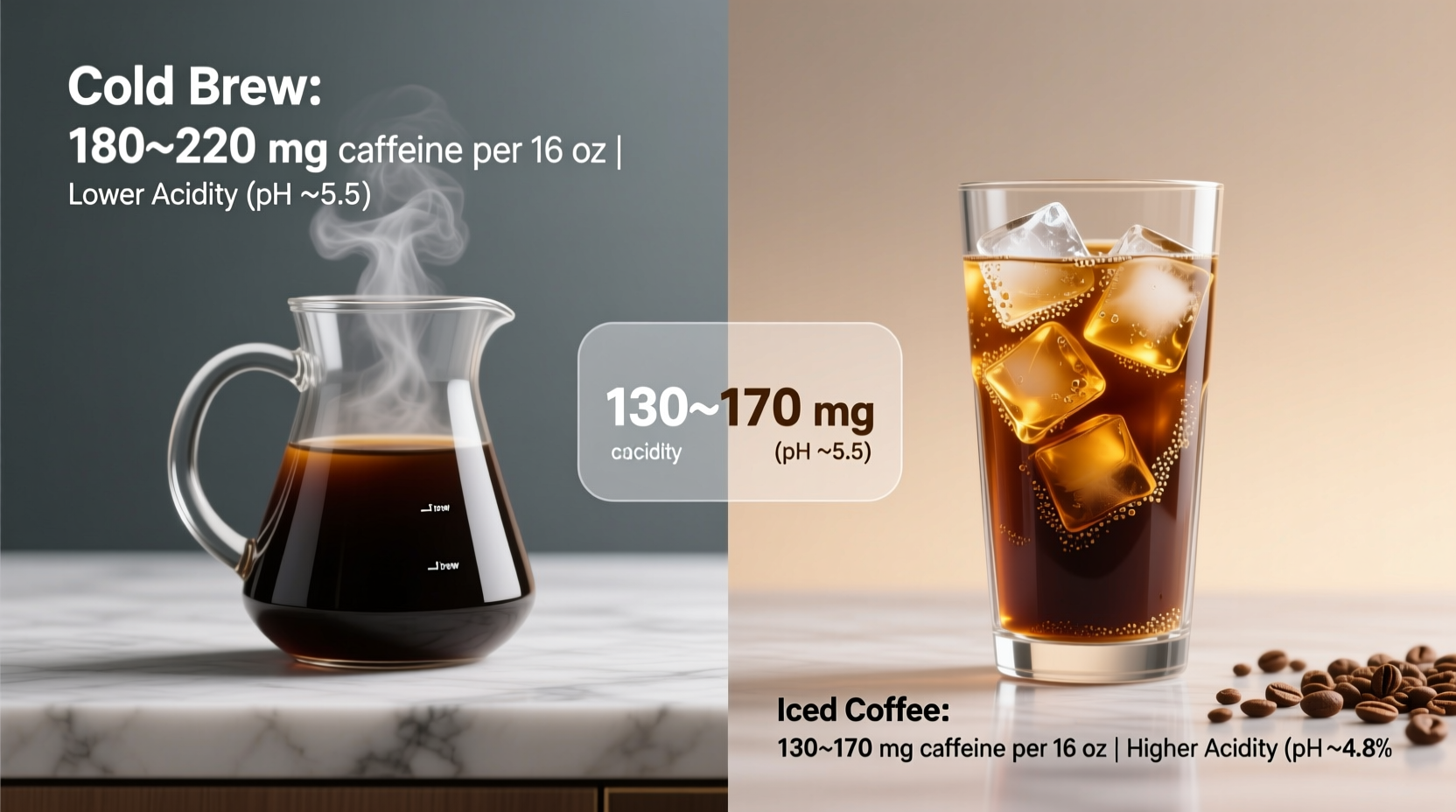
The most fundamental distinction between cold brew and iced coffee lies in how they’re made. This single factor influences every other aspect—taste, strength, acidity, and caffeine.
Cold brew is made by steeping coarsely ground coffee beans in room-temperature or cold water for 12 to 24 hours. This slow extraction process occurs without heat, allowing flavors and compounds to dissolve gradually. After steeping, the concentrate is filtered and typically diluted with water or milk before serving.
In contrast, iced coffee is traditionally brewed using standard hot-water methods—drip, pour-over, or French press—and then poured over ice to cool. Some variations use flash-chilling (immediately cooling freshly brewed coffee), but the core principle remains: it starts as hot coffee.
Caffeine Content: Strength in Steeping Time
Caffeine levels are a major consideration for those relying on coffee for alertness—or trying to avoid jitters. Contrary to popular belief, cold brew isn't automatically stronger than iced coffee. The actual caffeine content depends on concentration, brewing ratio, and serving size.
Because cold brew is often prepared as a concentrate (typically a 1:4 coffee-to-water ratio), a small amount contains a high volume of caffeine. When diluted at a 1:1 ratio with water or milk, the final drink may have similar or slightly higher caffeine than standard iced coffee. However, if you consume the undiluted concentrate, caffeine intake spikes dramatically.
A typical 16-ounce serving comparison reveals notable differences:
| Drink Type | Brew Method | Avg. Caffeine (16 oz) | Notes |
|---|---|---|---|
| Cold Brew (diluted) | 16-hour cold steep | 150–200 mg | Higher if served as concentrate |
| Iced Coffee (regular strength) | Hot brew, chilled | 120–160 mg | Varies with bean type and roast |
| Iced Coffee (double-strength) | Strong hot brew, chilled | 180–220 mg | Common in cafes to prevent dilution |
As shown, cold brew tends to edge out regular iced coffee in caffeine, but strong-brewed iced coffee can surpass it. The takeaway? Read labels at cafes or control your ratios at home to manage caffeine intake.
“Cold brew’s extended steeping time extracts more caffeine per ounce, but dilution brings it into balance. It’s the preparation and serving method that ultimately determine potency.” — Dr. Lydia Chen, Food Chemist & Beverage Researcher
Acidity Levels: A Game-Changer for Sensitive Stomachs
One of cold brew’s most touted benefits is its lower acidity. For people who experience acid reflux, heartburn, or general stomach discomfort from coffee, this difference can be transformative.
Research published in *Scientific Reports* (2018) found that cold brew has a pH level around 6.0–6.5, compared to hot-brewed coffee’s average of 4.85–5.13. While this may seem like a small gap, pH is logarithmic—meaning each full point represents a tenfold difference in acidity. That makes cold brew roughly 1.5 to 2 times less acidic than its hot-brewed counterpart.
The reason lies in chemistry: heat accelerates the extraction of acidic compounds such as chlorogenic acids and tannins. Since cold brew uses no heat, fewer of these sharp-tasting, gut-irritating compounds make it into the final cup.
This reduced acidity translates directly into taste. Cold brew is often described as smoother, sweeter, and less bitter. Iced coffee, especially when made from light or medium roasts, retains more of the bright, tangy notes associated with traditional coffee profiles.
Taste and Texture: Beyond the Chill
Flavor is where personal preference takes center stage. Cold brew delivers a mellow, rounded profile with subtle chocolate, nutty, or caramel undertones. Its texture is often heavier, almost syrupy when consumed as a concentrate. Because volatile aromatic compounds don’t release without heat, cold brew lacks the floral or citrusy brightness found in hot coffee.
Iced coffee preserves more of the original bean characteristics. A well-made iced pour-over from Ethiopian beans might still showcase blueberry and bergamot notes, even when chilled. However, rapid cooling can sometimes lock in bitterness if the coffee was over-extracted during brewing.
Another factor is oxidation. Once hot coffee cools, it begins to degrade chemically, leading to a flat or stale taste within 30 minutes to an hour unless rapidly chilled. Cold brew, due to its slow extraction and stable chemical profile, maintains freshness for up to two weeks when refrigerated.
Texture-wise, cold brew feels fuller-bodied because oils emulsify differently in cold water. Iced coffee, particularly drip-style, tends to be lighter and crisper—closer to room-temperature coffee served cold.
Step-by-Step Guide: Making Both at Home
You don’t need specialty equipment to enjoy either beverage. Here’s how to make both versions with consistent results.
Making Cold Brew (12–24 Hour Method)
- Grind 1 cup of coffee beans to a coarse consistency (like sea salt).
- Add grounds to a large jar or French press.
- Pour in 4 cups of cold, filtered water. Stir gently to saturate all grounds.
- Cover and steep at room temperature for 12 hours (minimum) or up to 24 hours in the fridge for a cleaner taste.
- Strain through a fine-mesh sieve lined with a paper filter or reusable cloth.
- Dilute 1:1 with water, milk, or plant-based alternatives before serving over ice.
- Store concentrate in a sealed container in the refrigerator for up to 14 days.
Making Iced Coffee (No Dilution Method)
- Brew coffee at double strength using your preferred method (e.g., 2x the usual coffee for the same water).
- Immediately pour the hot coffee over a full glass of ice. The rapid chill locks in flavor and prevents bitterness.
- Optionally add milk or sweetener while the coffee is still warm for better integration.
- Serve immediately. Leftover hot coffee can be cooled and stored, but flavor degrades within 24 hours.
“Flash-chilling hot coffee over ice is one of the best ways to preserve delicate flavor notes while delivering a refreshing drink.” — Javier Ruiz, Barista Champion & Coffee Educator
Mini Case Study: Office Workers and Midday Energy Crashes
In a small observational study conducted at a tech startup in Austin, TX, employees were offered either cold brew or regular iced coffee during a two-week trial. Participants logged their energy levels, mood, and digestive comfort hourly after consumption.
Of the 32 participants, 68% reported smoother, longer-lasting energy from cold brew, with fewer crashes after two hours. Additionally, 7 of the 11 individuals who regularly experienced post-coffee acid reflux noted significant improvement when switching to cold brew—even at similar caffeine levels.
Interestingly, creative team members preferred iced coffee for its brighter taste and faster onset of alertness, despite slightly more jitteriness. Operations staff leaned toward cold brew for its milder effect and compatibility with prolonged focus.
The takeaway: physiological response varies, but brewing method clearly influences both physical comfort and cognitive performance.
Frequently Asked Questions
Is cold brew healthier than iced coffee?
Not inherently, but its lower acidity makes it easier on the stomach for many people. If you add sugar or flavored syrups, the health benefit diminishes. In terms of antioxidants, both beverages retain similar levels, though cold brew may extract fewer polyphenols due to lack of heat.
Can I heat up cold brew?
Yes. Heating diluted cold brew won’t ruin it, though it won’t replicate the complexity of hot-brewed coffee. Avoid heating the concentrate directly—it can become overly intense and unbalanced. Warm it gently and consider adding a splash of hot water to adjust strength.
Why does my iced coffee taste watery?
This usually happens when hot coffee is poured over ice without adjusting the brew strength. The melting ice dilutes the flavor. Use a double-strength brew or freeze coffee into ice cubes to maintain intensity.
Checklist: Choosing Between Cold Brew and Iced Coffee
- ✅ Need a smoother, less acidic coffee? → Choose cold brew
- ✅ Want faster preparation? → Choose iced coffee
- ✅ Prefer bold caffeine kick without jitters? → Try diluted cold brew
- ✅ Love bright, complex coffee notes? → Stick with iced coffee
- ✅ Planning to store coffee for several days? → cold brew lasts longer
- ✅ Watching caffeine intake? → Check serving size—concentrates pack a punch
- ✅ Want minimal effort during busy mornings? → Make a batch of cold brew ahead of time
Final Thoughts: Match Your Brew to Your Lifestyle
The choice between cold brew and iced coffee isn’t about which is “better”—it’s about alignment with your body, taste preferences, and routine. Cold brew offers a gentler, more stable experience ideal for sensitive systems and sustained focus. Iced coffee delivers immediacy, vibrancy, and familiarity, perfect for those who miss the aromatic lift of a morning brew—even in July.
Understanding the science behind caffeine extraction and acidity empowers you to make informed decisions. Whether you're crafting your own at home or ordering at a café, knowing how each drink is made—and what ends up in your glass—can transform your coffee habit from routine to ritual.




 浙公网安备
33010002000092号
浙公网安备
33010002000092号 浙B2-20120091-4
Comments
No comments yet. Why don't you start the discussion?