
When it comes to outdoor adventures, festivals, camping trips, or even just a long day of fishing, having a reliable seat can make all the difference. But between collapsible stools and folding chairs, which option truly wins in convenience for travelers? Both promise portability and ease of setup, but their performance varies significantly depending on your needs. This article breaks down the key differences—weight, size, comfort, durability, and practicality—to help you decide which one aligns best with your travel lifestyle.
Portability: Weight and Packed Size
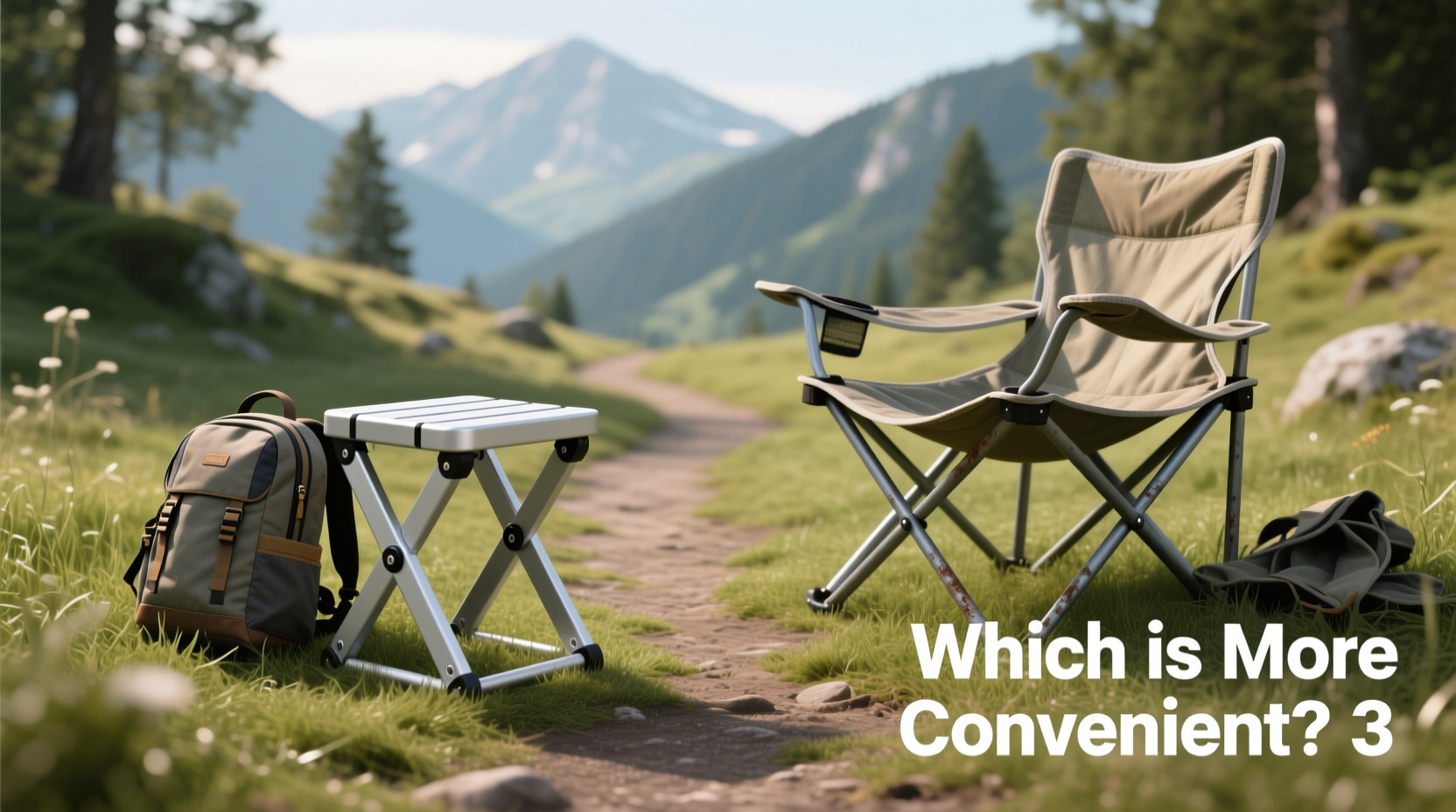
One of the most critical factors in travel gear is how easily it moves with you. Collapsible stools typically win in this category. Most models weigh between 1.5 to 3 pounds and pack down to the size of a water bottle—some as short as 12 inches tall and 4 inches in diameter. They often come with a carrying strap or clip, making them easy to attach to a backpack.
Folding chairs, by contrast, are bulkier. Even compact versions usually measure around 30 inches when folded and weigh 4 to 7 pounds. While many include shoulder straps, they take up significantly more space in luggage or car trunks. For hikers, urban travelers, or those using public transit, every ounce and inch counts—and here, the collapsible stool has a clear edge.
Comfort and Support: Sitting All Day vs Quick Rests
While stools are light and compact, they sacrifice back support. Most consist of a single seat pad attached to three or four legs, leaving users sitting upright with no lumbar relief. This works fine for short breaks—like watching a street performer or waiting at a campsite—but becomes uncomfortable after 30 minutes.
Folding chairs, especially those designed for camping or tailgating, often feature mesh backs, armrests, and contoured seats. Some even recline slightly. These additions make them far more suitable for extended sitting, such as at a beach bonfire or a music festival lasting several hours.
For individuals with back issues or those prioritizing relaxation over mobility, a folding chair may be worth the extra weight. However, if your travel involves constant movement and brief stops, the stool’s minimalist design might be more practical.
“Back support isn’t a luxury—it’s a necessity for older travelers or anyone spending multiple hours seated outdoors.” — Dr. Lena Torres, Outdoor Ergonomics Researcher
Comparison Table: Key Features Side-by-Side
| Feature | Collapsible Stool | Folding Chair |
|---|---|---|
| Average Weight | 1.5–3 lbs | 4–7 lbs |
| Packed Size | 10–14” x 4” | 30–36” x 6” |
| Setup Time | 5–10 seconds | 15–30 seconds |
| Back Support | None | Full or partial (mesh/contour) |
| Durability (Weight Capacity) | 250–350 lbs | 225–500 lbs |
| Best For | Hiking, festivals, quick rests | Camping, tailgating, beach days |
Real-World Use Case: Backpacking Through Southeast Asia
Consider Sarah, a solo traveler touring Vietnam and Cambodia. She carries a 40L backpack and uses local buses, tuk-tuks, and boats daily. At night markets, she wants a place to sit while eating street food. On temple visits, she needs a break during long walks.
She initially brought a lightweight folding chair, but quickly found it too awkward to carry. After switching to a 2-pound collapsible stool with a magnetic closure and padded seat, her experience improved dramatically. The stool clipped to her pack, took up no internal space, and was ready in seconds. Though less comfortable than a chair, it served her needs without adding strain.
This example illustrates a core truth: convenience isn’t just about comfort—it’s about integration into your existing routine. For mobile travelers, reducing friction matters more than maximizing cushioning.
Durability and Longevity
Both options vary widely in build quality. Entry-level stools made from thin steel tubing and polyester fabric may last only a season or two of regular use. Higher-end models use aircraft-grade aluminum and reinforced stitching, surviving years of abuse.
Folding chairs often have more components—fabric seats, hinges, cross-bracing—which increases the chance of mechanical failure. Hinges can loosen, welds crack, and fabrics tear. Stools, with fewer moving parts, tend to be more resilient if built well.
Still, weight capacity should not be ignored. Some premium folding chairs support up to 500 pounds and are tested for repeated use on uneven terrain. If you're larger-framed or plan heavy-duty use, don't assume the lighter option is better.
Step-by-Step: Choosing the Right Option for Your Travel Style
- Assess your primary activity: Are you hiking and moving constantly, or staying in one spot for hours?
- Measure your available space: Can you afford an extra foot of length in your bag?
- Test weight limits: Ensure the product supports your body weight with room to spare.
- Check setup mechanics: Does it open smoothly? Can you deploy it with one hand?
- Read user reviews: Look for feedback on stability, wind resistance, and long-term wear.
- Try before you buy: If possible, sit on display models to judge comfort and balance.
Frequently Asked Questions
Can a collapsible stool handle uneven ground?
Yes, many models perform well on grass, sand, or gravel thanks to wide feet or adjustable legs. However, they’re less stable than wider-based folding chairs. Always test stability before fully sitting.
Are folding chairs allowed at festivals?
It depends on the event. Many large festivals now restrict full-size chairs due to space and safety concerns. Always check the venue’s policy—some allow only low-profile stools or prohibit seating altogether in standing areas.
Do collapsible stools tip easily?
Poorly designed ones can, especially on slopes. Look for models with a wide base diameter (at least 14 inches) and non-slip foot pads. Three-legged designs often offer better balance on soft ground than four-legged variants.
Final Checklist Before Buying
- ✅ Weight under 3 lbs (for stools) or 5 lbs (for chairs)
- ✅ Packed length under 16 inches
- ✅ Weight capacity exceeds your needs by at least 50 lbs
- ✅ Includes carry strap or attachment point
- ✅ Seat height between 16–18 inches (comfortable for most adults)
- ✅ Frame material: aluminum preferred over steel for corrosion resistance
- ✅ Fabric is UV-resistant and breathable (especially for hot climates)
Conclusion: So, Which Is More Convenient?
The answer depends on your definition of “convenient.” If convenience means minimal weight, effortless transport, and instant deployment, the collapsible stool is superior. It’s the ideal companion for fast-paced, mobile travel where sitting is occasional and brief.
But if convenience includes sustained comfort, back support, and staying relaxed for hours, then a folding chair earns its keep—despite the added bulk. It’s better suited for destination-based activities like camping, beach outings, or stadium events.
For maximum versatility, some travelers carry both: a folding chair for basecamp and a collapsible stool for day trips. Others prioritize simplicity and go stool-only, accepting minor discomfort for unmatched portability.




 浙公网安备
33010002000092号
浙公网安备
33010002000092号 浙B2-20120091-4
Comments
No comments yet. Why don't you start the discussion?