
A capsule wardrobe is not a trend—it’s a philosophy. It represents intentionality in dressing, where quality triumphs over quantity and simplicity enhances self-expression. The idea of building a functional, stylish wardrobe with just 10 pieces may sound extreme at first, but it’s entirely achievable when those items are thoughtfully selected for versatility, fit, fabric, and timelessness. This approach reduces decision fatigue, saves money, minimizes clutter, and ensures you always have something appropriate to wear—no matter the occasion.
The concept originated in the 1970s with London boutique owner Susie Faux, who coined the term to describe a small collection of essential clothing that transcends seasonal trends. Today, it has evolved into a global movement embraced by sustainability advocates, busy professionals, and fashion minimalists alike. Reducing your wardrobe to 10 core pieces forces clarity: every item must earn its place through function, comfort, and adaptability.
Why 10 Pieces? The Power of Restraint
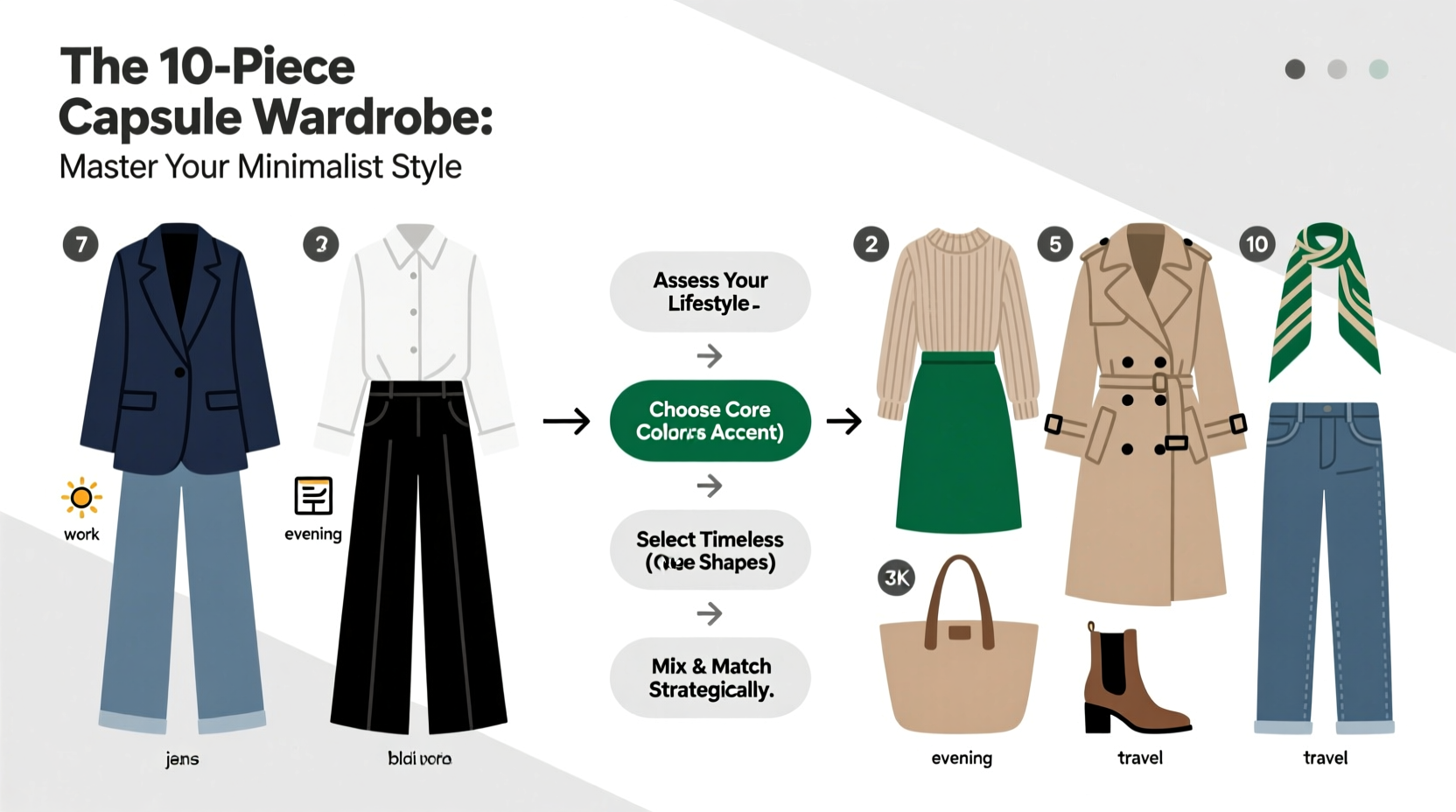
Limiting yourself to 10 garments (excluding undergarments, sleepwear, outerwear, and activewear) sharpens focus on what truly works for your lifestyle. This constraint isn’t about deprivation—it’s about liberation. When you eliminate excess, you gain confidence in each choice. These 10 pieces should be able to create dozens of outfits across work, casual, and semi-formal settings through strategic layering and accessory changes.
The number 10 strikes a balance between minimalism and practicality. Fewer than five might leave you underprepared; more than 15 begins to dilute the purpose. With 10 well-chosen items, you can generate up to 50 unique combinations depending on how they layer and accessorize. The key lies in selecting neutral bases with subtle variation in texture or cut, allowing them to coexist harmoniously.
“Minimalism in fashion isn't about having less—it's about making room for more: more joy, more ease, more authenticity.” — Courtney Carver, Author of *Project 365*
Selecting Your 10 Versatile Pieces: Criteria & Principles
Before listing specific items, establish guiding principles. Each piece must meet four criteria:
- Fit: Tailored to your body type without restriction.
- Color: Neutral or tonal (e.g., black, navy, gray, beige, white).
- Material: Natural fibers like cotton, wool, silk, or high-quality blends that breathe and age well.
- Function: Adaptable across multiple contexts (office to dinner, errands to events).
These standards ensure longevity and cohesion. Avoid anything trendy, ill-fitting, or emotionally driven (“I’ll lose weight” or “It was on sale”). Every garment should serve a current need.
Core Wardrobe Structure
Your 10-piece capsule should include a balanced mix of tops, bottoms, dresses, and layers. Here’s a recommended distribution:
| Category | Number of Items | Rationale |
|---|---|---|
| Tops | 4 | Shirts, blouses, sweaters—base layers for mixing. |
| Bottoms | 3 | Pants, skirts—anchor silhouettes. |
| Dresses / One-Pieces | 2 | Effortless full outfits. |
| Layering Piece | 1 | Blazer, cardigan—adds polish and warmth. |
The Essential 10-Piece Capsule Lineup
Below is a curated list of 10 items designed for maximum flexibility across climates and lifestyles. Adjust based on personal needs (e.g., swap dress shoes for boots if needed), but maintain the foundational logic.
- Classic White Button-Down Shirt – Crisp cotton or poplin. Wear open over a tank, tucked into trousers, or knotted at the waist.
- Neutral Turtleneck Sweater – Black or charcoal. Ideal for layering under blazers or standing alone in cooler months.
- Well-Fitted Blazer – Navy or gray wool blend. Instantly elevates jeans or pairs with tailored pants.
- Silk Blouse – Ivory or soft taupe. Drapes beautifully and transitions from day to night.
- Dark Wash Straight-Leg Jeans – Mid-rise, non-stretch denim. Durable and universally flattering.
- Tailored Trousers – Black or beige crepe or wool. Crisp lines suitable for meetings or dinners.
- Black Midi Skirt – A-line or pencil cut. Pairs with turtlenecks, blouses, or tees. <8> Little Black Dress – Sleeveless sheath with modest neckline. Works with flats, heels, jackets, or jewelry.
- Crewneck Cashmere Sweater – Gray or camel. Soft, warm, and perfect over dresses or with jeans.
- Wrap Dress – Navy or floral-on-neutral background. Flattering, season-spanning, and travel-friendly.
Step-by-Step Guide to Building Your Capsule
Follow this six-step process to assemble your 10-piece wardrobe with precision and purpose.
- Declutter Ruthlessly
Remove everything from your closet. Sort into keep, donate, repair, discard. Keep only items that fit now, make you feel confident, and align with your lifestyle. - Assess Your Lifestyle Needs
Track your activities for one week. How many days do you work in-office? Attend social events? Run errands? Design your capsule around real usage, not ideals. - Choose a Color Palette
Select 3–4 base neutrals (e.g., black, navy, beige) and one accent shade (burgundy, olive, cream). All 10 pieces should coordinate within this scheme. - Identify Gaps
From your decluttered inventory, note missing essentials. Prioritize filling gaps with high-quality versions rather than settling for fast-fashion substitutes. - Shop Mindfully
Buy one piece at a time. Try combinations in-store. Ask: Does it pair with at least three other items I own? Will I wear it 30+ times? - Test the System
Wear only your 10 pieces for two weeks. Note any outfit repeats, discomfort, or missing functions. Adjust as needed—this is iterative, not rigid.
“The best wardrobe is one that reflects who you are—not who you wish to be.” — Tim Gunn, Fashion Educator and Critic
Real-Life Example: Emma’s 10-Piece Transformation
Emma, a 34-year-old project manager in Portland, spent years cycling through fast-fashion purchases. Her closet overflowed, yet she felt perpetually “out of options.” After reading about minimalist wardrobes, she decided to try the 10-piece challenge.
She began by removing 87 items—mostly impulse buys and unworn trends. From what remained, she kept only five: dark jeans, a white tee, a navy blazer, black ankle boots, and a gray sweater. She then added five intentional pieces: a silk camisole, tailored trousers, a wrap dress, a turtleneck, and a midi skirt.
Within days, her morning routine dropped from 25 minutes to 8. She reported feeling calmer, more professional, and even received compliments at work. Over six months, she saved $420 by avoiding unnecessary purchases and wore each item an average of 22 times.
Her favorite combination? The turtleneck under the wrap dress with the blazer on top—ideal for rainy commutes and client calls. “I finally dress like myself,” she said. “Not like someone trying too hard.”
Maximizing Outfits: Mix, Match, Accessorize
Ten pieces don’t mean ten looks. Strategic pairing multiplies possibilities. For example:
- White shirt + jeans + boots = casual Friday
- White shirt + trousers + blazer = business meeting
- Turtleneck + midi skirt + cardigan = weekend brunch
- Wrap dress + blazer + heels = evening event
- Silk blouse + jeans + statement earrings = date night
Accessories are force multipliers. A scarf, belt, necklace, or shoe change can transform an outfit entirely. Stick to a cohesive accessory palette (e.g., gold hardware, brown leather) to maintain harmony.
Frequently Asked Questions
Can I really live with only 10 clothes?
Yes—but clarify: these are 10 core garments, not your entire wardrobe. Outerwear, workout gear, pajamas, and seasonal extremes (parkas, swimsuits) are separate. The 10-piece rule applies to daily wearables that form the foundation of your look.
What if my job requires variety?
If you're in a highly visible role (e.g., media, sales), consider expanding slightly to 12–15 pieces while maintaining the same principles. Alternatively, use rental services for special occasions while keeping your daily rotation minimal.
How do I handle seasonal changes?
Create rotating capsules. Store off-season items properly. For example, swap summer linen shirts and sandals for winter sweaters and boots. Keep the core structure (tops, bottoms, layers) consistent across seasons.
Maintenance & Longevity Tips
A small wardrobe demands care. Since each piece sees frequent use, proper maintenance extends its life significantly.
- Wash clothes only when necessary—spot clean when possible.
- Use gentle, pH-balanced detergents for delicates.
- Turn garments inside out before washing to preserve color.
- Air dry whenever feasible to prevent shrinkage.
- Steam instead of iron to protect fabrics.
- Store folded knits; hang structured items on padded hangers.
“Clothing lasts longer when loved—not when hidden in overcrowded closets.” — Dana Thomas, Fashion Sustainability Journalist
Checklist: Launch Your 10-Piece Capsule
Use this checklist to stay on track:
- ☐ Empty closet and sort all items
- ☐ Define personal style and daily needs
- ☐ Choose a cohesive color palette
- ☐ Keep only pieces that fit, flatter, and function
- ☐ Identify missing essentials
- ☐ Purchase new items mindfully (one at a time)
- ☐ Test the capsule for 14 days
- ☐ Adjust based on real-world feedback
- ☐ Establish a care routine for each garment
- ☐ Reassess every 3–6 months
Conclusion: Embrace Intentional Style
Creating a capsule wardrobe with only 10 versatile pieces is more than a styling exercise—it’s a declaration of autonomy in a culture of excess. It shifts focus from consumption to curation, from noise to clarity. When you know exactly what you own and why you own it, getting dressed becomes effortless, even joyful.
This guide provides the framework, but your capsule will evolve with you. Let it reflect your present reality, not past habits or future fantasies. Start small. Be patient. Celebrate progress, not perfection.




 浙公网安备
33010002000092号
浙公网安备
33010002000092号 浙B2-20120091-4
Comments
No comments yet. Why don't you start the discussion?