
When a recipe calls for dried sage but you only have fresh—or vice versa—knowing the correct conversion ratio is essential to avoid overpowering or underseasoning your dish. Sage, whether fresh or dried, brings a distinctive earthy, slightly peppery flavor to food, especially in autumnal and holiday cooking. However, because drying concentrates its volatile oils and reduces moisture, the potency changes significantly. Using the wrong amount can turn a balanced stuffing into an herbal assault. This guide provides precise measurements, explains the science behind the conversion, and offers practical advice for using both forms effectively in everyday cooking.
Definition & Overview
Sage (Salvia officinalis) is a perennial herb belonging to the mint family (Lamiaceae), native to the Mediterranean region. Revered since antiquity for both culinary and medicinal uses, the name “sage” derives from the Latin word *salvare*, meaning “to heal.” In cooking, it's prized for its robust, camphorous aroma and warm, slightly bitter taste that pairs exceptionally well with fatty meats, root vegetables, and dairy-rich dishes.
Fresh sage consists of soft, velvety leaves with a vibrant green hue and high moisture content. Dried sage is made by dehydrating fresh leaves, which removes water and concentrates the essential oils responsible for its flavor. While both forms are used widely in Western cuisine—particularly in American Thanksgiving dishes, Italian brown butter sauces, and British sausages—they are not interchangeable on a 1:1 basis. Understanding their differences ensures consistent results in flavor and texture.
Key Characteristics
| Characteristic | Fresh Sage | Dried Sage |
|---|---|---|
| Flavor Profile | Mildly earthy, slightly sweet, with subtle citrus and eucalyptus notes | More intense, concentrated, with pronounced bitterness and pine-like sharpness |
| Aroma | Fragrant, herbaceous, with a clean green scent | Sharper, more medicinal, with deeper woody undertones |
| Texture & Form | Soft, pliable leaves; whole or chopped | Crisp, brittle; typically crumbled or powdered |
| Heat Sensitivity | Loses flavor quickly when overcooked; best added late in cooking | Withstands longer cooking; ideal for slow-simmered dishes |
| Shelf Life | 3–5 days refrigerated; up to 1 week if stored properly | 1–2 years when stored in a cool, dark place |
| Culinary Function | Finishing herb, infusion base, garnish | Seasoning agent in rubs, stuffings, soups, and baked goods |
Practical Usage: How to Use Fresh and Dried Sage
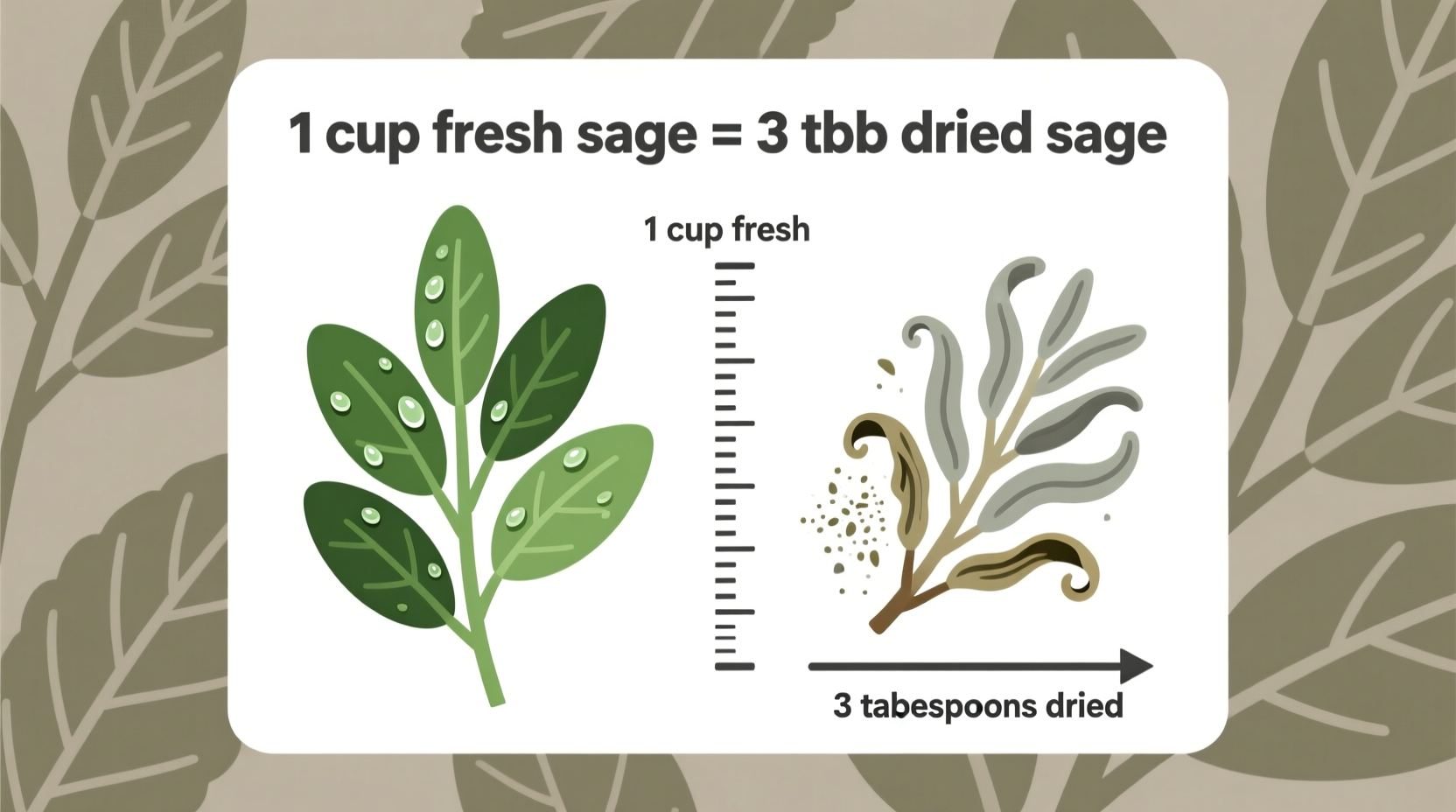
The most common mistake in home cooking is substituting fresh and dried sage without adjusting quantities. Because dried herbs are more concentrated due to water loss (typically 70–85% moisture removed), they deliver stronger flavor per volume. The standard rule of thumb in professional kitchens is:
1 tablespoon of fresh sage = 1 teaspoon of dried sage
This 3:1 ratio accounts for the concentration effect during dehydration. For example, if a recipe calls for 3 tablespoons of fresh sage, use 1 tablespoon of dried instead. Conversely, if you're replacing dried with fresh, triple the amount.
Here’s how to apply this in real-world cooking:
Example 1: Classic Sage and Onion Stuffing
A traditional recipe might call for 2 teaspoons of dried sage. If using fresh, substitute with 6 teaspoons (or 2 tablespoons) of finely chopped leaves. Add the fresh sage during the sauté stage with onions to mellow its raw edge, but avoid prolonged cooking to preserve its aromatic qualities.
Example 2: Brown Butter Sage Sauce for Pasta
This Italian staple relies on fresh sage for its bright, floral notes. Substituting dried sage here would result in a harsh, overly bitter sauce. When the recipe specifies 8–10 whole fresh leaves, do not replace them with dried—this is a case where freshness defines the dish. The gentle frying of fresh leaves in butter releases essential oils without scorching, creating a nutty, aromatic emulsion.
Example 3: Breakfast Sausage Seasoning Blend
Dried sage shines in dry spice mixes. A typical homemade sausage blend uses 1 tablespoon of dried rubbed sage per pound of meat. If attempting to use fresh, the excess moisture could affect texture and shelf stability. Moreover, the long cooking process allows dried sage to rehydrate gradually and distribute flavor evenly.
Pro Tip: When using dried sage, crush it between your fingers before adding to release trapped essential oils. For fresh sage, strip leaves from woody stems and chop finely to ensure even distribution.
Variants & Types of Dried Sage
Not all dried sage is the same. Different processing methods yield distinct textures and applications:
- Rubbed Sage: Made by rubbing dried whole leaves into a fluffy, lint-like consistency. It has excellent dispersion in batters and doughs and is preferred in stuffing and sausage recipes. Most sensitive to oxidation—store tightly sealed.
- Ground Sage: Pulverized into a fine powder, often blended with other spices. More stable than rubbed sage but less aromatic. Best used in spice blends like poultry seasoning.
- Whole Dried Leaves: Intact dehydrated leaves. Ideal for infusions, teas, or sachets. Must be crushed before culinary use to release flavor.
Choosing the right type depends on the dish. Rubbed sage integrates smoothly into moist mixtures, while ground sage works better in dry rubs. Whole dried leaves are rarely used directly in cooking unless specified.
Comparison with Similar Ingredients
Sage is sometimes confused with other herbs, particularly due to overlapping flavor profiles or regional naming. Clarifying these distinctions prevents substitution errors.
| Ingredient | How It Differs from Sage | Substitution Advice |
|---|---|---|
| Thyme | Milder, more floral, with lemon-pine notes; lacks sage’s bitterness | Can complement sage but not replace it; use 50% less if experimenting |
| Marjoram | Sweeter, gentler cousin of oregano; sometimes called \"sweet basil\" | Not a direct substitute; may work in light sauces if sage is unavailable |
| Poultry Seasoning | Blend containing sage, thyme, marjoram, rosemary, and pepper | Contains sage but isn’t pure; use 1:1 only if no pure sage available |
| Summer Savory | Peppery yet delicate; often used in bean dishes and stews | Balances similar dishes but lacks depth; use equal amounts cautiously |
True sage has a unique profile—no single herb replicates it exactly. Blends like poultry seasoning can serve as emergency substitutes, but they alter the final flavor balance.
Practical Tips & FAQs
What is the exact conversion from fresh to dried sage?
The accepted culinary standard is a 3:1 ratio—three parts fresh to one part dried. Since fresh sage contains significant water, drying removes mass but intensifies flavor compounds. Always adjust downward when switching from fresh to dried.
Can I make my own dried sage at home?
Yes. Hang small bundles of fresh sage upside down in a warm, dry, dark place for 1–2 weeks until crisp. Alternatively, use a dehydrator at 95°F (35°C) for 2–4 hours. Once dry, crumble leaves and store in an airtight container away from light and heat. Home-dried sage often retains more aroma than commercial versions if processed carefully.
Why does my dried sage taste bitter?
Overuse is the most common cause. Dried sage becomes increasingly bitter with prolonged cooking or excessive quantity. Use sparingly—start with half the recommended amount, taste, then adjust. Also, old or poorly stored sage can oxidize and develop off-flavors.
How long does dried sage last?
Dried sage retains optimal flavor for 12–18 months when stored in a sealed glass jar in a cool, dark cupboard. After two years, it doesn’t spoil but loses potency and develops a flat, dusty taste. Label containers with purchase dates to track freshness.
Is rubbed sage the same as ground sage?
No. Rubbed sage is made by crushing whole dried leaves into a light, fluffy form that dissolves easily in moisture. Ground sage is mechanically pulverized into a fine powder, often mixed with other spices. They are not interchangeable in texture-sensitive recipes.
Can I freeze fresh sage?
Yes, though texture changes. Freeze whole leaves on a tray, then transfer to a freezer bag for up to 6 months. Frozen sage works well in cooked dishes but not as a garnish. Alternatively, blend chopped sage with olive oil and freeze in ice cube trays for ready-to-use portions in soups and stews.
What dishes should never use dried sage?
Delicate preparations like sage-infused butter, fresh herb salads, or quick sautés benefit from the nuanced flavor of fresh sage. Dried sage’s intensity and slower release make it unsuitable for these applications, where brightness and immediacy matter.
Expert Insight: “In restaurant kitchens, we keep both forms on hand. Dried sage for consistency in large-batch items like stuffing mix, fresh for à la minute sauces. Never assume they’re equal—taste is our final guide.” — Chef Elena Rodriguez, Culinary Instructor, New England Institute of Food Arts
Summary & Key Takeaways
Converting between fresh and dried sage requires understanding both the physical transformation during drying and the resulting impact on flavor intensity. The core principle is simple: dried sage is three times more potent than fresh. Therefore, use one-third the amount when substituting dried for fresh, and triple the quantity when replacing dried with fresh.
- Fresh sage offers bright, nuanced flavors best suited for finishing dishes, sautés, and butter sauces.
- Dried sage delivers concentrated, long-lasting seasoning ideal for stuffing, sausages, soups, and dry rubs.
- The 3:1 conversion ratio (fresh:dried) is a reliable benchmark across most recipes.
- Different types of dried sage—rubbed, ground, whole—serve different purposes; choose based on application.
- Store both forms properly: fresh sage wrapped in damp paper towels in the fridge, dried sage in airtight containers away from light and heat.
- No herb perfectly substitutes for sage; blends like poultry seasoning can help in a pinch but alter flavor balance.
Mastering sage conversions empowers cooks to adapt recipes confidently, reduce waste, and maintain flavor integrity. Whether preparing a holiday feast or a weeknight pasta, knowing how to use sage in any form elevates your culinary precision. Keep this guide handy next time you reach for the spice rack—and cook with confidence.




 浙公网安备
33010002000092号
浙公网安备
33010002000092号 浙B2-20120091-4
Comments
No comments yet. Why don't you start the discussion?