
When it comes to drilling into wood, metal, or masonry around the house, the right tool makes all the difference. For decades, the corded drill reigned supreme in workshops and job sites. But with rapid advancements in battery technology, cordless drills have surged in popularity—offering portability, convenience, and increasingly competitive power. The real question isn’t just about convenience; it’s about performance. Which type of drill actually powers through home projects faster?
The answer depends on more than just voltage or torque ratings. It hinges on the nature of your work, frequency of use, material types, and even environmental conditions. Whether you're assembling furniture, installing shelves, or tackling a full-scale renovation, understanding the strengths and limitations of each tool is key to choosing wisely—and working efficiently.
Power and Performance: What Drives Speed?
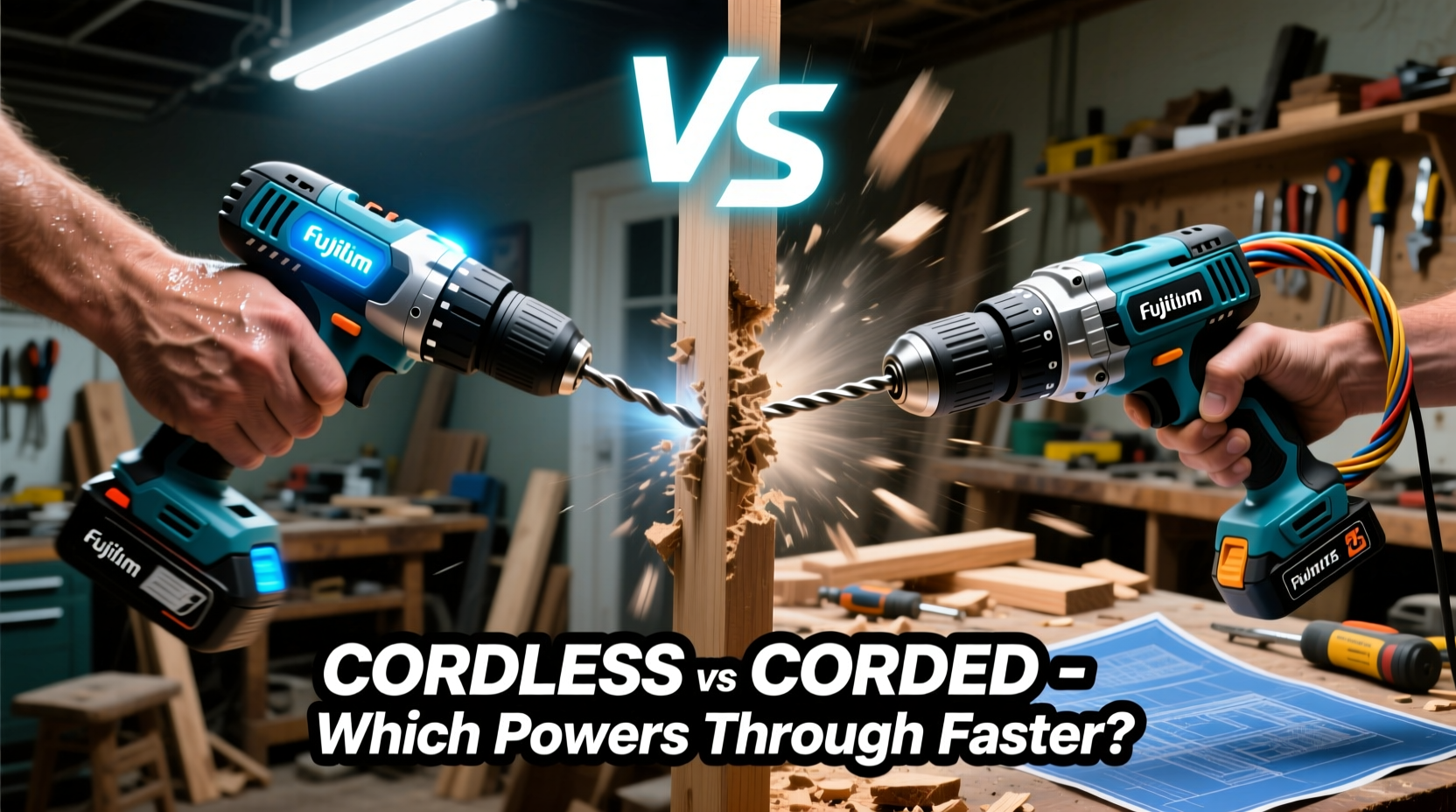
At the heart of any drilling operation is power—the ability to deliver consistent rotational force (torque) and maintain high revolutions per minute (RPM) under load. Corded drills traditionally outperform their cordless counterparts in raw power output because they draw continuous electricity from an outlet. This means no drop in performance over time, regardless of how long you run the tool.
Cordless drills, powered by lithium-ion batteries, have closed the gap significantly. Modern 18V and 20V models can match mid-range corded drills in light to moderate tasks. However, when faced with dense materials like hardwood, thick steel, or concrete, corded drills maintain steady RPM without bogging down, while cordless units may slow as resistance increases—especially if the battery charge is low.
“On extended jobs involving deep holes in pressure-treated lumber or multiple anchor installations in brick, I still reach for my corded drill. The sustained power delivery keeps me moving without hesitation.” — Mark Delaney, Professional Carpenter & Home Renovation Contractor
Another factor affecting speed is heat buildup. Corded drills dissipate heat more effectively due to constant energy flow and larger motor housings. Cordless drills, especially during prolonged use, can overheat and trigger thermal protection systems that temporarily shut them off—a frustrating delay when you’re mid-task.
Portability and Setup Time: Where Cordless Shines
While corded drills win in raw power, cordless models dominate in mobility and setup efficiency. Without being tethered to an outlet, users can move freely between rooms, ladders, or outdoor areas without dragging extension cords. This freedom translates directly into time saved—especially in large homes or unfinished spaces where outlets are sparse.
Consider this scenario: You’re mounting several heavy mirrors across two floors. With a corded drill, you must unplug, carry the cord, find new outlets, and possibly reset tripped breakers. Each transition takes 30–60 seconds. Over ten moves, that’s nearly 10 minutes lost. A cordless drill eliminates these interruptions entirely.
Beyond movement, cordless drills are lighter and better balanced, reducing user fatigue during overhead or precision work. Less strain means fewer breaks and more consistent progress—indirectly boosting overall project speed.
Real-World Comparison: A Weekend Project Breakdown
To illustrate the practical differences, consider a common weekend task: building a wooden deck frame in a backyard with limited access to power.
Mini Case Study: Building a Backyard Deck Frame
Tom, a seasoned DIYer, set out to build a 10x12-foot deck using pre-cut pressure-treated lumber. His goal was to complete the framing in one day. He used both tools across different phases:
- Phase 1 – Ledger Board Installation (against house): Required drilling pilot holes and driving lag bolts into brick and wood. Tom used his 15A corded drill with a hammer function. It powered through masonry anchors quickly, completing the phase in 45 minutes with zero slowdown.
- Phase 2 – Joist Framing (on ground level): Involved repetitive drilling and screw-driving in softwood. He switched to a 20V cordless drill. Despite excellent battery life, he noticed slight lag when driving long screws into end grain. Total time: 2 hours 10 minutes.
- Phase 3 – Perimeter Beams (remote corner): Far from any outlet. He relied solely on the cordless drill with a spare battery. No cord management needed. Completed in 1 hour 20 minutes—faster than expected due to uninterrupted workflow.
Verdict? The corded drill was faster in high-resistance applications, but the cordless model saved time in remote locations and reduced physical effort. Overall, the combination of both tools allowed Tom to finish in 4 hours—about 30 minutes faster than his previous all-corded attempt.
Speed Comparison Table: Key Metrics Side-by-Side
| Feature | Corded Drill | Cordless Drill (20V) |
|---|---|---|
| Max Torque (in-lbs) | 400–600+ | 300–500 |
| Max RPM | 2,500–3,000 | 2,000–2,800 |
| Runtime Consistency | Constant (no fade) | Decreases as battery drains |
| Mobility | Restricted by cord length | Full freedom of movement |
| Setup/Relocation Time | High (plugging/unplugging) | Negligible |
| Heat Resistance | Excellent (continuous use) | Fair (thermal cutoff risk) |
| Best For | Heavy-duty, long-duration tasks | Light to medium, mobile jobs |
This table highlights a critical insight: speed isn’t only about how fast the bit spins—it’s also about how quickly you can start, move, and sustain work. In stationary, high-load scenarios, corded drills are objectively faster. In dynamic, multi-location projects, cordless often wins by eliminating logistical delays.
Choosing Based on Project Type
No single drill is universally faster. The optimal choice depends on your specific project demands. Here’s a step-by-step guide to help you decide:
Step-by-Step Guide: Selecting the Right Drill for Speed
- Assess the Material: Are you drilling into softwood, drywall, or plastic? A cordless drill will handle these quickly. If you’re working with masonry, metal, or hardwood, lean toward corded for consistent penetration speed.
- Evaluate Job Duration: Tasks lasting over 90 minutes with continuous operation favor corded tools to avoid battery swaps and overheating.
- Map Power Access: Sketch your workspace. If outlets are within 25 feet of most points, corded is viable. If not, cordless saves significant relocation time.
- Count Repetitive Actions: Installing dozens of shelf brackets? Cordless excels here due to lightweight handling and quick trigger response.
- Plan for Backup: Even if you choose cordless, ensure at least one backup battery is charged. Running out mid-task kills momentum.
Expert Recommendations and Long-Term Efficiency
Industry professionals rarely rely on just one type. Most well-equipped garages contain both corded and cordless models, used strategically. According to data from the National Association of Home Builders (NAHB), 78% of contractors keep a corded drill for demolition and framing, while 92% use cordless for finish work and trim installation.
For homeowners, the ideal approach is hybrid. Start with a quality 20V cordless drill—compact, versatile, and sufficient for 80% of household tasks. Add a 7–10 amp corded model when you notice frequent stalling, overheating, or frustration during heavy jobs.
“The fastest tool isn’t always the one with the highest specs. It’s the one that keeps you in motion.” — Lisa Tran, Tool Efficiency Analyst at BuildSmart Labs
Modern brushless motor technology has improved cordless efficiency, reducing energy waste and extending runtime. Still, physics limits battery capacity. Until solid-state batteries or wireless power become mainstream, corded drills remain unmatched for relentless, uninterrupted performance.
Checklist: Maximizing Drilling Speed at Home
- ✅ Match drill type to material hardness and project scale
- ✅ Use sharp, appropriate bits—dull bits double drilling time
- ✅ Pre-mark all holes to minimize repositioning
- ✅ Keep batteries charged and store them at room temperature
- ✅ Use clamps or a third hand to stabilize workpieces
- ✅ Clean vents and chuck regularly to maintain performance
- ✅ Invest in a dual-port charger to reduce battery wait time
FAQ: Common Questions About Drill Speed and Performance
Can a cordless drill go through concrete?
Yes, but only with a hammer drill function and masonry bit. However, progress is slower than with a corded hammer drill, and frequent pauses are needed to prevent overheating. Not ideal for large-scale masonry work.
Why does my cordless drill slow down after a few minutes?
This usually indicates a low battery charge, excessive load, or internal overheating. Let the tool rest for 5–10 minutes and check if the battery is fully charged. Using the correct clutch setting can also prevent unnecessary strain.
Is a higher voltage cordless drill always faster?
Not necessarily. While 40V or 60V models offer more power, they are heavier and often overkill for home use. For most DIYers, a 20V brushless model provides the best balance of speed, weight, and battery life.
Conclusion: Speed Is Contextual—Choose Smart
So, which powers through home projects faster—cordless or corded? The truth is nuanced. Corded drills deliver superior sustained power and are faster in demanding, stationary applications. Cordless drills save time through mobility, ease of use, and reduced setup, making them quicker for dispersed, short-cycle tasks.
The fastest way to complete your next project isn’t about picking one tool over the other—it’s about understanding their roles. Use corded for brute-force jobs where power matters most. Rely on cordless when agility and access trump raw strength. And if possible, keep both in your toolkit.




 浙公网安备
33010002000092号
浙公网安备
33010002000092号 浙B2-20120091-4
Comments
No comments yet. Why don't you start the discussion?