
Choosing the right drill for your home projects isn’t just about power or price—it’s about matching the tool to your lifestyle, workspace, and the types of jobs you tackle most often. Whether you’re assembling flat-pack furniture, installing shelves, or remodeling a bathroom, the decision between a cordless and a corded drill can significantly impact your efficiency, comfort, and results. While both tools have loyal followings, understanding their strengths, limitations, and real-world performance will help you make an informed choice that lasts years.
Understanding the Core Differences
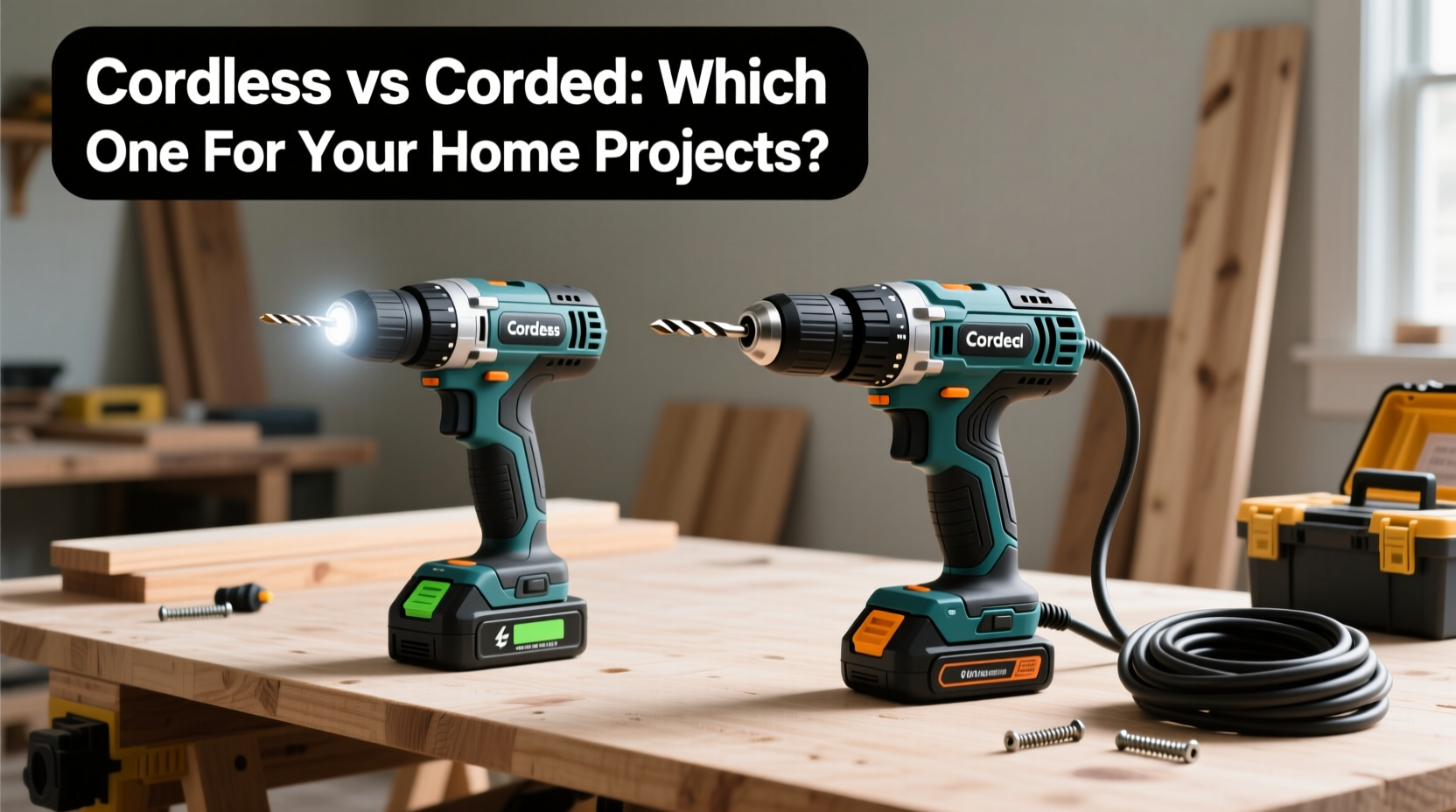
The fundamental distinction between cordless and corded drills lies in their power source and mobility. Corded drills plug directly into an electrical outlet, delivering consistent, uninterrupted power. Cordless models run on rechargeable lithium-ion batteries, offering freedom of movement but with finite runtime and variable power output depending on charge level.
Corded drills are typically more powerful, capable of sustained high-torque drilling through dense materials like hardwood, masonry, or metal. They don’t suffer from battery degradation over time and remain ready as long as there’s electricity. On the other hand, cordless drills prioritize portability. They eliminate tripping hazards from cords, allow access to tight spaces, and enable work in areas without nearby outlets—like attics, basements, or outdoor decks.
Performance Comparison: Power, Torque, and Runtime
When it comes to raw performance, corded drills generally outperform their cordless counterparts. Most corded models operate at 7 to 10 amps, translating to higher torque and RPM (revolutions per minute). This makes them ideal for continuous drilling, especially in tough applications such as boring large holes in beams or driving lag bolts into structural timber.
Cordless drills have improved dramatically over the past decade. Modern 18V or 20V MAX models can rival mid-range corded units in short bursts. However, sustained use—such as drilling multiple holes in concrete or driving dozens of screws—can cause voltage sag, reducing effectiveness as the battery drains. High-end cordless systems now offer dual-battery options or fast-charging technology, but they still require planning around charging cycles.
| Feature | Cordless Drill | Corded Drill |
|---|---|---|
| Power Source | Battery (typically 12V–20V) | Electrical outlet (110–120V) |
| Max Torque | 300–600 in-lbs (high-end models) | 500–900+ in-lbs |
| Mobility | Excellent – no cord | Limited by cord length |
| Runtime | 20–60 minutes under load | Unlimited (while plugged in) |
| Weight | Lighter (without battery), heavier with large packs | Consistently moderate |
| Best For | DIY, light framing, indoor assembly | Heavy-duty jobs, workshops, contractors |
“While cordless technology has closed the gap, nothing beats a corded drill for relentless, all-day performance on job sites.” — Mark Reynolds, Professional Carpenter & Tool Instructor
Real-World Applications: Matching Tools to Projects
Not every project demands maximum power. In fact, many common household tasks benefit more from convenience than brute strength. Consider these scenarios:
- Hanging pictures or shelves: A compact cordless drill with adjustable clutch settings provides precision without overdriving screws.
- Assembling furniture: Lightweight cordless models reduce fatigue during repetitive screw-driving.
- Installing cabinets: Requires consistent torque and depth control—here, a mid-power cordless with a second battery may suffice.
- Framing walls or deck building: These demand extended operation and high torque. A corded drill or high-voltage cordless system (e.g., 20V MAX with 5.0Ah battery) is preferable.
- Drilling into masonry: Corded drills with hammer function handle concrete and brick more reliably, though some cordless hammer drills now perform adequately for occasional use.
Mini Case Study: Renovating a Basement Bathroom
Homeowner Lisa Thompson decided to update her basement bathroom, involving tile removal, stud replacement, vanity installation, and fixture mounting. She initially used her old 12V cordless drill but quickly ran into issues: the battery died after installing two wall brackets, and the motor struggled when drilling through treated lumber.
She borrowed a 7.5-amp corded drill from a neighbor. The difference was immediate—she completed all structural screw work in one session without interruption. For final trim and fixture work, she switched back to her cordless for easier maneuvering in tight corners. Her takeaway? Using both tools strategically saved time and reduced frustration.
Practical Considerations: Cost, Maintenance, and Longevity
Upfront cost varies significantly. Entry-level cordless drills start around $50, but premium kits with multiple batteries and chargers can exceed $200. Corded drills are generally cheaper, ranging from $40 to $120, with fewer recurring costs.
However, long-term ownership costs differ. Cordless drill batteries degrade over time—typically lasting 2–5 years depending on usage and charging habits. Replacement batteries can cost $50–$100, making them a hidden expense. Corded drills have no such consumables; their motors last decades with basic care.
Maintenance is minimal for both. Keep vents clean, avoid moisture exposure, and lubricate chuck threads occasionally. Corded models should be inspected for frayed cords, while cordless units require proper battery storage—ideally at 40–60% charge in a cool, dry place when not in use for extended periods.
Step-by-Step Guide: Choosing the Right Drill for Your Needs
- Assess your typical projects: List the last five things you built or repaired. Were they light assembly, structural work, or mixed?
- Evaluate your workspace: Do you have easy access to power outlets? Are you working overhead or in remote areas?
- Determine frequency of use: Occasional users benefit from simplicity and portability; frequent users need durability and power.
- Set a budget: Include potential future costs like spare batteries or chargers.
- Test before buying: Visit a hardware store and hold different models. Check balance, trigger responsiveness, and ease of bit changes.
- Consider brand ecosystem: If you already own tools from DeWalt, Makita, or Milwaukee, sticking with the same platform saves money on batteries.
Checklist: Questions to Ask Before Buying
- Do I frequently work where outlets aren’t available?
- Will I be drilling into hardwood, metal, or masonry regularly?
- How important is weight and ergonomics for my application?
- Am I willing to manage battery charging schedules?
- Do I prefer one tool that does everything, or am I open to owning multiple specialized tools?
- Is long-term reliability a priority over initial convenience?
FAQ
Can a cordless drill handle the same jobs as a corded one?
For most homeowners, yes—especially with modern 18V or 20V MAX models. However, cordless drills may struggle with prolonged, high-resistance tasks unless equipped with high-capacity batteries. For occasional use, they’re often sufficient.
Are corded drills becoming obsolete?
No. While cordless tools dominate consumer markets, professionals and serious DIYers still rely on corded drills for unmatched power and consistency. They remain essential in fixed workspaces like garages and workshops.
What’s better for beginners: cordless or corded?
A cordless drill is usually better for beginners due to its ease of use, safety (no tripping over cords), and versatility. It encourages experimentation without complex setup. As skills grow, adding a corded model becomes a natural upgrade.
Final Recommendation: One Size Doesn’t Fit All
There’s no universal answer to whether a cordless or corded drill is “better.” The right choice depends on your specific needs, environment, and expectations. For quick fixes, weekend projects, and general household maintenance, a quality cordless drill offers unmatched convenience and is likely all you’ll ever need.
If you're tackling major renovations, working in a dedicated shop, or performing labor-intensive tasks daily, a corded drill delivers dependable performance without compromise. The smartest approach for many is hybrid: start with a solid cordless kit, then add a corded model later as your projects evolve.
Ultimately, the best tool is the one that gets used consistently and effectively. Whether powered by plug or battery, what matters most is confidence in your equipment and satisfaction with your results.




 浙公网安备
33010002000092号
浙公网安备
33010002000092号 浙B2-20120091-4
Comments
No comments yet. Why don't you start the discussion?