
As the crisp air of autumn settles in and golden leaves swirl through city streets, many turn to classic outerwear staples to stay comfortable. Two of the most beloved options—the corduroy jacket and the denim jacket—offer timeless style and rugged durability. But when it comes to actual warmth during those unpredictable fall breezes, which fabric truly performs better? Is the soft ridged texture of corduroy enough to outpace the dense weave of denim? The answer isn’t as straightforward as it seems, and depends on a mix of material science, construction, layering potential, and personal climate.
This article breaks down the thermal performance of both fabrics, compares their insulating properties, and helps you make an informed decision based on how you dress, where you live, and what kind of autumn activities you enjoy.
The Science of Warmth: How Fabrics Insulate
Before comparing corduroy and denim directly, it’s essential to understand how clothing provides warmth. Heat retention in garments is not just about thickness—it’s about how well the fabric traps body heat and resists wind and moisture. Three key factors determine a jacket’s ability to keep you warm:
- Thermal resistance (R-value): A measure of how effectively a material resists heat flow.
- Air trapping capacity: Fabrics with textured surfaces or layered weaves create tiny pockets of still air, which act as natural insulators.
- Density and weight: Heavier fabrics generally provide more inherent insulation due to increased mass and tighter construction.
Both corduroy and denim are woven cotton-based textiles, but their structures differ significantly, affecting how they interact with temperature and airflow.
Corduroy Jackets: The Hidden Warmth Champion?
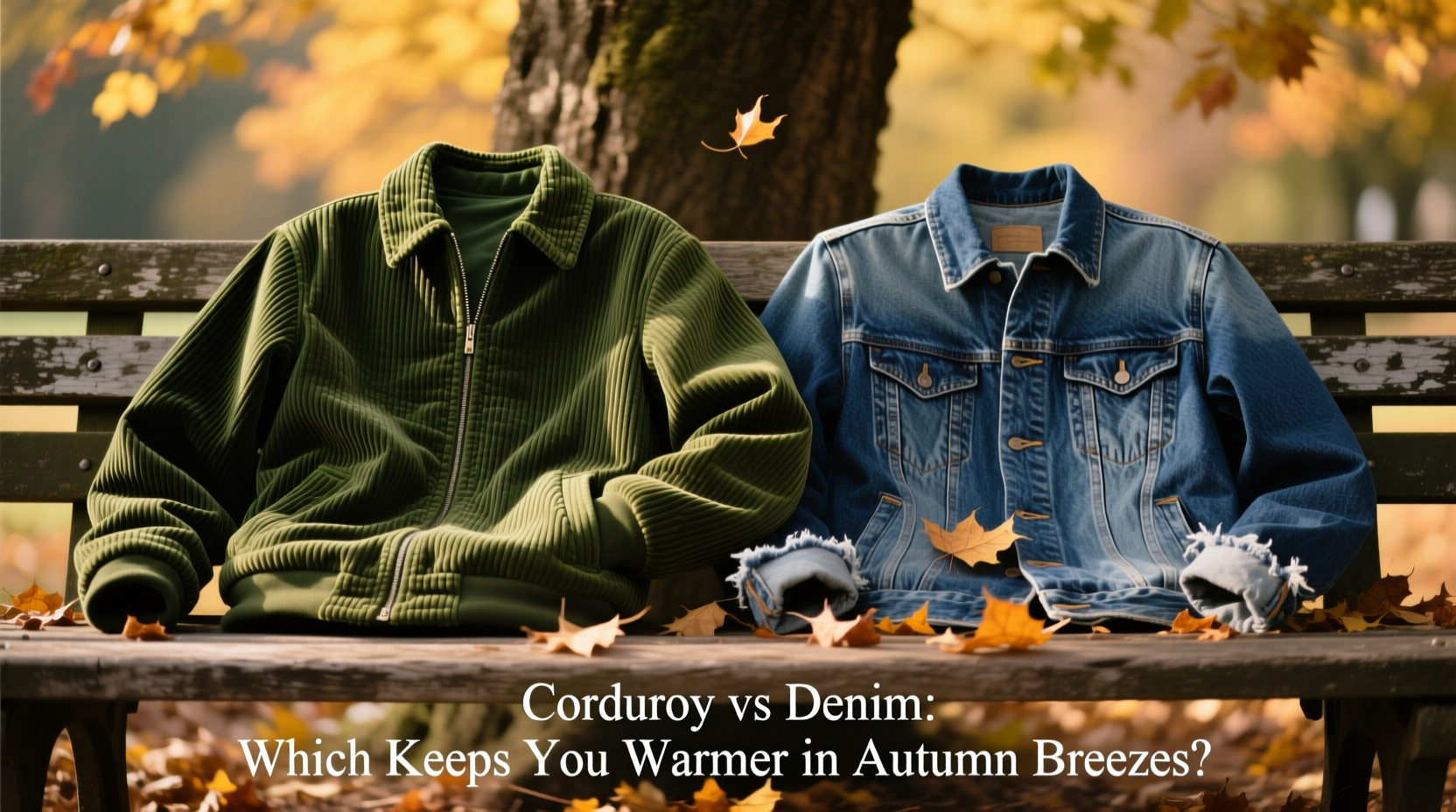
Corduroy is made from cotton cut-pile fabric, characterized by its vertical “wales”—ridges that run along the surface. These wales aren’t just for visual appeal; they play a functional role in insulation. The raised fibers create micro-air pockets that trap warm air close to the skin, forming a buffer against cold air.
The warmth of a corduroy jacket largely depends on the wale count—measured by the number of ridges per inch. Lower wale counts (e.g., 3–6 wales per inch) mean wider, thicker cords, resulting in heavier, denser fabric with superior heat retention. Higher wale counts produce a smoother, finer texture suitable for milder conditions.
Additionally, corduroy has a slight nap, meaning the fibers lie in one direction. When brushed downward, this nap can reduce wind penetration slightly, though it’s not windproof. However, untreated cotton corduroy offers minimal water resistance and can feel clammy if damp.
Denim Jackets: Style Meets Moderate Insulation
Denim, traditionally made from tightly woven cotton twill, is known for its durability and structured drape. Its diagonal ribbing gives it strength and a slight flexibility, but unlike corduroy, it lacks built-in air-trapping texture. Instead, denim relies on weight and density for warmth.
A standard denim jacket uses 9–14 oz cotton fabric. Heavier denims (12–14 oz) offer more thermal resistance than lighter versions. However, because the surface is flat and smooth, there are fewer air pockets to retain heat. This makes denim less inherently insulating than corduroy of comparable weight.
That said, denim excels in wind resistance. The tight weave acts as a modest barrier against breezes, especially when combined with a stiff finish or starch treatment. Many modern denim jackets also include polyester blends or internal linings to enhance warmth without sacrificing the classic look.
One drawback: denim tends to lose heat quickly once cooled, particularly in damp conditions. Cotton absorbs moisture easily, and wet denim conducts heat away from the body—a phenomenon known as evaporative cooling.
“While denim has iconic status, its warmth is situational. In dry, breezy fall weather, a lined denim jacket performs well. But in humid or variable conditions, corduroy often provides more consistent comfort.” — Dr. Lena Torres, Textile Performance Researcher, MIT Materials Lab
Direct Comparison: Corduroy vs Denim in Autumn Conditions
To evaluate which jacket performs better in typical autumn scenarios, consider four key variables: temperature range, wind exposure, humidity, and activity level. Below is a side-by-side analysis.
| Factor | Corduroy Jacket | Denim Jacket |
|---|---|---|
| Inherent Insulation | High – air-trapping wales boost warmth | Moderate – relies on fabric weight |
| Wind Resistance | Low to moderate – loose pile allows airflow | High – tight twill weave blocks breezes |
| Moisture Handling | Poor – absorbs water, dries slowly | Fair – similar absorption, but stiffer surface sheds light rain |
| Layering Compatibility | Excellent – soft interior works over sweaters | Good – structured fit may restrict thick layers |
| Weight & Comfort | Medium-heavy, plush feel | Light to medium, rigid at first |
| Best For | Cool, dry days; indoor-outdoor transitions | Breezy afternoons; urban commutes |
From this comparison, it’s clear that corduroy wins in pure insulation value, while denim offers better protection against wind. If your autumn mornings involve walking through gusty parks or waiting for transit, denim might feel more protective initially. But during extended outdoor time or in fluctuating temperatures, corduroy’s heat retention gives it the edge.
Real-World Scenario: A Week in Portland, Oregon
Consider Sarah, a graphic designer living in Portland, where fall brings frequent drizzle, cool temperatures (45–58°F), and sudden wind shifts. She owns both a vintage corduroy trucker jacket and a classic red-tab denim jacket.
On a typical Monday, she bikes to work in the morning fog. The denim jacket, though stylish, lets wind cut through by mid-morning. By contrast, on Wednesday, she wears the corduroy jacket with a merino wool sweater underneath. Despite the damp air, she stays warmer longer—even after dismounting her bike.
However, on Thursday, a steady rain sets in. Both jackets become heavy and uncomfortable, but the denim holds up slightly better due to its tighter surface. Sarah realizes neither is ideal for prolonged wet weather, but for dry or lightly damp autumn days, the corduroy consistently feels cozier.
This mini case study illustrates a broader truth: context matters. Corduroy excels in still, cool air. Denim shines when wind is the primary challenge.
Maximizing Warmth: Smart Styling and Layering Tips
No jacket performs optimally in isolation. How you wear it determines much of its effectiveness. Here’s how to get the most warmth from either option:
- Start with a moisture-wicking base: Wear a long-sleeve merino wool or synthetic thermal shirt to manage sweat and maintain core temperature.
- Add an insulating mid-layer: A lightweight fleece, shawl-collar cardigan, or quilted vest adds critical warmth without bulk.
- Choose lined versions: Jackets with flannel, sherpa, or thermal linings dramatically improve heat retention—especially important for denim.
- Seal the gaps: High collars, buttoned cuffs, and snug hems prevent heat loss. Consider turtlenecks or scarves for extra defense.
- Limit exposure to moisture: Treat both fabrics with a cotton-safe water-repellent spray to resist light rain and morning dew.
Checklist: Choosing Your Ideal Autumn Jacket
Use this checklist to decide which jacket suits your needs best:
- ✅ Do you spend most of your time outdoors in windy areas? → Lean toward denim.
- ✅ Are you frequently moving between heated indoors and cool outdoors? → Corduroy adapts better.
- ✅ Do you prefer soft, tactile fabrics next to your skin? → Corduroy wins on comfort.
- ✅ Are you looking for a jacket that layers easily over chunky sweaters? → Corduroy typically has a roomier cut.
- ✅ Do you live in a humid or rainy climate? → Neither is ideal, but denim handles dampness slightly better.
- ✅ Is longevity and fade resistance important? → Denim ages beautifully; corduroy may pill or flatten over time.
Frequently Asked Questions
Can I wear a corduroy jacket in the rain?
Corduroy is not rain-friendly. Cotton absorbs moisture quickly, and the pile can mat down when wet, reducing insulation and taking hours to dry. If caught in a shower, remove the jacket as soon as possible and air-dry it flat. For wet climates, consider a waxed cotton overshell worn over your corduroy jacket.
Does a heavier denim jacket always mean more warmth?
Generally yes, but only up to a point. A 14-ounce denim jacket will be warmer than a 10-ounce one, assuming similar cuts and linings. However, without a thermal lining or proper layering, even heavy denim lacks the passive insulation of textured fabrics like corduroy. Weight alone doesn’t guarantee comfort in cold air.
Which jacket lasts longer: corduroy or denim?
Denim typically has superior durability due to its tight twill weave and abrasion resistance. Corduroy’s pile can wear down over time, especially at stress points like elbows and collars. However, with proper care—gentle washing, inside-out drying, and avoiding friction—both can last a decade or more.
Final Verdict: Which Keeps You Warmer?
When it comes to staying warm in autumn breezes, **corduroy has the upper hand**—but with caveats. Its textured surface naturally traps heat more efficiently than flat-woven denim, making it the better choice for sustained warmth in dry, cool conditions. It’s particularly effective when layered and worn in environments with frequent indoor-outdoor transitions.
Denim, while less insulating, offers stronger defense against wind and slightly better moisture resistance. It’s ideal for active urban lifestyles where wind chill is the main concern. Without added lining, however, it won’t match corduroy’s cozy feel during prolonged exposure to cool air.
If warmth is your top priority, choose a corduroy jacket with a low wale count and a warm lining. If you value wind protection and rugged style, go for a heavyweight denim jacket with a flannel interior. For ultimate versatility, own both and switch based on the day’s conditions.
“The right jacket isn’t about one fabric being ‘better’—it’s about matching material properties to environmental demands.” — Marcus Reed, Outdoor Apparel Designer, Patagonia R&D Team
Take Action This Autumn
Don’t let chilly breezes catch you off guard. Reassess your outerwear collection with thermal performance in mind. Test how each jacket feels during different times of day. Experiment with layering combinations. And remember: the warmest jacket is the one that fits your lifestyle, not just the label on the tag.




 浙公网安备
33010002000092号
浙公网安备
33010002000092号 浙B2-20120091-4
Comments
No comments yet. Why don't you start the discussion?