
Seasoned salt is one of the most overlooked yet powerful tools in the home cook’s arsenal. While often dismissed as a generic pantry staple or relegated to fried chicken and french fries, its true potential lies in its ability to elevate everyday dishes with balanced, layered flavor—without requiring advanced technique. When used thoughtfully, seasoned salt transforms simple ingredients into deeply satisfying meals. Understanding its composition, variations, and culinary applications allows cooks to harness its versatility across cuisines and techniques. This guide explores seasoned salt not as a shortcut, but as a strategic flavor enhancer capable of streamlining seasoning while delivering complexity.
Definition & Overview
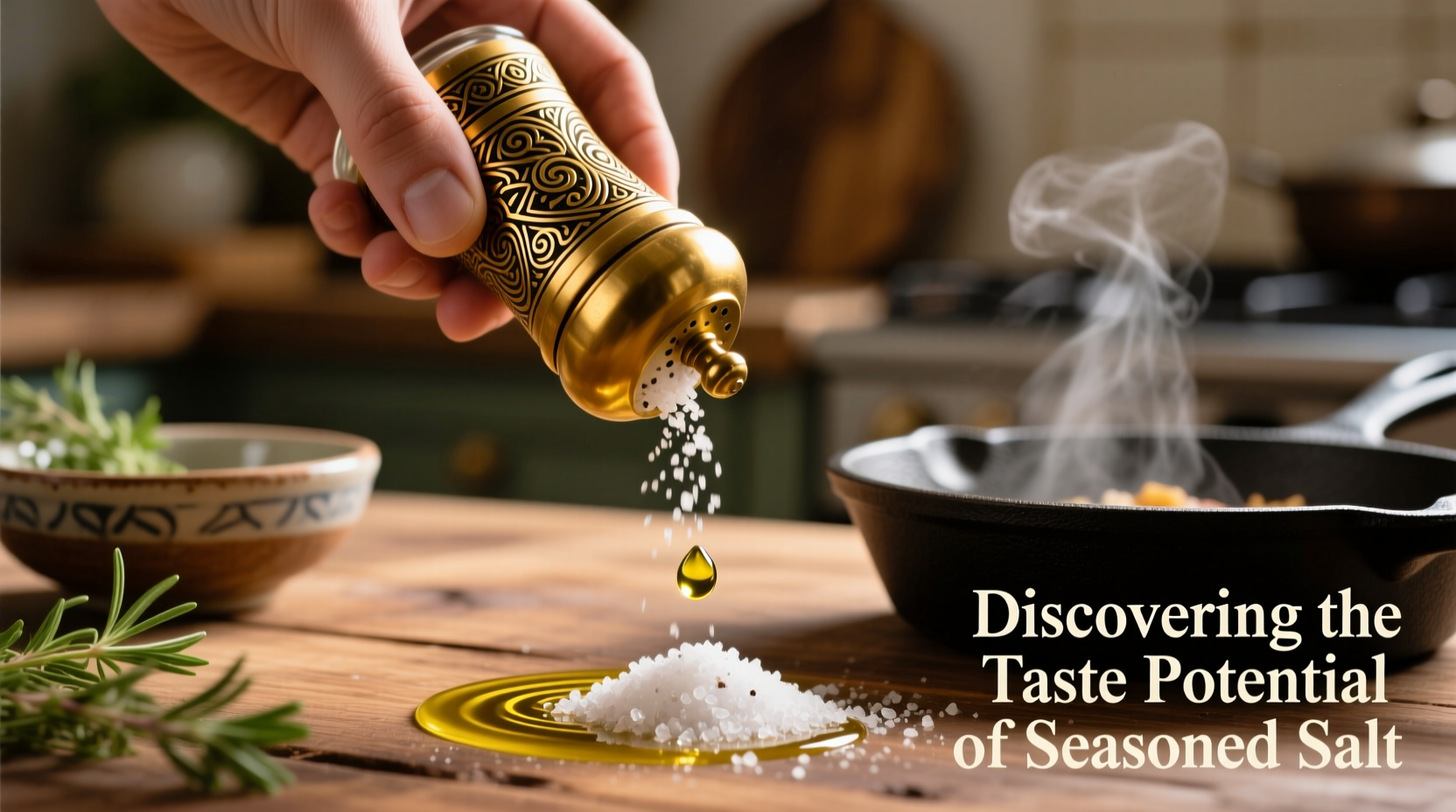
Seasoned salt is a pre-mixed dry blend of table salt combined with herbs, spices, and sometimes anti-caking agents. Unlike plain salt, which contributes only salinity, seasoned salt delivers a multidimensional flavor profile that includes savory, aromatic, earthy, and occasionally slightly sweet or tangy notes. It functions as a foundational seasoning, designed to reduce the need for measuring multiple individual spices during meal preparation.
The concept originated in mid-20th-century American kitchens, where convenience products gained popularity amid rising consumer demand for time-saving solutions. One of the earliest commercial versions was introduced by Lawry’s in 1938, originally formulated for their famous prime rib but later repackaged as a standalone product. Since then, seasoned salt has evolved beyond its American roots, inspiring regional adaptations worldwide—from Caribbean blends heavy on allspice and thyme to Middle Eastern versions incorporating sumac and cumin.
At its core, seasoned salt serves two purposes: enhancing natural flavors and providing consistency. For professional kitchens, it ensures uniform seasoning across large batches; for home cooks, it simplifies the process of building depth in everything from roasted vegetables to grilled proteins.
Key Characteristics
| Attribute | Description |
|---|---|
| Flavor Profile | Savory, umami-rich base with herbal (parsley, thyme), pungent (onion, garlic), and mild warmth (black pepper). Some blends include citrus zest or vinegar powder for brightness. |
| Aroma | Earthy and aromatic, dominated by dried garlic and onion, with subtle herbal top notes. |
| Color & Form | Fine to medium granules; light tan to pale gray depending on added ingredients. May contain visible flecks of herbs. |
| Heat Level | Mild (0–2/10 Scoville). Not inherently spicy unless chili powder or cayenne is included. |
| Culinary Function | All-purpose seasoning for meats, vegetables, soups, stews, marinades, rubs, and finishing. |
| Shelf Life | 18–24 months when stored properly. Degrades in potency over time, especially volatile oils in herbs. |
Practical Usage: How to Use Seasoned Salt Effectively
The key to using seasoned salt well is understanding its role—not as a substitute for thoughtful seasoning, but as a flavor accelerator. Because it already contains salt, it should be treated differently than spice-only blends. Overuse can lead to oversalting, while underuse may fail to deliver noticeable impact.
Home Cooking Applications
- Proteins: Apply generously to chicken thighs, pork chops, or fish fillets before roasting or grilling. The combination of salt and aromatics promotes browning and forms a flavorful crust.
- Potatoes: Toss cubed potatoes in olive oil and seasoned salt before roasting at 425°F (220°C) for crispy, evenly seasoned results.
- Eggs: Sprinkle lightly into scrambled eggs or omelets for an instant upgrade without additional prep.
- Popcorn: Melt butter, mix in a pinch of seasoned salt, and drizzle over freshly popped kernels for a savory snack.
- Soups & Stews: Add during simmering to deepen flavor layers. Particularly effective in bean soups, chowders, and tomato-based broths.
Professional Kitchen Techniques
In restaurant settings, seasoned salt is often used as a base layer in dry rubs or incorporated into compound butters. Chefs appreciate its consistency—especially during high-volume service—because it eliminates variability in seasoning ratios. For example, a steakhouse might blend seasoned salt into softened butter with fresh rosemary and a touch of smoked paprika to create a finishing compound butter that delivers immediate savoriness upon contact with hot meat.
Another pro application involves using seasoned salt in brines. Dissolved in water with sugar and acid, it enhances moisture retention while infusing flavor throughout poultry or pork. A typical ratio is ¼ cup seasoned salt per quart of liquid, adjusted based on brand sodium levels.
Pairing Suggestions and Ratios
To avoid overpowering a dish, consider these guidelines:
- Use **½ teaspoon per 8 oz (225g) of protein** as a starting point.
- For vegetables, **¼ teaspoon per cup** of chopped produce is sufficient.
- Always taste before adding additional salt—many seasoned salts contain up to 70% sodium chloride.
It pairs exceptionally well with:
- Lemon juice (brightens herbal notes)
- Smoked paprika (adds depth and color)
- Fresh parsley or cilantro (contrasts dried herb base)
- Dijon mustard (emulsifies into marinades or glazes)
Tip: If you're watching sodium intake, look for low-sodium versions or make your own blend using sea salt, garlic powder, onion powder, paprika, and dried herbs. This gives full control over ingredients and intensity.
Variants & Types of Seasoned Salt
Not all seasoned salts are created equal. Variations exist across brands, regions, and intended uses. Recognizing these differences allows for more precise application in cooking.
Commercial Blends
- Lawry’s Seasoned Salt: The benchmark version—contains salt, sugar, onion, garlic, paprika, and magnesium carbonate (anti-caking agent). Mildly sweet with pronounced garlic presence. Ideal for roasts, burgers, and popcorn.
- McCormick Original Seasoned Salt: Similar base but with higher black pepper content and no sugar. More assertive, better suited for hearty meats and stews.
- Club House Savory Herb: Emphasizes marjoram and thyme, making it excellent for poultry and stuffing.
Regional & Cultural Adaptations
- Caribbean Jerk-Style: Contains allspice, thyme, nutmeg, and cayenne. Used on grilled chicken, seafood, and plantains.
- Southwest Chipotle: Smoked chipotle pepper, cumin, and lime zest. Perfect for tacos, fajitas, and cornbread.
- Mediterranean: Fennel seed, oregano, lemon peel. Complements lamb, eggplant, and white beans.
- Umami Bomb: Modern gourmet blends featuring mushroom powder, kombu, and tomato flakes. Enhances vegetarian dishes and sauces.
Dietary & Specialty Versions
- Low-Sodium: Uses potassium chloride or salt substitutes. Check labels carefully—some have metallic aftertastes.
- Gluten-Free: Most are naturally gluten-free, but verify if processed in shared facilities.
- Smoke-Infused: Incorporates natural smoke flavor or smoked salts for barbecue-style depth without grilling.
| Type | Best For | Caution |
|---|---|---|
| Classic (e.g., Lawry’s) | Roasted meats, potatoes, popcorn | Contains sugar—may burn at high heat |
| Pepper-Forward | Steaks, stews, gravies | Can dominate delicate dishes |
| Herb-Centric | Poultry, stuffing, vegetables | Herbs fade faster—store tightly |
| Spicy/Jerk | Grilled foods, rice bowls, marinades | High capsaicin—use sparingly |
Comparison with Similar Ingredients
Seasoned salt is frequently confused with other seasoning blends. Understanding the distinctions prevents misuse and improves recipe outcomes.
| Ingredient | Difference from Seasoned Salt | When to Use Instead |
|---|---|---|
| Garlic Salt | Only garlic + salt; lacks herbs and onion. | When you want pure garlic flavor without complexity. |
| Onion Powder | Single ingredient; no salt or supporting spices. | For blending into recipes where salt must be controlled separately. |
| Adobo Seasoning | Latin American blend—often includes cumin, oregano, vinegar powder; usually salt-free. | Authentic Latin dishes like pernil or black beans. |
| MSG (Accent) | Only enhances umami; no herbs, garlic, or salt. | To boost savoriness in already-seasoned dishes. |
| Curry Powder | Complex spice mix—turmeric-heavy, warm, floral; rarely contains salt. | Curries, lentil dishes, rice pilafs. |
“Seasoned salt isn’t lazy seasoning—it’s intelligent compounding. It’s the culinary equivalent of a well-written paragraph: each word (spice) supports the others, creating meaning greater than the sum of its parts.” — Chef Elena Rodriguez, Culinary Instructor at National Institute of Gastronomy
Practical Tips & FAQs
How much seasoned salt should I use?
Begin with ¼ to ½ teaspoon per serving. Taste after cooking and adjust in future batches. Remember: you can always add more salt, but you can’t remove it.
Can I use seasoned salt in place of regular salt?
Yes, but with caution. Since it contains other ingredients, substituting 1:1 may alter flavor balance. In long-cooked dishes like soups, it works well. In baking or delicate sauces, stick to plain salt.
Does seasoned salt go bad?
It doesn’t spoil, but loses potency after 18–24 months. Store in a cool, dark place in an airtight container. Exposure to humidity causes clumping due to anti-caking agents.
Is seasoned salt healthy?
Like any salt, moderation is key. Many versions are high in sodium and may contain additives. Opt for clean-label brands or homemade versions if managing blood pressure or dietary restrictions.
Can I make my own seasoned salt?
Absolutely. Combine:
- ½ cup fine sea salt
- 2 tbsp garlic powder
- 2 tbsp onion powder
- 1 tbsp paprika (sweet or smoked)
- 1 tbsp dried parsley
- 1 tsp black pepper
- 1 tsp citric acid (optional, for brightness)
Mix thoroughly, store in a glass jar, and label with date. Shelf life: 12 months.
What are the best dishes for seasoned salt?
Top performers include:
- Roast chicken (rub under skin and on surface)
- Grilled corn (mix with butter and brush on)
- Deviled eggs (add to yolk filling)
- Meatloaf (blend into mixture for even distribution)
- Homemade crackers (sprinkle on before baking)
Case Study – Restaurant Efficiency: A fast-casual grill chain reduced seasoning errors by 60% after standardizing on a house-blended seasoned salt for all proteins. Line cooks apply one consistent mix instead of juggling five separate containers, improving speed and flavor consistency during peak hours.
Summary & Key Takeaways
Seasoned salt is far more than a convenience product—it is a precision tool for flavor development. When selected and applied wisely, it enhances texture, aroma, and taste across a broad range of dishes. Its power lies in balance: salt for seasoning, aromatics for depth, and herbs for complexity.
Key points to remember:
- Seasoned salt contains both salt and spices—adjust usage accordingly to avoid over-salting.
- Blends vary widely; choose based on cuisine and desired outcome.
- It excels in applications where even seasoning and efficiency matter—roasting, grilling, frying, and batch cooking.
- Homemade versions offer control over ingredients and sodium levels.
- Store properly to preserve volatile compounds and prevent clumping.
Treat seasoned salt not as a crutch, but as a curated flavor foundation. Whether you're searing a weeknight steak or seasoning a holiday roast, a well-chosen blend can be the difference between good and exceptional. Explore different types, experiment with pairings, and refine your approach until the seasoning becomes second nature—because great taste starts long before the first bite.
Call to Action: Try this tonight: Rub seasoned salt onto halved Brussels sprouts, toss with olive oil, and roast at 400°F (200°C) for 25 minutes. Finish with a squeeze of lemon. Notice how the blend enhances caramelization and creates a savory crust. Once you see what seasoned salt can do, you’ll never look at your spice rack the same way again.




 浙公网安备
33010002000092号
浙公网安备
33010002000092号 浙B2-20120091-4
Comments
No comments yet. Why don't you start the discussion?