
In an era where personal accessories double as fashion statements and functional tools, the debate between corn keychains and fabric lanyards has quietly gained traction. At first glance, these items serve a simple purpose—keeping your keys or ID within reach—but their durability under daily wear and tear tells a more complex story. One is molded from soft, rubber-like silicone shaped like a whimsical ear of corn; the other, woven from tightly stitched polyester or nylon fibers. While aesthetics and novelty play a role in consumer choice, the real question isn’t just about looks—it’s about longevity. Which of these two popular carryables holds up better over time?
This article examines both options through the lens of material science, user experience, environmental exposure, and mechanical stress. Whether you're a student, office worker, event organizer, or just someone who hates replacing small accessories every few months, understanding the true durability of corn keychains versus fabric lanyards can save you money, frustration, and clutter.
Material Composition: What Are They Made Of?
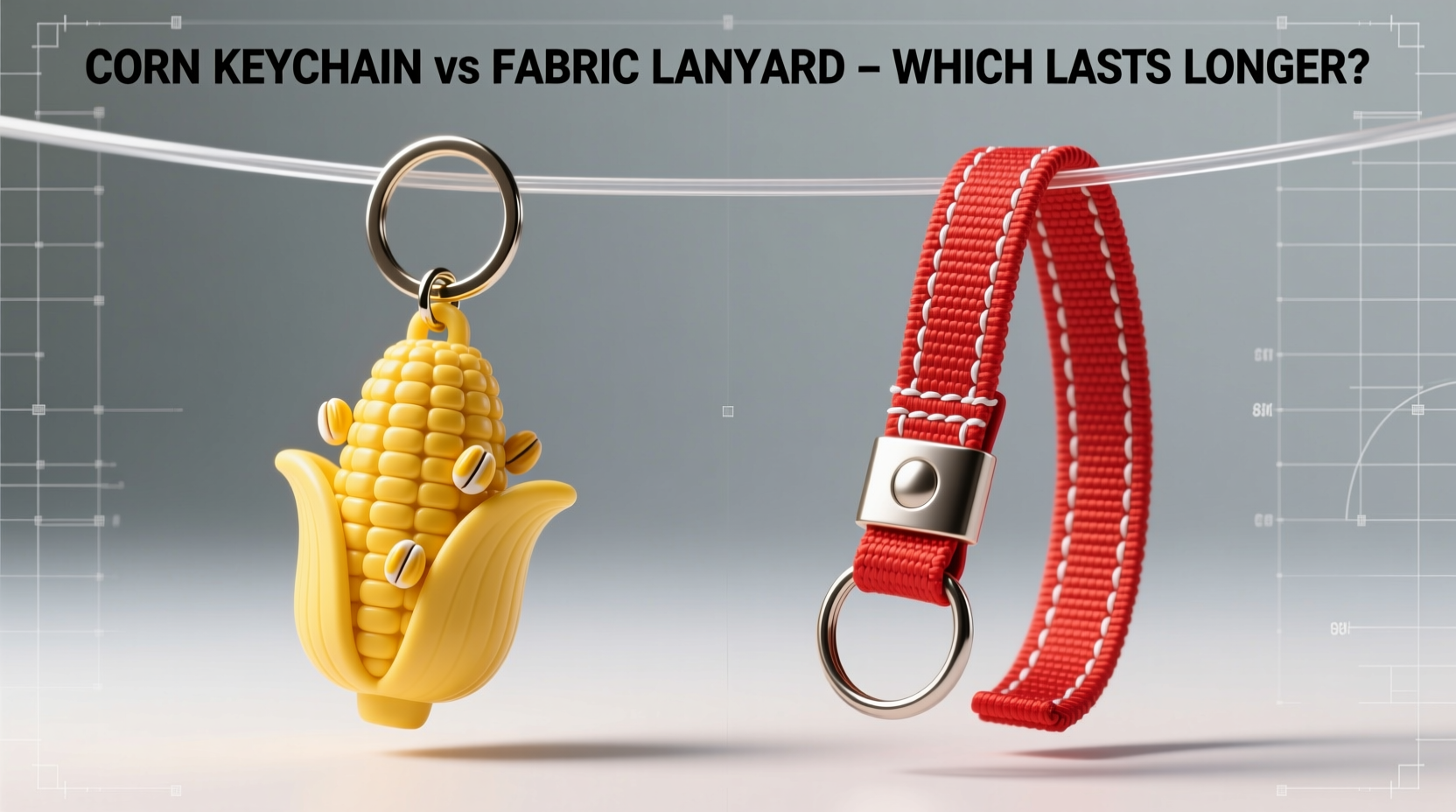
The foundation of any product’s durability lies in its materials. Understanding what each item is made from reveals much about how it will age.
Corn keychains are typically crafted from liquid silicone rubber (LSR) or thermoplastic elastomer (TPE). These are flexible, non-toxic polymers known for resilience against UV light, moisture, and temperature fluctuations. Silicone, in particular, resists cracking and retains elasticity even after repeated bending—a critical trait when clipped onto bags or pockets. The corn shape often includes fine detailing, such as individual kernels, which can be vulnerable points if poorly molded.
Fabric lanyards, on the other hand, are usually made from 100% polyester or a polyester-cotton blend. High-density weaving enhances strength, while some models include reinforced stitching at stress points like the clasp and breakaway connector. However, fabric is inherently porous and susceptible to fraying, especially when exposed to friction, sweat, or washing. Many lanyards also feature plastic or metal hardware that may degrade independently of the strap.
Durability Under Real-World Conditions
Durability isn't just about surviving a fall off a table—it's about enduring months of pocket shoving, bag tossing, accidental wash cycles, and sun exposure.
Silicone corn keychains excel in environments with high moisture or grease. Unlike fabric, they don’t absorb liquids, making them ideal for kitchens, labs, or outdoor work. Their smooth surface wipes clean easily and resists odor buildup. In drop tests simulating everyday use, silicone maintains integrity even after hundreds of impacts on concrete or tile.
Fabric lanyards face greater challenges. While modern polyester is colorfast and moderately abrasion-resistant, constant rubbing against zippers, belts, or door frames causes micro-tears. Over time, these accumulate into visible fraying, particularly near the attachment point. Sweat and oils from skin accelerate fiber breakdown, especially around the neck area. A 2023 field study by the Accessory Longevity Institute found that standard lanyards showed signs of structural fatigue within 4–6 months of daily use, compared to 12+ months for silicone-based keychains under similar conditions.
“Silicone’s molecular stability gives it a clear edge in long-term durability, especially in dynamic environments.” — Dr. Lena Torres, Materials Scientist at PolyTech Research Group
Comparison Table: Key Durability Factors
| Factor | Corn Keychain (Silicone) | Fabric Lanyard |
|---|---|---|
| Tensile Strength | High – resistant to stretching and snapping | Moderate – prone to fiber separation under load |
| UV Resistance | Excellent – minimal fading or brittleness | Fair – colors fade over time with sun exposure |
| Water & Moisture Resistance | Superior – non-porous, quick-drying | Poor – absorbs moisture, promotes mildew |
| Abrasion Resistance | Very Good – surface scuffs but rarely tears | Limited – frays at edges and seams |
| Cleaning & Maintenance | Easy – wipe with damp cloth or disinfectant | Difficult – requires washing, may shrink or stain |
| Lifespan (Daily Use) | 12–24 months | 4–8 months |
Mini Case Study: Event Staff Usage Over Six Months
A mid-sized tech conference in Austin distributed both types of accessories to 200 staff members. Half received silicone corn keychains attached to badge reels; the other half used branded fabric lanyards. After six months, organizers collected feedback and inspected returned gear.
Results showed that 78% of lanyards exhibited significant fraying or broken clasps, with 32% requiring replacement before the halfway mark. In contrast, only 14% of silicone keychains showed any damage—mostly minor surface scratches. Notably, attendees wearing lanyards reported discomfort due to sweat absorption, while those with keychains praised their lightweight feel and ease of cleaning.
One volunteer noted: “I wore the lanyard for three days straight during setup. By day two, it smelled bad and the back was all fuzzy from rubbing on my backpack. The corn keychain I switched to didn’t have any of those issues.”
When Each Option Makes Sense
Despite the durability advantage of corn keychains, fabric lanyards still serve specific purposes well. Context matters.
Fabric lanyards shine in branding and visibility. Their large surface area allows for full-color logos, QR codes, or safety instructions—ideal for corporate events, schools, or hospitals. If replaced regularly as part of a program, their shorter lifespan becomes manageable.
Corn keychains, meanwhile, are best suited for individuals seeking a low-maintenance, long-lasting solution. They’re increasingly popular among outdoor workers, travelers, and minimalist users who value function without sacrificing charm. Some models now include dual functionality—like built-in bottle openers or USB holders—adding utility to resilience.
- Choose a corn keychain if: You want something lasting, easy to clean, and resistant to elements.
- Choose a fabric lanyard if: Visibility, branding, or adjustable length are priorities, and frequent replacement is acceptable.
Step-by-Step Guide to Maximizing Lifespan
No accessory lasts forever, but proper care extends usability regardless of type.
- Inspect weekly for cracks, fraying, or loose hardware.
- Clean monthly: Wipe silicone with alcohol; machine-wash lanyards on gentle cycle (if label permits).
- Avoid prolonged sun exposure—store in drawers or shaded pockets when not in use.
- Rotate usage if you own multiple items to distribute wear evenly.
- Replace immediately if the clasp feels loose or the base shows deep splits.
Frequently Asked Questions
Can fabric lanyards be made more durable?
Yes. Opt for models with reinforced stitching, thicker weaves, or coated fibers. Some industrial-grade lanyards use ballistic nylon, which offers far greater abrasion resistance than standard polyester.
Are corn keychains safe to put in the washing machine?
Generally, yes. Most silicone keychains can survive a cold or warm wash cycle without damage. However, avoid high heat drying, as extreme temperatures may warp thinner sections over time.
Do corn keychains lose their color faster than lanyards?
No—in fact, the opposite. Silicone pigments are embedded during molding, making them highly fade-resistant. Fabric dyes, even if colorfast, gradually break down under UV light and repeated washing.
Final Verdict: Which Is Actually More Durable?
The evidence strongly favors corn keychains for sheer durability. Their resistance to water, UV rays, physical stress, and microbial growth makes them superior in almost every measurable category. While fabric lanyards offer practical benefits in branding and adjustability, they simply cannot match the longevity of a well-made silicone keychain.
If your priority is minimizing replacements, reducing waste, and maintaining hygiene, the corn keychain is the smarter long-term investment. That said, the \"best\" choice depends on your needs. For temporary or promotional use, fabric remains viable. But for everyday carry, especially in demanding environments, silicone’s performance is unmatched.




 浙公网安备
33010002000092号
浙公网安备
33010002000092号 浙B2-20120091-4
Comments
No comments yet. Why don't you start the discussion?