
Every morning, the ritual begins: rummaging through a crumpled cosmetic bag or digging past toppled lipsticks in a cluttered makeup organizer. If your beauty routine starts with chaos, you're not alone. The battle between cosmetic bags and makeup organizers isn’t just about preference—it’s about functionality, longevity, and sanity. One promises portability; the other, precision. But when it comes to preventing your makeup collection from “exploding” into disarray, only one truly delivers long-term order. Let’s break down the strengths, weaknesses, and real-world performance of both.
The Problem: Why Makeup Explodes
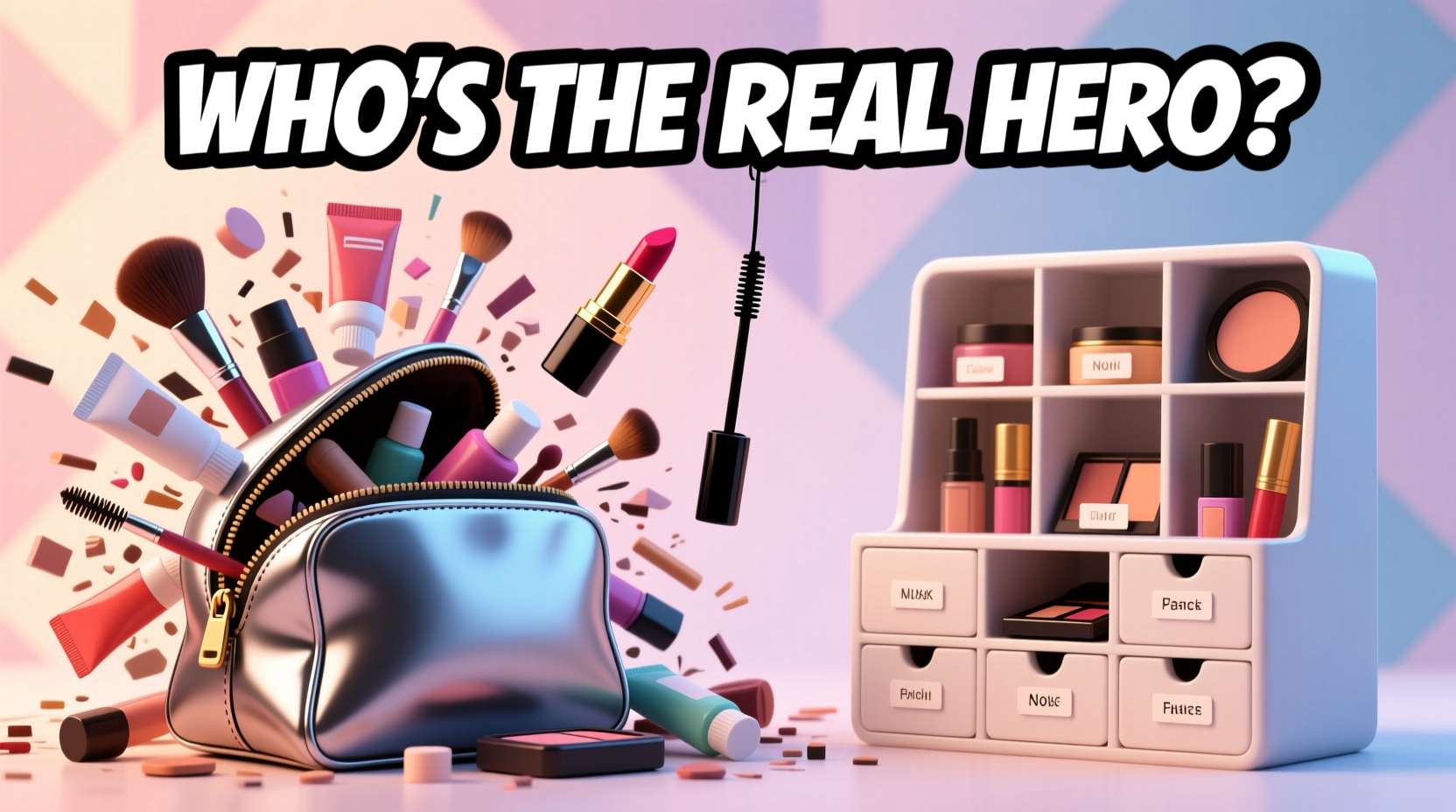
Makeup clutter doesn’t happen overnight. It starts with a single lipstick rolling under the sink, a palette left open, or a travel-sized serum stuffed into a corner. Over time, poor containment leads to spills, broken powders, dried-out products, and wasted money. The root cause? Inadequate organization systems that don’t match how you use, store, or transport your cosmetics.
Two primary culprits contribute to this chaos:
- Lack of structure – Soft bags offer no internal support, allowing items to shift and crush during movement.
- Overcapacity – Most people carry more than they need, turning even rigid organizers into time bombs of tangled tubes and shattered compacts.
Cosmetic Bags: Portability Over Precision
Cosmetic bags are designed for mobility. Whether tucked into a suitcase or carried as a daily pouch, they serve best when you’re on the move. Constructed from fabric, silicone, or soft leather, these bags range from flat zip-pouches to expandable roll-ups with multiple compartments.
Their main advantage is convenience. You can toss them into a larger tote, take them to a friend’s house, or pack them for weekend trips without adding bulk. However, their flexibility becomes a flaw when packed beyond capacity. Without dividers or rigidity, heavier items like foundation bottles settle at the bottom, crushing delicate eyeshadows above.
Another issue is visibility. Many cosmetic bags have small openings or opaque exteriors, forcing you to dump contents onto a counter just to find a specific product. This increases the risk of dropping or losing items—especially in low-light environments like hotel bathrooms.
“Travel-friendly doesn’t mean functional. A good cosmetic bag should protect contents, not just contain them.” — Lila Nguyen, Beauty Product Designer at GlamHaven
Makeup Organizers: Structure and Stability
Unlike soft-sided bags, makeup organizers prioritize stability. Typically made from acrylic, plastic, bamboo, or metal, these units feature fixed compartments, stackable trays, and tiered layouts. They’re meant for stationary use—on vanities, bathroom counters, or inside drawers.
Their strength lies in spatial intelligence. With designated slots for brushes, palettes, lipsticks, and skincare, everything has a place. Transparent materials allow instant visibility, reducing search time and accidental damage. Some advanced models include rotating carousels, pull-out drawers, or magnetic closures to enhance usability.
However, they lack portability. Moving a full acrylic organizer risks tipping, spilling, or breaking components. And while they excel at home, they’re impractical for travel unless you decant products into smaller containers first.
Real-Life Example: The Weekend Disaster
Sophie, a freelance photographer based in Portland, used her favorite velvet cosmetic bag for weekend trips. On a mountain cabin getaway, she tossed in her usual 15-piece kit. Midway through the trip, she opened the bag to find her pressed blush shattered, mascara smeared across a highlighter, and a leaking toner pad soaking her concealer.
After returning home, she switched to a two-tiered acrylic organizer for daily use and reserved a slim, hard-shell travel case for outings. Within a month, she reported using products more efficiently, replacing fewer broken items, and spending less time searching.
Head-to-Head Comparison: Key Differences
| Feature | Cosmetic Bag | Makeup Organizer |
|---|---|---|
| Portability | High – easy to carry and pack | Low – best for home use |
| Protection | Low – soft walls offer little impact resistance | High – rigid structure prevents crushing |
| Visibility | Variable – depends on design and material | High – often transparent with open access |
| Capacity Control | Poor – encourages overpacking | Good – fixed sections limit excess |
| Lifespan | Moderate – fabric wears, zippers fail | Long – durable materials resist wear |
| Best For | Travel, minimalists, touch-ups | Daily routines, large collections, precision |
Step-by-Step: Building an Explosion-Proof System
If you're tired of makeup meltdowns, follow this five-step process to create a sustainable, clutter-free setup.
- Declutter ruthlessly. Remove expired products (most mascaras last 3–6 months), duplicates, and items you haven’t used in 90 days.
- Assess your usage pattern. Do you apply full makeup daily? Only wear touch-up products? Travel frequently? Your habits dictate your ideal system.
- Choose your primary organizer. For home use, pick a multi-tier acrylic unit with brush holders. For travel, invest in a hard-shell case with removable trays.
- Group by category and frequency. Keep daily essentials front and center. Store seasonal or special-occasion items in secondary containers.
- Maintain monthly. Schedule a 15-minute cleanup session each month to wipe down surfaces, check expiration dates, and re-align misplaced items.
Frequently Asked Questions
Can I use a cosmetic bag as my main organizer?
You can, but it’s not ideal for long-term storage. Soft bags compress under pressure, increasing the risk of breakage. They also make it harder to see what you have, leading to overbuying. Reserve bags for travel and keep a structured organizer at home.
How do I stop my powder compacts from breaking?
Store them upright in padded or divided compartments. Avoid placing heavy items on top. Consider using silicone cup inserts or foam liners inside your organizer to absorb shock.
Are expensive organizers worth it?
High-quality organizers made from thick acrylic or sustainable wood may cost more upfront but last years longer than flimsy plastic versions. Look for modular designs that let you expand as your collection grows—this improves long-term value.
Final Verdict: Which Keeps Your Stuff From Exploding?
The answer depends on context—but overall, **a well-designed makeup organizer wins** when it comes to preventing chaos. Its rigid structure, clear visibility, and compartmentalization actively reduce the chances of spills, breakage, and disorganization. While cosmetic bags are essential for mobility, they lack the safeguards needed to protect fragile or liquid-based products.
The most effective approach combines both: use a sturdy makeup organizer as your command center at home, where you store, sort, and prep your products. Then, curate a lean, hard-case cosmetic bag for travel—one that holds only what you’ll realistically use.




 浙公网安备
33010002000092号
浙公网安备
33010002000092号 浙B2-20120091-4
Comments
No comments yet. Why don't you start the discussion?