
Creating cosplay armor doesn’t require industrial machinery or years of sculpting experience. With EVA foam—a soft, flexible material commonly found in floor tiles—you can craft detailed, lightweight armor that’s perfect for conventions, photoshoots, and stage performances. This guide walks through the entire process: from sourcing materials to sealing your finished piece, with practical insights from seasoned cosplayers.
Why EVA Foam Is Ideal for Cosplay Armor
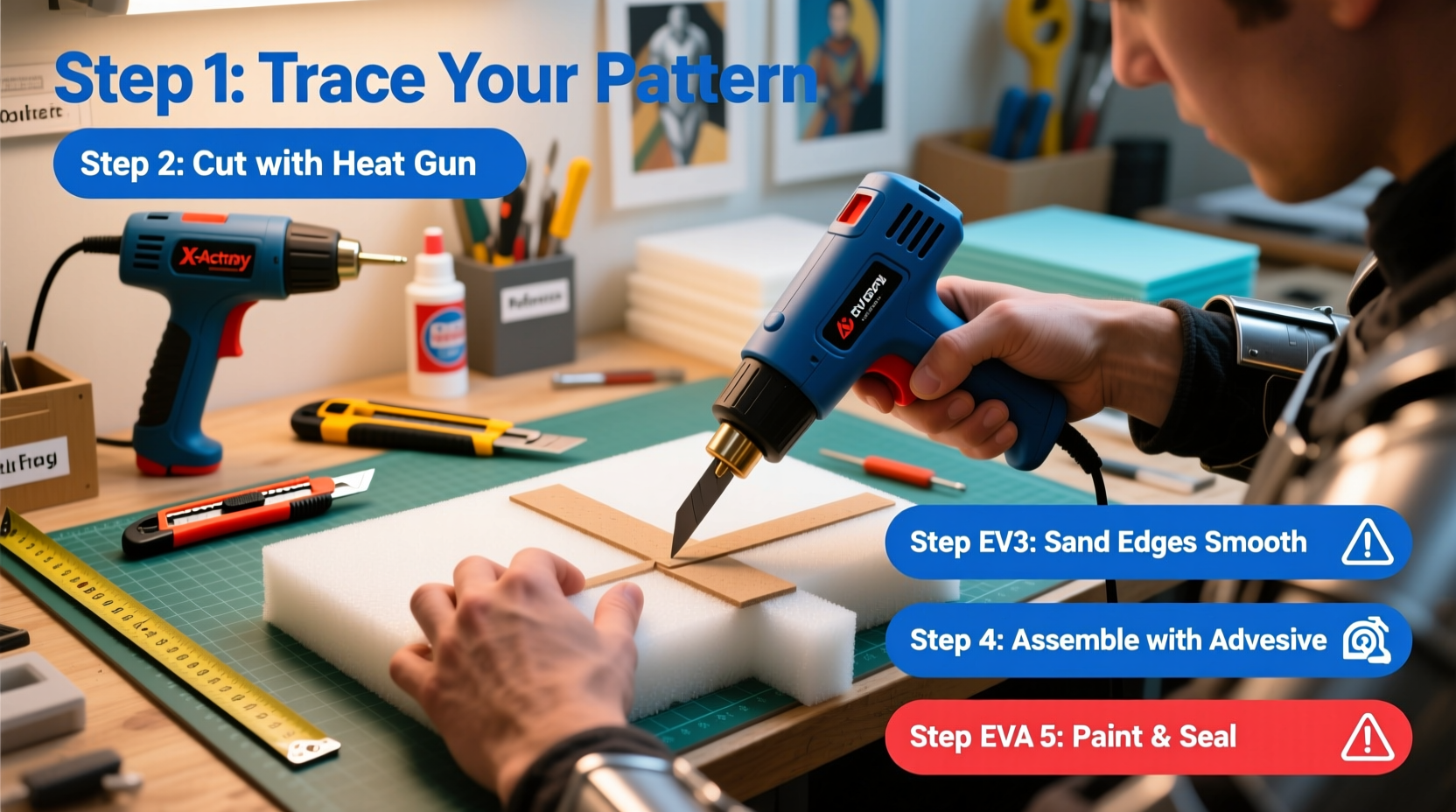
EVA (ethylene-vinyl acetate) foam is a favorite among beginner and advanced cosplayers alike due to its affordability, ease of shaping, and durability. Originally used in children’s play mats and yoga blocks, this closed-cell foam holds heat well, allowing it to be molded into curves, angles, and intricate shapes without cracking.
Unlike resin or fiberglass, EVA foam is safe to work with at home. It requires minimal tools, produces little dust, and poses no toxic fumes when cut properly. Its low weight ensures comfort during long wear, while still providing enough rigidity to hold structure.
“EVA foam transformed cosplay accessibility. What once required mold-making and casting can now be done with scissors, glue, and a hair dryer.” — Lena Park, Prop Maker & Cosplay Instructor
Essential Tools and Materials
Starting your first armor build doesn’t mean investing hundreds of dollars. Most tools are household items or inexpensive purchases available online or at hardware stores.
| Tool/Material | Purpose | Recommended Type |
|---|---|---|
| EVA Foam Sheets | Main construction material | 5–10mm thickness, black or colored |
| Heat Gun or Hair Dryer | Softens foam for shaping | Adjustable heat settings preferred |
| Utility Knife or Rotary Cutter | Cutting precise shapes | Replace blades often |
| Pencil & Ruler | Measuring and marking | Metal ruler for straight cuts |
| Contact Cement or Worbla Tornado | Bonding layers securely | VOC-free options reduce odor |
| Sandpaper (120–400 grit) | Smoothing edges and seams | Wet/dry paper prevents dust |
| Foam Sealer (Pledge Future Floor Finish) | Hardens surface for painting | Apply 3–4 thin coats |
| Acrylic Paints & Sealant | Finishing and weathering | Use matte topcoat for realism |
Avoid using hot glue guns for structural bonds—they create weak joints that crack under stress. Contact cement creates a permanent bond once surfaces are pressed together, so alignment must be precise before joining.
Step-by-Step: Building Your First Armor Piece
This timeline outlines how to construct a simple shoulder pad, ideal for testing techniques before tackling full suits. The process applies to any armor component.
- Design and Pattern Creation
Create a digital or hand-drawn sketch of your desired piece. Break complex shapes into flat panels. Transfer these onto cardboard or poster board to make templates. Cut them out and test-fit on your body using tape. Adjust until the shape aligns comfortably with your movement. - Tracing and Cutting Foam
Place each template on EVA foam and trace with a pencil. Use a sharp utility knife with multiple light passes rather than one deep cut—this prevents tearing. Always cut on a self-healing mat or scrap wood to protect surfaces. - Dry-Fit Assembly
Arrange all cut pieces on your body with masking tape. Check range of motion, symmetry, and overlap points. Mark where straps or fasteners will go. This step prevents irreversible gluing errors. - Shaping with Heat
Use a heat gun (or high-heat hair dryer) to warm the foam until it becomes pliable—about 10–20 seconds per side. Gently bend it over a rounded object (like a water bottle) to form curves. Never stretch or force it; overheating causes bubbling or warping. - Gluing Components
Apply contact cement evenly to both surfaces. Wait 5–10 minutes until tacky. Press firmly once—misalignment cannot be corrected after bonding. Clamp or weight parts if needed. - Sanding and Smoothing Seams
After assembly, sand all edges smooth. Use 120-grit to remove ridges, then 400-grit for a polished finish. Feather transitions between layers to avoid visible steps. - Sealing the Surface
Coat the entire piece with Pledge Future or similar acrylic floor sealer. Let dry completely (1–2 hours), then apply 2–3 more coats. This creates a hard shell resistant to dents and ready for paint. - Painting and Detailing
Base coat with acrylic craft paint. Add depth with dry brushing, washes, or sponge techniques. Finish with a matte clear coat to prevent shine and protect details.
Common Mistakes and How to Avoid Them
Even experienced builders encounter setbacks. Knowing what not to do saves time, money, and frustration.
- Skipping the mock-up phase: Jumping straight to foam means costly reshaping later. Cardboard prototypes are fast, cheap, and reveal fit issues early.
- Overheating the foam: Yellowing or bubbling indicates too much heat. Keep the gun moving and maintain a 6-inch distance.
- Using spray adhesives for structure: These lack strength for load-bearing joints. Reserve them only for attaching fabric linings or decorative trim.
- Applying thick sealer coats: Thick layers crack when flexed. Multiple thin coats provide flexibility and durability.
- Ignoring ventilation during sealing: Acrylic sealers emit fumes. Work in a well-ventilated area and wear a mask if sensitive.
“I ruined my first helmet by spraying five heavy coats of sealant overnight. It cracked across the forehead when I put it on. Now I wait two hours between coats and never rush.” — Diego Mendez, Convention Panel Speaker
Checklist: Your First EVA Foam Project
Follow this checklist to ensure every critical step is completed before display or wear.
- ☐ Sketch design concept and break into manageable sections
- ☐ Create cardboard templates and test fit on body
- ☐ Transfer patterns to EVA foam and cut cleanly
- ☐ Shape curved areas with controlled heat application
- ☐ Dry-fit all pieces with tape to confirm alignment
- ☐ Glue components using contact cement (not hot glue)
- ☐ Sand edges and seams smooth with progressive grits
- ☐ Apply 3–4 thin coats of acrylic sealer, drying fully between layers
- ☐ Prime and paint with non-reactive acrylics
- ☐ Finish with protective matte topcoat
- ☐ Attach straps or closures securely (elastic, buckles, magnets)
- ☐ Perform final wear test for comfort and mobility
Real Example: From Idea to Convention Floor
Sophie, a college student and first-time cosplayer, wanted to recreate a character’s armored corset for an upcoming event. She began by studying reference images and dividing the design into eight front and back segments. Using poster board, she made paper templates, adjusting waist curvature until it sat flush against her torso.
She transferred the final patterns to 10mm black EVA foam, cutting carefully with a fresh X-Acto blade. After heating and shaping the side panels around a rolled blanket, she glued everything with Barge All-Purpose Cement. To hide seams, she carved subtle panel lines with a soldering iron (used at low heat).
The entire piece was sealed with four coats of Pledge Future, sanded lightly between layers. She painted with base-coated gray, added rust effects with brown washes, and finished with a matte varnish. Attached elastic straps allowed easy wear. At the convention, her build drew attention—not just for accuracy, but because it looked professionally made despite being her debut project.
Frequently Asked Questions
Can I reuse EVA foam templates?
Yes. Cardboard or plastic templates can be stored flat and reused for future builds or scaled versions. Label them clearly with character name and body location (e.g., “Thor Helmet – Left Side”).
How do I attach armor to my body safely?
Use adjustable elastic straps sewn to fabric backing or riveted to foam. For heavier pieces, incorporate hidden backpack-style harnesses. Avoid rigid attachments that restrict breathing or movement.
Is EVA foam waterproof?
The material itself resists moisture, but prolonged exposure to rain may degrade paint and adhesive. If wearing outdoors, apply a waterproof outdoor sealant as a final coat and avoid submersion.
Advanced Tips for Long-Term Success
Once you’ve mastered the basics, consider upgrading your workflow:
- Add internal support: Insert thin plastic strips or aluminum rods inside large pieces (like wings or swords) to prevent sagging.
- Incorporate LED lighting: Route wiring through slits in the foam and use coin batteries hidden in compartments.
- Combine materials: Pair EVA foam armor with 3D-printed details or fabric capes for dynamic contrast.
- Label storage boxes: Keep finished pieces in labeled bins with silica gel packs to prevent dust and humidity damage.
Conclusion
Creating armor from EVA foam is accessible, creative, and deeply rewarding. You don’t need formal training or expensive equipment to produce professional-looking results. By mastering pattern-making, heat shaping, and proper sealing, you lay the foundation for increasingly ambitious builds. Every scratch, curve, and painted highlight tells a story—not just of the character you represent, but of the craftsmanship behind it.




 浙公网安备
33010002000092号
浙公网安备
33010002000092号 浙B2-20120091-4
Comments
No comments yet. Why don't you start the discussion?