
Creating a beaded rope keychain is more than just a practical project—it’s a chance to express individuality through color, texture, and design. Whether you're making one for yourself or as a thoughtful handmade gift, the process blends creativity with craftsmanship. With just a few basic supplies and a bit of patience, you can produce a durable, stylish accessory that stands out from mass-produced options. This guide walks you through every stage, from selecting materials to finishing touches, ensuring your keychain is both beautiful and functional.
Gathering Your Materials and Tools
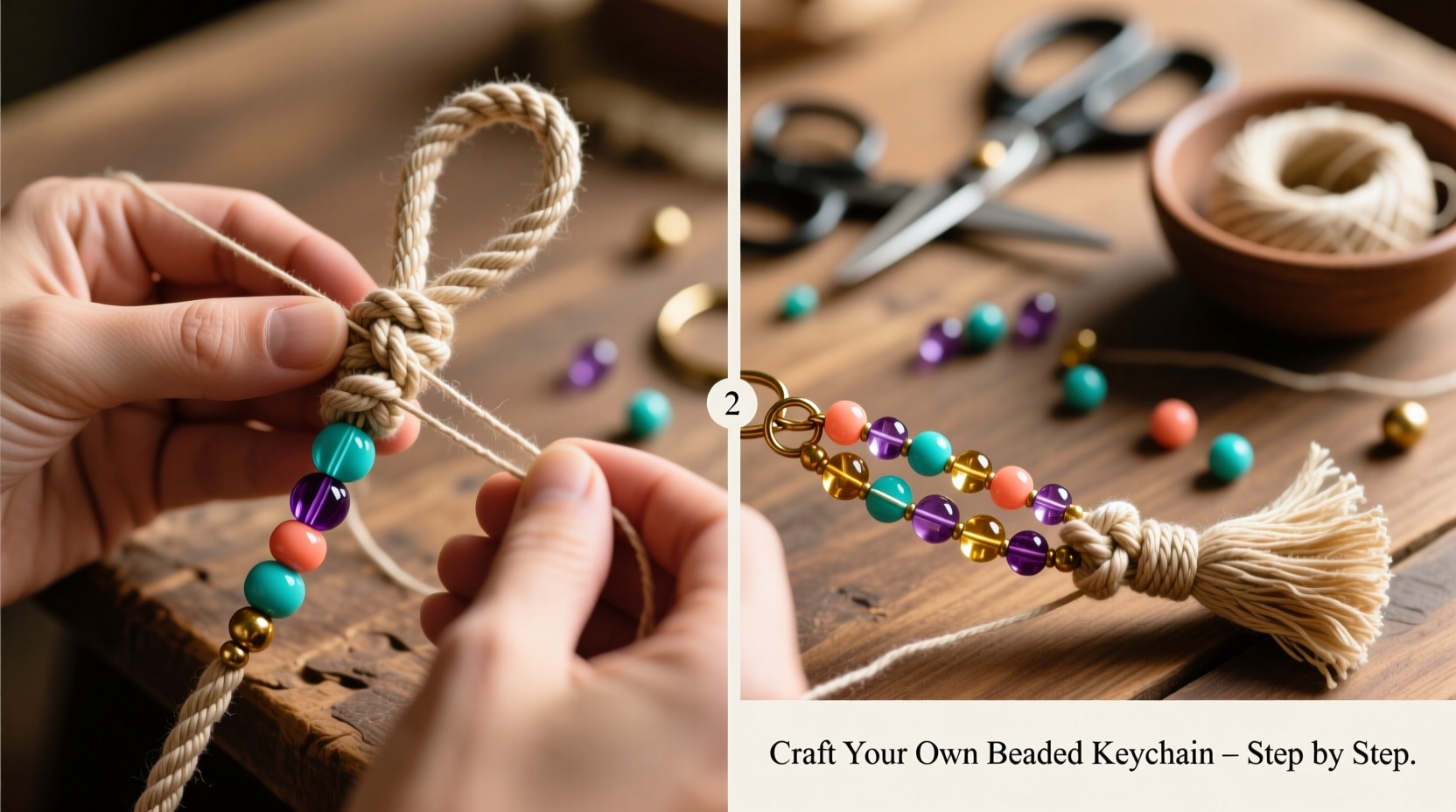
The foundation of any successful crafting project lies in preparation. Before diving into assembly, ensure you have all necessary components on hand. The beauty of this project is its accessibility—most items are affordable and widely available at craft stores or online retailers.
Here’s what you’ll need:
- Beads: Choose from glass, wood, acrylic, or metal beads. Consider size (4mm–8mm works well), shape, and color coordination.
- Rope or cord: Nylon, cotton macramé cord, or waxed thread (1.5–2mm thickness) provides durability and grip.
- Keyring: A sturdy metal split ring (25–30mm diameter).
- Scissors: Sharp fabric or embroidery scissors for clean cuts.
- Lighter or fray check: To seal synthetic cord ends and prevent unraveling.
- Tape or clamp: To secure the cord while working.
- Beading needle (optional): Helpful for threading small beads onto thin cords.
Design Planning: Color, Pattern, and Length
Before stringing begins, spend time planning your design. A well-thought-out pattern elevates a simple keychain into a wearable piece of art. Decide on a theme—perhaps seasonal colors, birthstones, or a favorite palette from nature.
A standard keychain length ranges from 4 to 6 inches, not including the keyring. For a balanced look, aim for symmetry or a repeating sequence. Common patterns include:
- Alternating two colors (e.g., black-white-black-white)
- Gradient fade (light to dark)
- Central focal bead surrounded by smaller accent beads
- Random mix for an organic, bohemian feel
| Design Style | Suitable Beads | Cord Color Tip |
|---|---|---|
| Minimalist | Wood, matte ceramic | Natural-toned cord |
| Vibrant & Playful | Acrylic, pony beads | White or bright matching cord |
| Elegant & Refined | Crystal, glass, metal spacers | Black or metallic thread |
| Rustic & Earthy | Stone, seed beads | Brown or tan hemp |
“Intentional design transforms everyday objects into personal statements. Even a small keychain can reflect someone’s mood, memory, or aesthetic.” — Lena Torres, Handmade Accessories Designer
Step-by-Step Assembly Guide
Follow this clear sequence to create a polished, tangle-free beaded rope keychain. Work on a clean, flat surface with good lighting to avoid losing beads.
- Cut the cord: Measure and cut a piece 24 inches long. This allows room for knotting and handling during assembly.
- Attach the keyring: Fold the cord in half and pass the looped end through the keyring. Pull the loose ends through the loop and tighten gently to form a lark’s head knot.
- Secure the work: Tape the knotted end to your workspace or use a clamp to keep tension steady.
- String your beads: Begin threading beads in your chosen pattern. Slide them down toward the knot. Use a needle if needed for tight holes.
- Maintain alignment: Periodically check that beads sit flush and the pattern remains consistent.
- Finish the strand: Once you reach the desired length (typically 4–6 inches of beaded section), leave about 2 inches of tail cord.
- Create the closure loop: Bend the cord back on itself and thread both ends through a final spacer or larger bead to form a loop. This will serve as the attachment point.
- Knot securely: Tie a double or triple overhand knot behind the last bead to lock everything in place.
- Trim and seal: Cut excess cord, leaving a 1/8-inch tail. Briefly pass the end over a lighter flame to melt and seal synthetic fibers (skip for natural fibers like cotton).
Real Example: Sarah’s Birthday Gift Keychain
Sarah wanted to make personalized keychains for her three best friends’ birthdays. She chose each friend’s birthstone color: garnet red for January, amethyst purple for February, and aquamarine blue for March. Using 6mm glass beads and black waxed cotton cord, she created symmetrical designs with a central focal bead flanked by smaller spacers.
To add a personal touch, she included a tiny silver letter charm representing each friend’s initial. The entire process took less than an hour per keychain once materials were gathered. Her friends loved the thoughtfulness—and durability—of the gifts. One even commented, “I’ve lost so many cheap keychains, but this one feels like it was made to last.”
Common Mistakes and How to Avoid Them
Even simple projects can go awry without attention to detail. Here are frequent pitfalls and how to sidestep them:
| Mistake | Why It Happens | How to Fix or Prevent |
|---|---|---|
| Beads sliding off during work | Loose tension or unsecured cord | Always anchor the knotted end with tape or a clip. |
| Uneven spacing | Inconsistent pressure when stringing | Slide beads down firmly after each addition. |
| Knot slipping | Using slippery cord or insufficient knots | Use triple knots and seal ends properly. |
| Too short or too long | Poor length estimation | Measure against a ruler as you go; 5 inches is ideal. |
Frequently Asked Questions
Can I wash my beaded rope keychain?
Spot clean with a damp cloth. Avoid soaking, especially if using wooden or porous stone beads, which can crack or discolor when wet.
What if my cord frays while I’m working?
This often happens with cotton or low-quality synthetics. Switch to waxed cord or apply a drop of clear nail polish to the tip to stiffen it for easier threading.
Are there eco-friendly material options?
Yes. Choose sustainably sourced wood beads, recycled glass, or organic cotton cord. Hemp rope is another durable, biodegradable option.
Final Checklist Before You Begin
Use this quick reference to ensure you’re fully prepared:
- ☑ Measured and cut cord to 24 inches
- ☑ Selected beads with compatible hole sizes
- ☑ Chosen a cohesive color scheme or pattern
- ☑ Secured keyring with a lark’s head knot
- ☑ Anchored working end to prevent slipping
- ☑ Tested knot security and sealed ends
Conclusion: Start Creating Today
There’s a quiet satisfaction in holding something you’ve made with your own hands—a tactile reminder of time, care, and creativity invested. A beaded rope keychain may seem small, but it carries meaning far beyond its size. It’s a daily-use item transformed into art, a splash of personality on a mundane object.
With this guide, you now have the knowledge and confidence to begin. Experiment with textures, layer multiple cords, or incorporate charms. Share your creations with friends, or start a mini side project selling them at local markets. The only limit is your imagination.




 浙公网安备
33010002000092号
浙公网安备
33010002000092号 浙B2-20120091-4
Comments
No comments yet. Why don't you start the discussion?