
Leaving your puppy alone during the workday is one of the most challenging aspects of new dog ownership. You want them safe, comfortable, and out of trouble—but you also want to nurture their confidence and independence. The debate between crate training and free roaming often divides pet owners, each method carrying its own risks and rewards. Understanding both approaches, along with practical strategies for building trust, can help you make a decision that supports your puppy’s well-being and fits your lifestyle.
The Crate Training Approach: Structure and Security
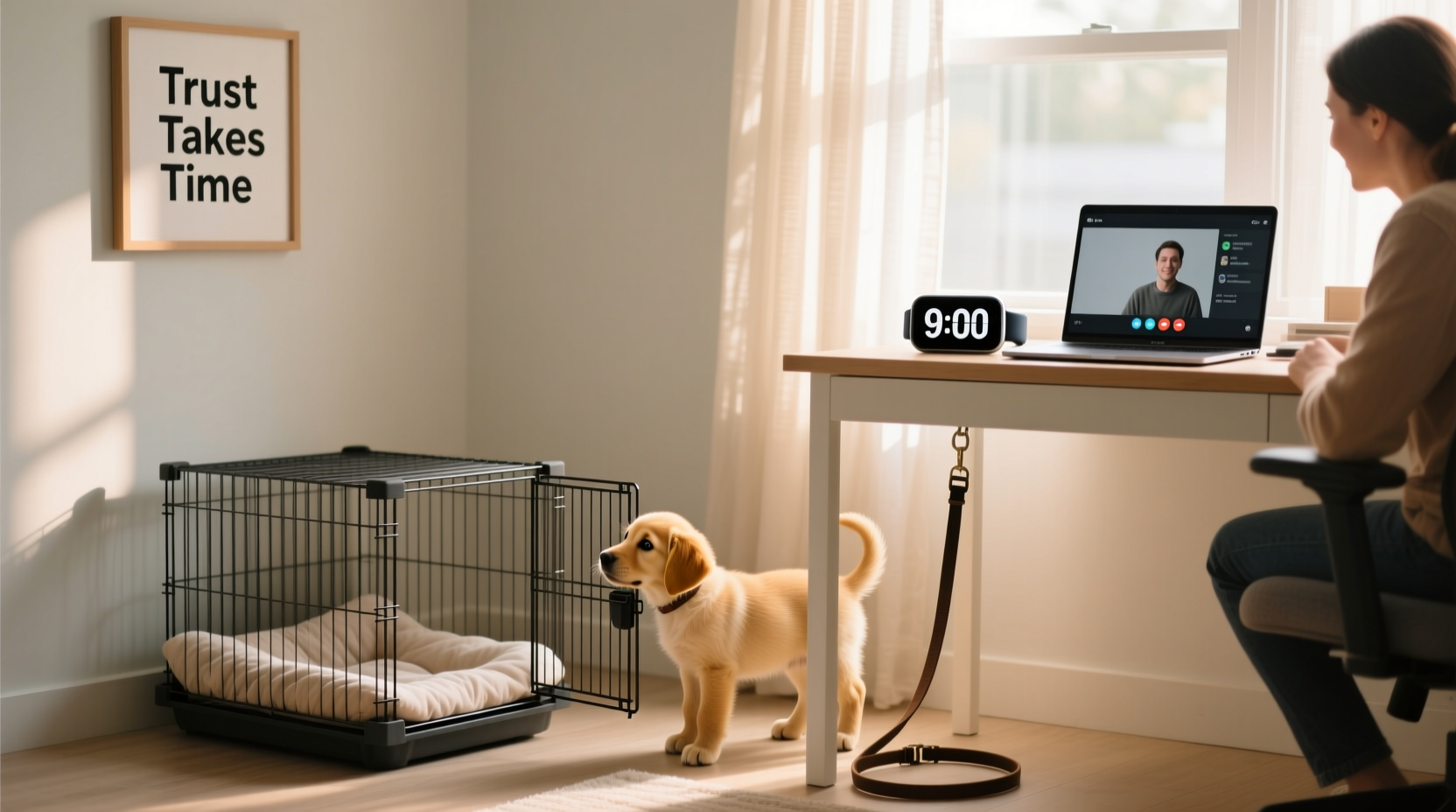
Crate training involves confining your puppy to a secure, appropriately sized enclosure when unsupervised. When done correctly, it taps into a dog’s natural instinct to seek shelter in a den-like space. A well-introduced crate becomes a sanctuary—a place where your puppy feels protected and calm.
The benefits are clear: reduced risk of household accidents, prevention of destructive chewing, and protection from hazards like electrical cords or toxic plants. Veterinarians and trainers frequently recommend crate training as a foundational tool for housebreaking and behavioral management.
However, crate training isn’t without limitations. Extended confinement—especially beyond 4–5 hours for young puppies—can lead to stress, physical discomfort, and bladder issues. Puppies under six months typically cannot hold their bladder for more than three to four hours. For full-time workers, this creates a real logistical challenge.
“Crate training works best when balanced with exercise, mental stimulation, and timely potty breaks. It’s a management tool, not a substitute for supervision.” — Dr. Laura Bennett, DVM, Canine Behavior Specialist
Free Roaming: Freedom with Responsibility
Free roaming allows your puppy access to part or all of your home while you’re away. Advocates argue it promotes confidence, reduces separation anxiety, and encourages independence. A puppy allowed to explore safely may develop better problem-solving skills and adapt more easily to household routines.
But freedom comes with risk. Unsupervised puppies are prone to chewing furniture, ingesting dangerous objects, or injuring themselves on stairs or slippery floors. Without boundaries, they may also develop bad habits that are difficult to correct later.
Successful free roaming requires extensive preparation: puppy-proofing every accessible room, installing baby gates, removing temptations, and providing designated areas for elimination if necessary. Some owners use indoor potty systems like pee pads or artificial grass trays—though these can complicate outdoor house training if not phased out properly.
When Free Roaming Might Be the Right Choice
- You have a small, easily contained area (e.g., a kitchen-living room combo).
- Your puppy is older (over 5–6 months) and has already demonstrated reliable behavior.
- You’ve arranged midday breaks via a dog walker or family member.
- You're working remotely part-time and can gradually increase solo time.
Comparing Both Methods: A Practical Breakdown
| Factor | Crate Training | Free Roaming |
|---|---|---|
| Safety | High – limits access to hazards | Variable – depends on prep and layout |
| Housetraining Support | Strong – encourages bladder control | Weaker – risk of accidents increases |
| Behavioral Development | Structured – teaches patience | Potentially more confident, but risk of bad habits |
| Owner Flexibility | Limited – requires timely release | Higher – less dependency on strict timing |
| Stress Levels | Can be high if overused or poorly introduced | Lower if environment is secure and enriching |
| Best For | New puppies, first-time owners, long workdays | Experienced owners, shorter absences, prepared homes |
Building Trust: How to Leave Your Puppy Alone Confidently
Whether you choose crating or free roaming, the ultimate goal is trust—trust that your puppy will stay safe, and trust that you’ve set them up for success. This doesn’t happen overnight. It requires consistency, observation, and gradual exposure.
Step-by-Step: Preparing Your Puppy for Solo Time
- Start with short absences. Begin by leaving the room for 30 seconds, then gradually extend to minutes, then hours. Always return calmly—don’t reinforce anxious greetings.
- Create a predictable routine. Feed, walk, and play at consistent times so your puppy knows what to expect before you leave.
- Use departure cues wisely. Avoid making keys or shoes dramatic signals. Pick them up randomly throughout the day so they don’t trigger panic.
- Provide mental stimulation. Offer puzzle toys, chew-safe bones, or stuffed Kongs to keep your puppy occupied.
- Practice confinement during the day. Even if you plan to free roam, teach your puppy to accept a gated or crated space so you have options.
- Monitor progress. Use a pet camera to observe behavior. Look for signs of distress like excessive barking, pacing, or destruction.
Real-Life Example: Balancing Work and Puppy Care
Sarah, a graphic designer in Portland, adopted a 10-week-old Labrador mix named Milo. Working 9-to-5, she worried about leaving him alone. She started with crate training, using a large enough kennel divided into sleeping and potty areas. For the first two weeks, she took unpaid breaks to come home at noon. She also hired a dog walker twice a week to break up the day.
By 16 weeks, Milo could handle three hours in the crate with a treat-filled toy. Sarah gradually expanded his access to the living room using a baby gate, keeping valuables out of reach. By six months, with consistent training and a midday walk, Milo was comfortable in a puppy-proofed apartment for up to five hours—part free roam, part gated space.
Her key insight? “I didn’t have to pick one method forever. I used the crate early on for structure, then transitioned to supervised freedom as he proved himself. The crate is still his go-to nap spot—he chooses it now.”
Hybrid Approach: Best of Both Worlds?
Many successful owners blend crate training and free roaming based on their puppy’s age, temperament, and home setup. For example:
- Morning: Crate your puppy while you get ready to avoid overstimulation.
- Work hours: Allow access to a secure zone with water, toys, and a potty pad if needed.
- Return: Greet calmly, take outside immediately, then engage in play or training.
This hybrid model offers flexibility. The crate remains a training aid and safe retreat, while controlled freedom builds maturity. The transition should be gradual—never open all doors on day one.
Checklist: Is Your Puppy Ready for Longer Alone Time?
- ✅ Holds bladder for age-appropriate duration (e.g., 3–4 hours at 12–16 weeks)
- ✅ Ignores forbidden items when unsupervised (for at least 10 minutes)
- ✅ Settles independently after brief periods of fussing
- ✅ Responds reliably to basic commands like “sit” and “leave it”
- ✅ Has no history of escape attempts or extreme distress
Frequently Asked Questions
Can I leave my puppy free roam if I work 8 hours?
It’s not advisable for puppies under six months. Even adult dogs struggle with such long isolation. Consider a dog walker, pet sitter, or bringing your puppy to a trusted friend or daycare. If you must leave them, combine a secure space with potty solutions and enrichment—but recognize the limitations.
Will crate training make my dog anxious?
Not if done properly. Anxiety usually stems from improper use—too much time, lack of acclimation, or using the crate punitively. Introduce it slowly with treats and praise. If your puppy whines, don’t let them out immediately; wait for a quiet moment to reinforce calm behavior.
How do I know if my puppy is stressed when I’m gone?
Signs include destructive chewing (especially near exits), excessive barking or howling, urination/defecation outside the designated area, drooling, or attempting to escape. A pet camera with two-way audio can help you assess in real time. Persistent stress warrants a reassessment of your setup or consultation with a trainer.
Final Thoughts: Trust Is Earned Through Preparation
There’s no universal answer to whether crate training or free roaming is better. The right choice depends on your puppy’s needs, your home environment, and your ability to provide support during the critical early months. What matters most is intentionality—every decision should aim to build security, reduce fear, and foster independence.
Trust isn’t something you simply hope for; it’s created through repetition, consistency, and empathy. Whether your puppy spends the day in a cozy crate or exploring a gated living room, they need to know you’ll return, their needs will be met, and their world is predictable.
Start small. Adjust as needed. Celebrate progress, not perfection. With time, both you and your puppy can feel confident—even when you’re apart.




 浙公网安备
33010002000092号
浙公网安备
33010002000092号 浙B2-20120091-4
Comments
No comments yet. Why don't you start the discussion?