
A big heart keychain is more than just an accessory—it’s a statement of love, identity, or personal meaning. Whether it symbolizes a relationship, a reminder of self-love, or a tribute to someone special, integrating it into your daily carry like car keys makes that sentiment tangible every time you reach for them. However, large decorative keychains often pose practical challenges: they can snag, rattle, or even interfere with the ignition. The goal isn’t just to attach it—but to do so in a way that’s both meaningful and sustainable for daily use.
The solution lies in balancing aesthetics with functionality. With thoughtful attachment methods, reinforcement techniques, and strategic placement, you can keep your heart keychain secure, accessible, and damage-free—even with frequent handling, exposure to weather, and constant motion.
Why Standard Attachment Methods Fall Short
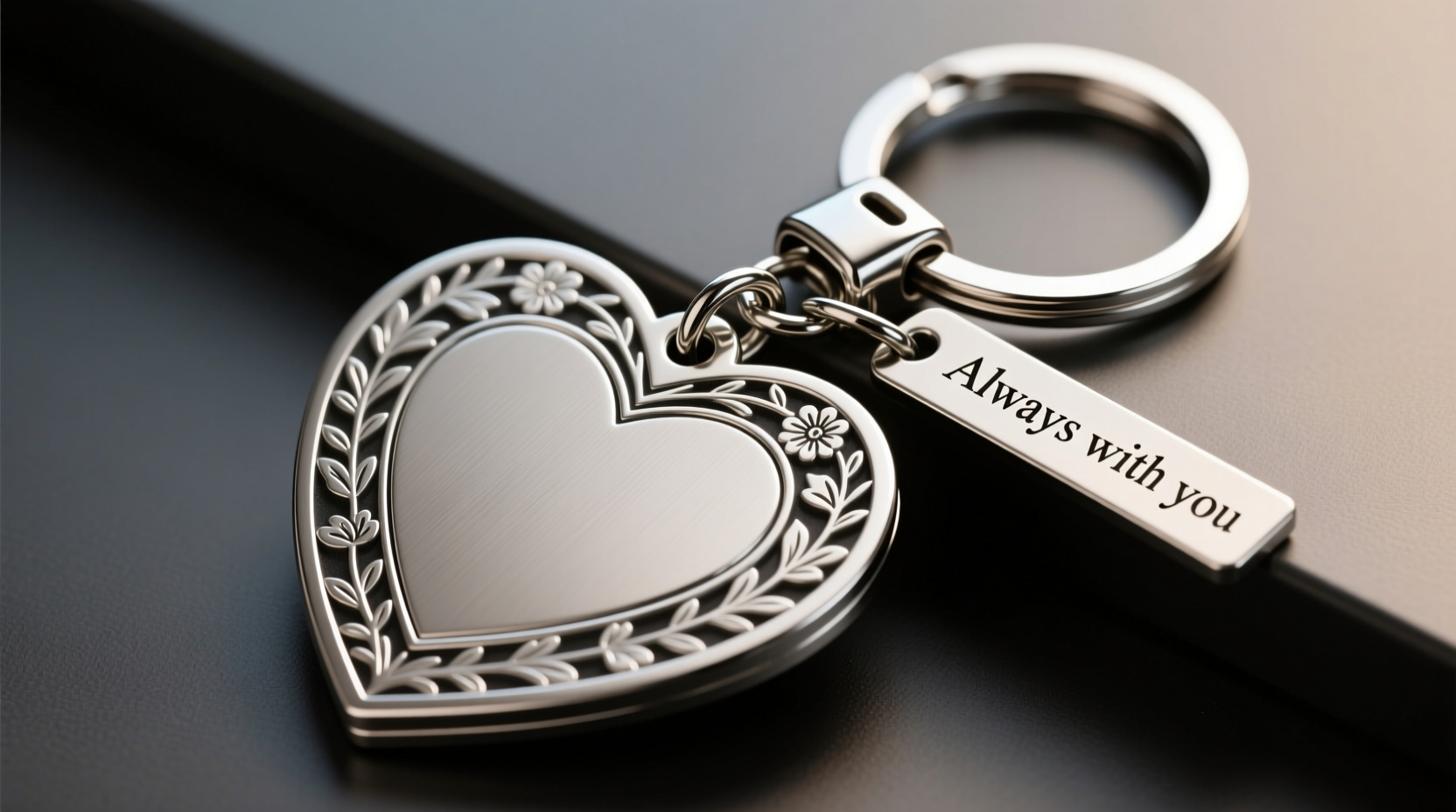
Most people default to sliding a keychain directly onto their keyring, but this approach rarely works well for oversized items. A large heart-shaped charm—especially one made from metal, resin, or wood—adds significant bulk. This creates several issues:
- Weight imbalance: Pulls keys downward, making retrieval awkward.
- Snagging: Catches on pockets, bags, or clothing linings.
- Ignition interference: May prevent smooth insertion into the car lock or push-button start mechanism.
- Wear and tear: Constant friction can loosen solder joints or degrade adhesives over time.
Without proper support, the charm may detach entirely after weeks of regular use. Durability depends not only on materials but on how the piece is integrated into your existing key system.
Choosing the Right Attachment Method
There are several proven techniques to integrate a large heart keychain securely. The best choice depends on the material of the charm, its attachment point (loop, hole, bail), and your preferred key organization.
1. Secondary Split Ring with Reinforced Link
Instead of placing the heart on the primary keyring, use a smaller secondary ring dedicated solely to the charm. Attach this ring to a less-used key or your key fob’s lanyard loop using a sturdy jump ring or carabiner.
This method isolates movement and reduces stress on the main cluster. Choose stainless steel components to resist corrosion and maintain strength over time.
2. Lanyard Integration
If your car keys include a retractable lanyard or leather strap, clip the heart charm to the end opposite the attachment point. This keeps it visible without interfering with pocket access.
For added security, use a locking lobster clasp instead of a basic split ring. These clasps require deliberate action to open, minimizing accidental loss.
3. Key Mod Embedding
A growing trend among key enthusiasts is the “key mod”—a customized add-on built directly into the key stack. You can embed a flat heart charm between layers of aluminum or acrylic spacers, securing it with bolts.
This approach offers maximum durability and sleek integration, especially if the heart is thin and rigid. It also prevents snagging by enclosing the charm within the structure.
“Integrating sentimental items into your EDC (everyday carry) shouldn’t mean sacrificing utility. The key is structural balance.” — Jordan Lee, Everyday Carry Designer & Urban Gear Specialist
Step-by-Step Guide: Secure Your Heart Charm in 5 Steps
Follow this sequence to ensure long-term reliability and ease of use.
- Evaluate the charm’s build: Check whether it has a pre-drilled hole, metal loop, or fragile adhesive backing. Metal loops are ideal; glued elements need reinforcement.
- Select your anchor point: Decide where on the key system the charm will live—on a secondary ring, lanyard, or within a modular stack.
- Reinforce weak connections: If the charm’s loop is thin or soldered poorly, replace it with a double-loop jump ring or wrap the junction with jewelry-grade wire.
- Choose durable connectors: Use marine-grade stainless steel split rings, spring hooks, or micro-carabiners rated for at least 5kg of tensile strength.
- Test under real conditions: Simulate daily actions—pulling keys from a pocket, jostling in a bag, inserting into a lock—to confirm stability.
Material-Specific Considerations
Different materials require different care strategies when used as large keychains.
| Material | Durability | Best Attachment Method | Risks |
|---|---|---|---|
| Metal (stainless, brass) | High | Split ring or key mod | Can scratch other keys; adds weight |
| Resin or acrylic | Moderate | Lanyard with soft clip | Brittle under impact; UV yellowing |
| Wood or ceramic | Low–Moderate | Shock-absorbing silicone sleeve + secondary ring | Fragile; sensitive to moisture |
| Fabric or felt | Low | Stitched onto lanyard | Wears quickly; stains easily |
For non-metal hearts, consider adding a protective coating (like clear epoxy resin for wood) or housing it in a transparent snap-case to shield against abrasion and weather.
Mini Case Study: Sarah’s Commuter Solution
Sarah, a school counselor from Portland, received a large engraved heart keychain from her daughter before moving cities for work. She wanted to carry it every day but found it kept falling off her overstuffed keyring.
After two failed attempts using flimsy key clips, she opted for a minimalist titanium carabiner attached to her key fob’s side loop. She mounted the heart charm on a small O-ring connected to the carabiner, positioning it so it dangled freely without touching other keys.
Eight months later, the charm remains intact, survives rain, snow, and daily use, and has become a conversation starter. “It doesn’t get in the way,” she says, “but I feel it when I reach for my keys. That small moment means everything.”
Checklist: Preparing Your Heart Keychain for Daily Use
- ✅ Inspect the charm’s attachment point for cracks or weak soldering
- ✅ Choose a secondary mounting location (not the main keyring)
- ✅ Upgrade connectors to stainless steel or titanium hardware
- ✅ Test fit with all keys and fobs in your daily set
- ✅ Apply threadlocker (optional) to screw-based key mods
- ✅ Perform a shake test: simulate walking briskly to check for wobble
- ✅ Re-evaluate monthly for signs of wear or loosening
FAQ
Can I glue the heart directly to a key?
Adhesive bonding is not recommended for high-stress applications. Even industrial epoxies degrade due to vibration, temperature shifts, and repeated handling. Mechanical fasteners are far more reliable.
Will a large charm damage my car’s ignition?
Potentially. If the charm interferes with full insertion or rotation, it can wear down the lock cylinder or prevent electronic recognition in smart ignitions. Always leave clearance around the key blade.
How do I clean a heart keychain without damaging it?
Use a soft cloth dampened with mild soapy water for metal or resin. For porous materials like wood or fabric, spot-clean only and avoid soaking. Dry thoroughly before reattaching.
Conclusion
Attaching a big heart keychain to your car keys is more than a simple hook-and-go task—it’s an act of intentional design. By selecting the right mounting strategy, reinforcing vulnerable points, and respecting material limitations, you preserve both the emotional value and functional integrity of your keys.
Your daily routine deserves touches of meaning, but those touches should endure. Whether it’s a gift from a loved one or a symbol of personal growth, let your heart stay close—not lost at the bottom of a purse or broken on the pavement. Implement these methods today, and carry your sentiment with strength, pride, and peace of mind.




 浙公网安备
33010002000092号
浙公网安备
33010002000092号 浙B2-20120091-4
Comments
No comments yet. Why don't you start the discussion?