
Lighting shapes the way we experience a space. It defines mood, supports function, and adds personality to interiors. While off-the-shelf fixtures are convenient, they rarely reflect individual taste or meet specific spatial needs. Building custom lights allows homeowners, designers, and DIY enthusiasts to create illumination that’s both functional and expressive. From minimalist pendant lights in the kitchen to ambient LED installations in the bedroom, this guide walks through the principles, materials, and techniques needed to craft bespoke lighting for every room in your home.
Understanding Light Types and Their Roles
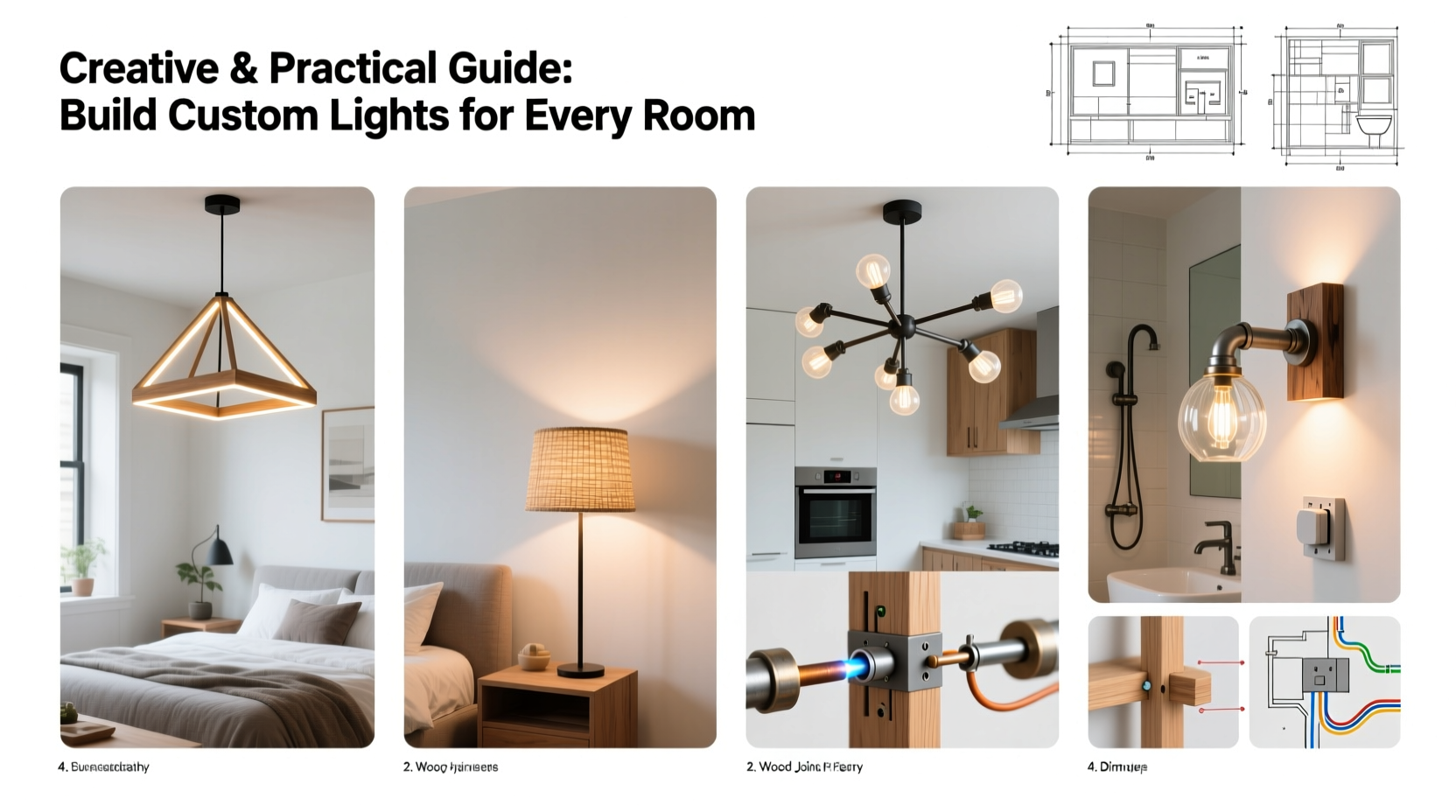
Before building any fixture, it’s essential to understand the three primary types of lighting: ambient, task, and accent. Each serves a distinct purpose and contributes to the overall atmosphere of a room.
- Ambient lighting provides general illumination, often from ceiling fixtures or recessed lights.
- Task lighting focuses on areas where activity occurs—reading nooks, kitchen counters, or desks.
- Accent lighting highlights architectural features, artwork, or design elements.
A balanced lighting scheme integrates all three. For example, a living room might combine soft overhead ambient light with floor lamps for reading (task) and LED strips behind shelves (accent). Custom lighting excels when tailored to these layered needs.
Materials and Components for DIY Lighting
Custom lights can be made from nearly any material, but functionality and safety must come first. Below is a comparison of common materials used in DIY lighting projects, along with their pros and cons.
| Material | Best For | Pros | Cons |
|---|---|---|---|
| Wood | Pendant lights, wall sconces | Warm aesthetic, easy to shape | Can warp; requires sealing near heat sources |
| Metal (copper, brass) | Modern fixtures, industrial designs | Durable, conducts heat well | Heavy; may corrode without treatment |
| Recycled glass | Shades, diffusers | Eco-friendly, unique textures | Fragile; harder to source uniformly |
| 3D-printed plastic | Prototype shades, geometric forms | Highly customizable, lightweight | Limited heat resistance; not for high-wattage bulbs |
| Fabric & paper | Lampshades, soft diffusers | Excellent diffusion, artistic flexibility | Flammable; keep away from hot bulbs |
In addition to materials, you’ll need electrical components: sockets, cords, plugs, LED modules, transformers (for low-voltage systems), and junction boxes. Always use UL-listed parts and comply with local electrical codes. When in doubt, consult a licensed electrician before hardwiring.
Step-by-Step Guide to Building a Custom Pendant Light
Creating a custom pendant light is an accessible project that delivers high visual impact. Follow this sequence to build a simple yet elegant fixture using reclaimed wood and Edison-style bulb.
- Gather materials: Wood disc (6” diameter, ¾” thick), socket kit with cord, plug, canopy, screw-in bulb base, drill, sandpaper, wood finish.
- Drill a center hole: Use a ½” drill bit to bore through the center of the wood disc. Sand edges smooth.
- Apply finish: Stain or seal the wood. Let dry completely.
- Thread the cord: Feed the cord through the hole from top to bottom.
- Attach the socket: Secure the socket base below the wood disc according to kit instructions.
- Install canopy: Connect the other end of the cord to the ceiling canopy, ensuring wires are safely joined in a junction box.
- Screw in bulb: Use a low-heat LED filament bulb for safety and vintage appeal.
This pendant works beautifully over a dining table or kitchen island. Customize by varying wood type, adding multiple tiers, or incorporating colored cord.
Room-by-Room Custom Lighting Ideas
Each room has unique lighting demands. Tailoring your designs to these contexts ensures both beauty and utility.
Kitchen
Focus on task lighting under cabinets and above islands. Try a linear LED strip housed in a brushed aluminum channel for a sleek look. For a statement piece, suspend mason jars with integrated LED bases above a breakfast bar.
Living Room
Combine floor lamps with hidden cove lighting. Install flexible LED tape behind floating shelves to create a “halo effect.” Use fabric-covered cords for a softer, residential feel.
Bedroom
Replace standard nightstand lamps with wall-mounted swing-arm lights or 3D-printed sconces. Add dimmable under-bed LED strips for nighttime navigation without disrupting sleep cycles.
Bathroom
Frame your mirror with waterproof LED strips for even, flattering light. Encase the strips in frosted acrylic channels to diffuse glare. Use motion sensors for night lighting.
Home Office
Build an adjustable desk lamp using copper piping and a swivel joint. Pair with a warm-white, high-CRI bulb to reduce eye strain during long work sessions.
“Lighting isn’t just about brightness—it’s about shaping human experience in a space. A custom fixture tells a story.” — Lena Torres, Interior Lighting Designer
Checklist: Building Safe and Stylish Custom Lights
- Define the lighting purpose (ambient, task, accent)
- Select non-flammable or heat-resistant materials
- Use LED bulbs to minimize heat output
- Verify all electrical components are UL-listed
- Follow local electrical codes for hardwired installations
- Test the fixture in a safe environment before mounting
- Label wiring connections clearly
- Include a switch or dimmer compatible with your bulb type
- Document your design for future repairs or replication
- Consider maintenance access (e.g., removable shades)
Real Example: The Floating Bookshelf Light
A homeowner in Portland wanted to highlight her collection of vintage novels without cluttering the space with lamps. She built a custom solution: thin LED strips mounted to the underside of floating bookshelves, activated by a touch sensor. The lights only turn on when she reaches for a book, conserving energy and creating a magical glow. The housing was crafted from laser-cut walnut veneer, matching the shelf design. This project merged practicality with artistry—proving that custom lighting can be both subtle and transformative.
FAQ
Can I build a custom light without electrical experience?
Yes, for plug-in fixtures like table or wall lamps. Start with pre-wired socket kits and avoid hardwiring until you’re confident or working with a professional.
Are LED strips safe for DIY projects?
Yes, especially low-voltage (12V or 24V) strips. Always use a proper driver and avoid covering them with insulation or flammable materials.
How do I make sure my custom light is durable?
Seal porous materials like wood or fabric, secure all joints, and protect wiring from stress. Test the fixture weekly for the first month to catch issues early.
Conclusion
Custom lighting transforms houses into homes. It reflects personal style, solves unique problems, and elevates everyday spaces with intention. Whether you're crafting a single pendant light or designing a full-home system, the process rewards patience, creativity, and attention to detail. Begin small, prioritize safety, and let each project grow your confidence. The result isn’t just better light—it’s a deeper connection to the places you live.




 浙公网安备
33010002000092号
浙公网安备
33010002000092号 浙B2-20120091-4
Comments
No comments yet. Why don't you start the discussion?