
Small forks—whether they’re dessert cutlery, fondue picks, cocktail forks, or children’s utensils—pose a unique storage challenge. Their size makes them easy to misplace, difficult to organize, and potentially hazardous if left loose in drawers or containers. Yet with thoughtful organization, these tiny tools can be stored securely, accessed easily, and even displayed attractively. The key lies in combining functionality with creativity to maintain both safety and order.
From compact kitchens to professional catering setups, the way you store small forks affects not only efficiency but also hygiene and longevity. Poor storage leads to bent tines, cross-contamination, and cluttered drawers. This guide explores proven strategies, innovative ideas, and expert-backed methods to keep your small forks where they belong: organized, protected, and ready to use.
Why Proper Storage Matters for Small Forks
Unlike full-sized dinner forks, small forks are more likely to slip through gaps, get lost among other utensils, or become damaged due to improper handling. Cocktail forks with delicate tines can bend when tossed into a drawer. Fondue forks may have wooden handles that crack if exposed to moisture. Children’s forks often feature plastic parts that degrade under pressure or heat.
Improper storage also introduces hygiene risks. Loose forks in crowded drawers can come into contact with dirty sponges, raw food residue, or cleaning chemicals. Over time, this compromises cleanliness and increases the risk of contamination. Additionally, disorganized storage wastes time—searching for a single fork should never take longer than using it.
“Small utensils are often overlooked in kitchen organization, but their condition reflects overall kitchen hygiene and efficiency.” — Lena Torres, Culinary Organizer & Kitchen Design Consultant
Creative & Practical Storage Solutions
The best storage systems balance accessibility, protection, and space efficiency. Below are seven effective approaches tailored specifically for small forks.
1. Repurpose Everyday Containers
You don’t need specialized equipment to organize small forks. Common household items like mason jars, tin cans, or spice bottles work exceptionally well. Simply clean and label them, then group forks by type—dessert, appetizer, kids’—for quick identification.
2. Use Drawer Dividers with Custom Inserts
Standard cutlery trays often lack compartments sized for small forks. Customize yours by adding foam inserts or 3D-printed dividers. Alternatively, cut pieces of corrugated cardboard or craft wood to fit snugly and create dedicated slots.
This method prevents shifting during drawer opening and protects tines from impact. For families or commercial kitchens, labeling each slot ensures consistent placement and reduces confusion.
3. Install Vertical Utensil Racks
Maximize cabinet door space by installing slim, vertical racks designed for spices or cleaning tools. These can hold small forks upright, minimizing contact between tines and reducing wear. Magnetic strips with protective sleeves also offer secure hanging options.
Ensure the rack material is non-abrasive (e.g., silicone-coated wire or soft plastic) to avoid scratching polished finishes.
4. Utilize Egg Cartons or Pill Organizers
An unconventional yet highly effective solution: repurpose egg cartons or weekly pill organizers. Each individual cell isolates one fork, preventing tangling and damage. Cardboard egg cartons are ideal for occasional use; for long-term durability, opt for plastic versions.
This method is especially useful for storing themed or decorative forks—like holiday cocktail picks—without risking deformation.
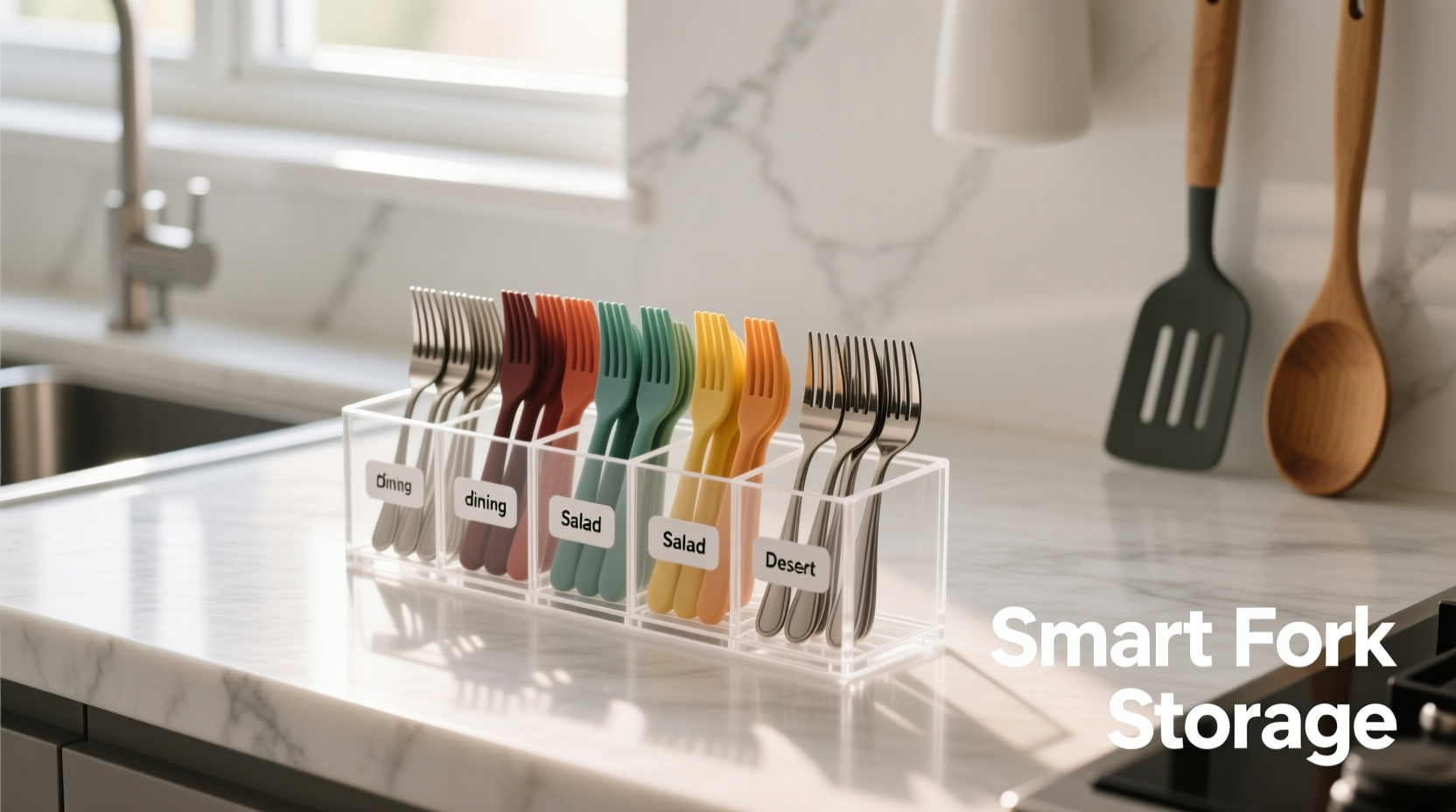
5. Stackable Transparent Boxes
For caterers or households with large collections, stackable acrylic boxes with removable trays provide scalable organization. Choose models with adjustable partitions so you can reconfigure spaces as your collection grows.
Clear walls allow visual inventory at a glance, reducing unnecessary handling and saving time during meal prep or service.
Step-by-Step Guide to Organizing Your Small Forks
- Sort by Type: Separate forks into categories—dessert, fondue, cocktail, baby, etc.
- Inspect Condition: Check for bent tines, cracked handles, or signs of rust. Discard damaged pieces.
- Choose Storage Method: Match the solution to your space and usage frequency (e.g., daily vs. seasonal).
- Label Containers: Use waterproof labels or color-coded tags for easy recognition.
- Position Strategically: Store near point of use—dessert forks near serving dishes, kids’ forks near highchairs.
- Maintain Monthly: Reassess arrangement every 30 days; clean containers and realign misplaced items.
Do’s and Don’ts of Small Fork Storage
| Do’s | Don’ts |
|---|---|
| Store forks dry and clean to prevent corrosion | Leave wet forks in closed containers (promotes mold) |
| Use padded or lined compartments to protect tines | Toss forks loosely into deep drawers |
| Group by function for faster retrieval | Mix stainless steel with silver-plated forks (risk of galvanic corrosion) |
| Rotate stock regularly if storing seasonally | Forget to check for pests in cardboard-based storage |
Real-World Example: A Catering Company’s Solution
Bloom & Thyme Events, a boutique catering service in Portland, struggled with lost and damaged fondue forks after each event. With over 200 mini forks used annually, replacements were costly and time-consuming.
Their solution? They adopted modular, dishwasher-safe acrylic trays with custom-cut foam liners. Each tray holds 24 forks, separated and immobilized. After events, staff rinse, dry, and return them directly to labeled cabinets. Since implementation, fork loss has dropped by 90%, and setup time decreased significantly.
“We treat our small utensils like precision tools,” said head caterer Maya Lin. “When they’re stored properly, everything runs smoother—from prep to plating.”
Frequently Asked Questions
Can I store small forks in the dishwasher?
Yes, but with caution. Place them in designated cutlery baskets with tines facing down to prevent injury and reduce movement. Avoid overcrowding. Remove promptly after the cycle ends to prevent moisture buildup and potential rust, especially on carbon steel or silver-plated models.
How do I prevent my child’s training forks from getting lost?
Assign a dedicated container—such as a colorful cup or suction-based organizer—and attach it inside a lower cabinet or on the side of a drawer. Involve your child in returning the fork after meals to build routine. Consider purchasing sets with matching colors or characters for easier tracking.
Are magnetic strips safe for small forks?
They can be, provided the magnets are strong enough to hold the weight and the fork surface isn’t scratched. Use strips with a soft coating or slide forks into silicone sleeves before mounting. Not recommended for forks with loose parts or wooden handles.
Checklist: Optimize Your Small Fork Storage Today
- ✅ Inventory all small forks currently in use or storage
- ✅ Discard broken or excessively worn pieces
- ✅ Select 1–2 storage methods based on available space and usage
- ✅ Label all containers clearly
- ✅ Position storage units near primary points of use
- ✅ Schedule a monthly maintenance check
- ✅ Educate household members or team staff on proper placement
Final Thoughts: Turn Tiny Tools Into Organized Assets
Small forks may seem insignificant, but their cumulative impact on kitchen workflow, safety, and aesthetics is substantial. By investing just a few minutes in smart storage planning, you eliminate frustration, extend utensil life, and elevate everyday dining experiences.
Whether you're organizing a family kitchen, running a catering business, or simply collecting vintage cocktail picks, the right system transforms chaos into clarity. Start small—one container, one drawer—but start today. Your future self will appreciate not having to dig through a jumbled mess just to find a single dessert fork.




 浙公网安备
33010002000092号
浙公网安备
33010002000092号 浙B2-20120091-4
Comments
No comments yet. Why don't you start the discussion?