
Cats are natural hunters. Their instincts drive them to stalk, pounce, and bat at moving objects. While commercial cat toys abound, some of the most effective—and safest—options can be made from simple household items. String, in particular, is a versatile material that mimics the movement of prey when used correctly. However, not all string-based toys are created equal. The key lies in design: ensuring the toy engages your cat without posing a choking or ingestion hazard.
With thoughtful construction and responsible play, string-based DIY toys can offer hours of stimulation. These toys encourage physical activity, reduce stress, and strengthen the bond between you and your feline companion. Below are several creative, safe, and easy-to-make string toys—all using just string and common household materials.
Why String Works—And When It Doesn’t
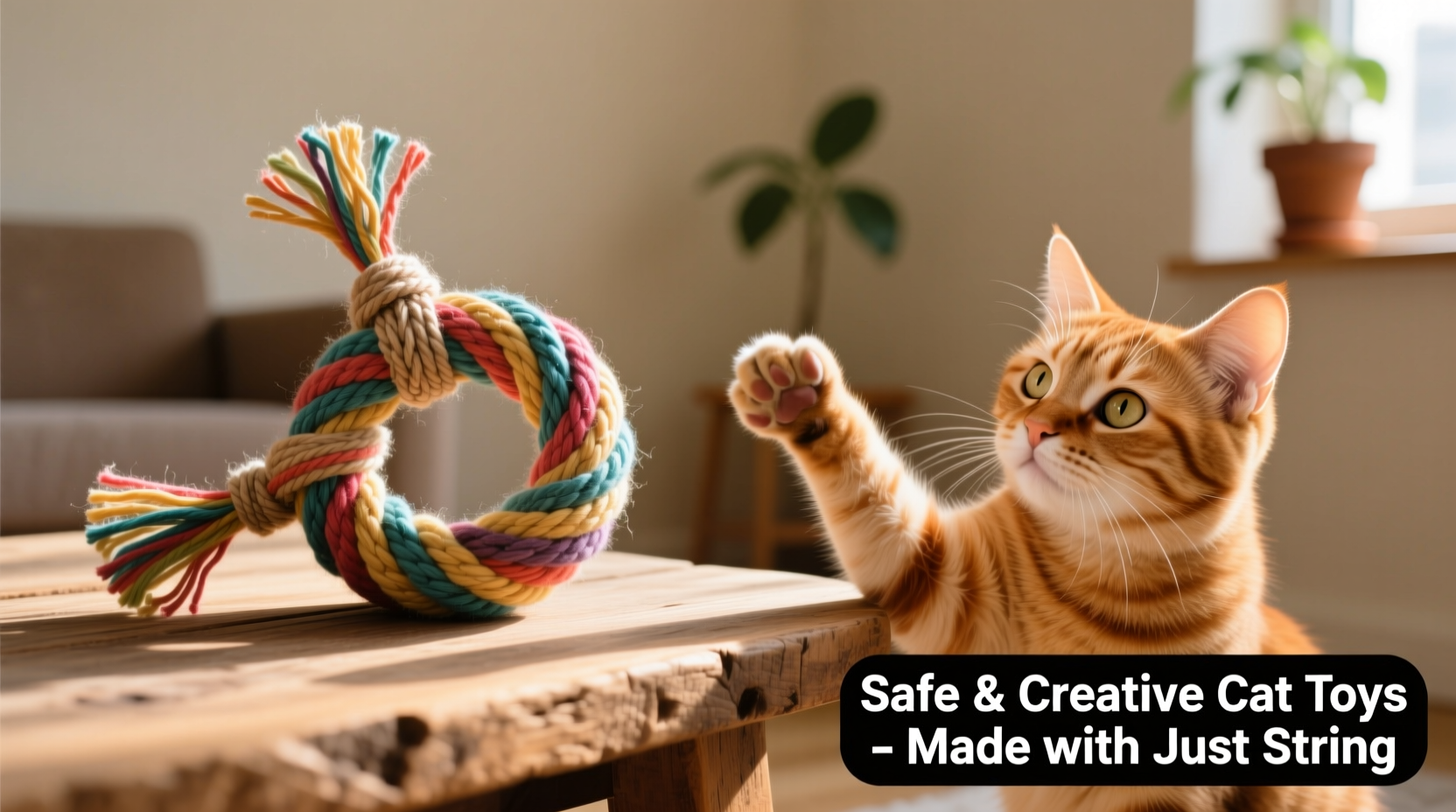
String fascinates cats because it moves unpredictably, much like a snake or insect. When dangled or dragged, it triggers their predatory response. But loose string poses serious risks. If swallowed, it can cause linear foreign body obstructions—a life-threatening condition requiring emergency surgery.
The solution? Never leave your cat unattended with loose string. Instead, anchor the string to a secure object or use it as part of an interactive toy you control during playtime. This keeps the fun dynamic while minimizing danger.
“Interactive string toys are excellent for mental and physical enrichment, but supervision is non-negotiable. Always retrieve the toy after play.” — Dr. Lena Reyes, Feline Behavior Specialist
5 Creative & Safe String-Based Cat Toys You Can Make Today
1. The Wand-and-Tassel Teaser
This classic toy mimics the movement of insects or small rodents. By attaching a tassel to a wand, you create a safe distance between your cat and the string.
- Cut a 12-inch piece of sturdy wooden dowel or a clean chopstick.
- Tie one end of a 10-inch cotton string tightly around the middle of the dowel.
- Braid or knot the free end into a tassel using additional short string pieces.
- Test the tension by gently pulling—ensure the knot won’t slip.
Wave the wand above your cat’s head or along the floor to simulate prey movement. End each session by putting the toy away to maintain novelty.
2. The Bottle Roll Tracker
A clever way to repurpose an empty plastic bottle while giving your cat a self-play option—safely.
- Clean and dry a 500ml plastic bottle (remove labels and cap).
- Punch two small holes on opposite sides near the top.
- Thread a 14-inch string through the holes and tie large knots on both ends to prevent slipping.
- Let your cat bat the bottle, watching the string wiggle as it rolls.
The bottle acts as a weight, keeping the string from being pulled inside. Always supervise initial use to ensure your cat doesn’t chew the plastic.
3. The Doorway Dangler
Perfect for encouraging vertical swatting and jumping, this toy uses doorframe tension to suspend a string lure.
- Cut a 3-foot length of cotton string.
- Tie one end to a soft pompom or felt ball.
- Lay the string over the top of a closed door so the weighted end hangs on one side, the free end on the other.
- Gently pull the free end up and down to animate the toy.
Your cat will leap and bat at the moving object. Pull slowly at first, then vary speed to mimic erratic prey behavior.
4. The Box Tunnel Twitcher
Combine cardboard engineering with string action for a hide-and-seek challenge.
- Cut two small holes in opposite sides of a medium cardboard box.
- Thread a 20-inch string through the holes, leaving a few inches on each side.
- Attach small fabric scraps or feathers to each end.
- Place the box on its side and let your cat watch as you tug the string back and forth.
The disappearing-reappearing motion taps into curiosity and hunting instinct. Replace the string if frayed after several uses.
5. The Wall-Mounted Wiggle Wire
For apartment dwellers or those short on floor space, this wall-mounted version offers continuous entertainment.
- Nail two small hooks into the wall about 2 feet apart and 3 feet off the ground.
- Stretch a 24-inch cotton string between them and tie securely.
- Add a lightweight feather or pompom tied to the center of the string.
- Give it a flick occasionally throughout the day.
The vibration and slight bounce attract attention without noise or clutter. Ideal for shy cats who prefer observing before engaging.
Safety Checklist: Before You Play
Before introducing any string toy, verify these safety points:
- ✅ All knots are tight and secure
- ✅ No loose threads or fraying
- ✅ Toy is used only during supervised play
- ✅ String is made of natural, non-toxic fiber
- ✅ No small parts that could detach and be swallowed
- ✅ Storage out of reach when not in use
Do’s and Don’ts of String Toy Use
| Do’s | Don’ts |
|---|---|
| Use thick, braided cotton string | Use thin, slippery yarn or fishing line |
| Supervise every play session | Leave string toys accessible when you’re away |
| Wash or replace string monthly | Allow chewing or aggressive biting |
| Rotate toys weekly to maintain interest | Attach string to your wrist—risk of injury |
| Store toys in a sealed container | Use ribbons with elastic cores |
Real Example: How Mia the Shy Kitten Became Playful
Mia, a three-month-old rescue kitten, was initially fearful and withdrawn. Her owner, Jess, tried plush mice and crinkle balls, but Mia showed little interest. After reading about string movement triggering instinctive responses, Jess made a simple doorway dangler using pink cotton string and a felt ball.
At first, Mia only watched from under the couch. But within days, she began swatting at the ball when Jess moved it slowly. Over two weeks, her confidence grew. She started leaping and even “capturing” the toy. Now, daily 10-minute sessions with the string toy are a highlight of her routine—and a bonding ritual with Jess.
“It’s amazing how something so simple brought her out of her shell,” Jess said. “She’s still cautious, but now she chooses to engage.”
Frequently Asked Questions
Can I let my cat play with string unsupervised?
No. Even anchored string toys should only be used under direct supervision. Cats can become entangled or ingest fibers if left alone with string. Always put the toy away after play.
What kind of string is safest for cats?
Thick, braided 100% cotton string is ideal. It’s strong, less likely to fray, and biodegradable if accidentally ingested in tiny amounts. Avoid synthetic strings, wool (can mat in the stomach), or anything with metallic threads.
How often should I replace homemade string toys?
Inspect toys before each use. Replace immediately if there are signs of wear, such as thinning, unraveling, or weak knots. As a rule, refresh string components every 4–6 weeks, even if they appear intact.
Final Thoughts: Simple Tools, Meaningful Impact
You don’t need expensive gadgets to enrich your cat’s life. A piece of string, thoughtfully used, can spark joy, exercise, and instinctual fulfillment. The toys outlined here are designed with safety as the foundation—because fun should never come at the cost of well-being.
Start with one design, observe how your cat responds, and adjust accordingly. Some cats prefer rapid movements; others like slow stalking challenges. Tailor your approach, stay present during play, and enjoy the moments of connection.




 浙公网安备
33010002000092号
浙公网安备
33010002000092号 浙B2-20120091-4
Comments
No comments yet. Why don't you start the discussion?