
For collectors, a Godzilla action figure is more than a toy—it’s a piece of cinematic history, a tribute to kaiju culture, and often, a growing investment. Whether you own vintage 1970s vinyl figures or modern screen-accurate articulated models from NECA or Mezco, preserving their condition is critical. Dust, UV exposure, and improper handling can degrade even the most pristine display over time. With the right care, these figures can remain in mint condition for decades, retaining—and even increasing—their market value.
The Importance of Preservation for Collectors
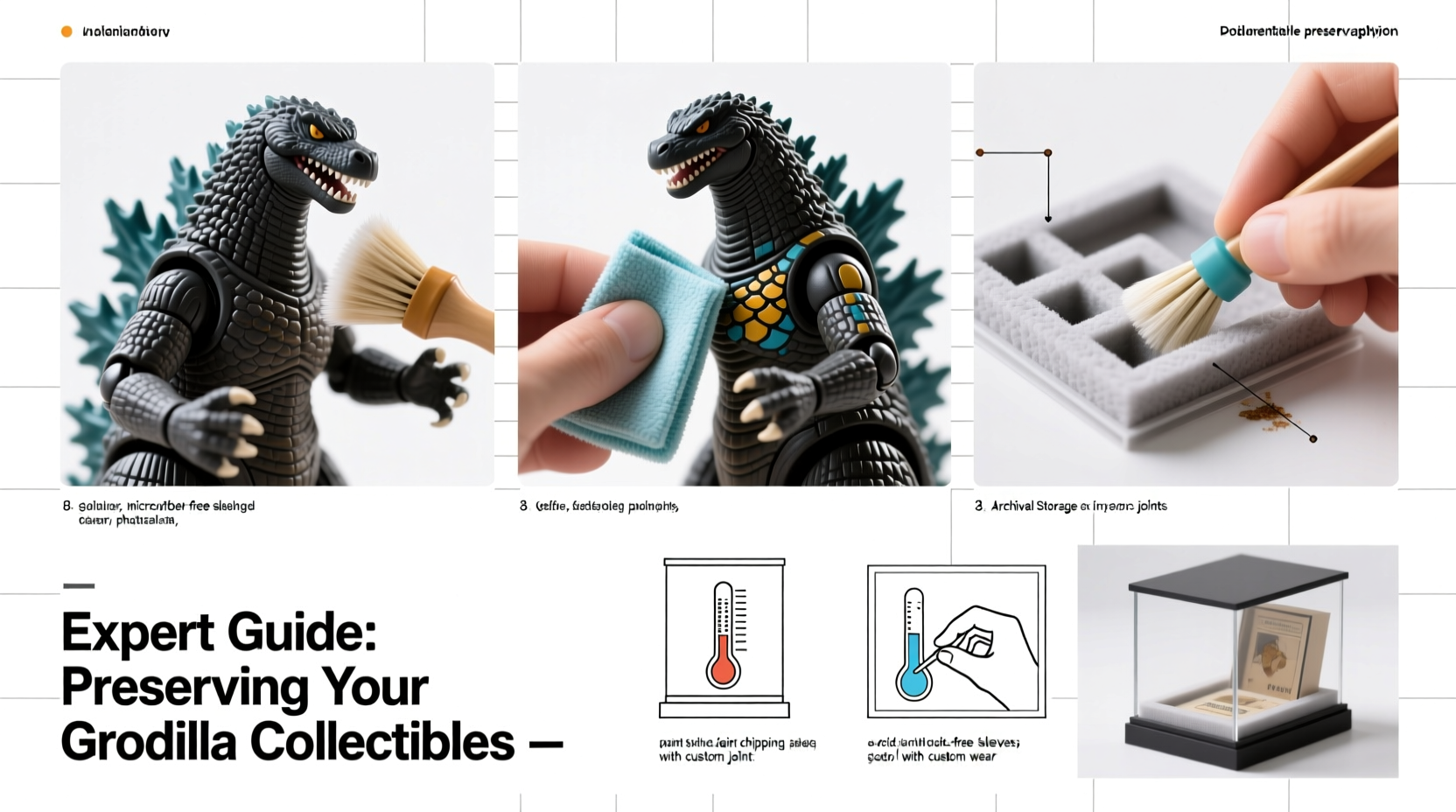
Action figures, especially those tied to iconic franchises like Godzilla, are subject to rapid depreciation if not maintained properly. A sealed, unopened figure in original packaging can fetch hundreds or thousands at auction—provided it shows no signs of yellowing, sticker lift, or moisture damage. Even opened displays lose value quickly if they accumulate grime or suffer structural wear.
Maintaining collectible value isn’t just about aesthetics; it’s about consistency in care. Professional appraisers look for clean lines, intact paint applications, minimal stress on joints, and absence of odors or residue. The longer you intend to hold onto a figure, the more disciplined your maintenance routine should be.
“Collectors who treat their figures like museum pieces see the strongest returns. It’s not just about rarity—it’s about condition.” — Daniel Park, Toy Appraiser & Founder of RetroGrade Collectibles
Daily and Monthly Cleaning Procedures
Cleaning should be approached with caution. Aggressive wiping or soaking can strip paint, crack plastic, or loosen articulation points. Instead, adopt a tiered system: daily dusting and monthly deep cleaning.
Daily Maintenance
- Use a soft microfiber cloth to gently wipe visible surfaces.
- Employ a compressed air duster (held upright) to remove dust from crevices like claws, gills, or armor joints.
- Avoid touching painted areas with bare hands to prevent oil transfer.
Monthly Deep Cleaning
- Remove the figure from its display case (if applicable).
- Use a cotton swab lightly dampened with distilled water to clean tight spots. Never use tap water—it contains minerals that leave residue.
- For stubborn grime, mix one drop of mild dish soap into 100ml of distilled water. Dip only the tip of the swab—never soak the figure.
- Dry immediately with a lint-free cloth.
- Inspect for paint chipping or joint loosening.
Proper Storage: Protecting Against Environmental Damage
Where you store your figures matters as much as how you clean them. Light, heat, humidity, and airborne pollutants all contribute to deterioration. Sunlight, in particular, causes plastics to yellow due to UV radiation—a common issue with older PVC and ABS materials.
| Factor | Recommended Practice | What to Avoid |
|---|---|---|
| Light Exposure | Display under UV-filtering glass or LED lighting | Direct sunlight or halogen bulbs |
| Temperature | Stable room temperature (65–72°F) | Attics, garages, or near radiators |
| Humidity | 40–50% RH with silica gel packs | Basements or bathrooms |
| Air Quality | Sealed acrylic cases with activated charcoal filters | Kitchens or smoking areas |
For long-term storage, keep figures in their original boxes only if the box is archival-quality. Standard cardboard off-gasses acids over time, which can stain plastic and degrade adhesives. If storing boxed, place the box inside a Mylar sleeve or acid-free container.
Handling and Display Best Practices
Every time you handle a figure, you risk introducing contaminants or causing mechanical stress. Limit direct contact, especially with high-detail sculpts or fragile accessories like dorsal plates or tails.
Safe Handling Protocol
- Wash and dry hands thoroughly before touching a figure.
- Support heavier figures at the base (e.g., legs or torso), not arms or weapons.
- Rotate poses infrequently—constant repositioning wears out ball joints.
- Use nitrile gloves when handling rare or vintage pieces.
When displaying, choose adjustable shelves or risers to reduce neck strain on standing figures. For dynamic scenes (e.g., battling figures), use clear acrylic support rods hidden behind the tail or leg to bear weight without stressing joints.
Real Example: Restoring a Vintage 1992 Kenner Godzilla
Mark T., a collector from Portland, inherited a loose 1992 Kenner Godzilla figure from his brother’s childhood collection. Stored in a garage for 15 years, it had accumulated dust, surface stickiness, and slight paint loss on the chest emblem.
He began by disassembling non-essential parts (tail and arm attachments). Using a microfiber cloth and distilled water, he gently wiped the body. For the tacky feel—a sign of plasticizer migration—he applied a tiny amount of isopropyl alcohol (70%) on a cotton swab, testing first on the sole of the foot. After careful cleaning and drying, he placed the figure in a climate-controlled display cabinet with UV shielding.
Within weeks, the stickiness vanished, and the figure regained its original luster. Six months later, Mark sold it at auction for 3x the estimated value—largely due to documented restoration efforts and preserved articulation.
Essential Maintenance Checklist
Follow this checklist every three months to ensure consistent care:
- ✅ Dust all figures with microfiber cloth or air duster
- ✅ Inspect for paint chips, cracks, or joint looseness
- ✅ Check storage environment: temperature, humidity, light
- ✅ Replace silica gel desiccants if saturated
- ✅ Clean display cases with glass-safe cleaner (avoid ammonia)
- ✅ Document condition with dated photos for insurance or resale
- ✅ Rotate displayed figures quarterly to reduce light fatigue
Frequently Asked Questions
Can I use household cleaners on my Godzilla figures?
No. Common cleaners like Windex, Lysol, or Clorox contain solvents that can cloud or etch plastic. Stick to distilled water, mild soap, or specialized toy-safe wipes designed for collectibles.
How do I remove sticker residue from an old figure?
Use a tiny amount of citrus-based adhesive remover (like Goo Gone) on a cotton swab. Apply sparingly, wait 10 seconds, then wipe with a dry cloth. Immediately follow with a distilled water swipe to remove residue.
Do sealed figures need maintenance too?
Yes. Even boxed figures should be stored away from light and humidity. Over time, the plastic inside can off-gas, creating fogging or condensation. Inspect boxes annually for warping, mold, or insect activity.
Conclusion: Treat Your Collection Like a Legacy
Your Godzilla action figures represent more than fandom—they embody artistry, engineering, and nostalgia. By committing to a disciplined regimen of cleaning, smart storage, and mindful handling, you protect both emotional and financial value. These practices don’t require expensive tools or hours of effort. They demand only consistency and attention to detail.




 浙公网安备
33010002000092号
浙公网安备
33010002000092号 浙B2-20120091-4
Comments
No comments yet. Why don't you start the discussion?