
Adding a bowknot keychain to your backpack is more than just a decorative choice—it’s a personal statement. Whether it's a handmade silk knot, a sentimental charm, or a vibrant accessory that reflects your style, securing it properly ensures both safety and longevity. But how do you keep it attached firmly without damaging your bag or losing it during daily use? The solution lies in combining creativity with practicality. From reinforced threading techniques to clever clip adaptations, there are multiple reliable methods that preserve aesthetics while enhancing durability.
Why Secure Attachment Matters
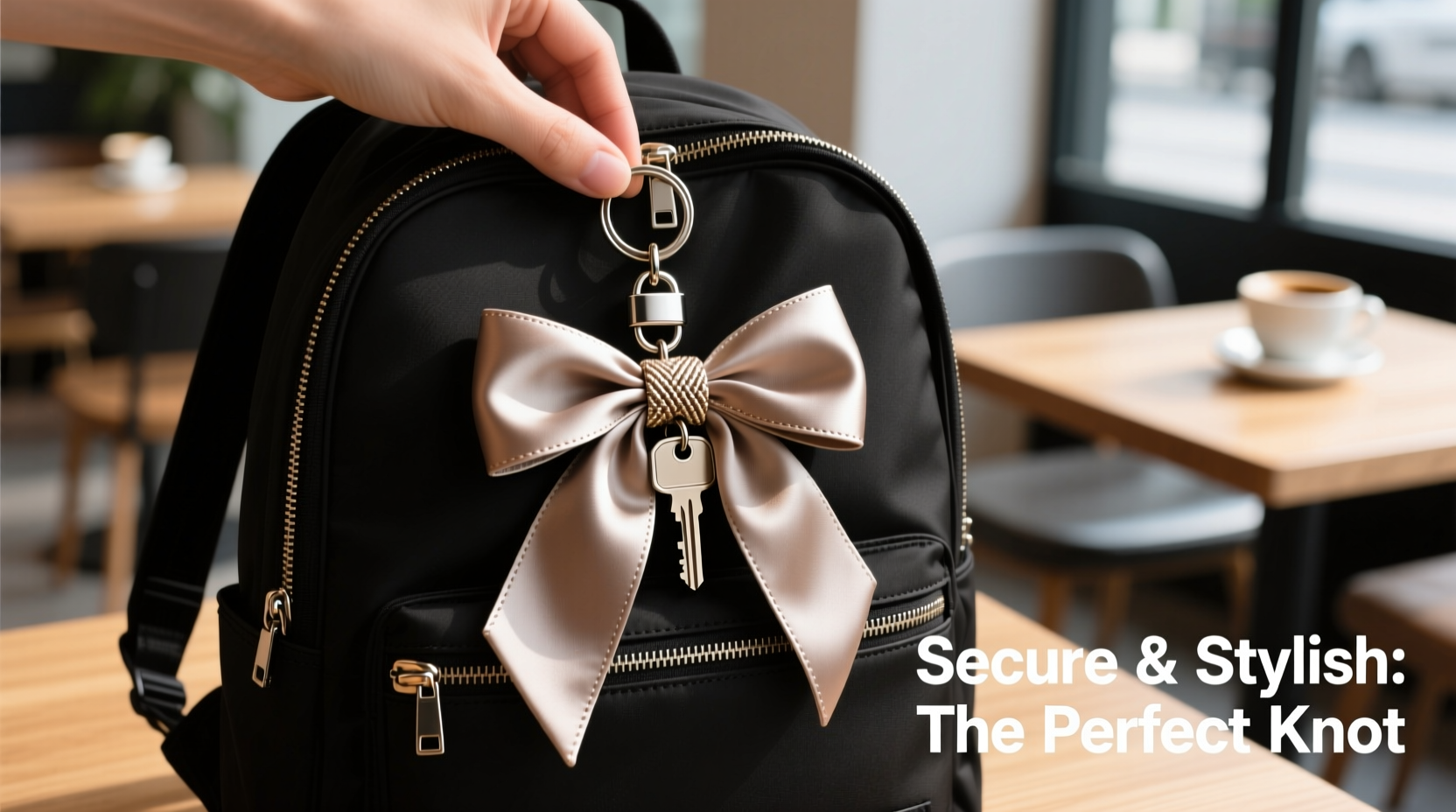
A loosely attached bowknot keychain may look charming at first, but it can easily snag on door handles, get caught in zippers, or fall off during transit. Beyond the risk of loss, poorly secured accessories can pull stitching, tear fabric, or create stress points on straps. A well-fastened keychain should remain intact through commutes, travel, and active use—without compromising the integrity of your backpack.
Security also plays a role in emotional value. Many people attach bowknots for symbolic reasons: graduation mementos, gifts from loved ones, or reminders of meaningful experiences. Ensuring these items stay safely connected transforms a simple attachment into an enduring keepsake.
Step-by-Step Guide: Reinforced Loop Threading Method
This method works best when your bowknot keychain has a metal loop or jump ring already attached. It leverages existing backpack hardware like zipper pulls, D-rings, or strap webbing for maximum stability.
- Identify a strong anchor point: Look for a D-ring, chest strap buckle, or sturdy zipper pull. Avoid thin fabric areas or loose stitching.
- Open the jump ring (if needed): Use two pairs of pliers—one to hold the ring steady, the other to twist open sideways. Never pull apart, as this weakens the metal.
- Thread through a fixed loop: Slide the jump ring through the zipper pull or D-ring. Make sure it moves freely but won’t slip off.
- Add a secondary security ring: Attach a small split ring (like those used for keys) between the jump ring and the backpack hardware. This creates redundancy—if one fails, the other holds.
- Close and test: Gently close the jump ring fully. Tug the bowknot to simulate stress and check for wobbling or slippage.
This technique distributes tension across multiple points and minimizes fabric strain, making it ideal for frequent travelers or students carrying heavy loads.
Alternative Methods: Creative & Damage-Free Options
Not all backpacks have convenient loops or D-rings. For minimalist designs or rental gear where modification isn’t allowed, consider these non-invasive approaches:
- Magnetic Snap Clips: Use a pair of micro magnetic clasps—one clipped to the backpack strap, the other connected to the keychain. They’re easy to detach and reattach, and invisible when not in use.
- Adjustable Paracord Lanyard: Tie a short length of paracord around a shoulder strap using a constrictor knot. Attach the bowknot to the lanyard end. The cord blends in and allows quick removal.
- Silicone O-Ring Sleeves: Slide a colored O-ring over a zipper pull and thread the keychain through it. These grips tightly without scratching surfaces and come in various sizes.
- Fabric-Friendly Adhesive Hooks: Choose removable nano-suction hooks designed for lightweight decor. Stick one to a smooth panel of the backpack and hang the keychain from its hook. Ideal for synthetic materials like Cordura or ballistic nylon.
“Many customers lose sentimental accessories because they rely solely on aesthetic appeal rather than mechanical security.” — Jordan Lee, Outdoor Gear Designer at Trailmark Studios
Do’s and Don’ts: Keychain Attachment Table
| Do’s | Don’ts |
|---|---|
| Use dual-point attachments for redundancy | Attach directly to flimsy fabric without reinforcement |
| Choose corrosion-resistant metals (e.g., stainless steel, titanium) | Leave sharp edges exposed that could fray straps |
| Inspect monthly for wear or loosening | Overload the keychain with extra charms or weight |
| Match knot size to backpack scale—avoid oversized bows on slim packs | Use glue or permanent adhesives unless intended to be temporary |
| Opt for soft-loop connectors (fabric-covered rings) for delicate finishes | Ignore manufacturer care instructions for coated or waterproof fabrics |
Real Example: How a Student Kept Her Graduation Bow Secure
Sophia, a university senior, received a hand-tied red satin bowknot from her mentor during commencement. She wanted to carry it on her everyday backpack throughout her final semester abroad. Instead of sewing it directly—which would damage the rental bag—she used a hybrid approach.
She threaded a miniature stainless steel split ring through the zipper pull of her main compartment. Then, she attached a fabric-wrapped key fob to the ring and clipped the bowknot onto it using a tiny lobster clasp. Every week, she checked the clasp for tension and wiped down the metal to prevent oxidation from humidity.
The system lasted five months across three countries. Even after being caught in rainstorms and packed into overhead bins, the bow remained intact. “It wasn’t just about keeping it safe,” Sophia said. “It was about honoring what it represented every day I wore it.”
Checklist: Secure Your Bowknot Keychain in 5 Steps
- ✅ Identify a structurally sound attachment point on your backpack
- ✅ Select appropriate hardware (split rings, clips, cords) based on material and usage
- ✅ Use dual-layer security—primary attachment plus backup restraint
- ✅ Test for stability under simulated motion (shake, tug, swing)
- ✅ Schedule monthly inspections for signs of wear or loosening
Frequently Asked Questions
Can I sew the bowknot directly onto the backpack?
You can, but only if you own the bag and don’t mind permanent alteration. Use UV-resistant nylon thread and a backstitch pattern for durability. Avoid sewing through load-bearing seams, as this may compromise structural integrity. For rented or shared bags, opt for non-permanent solutions instead.
What if my backpack has no loops or zipper pulls?
In absence of natural anchor points, use removable silicone sleeves or adjustable lanyards tied securely around padded straps. Another option is a micro carabiner clipped to a ventilated mesh pocket frame—just ensure the plastic support bar can handle light lateral pressure.
How do I clean the bowknot without detaching it?
Spot-clean with a damp microfiber cloth and mild soap. Avoid soaking, especially if the knot contains glued elements or delicate fabric. Let it air dry completely before closing compartments. If heavily soiled, temporarily unclip it using pliers, clean separately, then reattach.
Final Thoughts: Style Meets Function
A bowknot keychain is more than an ornament—it’s a fusion of memory, identity, and intention. When attached thoughtfully, it becomes a resilient part of your daily journey. By choosing secure methods, inspecting regularly, and respecting the limits of both your accessory and your backpack, you preserve both form and function.
Whether you're commemorating a milestone, expressing individuality, or simply adding a pop of color to your gear, take a moment to ensure your bow stays put. The right attachment doesn’t just prevent loss—it honors the meaning behind the object.




 浙公网安备
33010002000092号
浙公网安备
33010002000092号 浙B2-20120091-4
Comments
No comments yet. Why don't you start the discussion?