
Cats are natural climbers and explorers. In multi-level homes or compact apartments, vertical space is often underused—yet it’s exactly what feline companions crave. Building custom cat walkways allows pets to navigate their environment safely while adding a unique design element to your interior. These elevated pathways not only satisfy instinctual behaviors but also reduce stress by giving cats control over their territory. With thoughtful planning and basic tools, you can create a functional, attractive network of walkways that blends seamlessly into your decor.
Understanding Feline Behavior and Spatial Needs
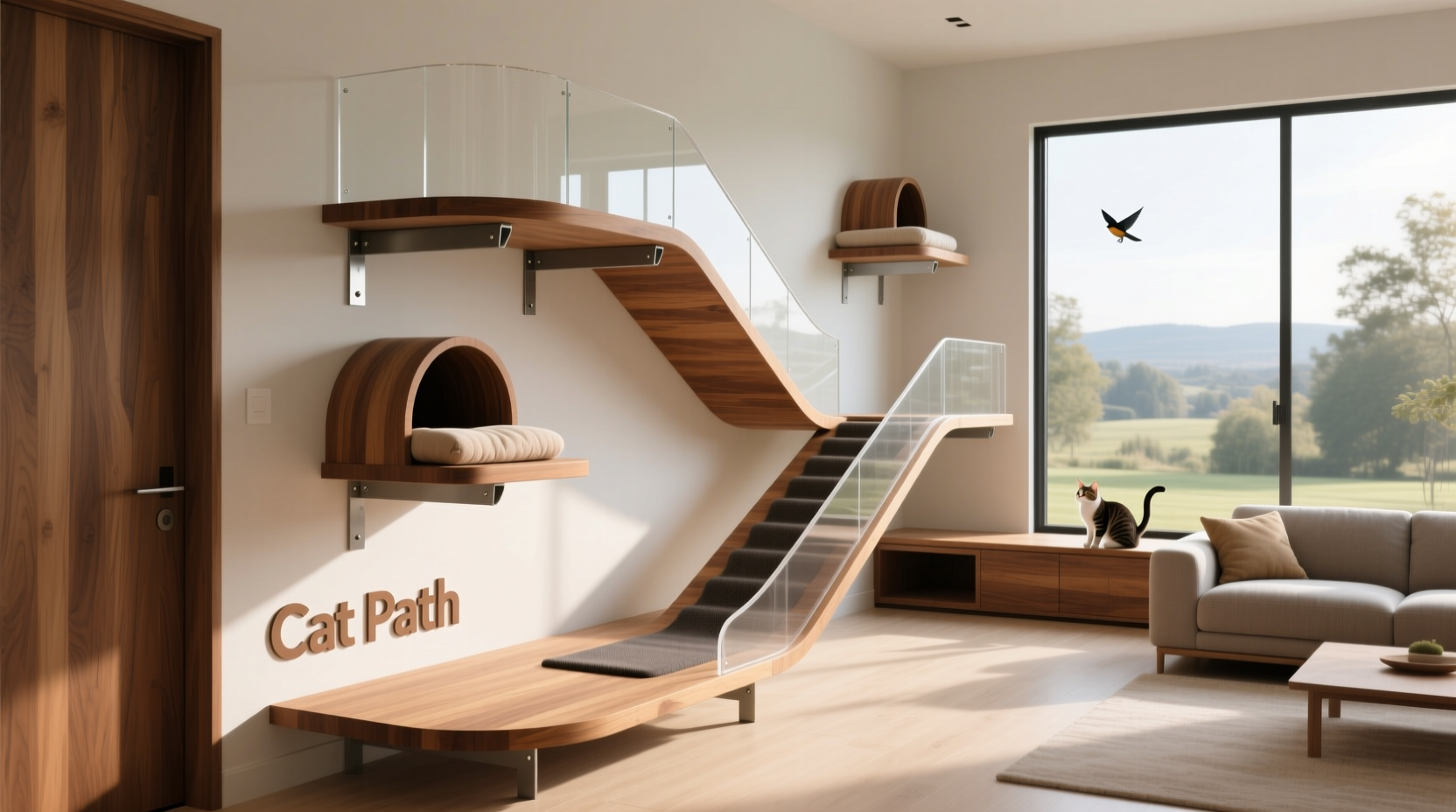
Cats thrive in environments where they can observe from above, retreat when needed, and move freely without interference. In the wild, felines use trees and rocky outcrops for surveillance and safety. Indoors, furniture like bookshelves or window sills may serve this purpose—but inconsistently and sometimes unsafely. A dedicated cat walkway system offers predictable, secure routes between favorite spots: near windows, beside beds, or above doorways.
The average domestic cat can jump up to five times its body length vertically and prefers platforms spaced 18–24 inches apart. Walkways should be at least 10 inches wide to accommodate confident movement, especially for larger breeds. Avoid sharp turns; gentle curves or straight runs encourage regular use. Height variation keeps the route engaging—positioning one segment near a sunlit window, another above a quiet hallway—creates zones for lounging, playing, and patrolling.
“Cats who have access to vertical territory show lower cortisol levels and fewer behavioral issues.” — Dr. Lena Reyes, Feline Environmental Specialist
Design Principles for Safe and Stylish Integration
A well-designed cat walkway doesn’t compete with your interior—it enhances it. Begin by mapping high-traffic observation points: where your cat already likes to perch. Common anchors include walls adjacent to living room windows, beside bedroom dressers, or along hallways leading to balconies.
Materials matter both for safety and aesthetics. Solid wood (like pine or birch) provides durability and warmth. For modern spaces, powder-coated steel brackets with matte-finish plywood shelves offer industrial elegance. Use non-toxic finishes—water-based polyurethane or raw wood oil—to prevent respiratory irritation. Texture is equally important: line walking surfaces with grippy materials like cork, carpet remnants, or anti-slip tape to prevent slips.
Step-by-Step Guide to Installation
Follow this timeline to build a basic wall-mounted cat walkway system in a standard living area. Total time: 1 weekend (including drying).
- Day 1 Morning – Plan & Measure: Sketch a route connecting two key areas (e.g., sofa to window). Mark stud locations using a stud finder every 16 inches.
- Day 1 Afternoon – Cut & Finish Shelves: Cut wooden boards to desired lengths (typically 24–36 inches). Sand edges smooth and apply eco-friendly sealant. Let dry overnight.
- Day 2 Morning – Mount Brackets: Attach heavy-duty L-brackets directly into wall studs. Ensure level alignment across all points.
- Day 2 Afternoon – Install Shelves: Secure shelves onto brackets with countersunk screws. Test load capacity with a 20 lb weight before allowing cat access.
- Final Touches: Add soft padding or carpet strips. Place a treat or toy on each platform to encourage exploration.
Recommended Tools & Supplies
| Item | Purpose | Notes |
|---|---|---|
| Stud finder | Locate secure anchor points | Mandatory for load-bearing safety |
| ¾” Plywood or solid board | Shelf surface | Birch preferred for stability |
| Heavy-duty L-brackets (4”) | Support structure | Minimum 2 per shelf |
| Countersunk screws (2.5”) | Secure mounting | Use washers for added grip |
| Non-slip matting | Foot traction | Recycled rubber or low-pile carpet |
Common Pitfalls and How to Avoid Them
Even well-intentioned designs can compromise safety if structural details are overlooked. One frequent error is attaching shelves to drywall alone, which cannot support repeated impact. Always fasten into wooden studs or use toggle bolts rated for dynamic loads (minimum 50 lbs per bracket).
Another issue is poor spacing. Gaps wider than 24 inches discourage use, especially in older or less agile cats. If spanning longer distances, insert an intermediate platform shaped like a small landing or resting nook. Avoid placing walkways directly above heat sources, dangling cords, or fragile decor.
“Overengineering is better than underbuilding. Cats land with force—your structure must absorb that energy repeatedly.” — Marcus Tran, Structural Carpenter & Pet Home Designer
Real Example: Transforming a Small Apartment Layout
In a 700-square-foot Brooklyn apartment, owner Julia installed a U-shaped walkway linking her bedroom loft to a south-facing bay window. Using reclaimed oak planks and black iron brackets, she created a continuous loop 7 feet above the floor. The path begins at the foot of her bed, angles past a bookshelf, then extends toward a cushioned window perch.
To blend functionality with style, she stained the wood to match her existing nightstand and used dark gray carpet tiles for grip. Within hours of completion, her 4-year-old tabby, Milo, began using the route multiple times daily—especially at dawn, when birds gather outside the glass. The project cost under $180 and added visual interest to an otherwise blank wall.
Customization Ideas for Different Interiors
Your cat walkway doesn’t need to look like pet furniture. Consider these integrations:
- Modern Minimalist: Floating white shelves with hidden brackets, lined with charcoal-gray felt.
- Rustic Farmhouse: Reclaimed barn wood planks mounted beneath exposed beams.
- Urban Loft: Steel pipe railings with wooden treads, doubling as plant stands.
- Child-Friendly Homes: Lower-mounted paths with rounded corners and padded rails.
For multi-cat households, widen shared segments or create parallel lanes. Incorporate interactive elements: cutouts for paws, hanging teaser toys, or embedded scratching pads on vertical supports.
FAQ
Can I install cat walkways on plaster or brick walls?
Yes, but avoid standard drywall anchors. Use masonry screws or plastic expansion anchors designed for brick/plaster. Pre-drill holes carefully to prevent cracking.
Will my cat actually use the walkway?
Most cats adapt quickly if the path leads to desirable destinations (sunlight, views, food). Encourage use with treats, catnip, or a favorite toy placed at intervals. Patience is key—some take days to explore fully.
How much weight can a typical DIY cat shelf hold?
A properly mounted shelf using two L-brackets in studs can support 50–75 pounds. This exceeds the needs of even large breeds like Maine Coons. Always test manually before introducing your pet.
Final Checklist Before Launch
- Confirm all brackets are secured into wall studs or masonry anchors.
- Check for wobbling or unevenness; adjust until stable.
- Apply non-slip surfacing across entire walking area.
- Clear surrounding space of hazards (lamps, cords, breakables).
- Introduce the path gradually with positive reinforcement.
Conclusion
A thoughtfully built cat walkway transforms unused wall space into a dynamic extension of your pet’s world. Beyond physical benefits, it fosters mental stimulation and confidence. By combining structural integrity with aesthetic intention, you create more than a pathway—you design a lifestyle upgrade for both cat and human. Whether you live in a studio or a split-level home, vertical freedom is within reach. Start small, build wisely, and watch your cat claim new heights.




 浙公网安备
33010002000092号
浙公网安备
33010002000092号 浙B2-20120091-4
Comments
No comments yet. Why don't you start the discussion?