
In many areas of life—from academic grading to product design, employee performance reviews, or even personal habit tracking—a “5” often represents adequacy. It’s acceptable, functional, maybe even slightly above average. But sometimes, the most strategic move isn’t pushing from a 5 to a 6; it’s intentionally stepping back to a 4. This counterintuitive shift can create space for reflection, recalibration, and long-term sustainability. Whether you're streamlining a project, adjusting expectations, or optimizing effort, learning how to thoughtfully downgrade a 5 to a 4 is a skill rooted in wisdom, not failure.
This article explores why reducing intensity, scope, or output can be a powerful act of strategy—and how to do it with intention, clarity, and control.
Why Aim for a 4 Instead of a 5?
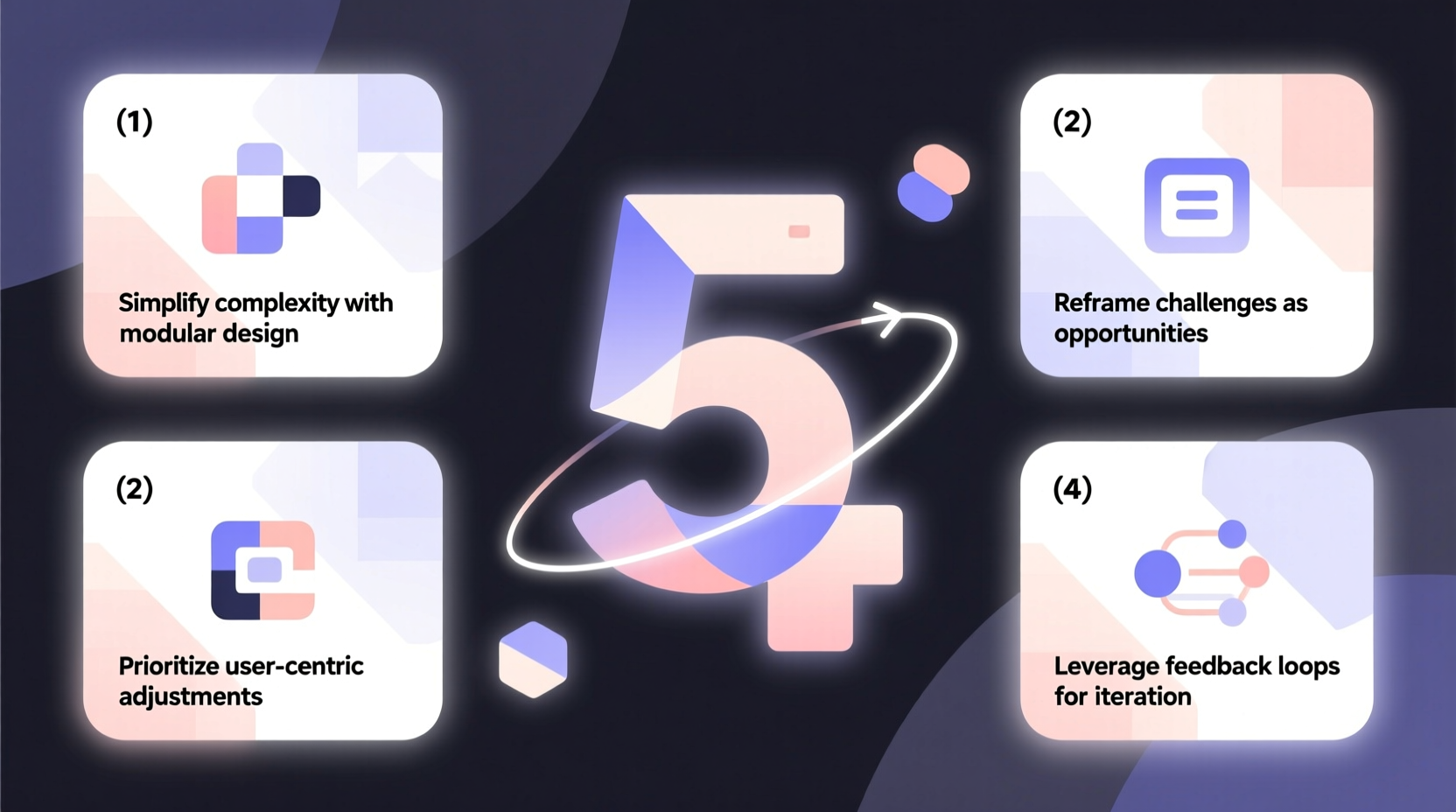
A score of 5 typically signals competence: the task was completed, the standard met, the goal achieved. Yet maintaining a constant 5 across multiple domains leads to burnout, inefficiency, and diminishing returns. A deliberate 4 introduces slack—room to breathe, iterate, and redirect energy where it matters most.
Consider this: in software development, shipping a “good enough” feature (a 4) faster allows teams to gather user feedback before over-investing. In fitness, scaling back intensity one day a week (from a 5 to a 4) prevents injury and supports recovery. In leadership, giving someone a “meets expectations” review (a 4) instead of “exceeds” (a 5) can open honest dialogue about growth without inflating performance.
“Sometimes the smartest decision isn't doing more—it's doing less, but better.” — Dr. Lena Patel, Organizational Psychologist
When to Downgrade: Recognizing the Right Moment
Intentionally lowering a rating or effort level should never be arbitrary. It must serve a strategic purpose. Look for these signals:
- Diminishing returns: Additional effort yields minimal improvement.
- Opportunity cost: Time spent perfecting one area detracts from higher-impact work.
- Sustainability concerns: Maintaining a 5 is draining resources or morale.
- Feedback misalignment: The recipient may interpret a 5 as complacency rather than excellence.
- Need for iteration: A near-complete version allows real-world testing before final polish.
Step-by-Step Guide to Converting a 5 into a 4
Lowering a score or effort level requires careful planning to avoid perceptions of laziness or disengagement. Follow this five-step process:
- Define what a 5 currently means. Break down the components that make up the current level of performance or output. Is it time invested? Quality metrics? Stakeholder perception?
- Identify which elements are essential for a 4. Strip away non-critical features, approvals, or refinements. Focus on core functionality or outcome.
- Communicate the rationale clearly. Explain that the reduction is strategic, not negligent. Emphasize goals like speed, learning, balance, or resource allocation.
- Set measurable boundaries for the 4. Establish criteria so stakeholders know what to expect (e.g., “This version will include core features but defer advanced customization”).
- Review and adjust post-deployment. After releasing the 4, collect data and feedback to determine whether to reinvest or maintain the lower level.
Real Example: The Product Launch That Skipped Perfection
A tech startup was preparing to launch a new mobile app. Their internal scoring placed the beta at a solid 5: fully tested, polished UI, robust backend. However, market research indicated competitors were six weeks behind. The team debated delaying launch by two weeks to fix minor bugs and enhance animations—pushing toward a theoretical 6.
Instead, they made a bold call: release at a 4. They removed non-essential onboarding animations, deferred one analytics integration, and launched with core functionality intact. The result? They captured early adopters, gathered real-user data within days, and iterated rapidly. Within three months, their user base surpassed the competitor’s projected launch audience. By choosing a 4 now over a 5 later, they gained critical momentum.
Do’s and Don’ts of Strategic Downgrading
| Do | Don’t |
|---|---|
| Downgrade transparently with clear reasoning | Assume others will understand your intent without explanation |
| Preserve core value while cutting peripheral elements | Remove foundational components that compromise integrity |
| Use the 4 as a temporary state for learning or recovery | Treat downgrading as a permanent retreat without reassessment |
| Align the decision with broader goals (speed, wellness, innovation) | Make the change reactively due to fatigue or pressure alone |
| Document the experiment and measure outcomes | Fail to evaluate whether the 4 achieved its intended purpose |
Practical Tips for Everyday Application
The principle of turning a 5 into a 4 applies far beyond business or tech. Here are actionable ways to apply it across life domains:
Checklist: Is a 4 the Right Choice?
- ☑ Am I holding onto a 5 out of pride or habit?
- ☑ Would reducing effort free up capacity for something more important?
- ☑ Can I maintain trust and credibility while delivering less?
- ☑ Is there a learning or agility benefit to moving faster with less?
- ☑ Have I communicated the change with clarity and confidence?
Frequently Asked Questions
Isn’t lowering a 5 to a 4 just making excuses for underperformance?
Not when done intentionally. The key distinction lies in motivation and method. Underperformance is passive and unexamined. Strategic downgrading is active, purposeful, and tied to larger objectives. It’s not about doing less arbitrarily—it’s about reallocating effort wisely.
How do I explain this to a manager or client who expects a 5?
Frame the downgrade as an optimization, not a compromise. Use language like “prioritizing impact over polish” or “accelerating delivery to gather feedback.” Present data or trade-offs showing that the marginal gain from a 5 isn’t worth the cost. Offer a timeline for revisiting the decision after evaluation.
Can this approach backfire?
Yes—if applied incorrectly. Reducing quality in safety-critical systems, legal compliance, or customer-facing reliability zones is rarely advisable. Always assess risk. Additionally, frequent downgrades without follow-up can erode trust. Use this strategy selectively and document results to justify future decisions.
Making the 4 a Strategic Advantage
The cultural obsession with excellence often blinds us to the power of restraint. A 4 isn’t failure—it can be foresight. It creates margin for error, room for creativity, and resilience against overload. In a world that rewards hustle, choosing to scale back with purpose is an act of quiet rebellion.
Mastering the art of turning a 5 into a 4 means understanding that value isn’t always additive. Sometimes, subtraction unlocks greater potential. Whether you’re managing projects, personal goals, or team dynamics, consider: where could a thoughtful reduction actually elevate your results?




 浙公网安备
33010002000092号
浙公网安备
33010002000092号 浙B2-20120091-4
Comments
No comments yet. Why don't you start the discussion?