
Circles and dots are among the most versatile motifs in interior design. Their simplicity belies their power: a single dot can draw the eye, while a field of circles creates rhythm and movement. When translated into pillow designs, these patterns become dynamic tools for shaping mood, defining space, and expressing personality. Far from being merely decorative, circle and dot pattern pillows offer a unique blend of playfulness and sophistication that can elevate any room. Whether you're drawn to minimalist polka dots or abstract concentric rings, integrating these textiles thoughtfully can transform your living space into a curated environment rich in visual interest.
The Visual Psychology of Circles and Dots
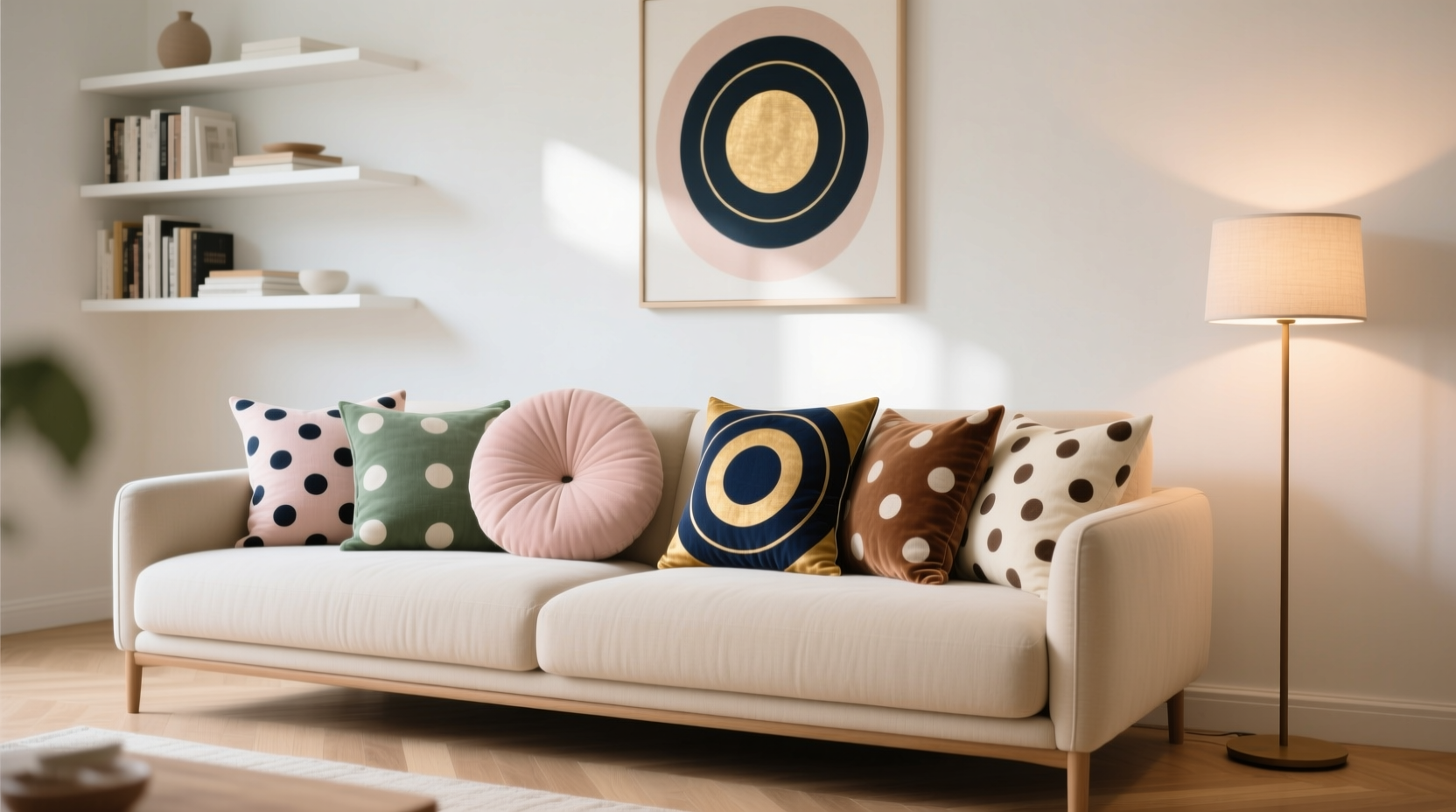
In design, shapes carry meaning. Circles symbolize unity, harmony, and continuity. Unlike angular forms, which suggest structure and rigidity, circles evoke softness, inclusivity, and flow. Dots—whether scattered, aligned, or clustered—introduce a sense of whimsy, focus, or even tension depending on their size, spacing, and color contrast.
When used in throw pillows, these patterns influence how we perceive a room. A large-scale dot pattern on a sofa can create a focal point, while smaller, evenly spaced circles might add subtle texture without overwhelming the senses. Designers often leverage the psychological comfort of circular forms to soften modern or minimalist interiors, balancing clean lines with organic repetition.
“Repetition of circular forms brings a meditative quality to a space. It’s rhythmic, calming, and surprisingly grounding.” — Lena Torres, Interior Design Consultant
Layering Patterns Without Chaos
One common hesitation with patterned pillows is the fear of clashing or overcrowding. The key lies in thoughtful layering. Circle and dot patterns, due to their geometric nature, are particularly well-suited for mixing with other prints when guided by a cohesive strategy.
Start with a neutral base—solid-colored upholstery or subtly textured fabrics. Then introduce dot-patterned pillows as your first layer. These work especially well alongside stripes (aligned vertically or horizontally) or organic prints like watercolor florals, where the dot acts as an anchor.
To build depth, add a second set of pillows featuring concentric circles or bullseye motifs. These can be slightly larger in scale to create contrast. Finish with a solid-texture pillow in a complementary fabric—such as velvet, bouclé, or linen—to ground the arrangement.
Pattern Mixing Guide: Do’s and Don’ts
| Scenario | Do | Don’t |
|---|---|---|
| Mixing dots with stripes | Align dot size with stripe width; use shared accent colors | Use high-contrast colors on both patterns simultaneously |
| Combining multiple dot scales | Vary sizes significantly (e.g., small polka dots + large orbs) | Use similar-sized dots in different colors—it reads as clutter |
| Pairing with florals | Choose floral prints that include circular elements or round petals | Match busy dot patterns with equally dense botanicals |
| Using in monochrome schemes | Leverage tonal variation (light gray dots on dark gray fabric) | Overuse identical shades—add texture to differentiate layers |
Strategic Placement Across Rooms
The impact of circle and dot pillows changes dramatically based on where they’re placed. Thoughtful positioning enhances both function and aesthetic.
Living Room: Anchor the Seating Area
Arrange dot-patterned pillows at the center of a sectional or sofa to draw attention inward, encouraging conversation. For a symmetrical look, place matching circle pillows on either end with a contrasting solid in the middle. Alternatively, stagger different circular designs across a loveseat to create a curated gallery effect.
Bedroom: Frame the Bed with Rhythm
Use a set of three pillows in graduated dot sizes—large, medium, small—centered behind standard shams. This creates a dynamic yet balanced composition. Consider black-and-white polka dots for a retro vibe, or pastel-toned circles for a nursery or guest room with a soft, inviting feel.
Nursery or Child’s Room: Spark Imagination
Dots naturally appeal to young children. Opt for oversized, colorful circles on floor cushions or reading nook pillows. These double as tactile elements and visual stimuli, supporting cognitive development through pattern recognition.
Bathroom: Add Unexpected Playfulness
A single dot-patterned lumbar pillow on a vanity bench or beside a freestanding tub injects surprise and warmth. Choose water-resistant fabric or removable covers for practicality.
Step-by-Step: Creating a Focal Point with Dot Pillows
Follow this sequence to turn an ordinary corner into a design highlight using circle and dot pillows:
- Assess the space: Identify a seating area, window nook, or empty chair that could benefit from added visual weight.
- Select a theme: Decide on a mood—playful, retro, modern, serene—and choose dot patterns that align (e.g., neon dots for fun, navy-and-white for nautical calm).
- Pick a color anchor: Choose one dominant color present in the room (e.g., sage green from curtains) and find dot pillows that incorporate it.
- Vary scale and placement: Use one large circular print pillow centered, flanked by two smaller polka dot pillows. Rotate textures—matte vs. glossy fabric—to add dimension.
- Add contrast: Introduce a non-patterned but texturally rich pillow (like sheepskin or ribbed knit) to prevent visual fatigue.
- Evaluate balance: Step back and view the arrangement from across the room. Adjust until the eye moves smoothly across the group.
Real-Life Inspiration: A Minimalist Living Room Transformed
In a downtown Portland loft with white walls, gray sofa, and exposed beams, homeowner Maya Chen felt her living room lacked warmth. She introduced four circle-patterned pillows: two with charcoal rings on ivory linen, and two with off-white polka dots on deep teal cotton. Paired with a woven jute rug and walnut side table, the pillows became the room’s emotional center.
“I was worried dots would feel childish,” she said. “But the precision of the circles gave it an artful edge. Now people always comment on them.”
This case illustrates how geometric patterns, when chosen with intention, can bridge minimalism and personality—adding character without clutter.
Checklist: Styling Success with Circle & Dot Pillows
- ☐ Define the mood you want to create (playful, elegant, retro, calming)
- ☐ Choose a dominant color already present in the room
- ☐ Mix at least two scales of circular patterns (e.g., tiny dots + bold rings)
- ☐ Limit the total number of patterned pillows to 3–5 per seating area
- ☐ Include at least one solid or textured neutral pillow for balance
- ☐ Rotate pillows seasonally to refresh the look (e.g., red dots in winter, yellow in summer)
- ☐ Clean or spot-treat regularly to maintain crisp pattern definition
Frequently Asked Questions
Can I mix polka dots with other circular patterns like target or ripple designs?
Yes—this combination works well when scales differ and colors align. For example, pair small white polka dots on navy with a large-scale black-and-white bullseye pillow. The contrast in rhythm adds energy without clashing.
Are circle patterns suitable for formal spaces?
Absolutely. A tailored pillow with delicate gold-dotted motifs on charcoal silk or a subtle tonal circular weave in wool can add quiet elegance to a formal parlor or study. The key is refinement in fabric and proportion.
How do I keep dot pillows from looking dated or kitschy?
Avoid overly nostalgic placements (like full polka-dot sofas). Instead, use dot pillows as accents within a modern context. Pair them with clean-lined furniture, natural materials, and restrained color palettes to keep the look fresh and intentional.
Final Thoughts: Let Geometry Tell Your Story
Circle and dot pattern pillows are more than just decorative objects—they’re tools for storytelling through design. Each dot can represent a moment, a breath, a pulse in the rhythm of your home. By playing with scale, color, and placement, you invite movement and emotion into static spaces.
Don’t wait for a full redesign to experiment. Start with one pillow. Place it deliberately. Observe how light hits its curves, how it interacts with surrounding textures. Then build from there. The beauty of circular design is that it loops back—inviting you to begin again, with fresh perspective.




 浙公网安备
33010002000092号
浙公网安备
33010002000092号 浙B2-20120091-4
Comments
No comments yet. Why don't you start the discussion?