
A book light is often seen as a simple tool: something to clip onto a novel when the room lights go out. But its compact design, focused beam, and portability make it far more versatile than most realize. Whether you're an avid reader, a remote worker, or someone trying to optimize their daily routines, a book light can be repurposed in surprisingly effective ways. From enhancing concentration to supporting low-light workflows, this unassuming device can become a quiet ally in your pursuit of efficiency and comfort.
1. Enhance Reading Comfort with Strategic Lighting
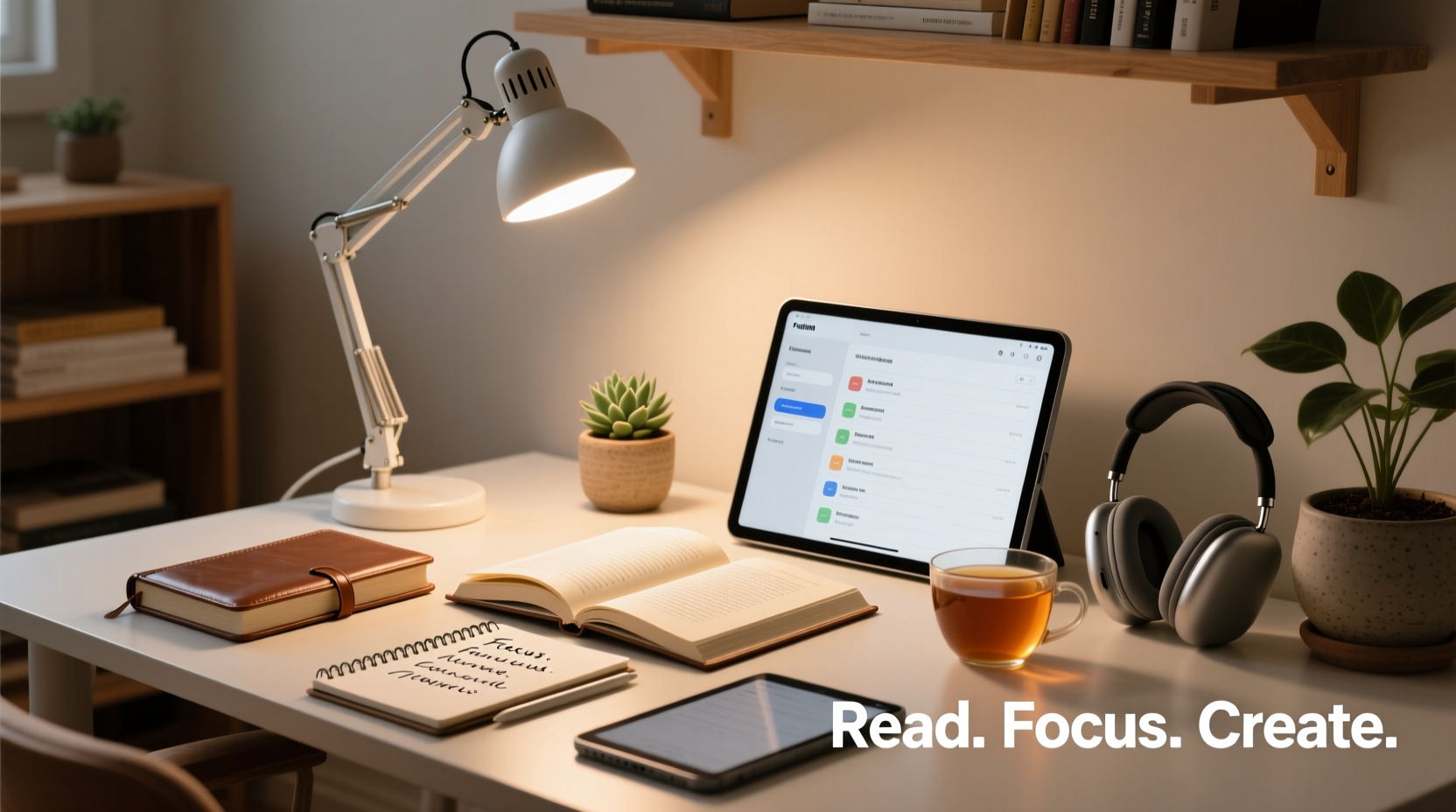
The primary function of a book light—illuminating text without disturbing others—is still one of its most valuable uses. However, how you position and utilize it can significantly affect eye strain, reading speed, and retention. Unlike overhead lighting, which can create glare or cast shadows across the page, a well-placed book light delivers even, directional illumination exactly where it's needed.
For nighttime readers, using a warm-white LED book light helps preserve melatonin levels, supporting healthier sleep cycles. Avoid cool-blue tones close to bedtime, as they can interfere with natural drowsiness. Some advanced models even offer adjustable color temperatures—ideal for transitioning from alert evening reading to restful sleep.
2. Boost Focus During Work and Study Sessions
Lighting plays a crucial role in cognitive performance. Poor illumination leads to fatigue, reduced concentration, and slower information processing. A book light can act as a \"focus beacon\"—a small but powerful visual cue that signals your brain it’s time to concentrate.
Place a clip-on book light beside your notebook, laptop, or study materials during late-night work sessions. The narrow beam keeps distractions at bay by darkening peripheral areas, creating a psychological boundary between “work zone” and “rest zone.” This technique mimics the principles of deep work, where minimizing environmental stimuli enhances mental clarity.
“Controlled lighting environments can improve attention span by up to 20% in low-stimulation settings.” — Dr. Lena Torres, Cognitive Ergonomics Researcher
This method is particularly effective for students in shared living spaces or professionals working from crowded co-living setups. You maintain visibility without disrupting others—a win-win for productivity and courtesy.
Step-by-Step: Creating a Focused Workspace with a Book Light
- Choose a dim or quiet corner of your room or workspace.
- Clip the book light to the edge of your desk or monitor.
- Angle the light downward to illuminate only your immediate tools (notebook, keyboard, notepad).
- Turn off ambient lights to increase contrast and reduce visual clutter.
- Use the lit area as your dedicated “deep work” zone—only for focused tasks.
3. Support Low-Light Journaling and Creative Writing
Many writers find inspiration in the stillness of night. A book light provides just enough glow to write in a journal or draft ideas without fully waking up your surroundings—or yourself. Its subtle presence encourages mindfulness and reduces the stimulation associated with bright screens.
Writers who practice morning pages or gratitude journaling can also benefit. Instead of turning on harsh ceiling lights before sunrise, a soft book light allows you to begin writing while maintaining a calm, meditative state. This gentle transition into the day supports creativity and emotional clarity.
4. Use as a Portable Task Light Beyond Reading
The flexibility of a book light extends well beyond books. Its clip-on design and battery-powered operation make it ideal for a range of micro-tasks around the home or office. Think of it as a mini task lamp you can move wherever targeted light is needed.
| Use Case | How It Helps | Setup Tip |
|---|---|---|
| Reading sheet music | Illuminates piano stand without stage glare | Attach to top edge, aim beam at middle staves |
| Handwriting cards or letters | Prevents shadows on paper | Use warm light for cozy ambiance |
| Working under cabinets | Shines into tight kitchen or workshop spaces | Clip to shelf edge for hands-free access |
| Power outages or camping | Provides personal lighting without draining phone battery | Keep charged and stored with emergency kit |
One real-world example comes from Maria, a freelance illustrator who lives in a studio apartment. She clips her book light to the edge of her drafting table when sketching late at night. “It gives me just enough light to see my lines,” she says, “and I don’t have to turn on anything else that disrupts my partner sleeping nearby.”
5. Optimize Digital Device Use in Dark Environments
Staring at a bright phone or tablet in a dark room causes digital eye strain and disrupts circadian rhythms. A common workaround is to enable night mode—but even dimmed screens can be too intense. A better solution? Use a book light to softly illuminate the space around your device.
By placing a book light behind your tablet or phone (on a low setting), you create balanced ambient light. This reduces the contrast between the bright screen and the dark room, easing pressure on your eyes. It’s a technique borrowed from professional video editors and animators, who use bias lighting behind monitors to improve visual comfort.
- Position the light behind your device, facing the wall or surface behind it.
- Use a warm tone to avoid blue-light interference.
- Adjust brightness so the glow is faint but perceptible.
Checklist: Maximize Your Book Light’s Utility
- ✔ Choose a model with adjustable brightness and color temperature
- ✔ Charge it regularly or keep spare batteries handy
- ✔ Test different angles to eliminate shadows during reading
- ✔ Reposition it as a task light for writing, drawing, or repairs
- ✔ Use it to create low-glare ambient lighting behind screens
- ✔ Store it with other essentials (journals, chargers, pens) for easy access
FAQ
Can I use a book light for reading on an airplane?
Absolutely. Most modern book lights are lightweight, TSA-friendly, and designed specifically for travel. They provide personal illumination without disturbing fellow passengers, making them ideal for long-haul flights.
Are rechargeable book lights worth it?
Yes. While they may cost slightly more upfront, rechargeable models reduce long-term waste and save money on batteries. Many also feature USB-C charging, which integrates seamlessly with existing tech accessories.
Do book lights help with dyslexia or reading difficulties?
Indirectly, yes. Consistent, shadow-free lighting improves text clarity, which can reduce visual stress—a common issue for people with dyslexia. While not a treatment, proper lighting supports better reading fluency and comfort.
Conclusion
A book light is more than a reading accessory—it’s a tool for intentionality. Whether you’re carving out a quiet moment to journal, focusing on a complex task, or preserving nighttime calm, its targeted illumination can shape your environment in subtle but meaningful ways. By reimagining its role beyond the page, you unlock new layers of utility that support both mental clarity and physical comfort.




 浙公网安备
33010002000092号
浙公网安备
33010002000092号 浙B2-20120091-4
Comments
No comments yet. Why don't you start the discussion?