
Flower building blocks—colorful, interlocking plastic or wooden pieces designed to resemble petals and stems—are more than just toys. They are powerful tools for early childhood development. When used intentionally, these playful components can support cognitive growth, fine motor skills, emotional regulation, and social interaction. Unlike traditional toys with fixed functions, flower building blocks encourage open-ended exploration, allowing children to shape their own learning experiences. This article explores practical, research-backed strategies to transform simple block play into rich developmental opportunities.
1. Enhancing Fine Motor Skills and Hand-Eye Coordination
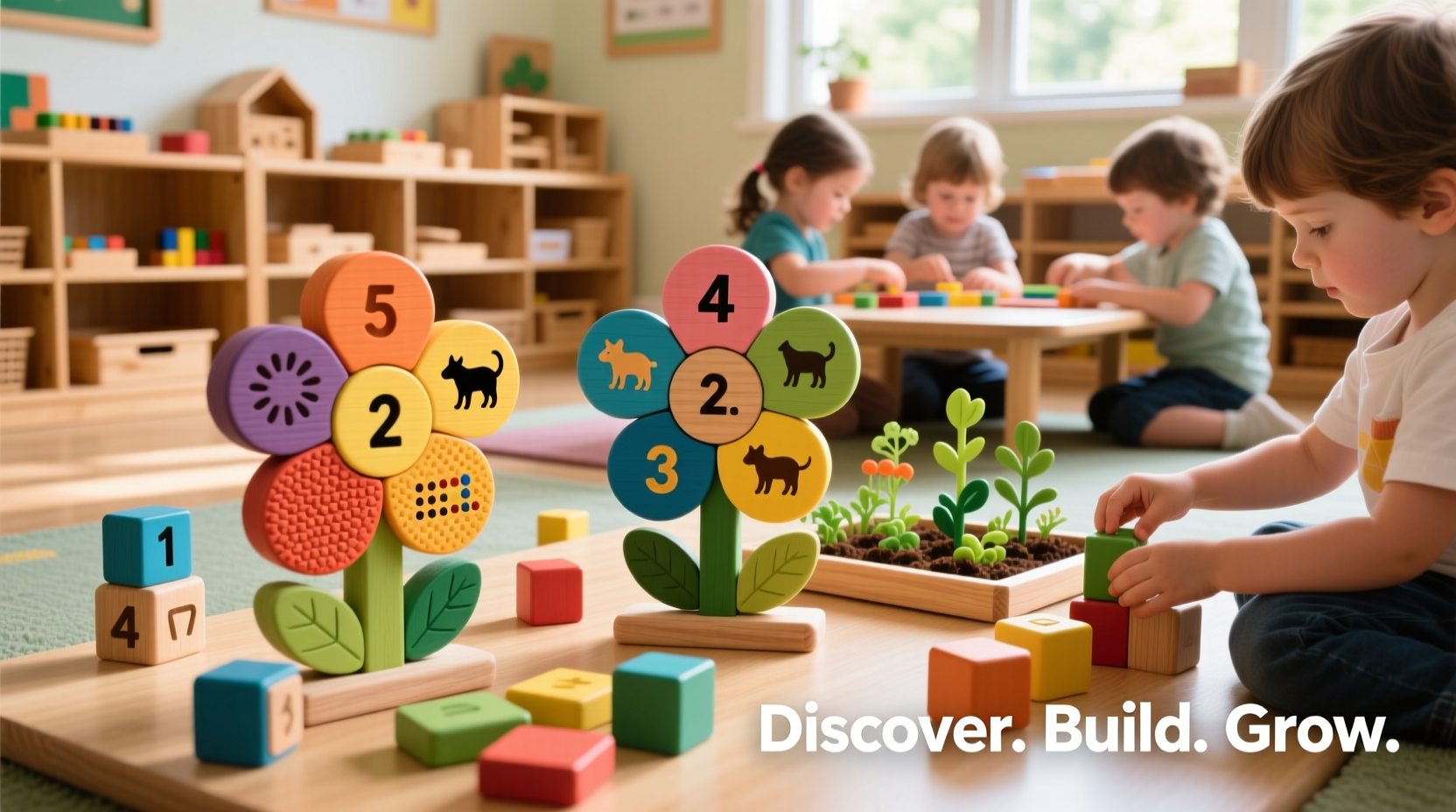
One of the most immediate benefits of playing with flower building blocks is the development of fine motor skills. Connecting small pieces requires precision, grip control, and coordination between the eyes and hands. As children twist, snap, and align blocks into blossoms or towers, they strengthen the muscles in their fingers and improve dexterity—skills essential for writing, drawing, and self-care tasks like buttoning clothes.
To maximize this benefit, introduce challenges that require deliberate placement. For example, ask a child to build a flower with exactly five petals, then reverse the task by removing each petal slowly without breaking the stem. These actions promote controlled movement and patience.
2. Fostering Early Math and Pattern Recognition
Mathematical thinking begins long before formal instruction. Flower building blocks offer a tactile way to explore foundational concepts such as counting, sorting, sequencing, and symmetry. Their bright colors and repetitive shapes make them ideal for creating patterns and understanding relationships between numbers and forms.
A simple activity involves laying out a color pattern (e.g., red-blue-yellow, red-blue-yellow) and asking the child to continue it. Over time, increase complexity by introducing size variations or alternating petal counts per bloom.
“Children learn abstract math concepts best through concrete manipulation. Toys like flower blocks bridge imagination and logic.” — Dr. Lena Patel, Early Childhood Cognitive Researcher
| Math Concept | Activity Example | Skill Developed |
|---|---|---|
| Counting | Count how many petals are on each flower | Number recognition, one-to-one correspondence |
| Sorting | Group all green stems together, separate by color | Categorization, visual discrimination |
| Symmetry | Create a mirror-image garden on both sides of a line | Spatial reasoning, balance perception |
| Sequencing | Build flowers from smallest to largest | Logical ordering, comparative thinking |
3. Building Language and Storytelling Abilities
Play is language in motion. When children construct with flower blocks, they naturally begin narrating their creations—\"This is a magic rose that grants wishes\" or \"The tall sunflower talks to the bees.\" These spontaneous stories reflect emerging narrative structures, vocabulary expansion, and expressive communication.
Parents and educators can deepen this process by engaging in co-play. Ask open-ended questions: “What happens when your flower blooms?” or “Who lives inside this garden?” Such prompts invite descriptive language, prediction, and emotional expression.
Step-by-Step Guide: Creating a Story Garden
- Invite the child to build three different flowers using various colors and sizes.
- Ask them to give each flower a name and personality (e.g., “Grumpy Tulip,” “Happy Daisy”).
- Encourage a short story about what happens when the flowers meet.
- Record or write down their words verbatim to reinforce value in their voice.
- Revisit the story later and let them add new characters or plot twists.
This progression nurtures not only oral fluency but also pre-literacy skills such as plot structure and character development.
4. Supporting Emotional Regulation and Mindful Play
In today’s fast-paced world, children often lack opportunities for calm, focused engagement. Flower building blocks provide a sensory-rich yet low-pressure medium for mindfulness. The rhythmic act of connecting pieces can be soothing, helping children regulate emotions after transitions or stressful events.
Use the blocks as part of a “calm-down corner” routine. A child might be invited to build one flower every time they take a deep breath. Alternatively, assign colors to feelings—red for anger, blue for sadness, yellow for joy—and have them create a “feeling flower” representing their current state.
Mini Case Study: Emma’s Morning Routine
Emma, a six-year-old with anxiety around school transitions, began using flower blocks during her morning routine. Each day, she built a single flower while talking quietly with her mother about her hopes for the day. Within two weeks, her resistance to leaving home decreased significantly. Her teacher noted improved focus during circle time. The ritual gave Emma a sense of control and emotional grounding before entering a busy environment.
5. Promoting Collaborative Learning and Social Skills
While flower blocks can be enjoyed solo, their true potential shines in group settings. Shared construction projects teach cooperation, negotiation, and perspective-taking. Children must communicate ideas, share limited resources, and compromise on design choices.
For classrooms or family playdates, try a “Community Garden” challenge: set a large baseplate and invite everyone to contribute one flower. Establish simple rules—each flower must connect to another, and no two adjacent blooms can be the same color. This encourages strategic thinking and mutual respect.
Checklist: Designing a Collaborative Block Session
- Set clear goals (e.g., “Build a garden that tells a story”)
- Lay out enough materials so sharing is necessary but not frustrating
- Assign roles if needed (e.g., designer, builder, connector)
- Facilitate discussion during and after building (“How did you decide on colors?”)
- Praise teamwork explicitly (“I noticed you waited patiently for your turn—great job!”)
FAQ
Are flower building blocks safe for toddlers?
Most flower building blocks are designed for children aged 3 and up due to small parts. Always check manufacturer guidelines and supervise younger children to prevent choking hazards. Look for BPA-free, non-toxic materials when purchasing.
Can these blocks be used in formal education settings?
Yes. Many preschools and early elementary programs integrate building blocks into STEM and SEL (Social-Emotional Learning) curricula. Flower blocks, with their organic shapes, are especially effective for teaching biology themes like plant parts and ecosystems.
How do I store flower blocks effectively?
Use compartmentalized containers labeled by color or shape. Clear bins allow children to see contents easily, encouraging independence and responsibility in cleanup routines. Rotate sets weekly to maintain novelty and interest.
Conclusion
Flower building blocks are far more than colorful toys—they are versatile instruments for holistic development. From strengthening tiny fingers to nurturing empathy and storytelling, these simple tools unlock layers of learning through joyful, child-led exploration. Whether at home, in a classroom, or during therapeutic play, integrating purposeful activities with flower blocks transforms playtime into meaningful growth.




 浙公网安备
33010002000092号
浙公网安备
33010002000092号 浙B2-20120091-4
Comments
No comments yet. Why don't you start the discussion?