
When it comes to carrying your essentials through grocery runs, library visits, or weekend markets, the humble tote bag is a staple of modern life. Two popular options—crochet tote bags and canvas totes—are often praised for their style and eco-friendliness. But when subjected to the wear and tear of daily use, which one truly holds up better? The answer isn’t just about material strength; it’s about construction, maintenance, load capacity, and long-term resilience. This in-depth comparison breaks down how each tote performs under real-life conditions, helping you make an informed decision based on practicality, not just aesthetics.
Durability Showdown: Material and Construction
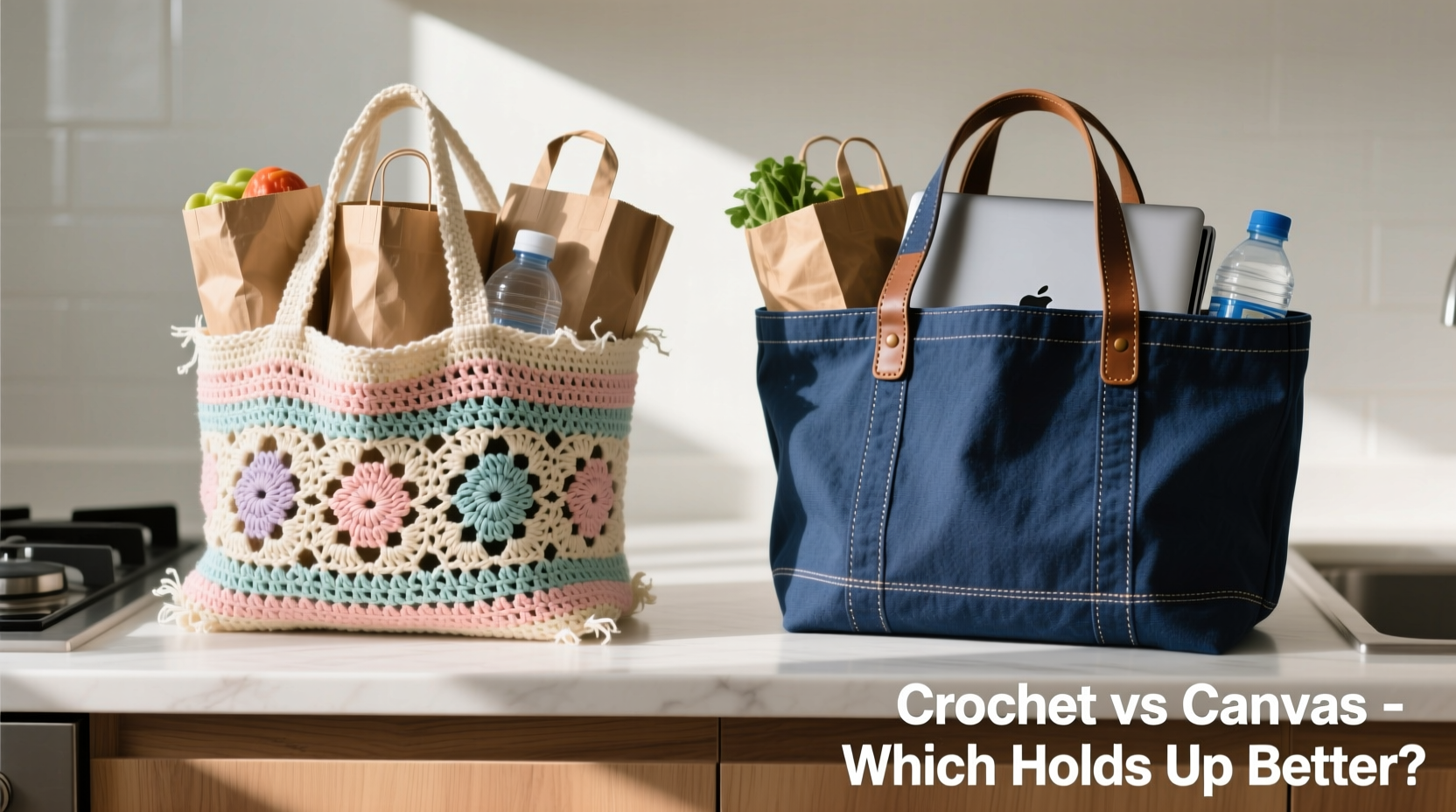
The foundation of any bag’s longevity lies in its material and how it’s assembled. Canvas totes are typically made from tightly woven cotton or cotton-blend fabric, often reinforced with double stitching at stress points like handles and seams. This dense weave gives canvas natural resistance to abrasion and tearing, making it ideal for carrying heavier loads such as books, groceries, or gym gear.
In contrast, crochet tote bags are handmade (or machine-crocheted) from yarn, usually cotton, acrylic, or a blend. While cotton yarn can be strong, the open-stitch patterns common in crochet designs create inherent weaknesses. Gaps between stitches reduce structural integrity, and individual loops can snag or unravel if caught on sharp edges. Even tightly crocheted bags lack the uniform density of canvas, making them more prone to stretching and deformation over time.
A key factor in durability is seam reinforcement. Most commercial canvas totes feature bar tacks or triple stitching at handle junctions—areas that bear the most stress. Crochet bags, unless meticulously crafted with reinforced bases and joined seams using durable techniques like whip stitching or lacing, rely on the continuity of yarn. One broken loop can lead to a ladder effect, compromising the entire structure.
“While crochet bags have artistic value, they’re structurally less resilient than tightly woven textiles. For heavy daily use, material continuity matters.” — Dr. Lena Peterson, Textile Engineer, MIT Materials Lab
Load Capacity and Structural Integrity
Errands demand reliability. Whether you're hauling a 5-pound bag of rice or a stack of library books, your tote must maintain shape and comfort without failing mid-use.
Canvas totes excel here. A standard 14-ounce cotton canvas can support 20–30 pounds without significant strain, especially when the bag includes a structured base or internal lining. Handles are typically wide and sewn with overlapping fabric strips, distributing weight evenly across the shoulder. Even when overloaded, canvas stretches minimally and returns to form.
Crochet totes vary widely depending on stitch tightness and yarn thickness. A bag made with bulky #5 yarn in a dense single or half-double crochet pattern might hold up to 10–15 pounds under ideal conditions. However, the flexible nature of knitted structures means they stretch under load. Over time, this stretching becomes permanent, leading to sagging bottoms and elongated handles. Worse, uneven weight distribution—like a single heavy item placed off-center—can cause localized stress that pulls stitches apart.
Resistance to Environmental Wear
Daily errands expose bags to unpredictable conditions: rain, dirt, UV exposure, and contact with rough surfaces. How each material responds determines long-term usability.
Canvas, especially when treated or waxed, offers moderate water resistance. Untreated cotton canvas will absorb moisture, but it dries quickly and resists mildew if aired out. Dirt can be spot-cleaned or machine-washed (if care instructions allow), and sunlight causes only gradual fading over years. Abrasion from brushing against brick walls or car doors rarely punctures the fabric.
Crochet bags face greater environmental vulnerability. Open stitches trap dust, lint, and food crumbs, making cleaning difficult. Moisture is a major concern—wet yarn swells, loses tensile strength, and takes longer to dry, increasing the risk of mold in humid climates. Acrylic blends fare slightly better than pure cotton in damp conditions, but neither matches canvas for resilience. Additionally, UV exposure degrades yarn fibers faster than tightly woven cotton, leading to brittleness and breakage after prolonged sun exposure.
| Factor | Canvas Tote | Crochet Tote |
|---|---|---|
| Tensile Strength | High (dense weave) | Moderate to Low (dependent on yarn and stitch) |
| Water Resistance | Moderate (improves with treatment) | Poor (absorbs moisture easily) |
| UV Resistance | Good (slow fading) | Fair to Poor (fiber degradation) |
| Stain & Dirt Trapping | Low (smooth surface) | High (open stitches collect debris) |
| Repairability | Easy (patching, resewing) | Difficult (requires matching yarn and skill) |
Real-World Example: A Week of Errands
Sophie, a freelance designer in Portland, tested both tote types during a typical workweek. Her routine included commuting via bike, visiting farmers' markets, dropping off dry cleaning, and picking up her child from daycare. She carried a 16-oz water bottle, laptop, lunchbox, and occasionally produce or library books.
Her canvas tote—a standard 14-oz black cotton model—handled everything without issue. After five days of heavy use, the bag showed no signs of wear. It survived two unexpected drizzles and was wiped clean with a damp cloth. The shoulder strap remained comfortable, and the base retained its shape.
Her handmade cotton crochet tote, while beautiful, began showing strain by day three. The bottom stretched noticeably under the weight of canned goods. On day four, a corner snagged on a bike rack, pulling a stitch and starting a small ladder. By day five, crumbs from a dropped granola bar were embedded in the weave and couldn’t be fully removed. Though she loved the aesthetic, Sophie admitted she wouldn’t rely on it for daily tasks moving forward.
This scenario reflects a common trend: crochet totes shine in low-stress, decorative roles, while canvas dominates in functional, high-use environments.
Maintenance and Longevity
Long-term performance depends heavily on care. Canvas totes are generally low-maintenance. Most can be spot-treated with mild soap and water. Machine washing is possible for many models (check labels), though air drying is recommended to preserve shape and prevent shrinkage. Storing canvas in a cool, dry place prevents mildew and fading.
Crochet bags require more attention. Hand washing is usually necessary to avoid distortion. Agitation in a washing machine can stretch or felt the yarn, especially with cotton. Drying flat is essential to maintain shape, and improper storage—such as folding tightly—can cause permanent creases or fiber fatigue. Moth damage is also a risk with natural fibers if stored for long periods without protection.
Repairs differ significantly. A torn canvas tote can often be patched or resewn with basic tools. Fixing a crochet bag demands knitting or crocheting skills. Unless the owner can match the original stitch pattern and tension, repairs may look uneven or weaken surrounding areas.
Step-by-Step Care Guide for Each Tote Type
- Canvas Tote Maintenance
- Wipe spills immediately with a damp cloth.
- Vacuum light dust or debris weekly.
- For deeper cleaning, hand wash with cold water and mild detergent or machine wash on gentle (if label permits).
- Hang or lay flat to dry—never use a dryer.
- Store upright or rolled with tissue paper inside to retain shape.
- Crochet Tote Maintenance
- Shake out loose debris after each use.
- Spot clean with a soft brush and soapy water.
- Hand wash in lukewarm water with wool-safe or gentle detergent.
- Rinse thoroughly and press out water—do not wring.
- Lay flat on a towel to dry, reshaping as needed.
- Store unfolded in a breathable cotton bag, away from direct light.
When to Choose Which Tote
The choice between crochet and canvas isn’t purely about durability—it’s about alignment with lifestyle.
Choose a canvas tote if:
- You carry heavy or bulky items regularly.
- You’re exposed to variable weather conditions.
- You prioritize low maintenance and long-term use.
- You want a blank canvas for branding or customization.
Choose a crochet tote if:
- You value artisan craftsmanship and unique design.
- Your errands are light—carrying a wallet, phone, and small items.
- You use the bag seasonally or for special outings.
- You enjoy DIY culture and don’t mind occasional repairs.
Hybrid solutions exist. Some designers now combine materials—using a crocheted outer layer over a lightweight canvas or nylon liner. These offer visual appeal with improved structure, though they still require careful handling.
Frequently Asked Questions
Can I reinforce a crochet tote to make it last longer?
Yes, but with limitations. Adding a fabric liner or stiffening the base with interfacing can improve load-bearing capacity. However, this alters the original texture and may complicate cleaning. Reinforcement doesn’t eliminate the risk of snags or unraveling in high-friction environments.
Are canvas totes environmentally better than crochet ones?
It depends on sourcing. Organic cotton canvas from sustainable farms has a lower environmental impact than synthetic yarns derived from petroleum. However, a handmade crochet tote using recycled cotton yarn and lasting years through mindful use can be equally eco-conscious. The key is longevity and responsible disposal.
How long should each type last with daily use?
A well-made canvas tote can last 3–5 years or more with regular use and proper care. A crochet tote used daily may show significant wear within 6–12 months, especially if exposed to moisture or heavy loads. Occasional use can extend its life to 2–3 years.
Final Verdict: Function Meets Form
For the rigors of daily errands—weight, friction, weather, and frequency—canvas totes are objectively more durable and reliable. Their robust construction, ease of cleaning, and resistance to environmental stress make them the superior choice for anyone needing a dependable carryall.
Crochet totes, while charming and expressive, belong in a different category: accessories that celebrate craft and individuality. They’re best reserved for light-duty use, seasonal outings, or as statement pieces rather than workhorse companions.
That said, dismissing crochet entirely would overlook its cultural and creative value. In a world of mass-produced goods, a handmade bag carries personal meaning. The key is intentionality: use the right tool for the job. Keep your crochet tote for farmer’s market strolls with a loaf of bread and a bouquet. Reserve the canvas tote for the heavy lifts, rainy commutes, and chaotic school-day pickups.
“Durability isn’t just about surviving—it’s about performing consistently without compromise. Canvas does that. Crochet inspires, but it doesn’t endure.” — Marcus Reed, Sustainable Product Designer
Take Action Today
Assess your weekly routine. Track what you carry and where you go. Then, assign each tote a role based on reality, not romance. Rotate your bags to maximize lifespan. Repair what you can, replace what fails, and invest in quality over novelty. Whether you reach for canvas or crochet, let function guide form—and let every errand remind you that the best bag is the one that keeps working, day after day.




 浙公网安备
33010002000092号
浙公网安备
33010002000092号 浙B2-20120091-4
Comments
No comments yet. Why don't you start the discussion?