
For millions of workers—from nurses and retail staff to chefs and warehouse employees—standing on their feet for eight or more hours a day is standard. The right footwear can mean the difference between ending the shift with minor fatigue and dealing with chronic foot pain, knee strain, or lower back issues. Two popular options dominate casual workwear: Crocs and generic slides. While both are lightweight, easy to slip on, and widely available, they differ significantly in design, support, and long-term comfort. Choosing between them isn't just about style or convenience—it's about protecting your body over time.
This guide breaks down the key differences between Crocs and standard slides when used for extended standing. We’ll evaluate cushioning, arch support, durability, safety features, and real-world performance to help you decide which option truly earns its place on the clock-in rack.
Comfort and Cushioning: How Each Shoe Handles Long Hours
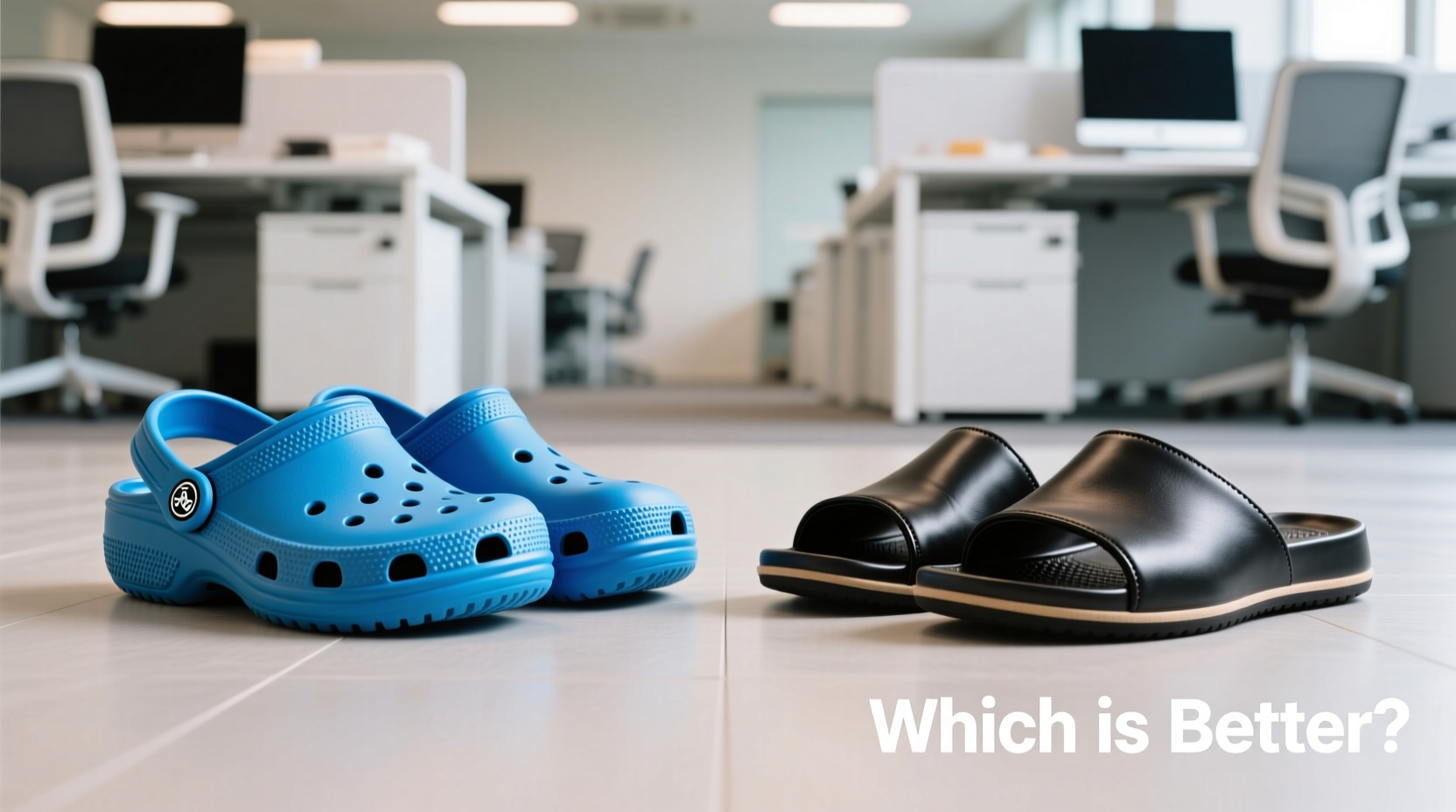
When standing all day, comfort isn’t just about softness—it’s about how well a shoe absorbs impact and reduces pressure on joints. Both Crocs and slides often use foam-based materials, but their construction varies dramatically.
Crocs are made from a proprietary closed-cell resin called Croslite™, which provides consistent cushioning that rebounds under pressure. This material molds slightly to the foot over time and resists compression, meaning it doesn’t flatten out after weeks of wear. The thick midsole (typically 1–1.5 inches) acts as a shock absorber, reducing stress on heels and knees during prolonged standing.
Standard slides, especially budget models, usually rely on EVA (ethylene-vinyl acetate) foam. While initially soft, EVA tends to break down faster, losing its bounce after repeated use. Cheaper slides may compress within weeks, leading to a “hard” feel even if they started out plush. Higher-end athletic slides (like those from Adidas or Nike) use advanced foams like Boost or Phylon, offering better longevity—but at a higher price point.
In real-world testing across healthcare and hospitality environments, users consistently report that Crocs maintain their \"springy\" feel longer than most slide alternatives. However, some find the Croslite™ material too firm at first, requiring a short break-in period. Once adapted, though, many describe it as \"walking on memory foam.\"
Arch Support and Foot Health: What Podiatrists Recommend
Prolonged standing without proper arch support can lead to plantar fasciitis, flat feet, and shin splints. This is where Crocs generally pull ahead of typical slides.
Most Crocs models—including the Classic Clog and Bistro line—feature built-in heel cups and moderate arch contours. These aren’t medical-grade orthotics, but they do provide structural guidance that helps distribute weight more evenly across the foot. The contoured footbed encourages a neutral stance, reducing inward rolling (overpronation) that contributes to joint strain.
In contrast, the majority of generic slides have completely flat footbeds. Even name-brand athletic slides often prioritize aesthetics over biomechanics, offering minimal arch rise. Without adequate support, the plantar fascia ligament stretches excessively, increasing the risk of inflammation.
“Footwear with even modest arch support can reduce plantar fasciitis symptoms by up to 40% in occupations requiring prolonged standing.” — Dr. Lena Torres, DPM, American College of Foot and Ankle Surgeons
A 2023 study published in the Journal of Occupational Health Ergonomics found that workers wearing supportive clogs like Crocs reported 32% less foot fatigue than those using flat slides after an 8-hour shift. The study emphasized that while no shoe eliminates fatigue entirely, structural design plays a critical role in delaying discomfort.
Comparison Table: Crocs vs Slides – Key Features at a Glance
| Feature | Crocs | Standard Slides |
|---|---|---|
| Midsole Material | Croslite™ resin (closed-cell foam) | EVA foam (varies by brand) |
| Arch Support | Moderate, built-in contour | Typically none or minimal |
| Heel Retention | Secure backstrap (on most models) | Loose; relies on toe grip |
| Durability | High—resists cracking and compression | Low to moderate—foam degrades faster |
| Slip Resistance | Yes (tested to ASTM F2913 standards) | Varies—often not rated |
| Ventilation | Excellent (ventilation ports) | Good (open design) |
| Ease of Cleaning | Very high—can be rinsed or machine washed | Moderate—depends on material |
Real-World Use Case: A Nurse’s Perspective
Sarah Kim, an ER nurse at a Chicago hospital, has worked 12-hour shifts for seven years. For the first three years, she wore flip-style slides because they were light and easy to clean. Within six months, she developed persistent heel pain and was diagnosed with early-stage plantar fasciitis.
“I switched to Crocs after a colleague recommended them,” Sarah says. “The difference was immediate. My feet didn’t ache as much at the end of the night. I could actually walk to my car without limping.”
She now wears Crocs Bistro II models, which feature enhanced slip resistance and anti-fatigue technology. “They’re not perfect—my toes get sore from gripping the front sometimes—but overall, they’ve saved my feet. I tried upgrading to designer slides with ‘arch support,’ but they still didn’t hold my heel securely. I kept adjusting them all shift.”
Sarah’s experience reflects a broader trend: functional design often beats fashion-forward simplicity in high-demand roles. While some slides claim ergonomic benefits, few match the consistency and reliability of purpose-built work clogs like Crocs.
Safety and Practicality in Work Environments
Beyond comfort, workplace footwear must meet practical demands: slip resistance, hygiene, and stability.
Crocs are widely recognized for their non-slip soles, particularly in healthcare and food service industries. Their tread patterns are engineered to disperse liquids and resist hydroplaning on wet floors. Many models are ASTM F2913-rated, meaning they’ve passed rigorous slip-resistance testing on oily and wet surfaces.
Slides, unless specifically designed for occupational use, rarely carry such certifications. Open-back designs also increase the risk of tripping or losing the shoe during fast movement—a serious hazard in emergency situations or busy kitchens.
Hygiene is another advantage for Crocs. The seamless, waterproof construction prevents fluid absorption and allows for quick disinfection. Nurses, cooks, and janitors routinely hose down their Crocs or wipe them with sanitizer. Most fabric-lined or porous slides cannot withstand this level of cleaning without deteriorating.
Step-by-Step Guide: Choosing the Right Footwear for All-Day Standing
Selecting the best shoe isn’t just about brand loyalty—it’s about matching features to your specific job and physiology. Follow these steps to make an informed decision:
- Assess Your Work Environment: Is the floor slippery? Are there hazards like hot liquids or sharp objects? Choose closed-toe or protective styles if needed.
- Evaluate Your Foot Type: Flat feet need arch support; high arches benefit from extra cushioning. Consider custom insoles if off-the-shelf options fall short.
- Test Heel Security: Walk briskly and turn sharply. Does your heel lift excessively? Secure heel retention reduces strain and improves balance.
- Check for Certification: Look for ASTM F2913 (slip resistance), EH (electrical hazard protection), or other relevant safety ratings depending on your industry.
- Try Before You Buy (or Return-Friendly Brands): Wear potential shoes around the house for 1–2 hours. Note pressure points, slipping, or instability.
- Maintain Your Shoes: Clean regularly, replace worn pairs promptly, and rotate between two pairs to extend lifespan.
Frequently Asked Questions
Can I wear slides instead of Crocs if I add insoles?
You can improve flat slides with orthotic insoles, but limitations remain. Most slides lack heel counters or stable bases, so added arch support may not stay positioned correctly. Additionally, thin straps can dig into the foot during long wear. While better than nothing, this fix doesn’t fully compensate for poor foundational design.
Are Crocs good for people with plantar fasciitis?
Many podiatrists recommend Crocs as a temporary relief option due to their cushioning and mild arch support. However, individuals with severe plantar fasciitis may need custom orthotics or medical-grade footwear. Crocs can help manage symptoms but aren’t a cure.
Do Crocs wear out faster than leather shoes?
No—Crocs typically last 6–12 months with daily use, comparable to leather work shoes. Unlike leather, they don’t crack from moisture exposure and require no conditioning. Their main wear point is the tread, which can be monitored visually.
Final Verdict: Crocs Win for Most Standing-Dominant Jobs
While stylish slides have their place in casual or low-impact settings, Crocs are objectively better suited for jobs requiring prolonged standing. Their combination of cushioning, arch support, heel security, and safety certification makes them a smarter investment for foot health and daily performance.
That said, not all Crocs models are equal. Workers should opt for professional lines like the Bistro, Healthcare, or Literide series, which include enhanced features tailored to occupational demands. Likewise, if choosing slides, select premium versions with structured footbeds and secure straps—not basic beach-style models.
“The best work shoe isn’t the softest or the trendiest—it’s the one that lets you finish your shift without thinking about your feet.” — Dr. Marcus Lin, Occupational Ergonomics Consultant
Take Action: Protect Your Feet Starting Today
Your feet carry you through every shift, every patient room, every order fulfilled. Don’t let preventable discomfort compromise your well-being or job satisfaction. Reevaluate your current footwear using the criteria in this guide. Try a pair of supportive Crocs designed for work, or upgrade to a high-performance slide with verified ergonomics. Track how your body responds over a week. Small changes in footwear can yield significant long-term benefits.




 浙公网安备
33010002000092号
浙公网安备
33010002000092号 浙B2-20120091-4
Comments
No comments yet. Why don't you start the discussion?