
When the sun is high and the pool beckons, few footwear choices are as synonymous with summer freedom as Crocs and Teva sandals. Both brands dominate warm-weather wardrobes, but when it comes to handling repeated exposure to water—especially chlorinated pool decks, sandy beaches, and wet grass—their performance diverges in meaningful ways. For parents, travelers, outdoor enthusiasts, or anyone who spends long days near water, understanding how each sandal stands up to moisture, impact, and prolonged use is essential.
This isn’t just about style or initial comfort. It’s about longevity, structural integrity, and how well a sandal recovers from being soaked, stepped on, and left to dry in the sun. One might dry faster, while the other offers superior grip on slick surfaces. One could crack over time; the other may stretch out. Choosing between them requires more than preference—it demands a clear-eyed look at real-world resilience.
Durability After Repeated Water Exposure
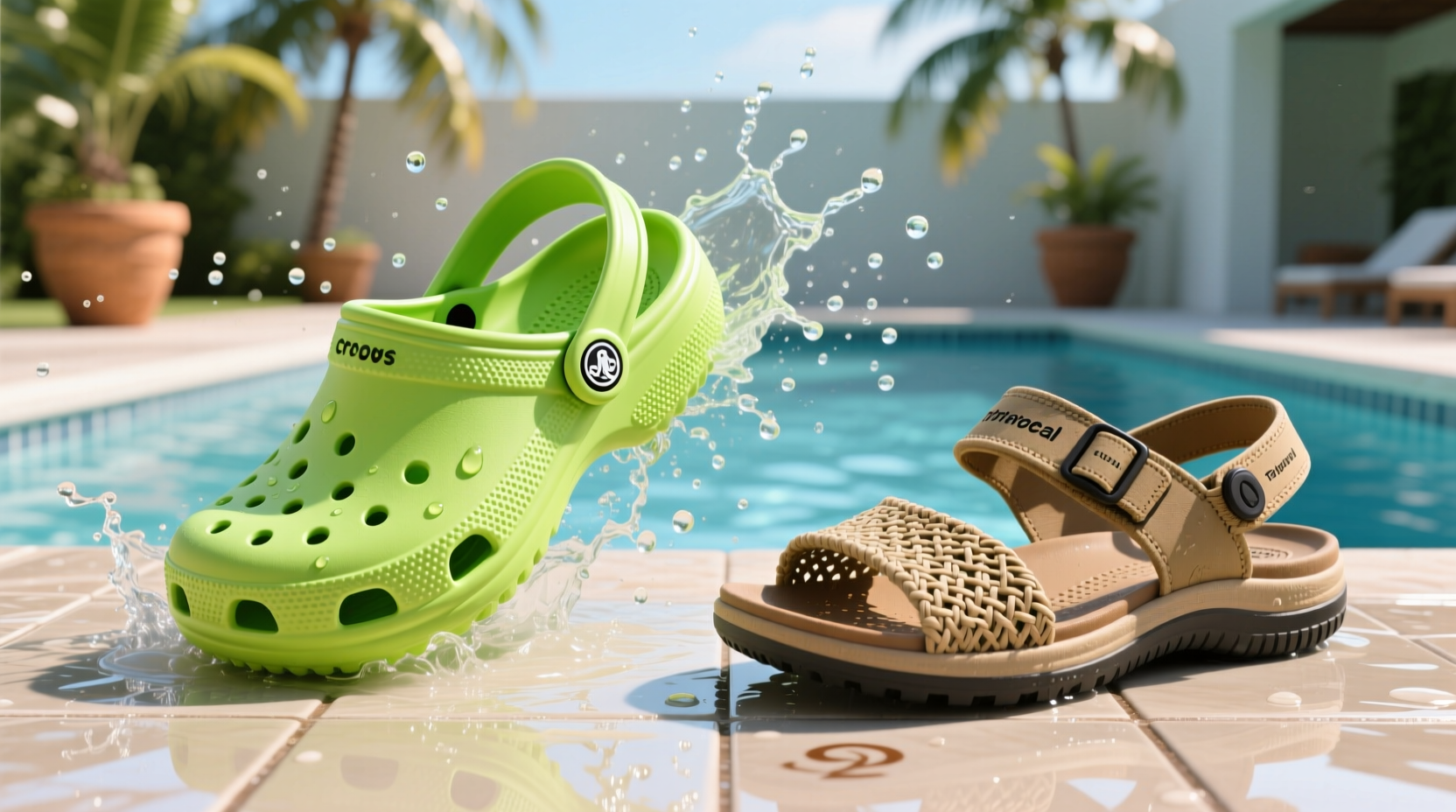
Crocs and Tevas face different challenges when submerged or drenched. The materials they’re made from dictate their response to moisture, UV rays, and physical stress.
Crocs are crafted from Croslite™, a proprietary closed-cell resin that resists water absorption. This means they don’t soak up chlorine or saltwater like foam or fabric would. They float, dry quickly, and won’t harbor mildew easily. However, prolonged exposure to direct sunlight can cause Croslite™ to degrade over time, leading to brittleness or fading, especially in lighter colors. Users often report that after two or three intense summers of daily pool use, some pairs begin to crack around the heel strap or develop microfractures near high-stress zones.
Teva sandals, particularly models like the Hurricane XLT2 or Terra-Float, use a combination of polyester webbing, rubber outsoles (often Vibram®), and EVA midsoles. While the straps absorb minimal water, they do retain moisture longer than Crocs, especially if packed away damp. However, Teva’s construction is engineered for rugged environments. Their soles maintain traction even when wet, and the materials are UV-resistant. In long-term tests conducted by outdoor gear reviewers, Tevas consistently outlast Crocs in mixed terrain scenarios involving water, rocks, and heat.
Comfort and Fit: Wet vs Dry Performance
Comfort shifts dramatically when feet are wet. What feels supportive in a dry store setting may chafe or slip once submerged.
Crocs offer a snug, sock-like fit due to their monolithic design. There are no straps to adjust, which eliminates pressure points but also limits customization. When wet, the smooth interior can become slippery, causing the foot to slide forward during brisk walking. Some users find this leads to toe jamming or blisters over extended wear. On the plus side, the lack of seams prevents rubbing, making them ideal for quick slips on and off.
Teva sandals, by contrast, feature adjustable hook-and-loop straps that allow wearers to fine-tune the fit. This becomes crucial when transitioning from dry land to wet environments. A properly tightened Teva maintains secure contact with the foot even when soaked, reducing slippage and improving control. The contoured footbeds in higher-end models provide arch support absent in most Crocs, which benefits those spending hours walking on hot pavement or uneven ground post-swim.
“Footwear that moves *with* the foot, not against it, makes all the difference in aquatic environments.” — Dr. Lena Torres, Podiatrist & Outdoor Activity Consultant
Material Comparison Table
| Feature | Crocs | Teva |
|---|---|---|
| Main Material | Croslite™ resin | Polyester webbing + EVA + Rubber |
| Water Absorption | Negligible | Low (straps may retain moisture) |
| Drying Time | 15–30 minutes | 1–2 hours |
| UV Resistance | Moderate (prone to cracking) | High (designed for sun exposure) |
| Traction When Wet | Fair (smooth sole) | Excellent (lugged rubber) |
| Adjustability | None | Full (hook-and-loop closures) |
| Lifespan (avg. summer use) | 1–2 years | 2–4 years |
Real-World Case Study: Family Vacation at a Resort Pool
The Patel family spent two weeks at an all-inclusive beach resort in the Dominican Republic. Each member brought either Crocs or Tevas for pool and beach access. Over the course of the trip, both types were subjected to daily chlorinated water, sand abrasion, hot concrete, and occasional hikes to nearby coves.
The children wore classic Crocs. They loved how easy they were to clean and appreciated that they could throw them in the washer. However, by day ten, one pair developed a hairline crack near the heel after being left on a sun-baked deck. The smooth soles also caused slips when exiting the pool, requiring extra caution.
The parents opted for Teva Hurricans. Though they took slightly longer to dry, the adjustable straps ensured a secure fit throughout activities. Even after wading through rocky shallows, the soles showed no signs of wear. At the end of the trip, both pairs looked nearly new, with only minor discoloration on the straps.
Post-trip, the Crocs were retired due to structural concerns, while the Tevas were stored for future vacations. This mirrors broader consumer trends: Crocs excel in convenience and hygiene, but Tevas win in sustained durability and safety.
Care and Maintenance Tips for Longevity
Proper care significantly extends the life of both sandals. Many failures stem not from inherent flaws but from neglect.
- Rinse after every use: Chlorine and salt corrode materials over time. A quick freshwater rinse removes harmful residues.
- Avoid direct heat drying: Never place either sandal near radiators or in ovens to speed drying. High heat warps Croslite™ and degrades adhesives in Tevas.
- Store in shaded areas: UV radiation breaks down polymers. Keep sandals in breathable bags away from windows or car dashboards.
- Inspect straps and joints monthly: Look for fraying, loosening, or delamination. Early detection prevents sudden failure.
- Use mild soap only: Harsh detergents strip protective coatings and accelerate aging.
Step-by-Step Guide: How to Test Sandal Readiness for Pool Season
- Inspect the sole: Check for deep cuts, separation from midsole, or worn tread. Replace if traction is compromised.
- Bend the sandal: Gently twist the footbed. If you hear cracking (especially in Crocs), internal degradation has likely begun.
- Wet test: Soak the sandal in water for 10 minutes, then walk on a smooth, wet surface. Note any slipping or instability.
- Smell check: Lingering mildew odor suggests trapped moisture or bacterial growth. Clean thoroughly before reuse.
- Strap security: For Tevas, ensure buckles still lock firmly and webbing hasn’t stretched beyond adjustment range.
- Dry time observation: After washing, monitor how long it takes to dry fully. Excessive drying time may indicate absorbed contaminants.
Expert Insight on Footwear Engineering
The engineering philosophy behind each brand reveals much about their intended use cases.
“Crocs prioritize function in controlled environments—think hospitals, kitchens, or backyard pools. Tevas are built for dynamic movement across variable terrain. That fundamental difference explains why Tevas handle repeated wet-dry cycles better.” — Marcus Lin, Footwear Design Engineer, Outdoor Gear Lab
This distinction matters. Crocs were originally designed as boat shoes, meant to be worn briefly in wet conditions. Their evolution into casual fashion staples doesn’t change their core limitations in rugged settings. Tevas, born from river rafting culture, are engineered for endurance. Their layered construction distributes stress more evenly, preventing localized fatigue.
Frequently Asked Questions
Can I wash Crocs in the dishwasher?
Yes, but with caveats. Place them on the top rack, avoid heated drying, and skip detergent if possible. Frequent dishwashing accelerates yellowing and micro-cracking. Hand washing with mild soap is safer for long-term care.
Do Teva sandals stretch over time?
Slightly. The webbing may relax after several weeks of regular wear, especially when wet. This is normal and usually stabilizes. To minimize stretching, avoid wearing them excessively tight initially, as this strains stitching.
Which sandal is better for kids around pools?
For young children who need slip-on ease and frequent cleaning, Crocs remain a solid choice. However, for older kids engaging in active play, Teva’s secure fit and superior grip reduce fall risks. Supervised use of either is key, but added traction gives Tevas an edge in safety.
Final Verdict: Who Wins for Poolside Durability?
If your priority is **quick-drying simplicity, easy cleaning, and lightweight comfort** for short stints—like stepping out of the pool to grab a drink or walking across a patio—Crocs deliver unmatched convenience. Their seamless design resists dirt and bacteria, making them ideal for shared spaces. But their lifespan under constant summer abuse tends to be shorter, especially in regions with intense sun exposure.
If you value **long-term durability, secure fit, and reliable traction** on slippery surfaces, Teva sandals are the superior investment. They cost more upfront but last significantly longer under identical conditions. Whether navigating rocky lake edges, jogging from pool to lounge chair, or exploring tide pools, Tevas maintain structural integrity and performance season after season.
In head-to-head comparisons involving repeated water immersion, UV exposure, and mechanical stress, Tevas consistently demonstrate greater resilience. Crocs aren’t fragile, but they’re optimized for different demands—one focused on hygiene and ease, the other on endurance and stability.




 浙公网安备
33010002000092号
浙公网安备
33010002000092号 浙B2-20120091-4
Comments
No comments yet. Why don't you start the discussion?